
Hyperhidrosis: diagnosis, assessment and stepwise management
Excessive sweating is common, under-recognised and often has a major impact on daily functioning and quality of life. Careful assessment helps distinguish primary from secondary hyperhidrosis and guides targeted investigation. Management is stepwise, with effective options ranging from topical treatments and iontophoresis, to botulinum toxin and surgery for refractory disease.
- Hyperhidrosis is excessive sweating beyond physiological requirements and may be primary (idiopathic) or secondary.
- Primary hyperhidrosis typically begins in childhood or adolescence, is focal and symmetrical, and usually affects the palms, soles, axillae or face. Secondary hyperhidrosis is more often generalised and occurs in association with systemic disease, physiological states such as menopause, or medication use.
- Clinical assessment should define onset, distribution, triggers, sleep symptoms, family history, comorbidities, medications and red flags for secondary causes.
- Hyperhidrosis can markedly impair social, occupational and psychological wellbeing, and this burden should be recognised and addressed.
- Management is individualised and stepwise, beginning with conservative measures and topical therapy, then progressing to iontophoresis, oral agents, botulinum toxin or surgery if needed.
Sweating is a normal physiological process essential for thermoregulation. Hyperhidrosis is a common yet frequently under-recognised condition characterised by sweating, usually eccrine in origin, that exceeds physiological requirements.1 Although it affects up to 4.8% of the population, only a minority of patients seek medical attention, often because of embarrassment or limited awareness of available treatments.2 Hyperhidrosis can substantially impair quality of life; however, effective treatments exist, and GPs are well placed to initiate management and achieve meaningful improvement in symptoms.
Epidemiology
Hyperhidrosis affects about 2.8 to 4.8% of the population in the USA.3 It occurs with similar frequency in men and women and is most frequently reported in adults younger than 60 years of age.1 Although hyperhidrosis affects individuals of all ethnic backgrounds, epidemiological studies suggest a higher reported prevalence among Chinese and Japanese populations.3
Pathophysiology
Sweating is a normal physiological process that plays a key role in maintaining core body temperature.1 Humans have an estimated two to four million sweat glands located all over the body. The majority of sweat glands are eccrine, with the highest concentrations on the soles, palms, axillae, forehead and cheeks. Apocrine glands are fewer in number and are found in the axillae and genital region. In contrast to the clear, odourless fluid produced by eccrine glands, apocrine glands produce a thick fluid, that, on contact with skin surface bacteria, produces body odour.4,5
Eccrine glands are innervated by cholinergic fibres of the sympathetic nervous system, which stimulate muscarinic receptors to induce sweating. When the thermoregulatory centre in the hypothalamus detects changes in core body temperature, it initiates sympathetic signalling to the eccrine glands.1
Although the exact pathophysiology of hyperhidrosis is incompletely understood, the condition is thought to result from excessive sympathetic nervous system stimulation of eccrine sweat glands, leading to excessive acetylcholine release from nerve endings. The inhibitory feedback loop to the hypothalamus appears to be impaired, resulting in sweating in excess of thermoregulatory requirements.1 The eccrine glands in patients with hyperhidrosis are histopathologically normal, suggesting that hyperhidrosis reflects exaggerated sympathetic cholinergic activity rather than intrinsic gland abnormalities.1 This neural hyperactivity hypothesis is further supported by observations of enlarged sympathetic ganglia supplying affected regions.1
Hyperhidrosis can be broadly classified as primary (idiopathic) or secondary, and treatment varies significantly between these two groups.1 Clinically, hyperhidrosis may present as focal disease, affecting discrete anatomical sites such as the palms or axillae, or as generalised sweating affecting the whole body.2
Primary hyperhidrosis typically presents in childhood or adolescence and is characterised by focal, symmetrical involvement of areas with dense eccrine gland populations, most often the palms, soles, axillae and face.1 Patients often describe a longstanding pattern of excessive sweating triggered by emotional stimuli, heat or stress, with symptoms resolving during sleep.5 Genetic factors are believed to play a significant role, with a positive family history in about 30 to 65% of cases.5
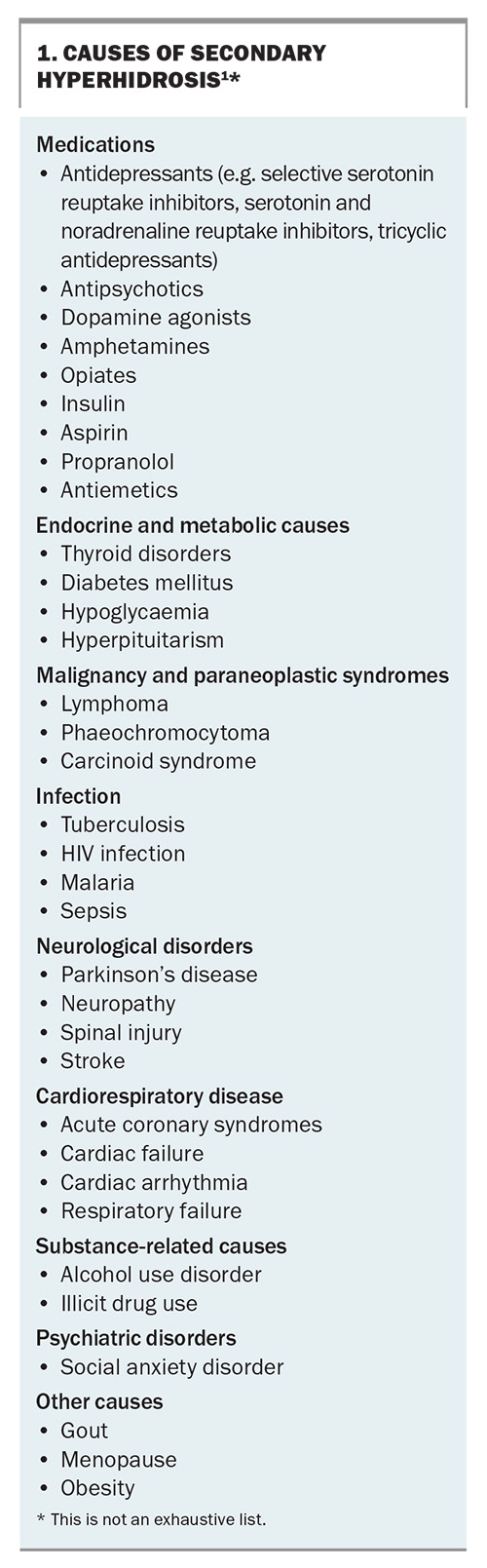
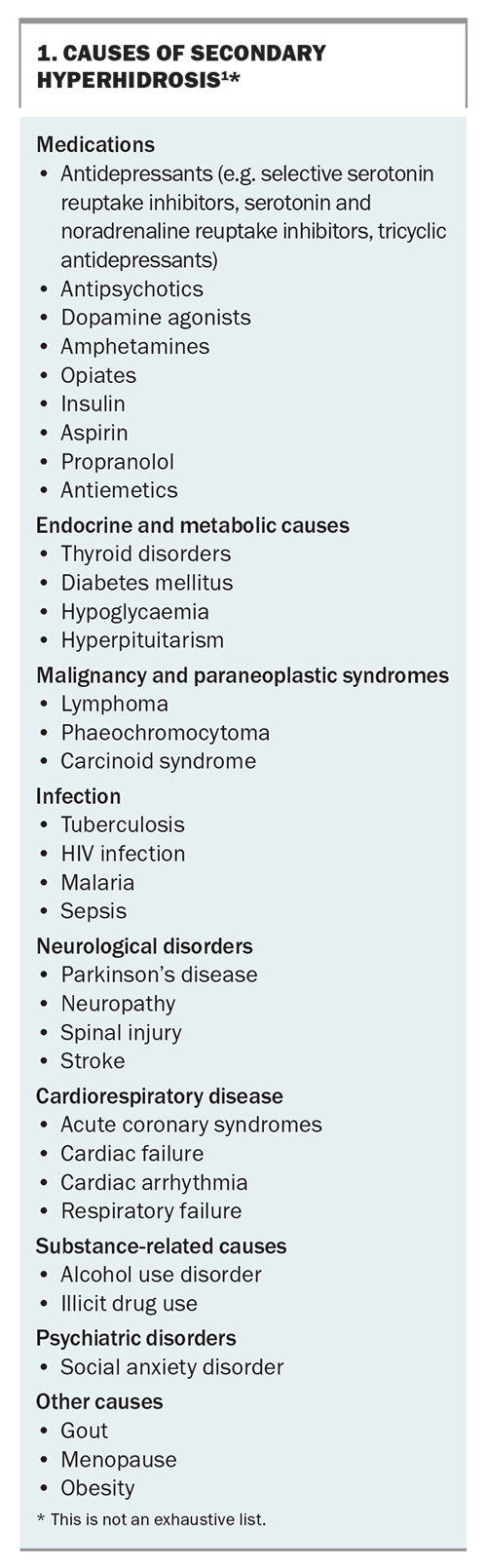
Secondary hyperhidrosis is usually generalised and occurs in the context of systemic disease, physiological states such as menopause or medication use (Box 1).1 Drugs that increase acetylcholine release or enhance sympathetic activity are frequent culprits, and medication-induced sweating should always be considered when assessing patients.1
Less common presentations of hyperhidrosis include segmental, unilateral and gustatory hyperhidrosis.1
Clinical assessment
A thorough clinical history is essential to distinguish primary from secondary hyperhidrosis and in guiding subsequent management. Key elements include age at onset, anatomical distribution, symmetry, seasonality and identifiable triggers such as heat, anxiety, eating or chewing, and environmental conditions.5
Clinicians should also ask whether sweating persists during sleep, explore family history, review medical comorbidities and medications, assess for associated systemic symptoms and explore previous treatments and responses.1,5
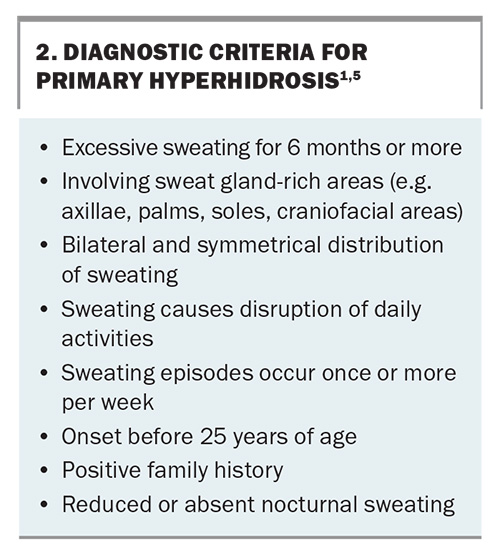
Patients should be asked directly about the impact of sweating on daily functioning, including difficulty gripping objects, limitations with fine motor tasks, avoidance of handshakes, frequent changes of clothing and interference with physical activity or social confidence.5 It is common for patients to report that they have experienced symptoms for many years before seeking medical attention. Primary hyperhidrosis typically presents in younger individuals, is present for more than six months, is often familial and usually involves bilateral, symmetrical sites (Box 2).1,5 In contrast, late onset should prompt consideration of secondary causes, including medication-related hyperhidrosis or underlying systemic disease (Box 1).1,5
Physical examination should focus on frequently affected areas, including the palms, soles, axillae and face. Findings may include clammy palms, damp axillae, maceration between the toes or, in severe cases, visible sweating.1,5 The pattern and distribution of sweating are particularly informative: focal, symmetrical involvement supports a diagnosis of primary hyperhidrosis, whereas generalised sweating, or sweating accompanied by features such as fever, lymphadenopathy, neurological signs or tachycardia, should raise suspicion of a secondary aetiology.1,5
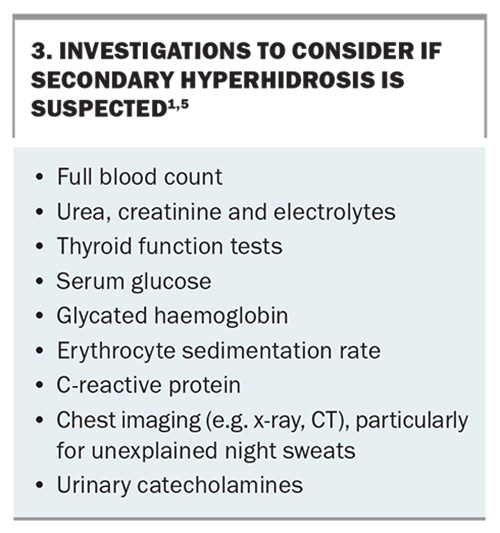
In most cases, visual assessment is sufficient to establish the diagnosis, which is primarily clinical. Further investigation is guided by the index of suspicion for secondary causes and may be required to exclude conditions such as infection, thyroid dysfunction, diabetes mellitus, neurological disease or medication-related adverse effects.1,5 Most patients with classical primary hyperhidrosis do not require laboratory investigations; however, when red flags such as fever, weight loss and lymphadenopathy are present, targeted, context-appropriate testing should be undertaken (Box 3).1,5
Objective assessment tools are rarely required. The starch–iodine test, which produces a dark purple reaction in areas of active sweating, may assist in localising affected sites and can be useful for procedural planning, particularly before botulinum toxin treatment. Other tests, such as gravimetric measurement of sweat production by weighing filter paper, are not routinely used in clinical practice and are generally reserved for research settings.1,5
Quality-of-life considerations
The psychosocial burden of hyperhidrosis is frequently underestimated. Patients may avoid close interpersonal contact, restrict social interactions, experience difficulties with occupational tasks or withdraw from recreational activities.1,5 Studies in both adult and paediatric populations demonstrate significant improvements in quality of life after effective treatment. For many individuals, even a partial reduction in sweating can be transformative. GPs play a key role in recognising this burden, validating patient concerns and facilitating access to appropriate management and specialist care.
Management
Management of hyperhidrosis should be individualised, beginning with the least invasive options and escalating according to symptom severity, anatomical distribution and patient priorities. Many patients achieve meaningful improvement with topical therapy alone, whereas others require procedural or surgical interventions. Topical treatments such as aluminium chloride-containing antiperspirants or topical anticholinergic agents may be sufficient for mild to moderate disease; however, patients with more severe or refractory symptoms may require botulinum toxin injections or surgical management. Regardless of treatment modality, setting realistic expectations and reassuring patients that therapy can substantially improve daily functioning is an important component of care. Algorithms for the management of hyperhidrosis are available on the International Hyperhidrosis Society’s website (https://www.sweathelp.org/treatments-hcp/clinical-guidelines/hyperhidrosis-treatment-algorithms.html).
Conservative measures
Lifestyle and adjunctive measures should be recommended for all patients with primary hyperhidrosis and can be introduced at any stage of management. These include avoiding known triggers such as heat, crowded environments, tight clothing, spicy food, alcohol and stressful situations. Practical adjuncts, including moisture-wicking clothing and bedding, absorbent shoe insoles, foot powders, cotton or wool socks, leather footwear, underarm liners and dress shields, may help reduce symptoms. Although these measures are rarely sufficient as monotherapy, they play an important supportive role when used alongside pharmacological or procedural treatments.5
Topical therapy
Topical treatments are relatively inexpensive, widely accessible and can be administered at home. Topical aluminium chloride hexahydrate remains first-line therapy for most patients, particularly those with mild to moderate axillary hyperhidrosis.1,5 Concentrations of 20 to 25% are typically required. Aluminium chloride is thought to act by obstructing sweat ducts and inducing functional atrophy of eccrine glands. Application to completely dry skin at night, followed by washing off in the morning, improves efficacy. Cutaneous irritation is common, particularly with frequent application or use on recently shaved skin, and can be managed by reducing the application frequency to weekly, or by using a mild topical corticosteroid such as hydrocortisone 1% cream. Patients should be advised that clinical improvement may take up to six weeks, and adherence during this period is essential.1,5
A new addition to the therapeutic armamentarium is topical anticholinergic agents, including glycopyrronium preparations such as glycopyrronium bromide 1% cream, which has recently been listed on the PBS for primary axillary hyperhidrosis. Topical anticholinergics offer an alternative option for localised hyperhidrosis. Glycopyrronium bromide is a muscarinic anticholinergic that blocks the action of acetylcholine. It does not cross the blood–brain barrier, resulting in minimal to no central nervous system effects. Glycopyrronium bromide 1% cream is applied once daily, preferably in the evening, for four weeks, then tapered to as infrequently as twice weekly.6 Randomised controlled trials demonstrate that topical glycopyrronium significantly reduces sweat production and improves symptom severity and quality-of-life metrics compared with placebo.7 Adverse events tend to be mild and include dry mouth and local erythema.6 Their use may be limited by availability, cost or local irritation.1,5
Other topical agents, such as potassium permanganate and tannic acid, reduce sweating by denaturing keratin and occluding sweat duct pores. These agents have a short duration of effect and may cause skin discolouration, limiting their practical use.1,5 Topical oxybutynin, a muscarinic receptor antagonist, is another treatment that has shown promise in clinical trials. Side effects include application site reactions, dry mouth and thirst.8
Iontophoresis
Iontophoresis is an effective treatment for palmar and plantar hyperhidrosis and is often considered when topical therapy fails. Treatment involves immersing the hands or feet in trays of tap water or anticholinergic solution through which a low-intensity electrical current (typically 10 to 20 mA) is passed. Treatments usually last between 15 and 40 minutes.1,5 Iontophoresis is available in some public hospitals and a limited number of dermatology practices, where treatment can be initiated following referral. Alternatively, tap-water iontophoresis can be performed at home using commercially available devices, making it a feasible long-term option.
Iontophoresis using anticholinergic solutions, most frequently glycopyrrolate, is more effective than tap water alone and is generally well tolerated. Mild systemic absorption may occur, resulting in transient dry mouth, blurred vision or dry eyes, but these effects are usually short lived. Glycopyrrolate iontophoresis typically requires treatment in specialist centres.1,5
Treatment usually commences with sessions three to four times per week for three to four weeks until symptom control is achieved, followed by maintenance therapy every one to two weeks. Iontophoresis is less effective for axillary hyperhidrosis because of technical difficulties with electrode placement and a higher risk of local skin reactions. Contraindications include pregnancy, implanted cardiac devices, metallic implants, narrow-angle glaucoma, epilepsy, cardiac arrhythmias and intrauterine devices.1,5
Oral therapies
Oral anticholinergic medications may be useful when hyperhidrosis is generalised or when focal disease is refractory to topical and iontophoretic treatments. Oxybutynin (off-label use, typically 5 to 10 mg daily, with maximum doses as high as 20 mg daily) and propantheline bromide (15 mg daily, uptitrated as tolerated to 30 mg three times a day) are most often used and can produce substantial reductions in sweating. However, systemic anticholinergic adverse effects, including dry mouth, constipation, blurred vision and urinary retention, frequently limit long-term use. Some patients prefer intermittent dosing for situational control, such as before public speaking or social events.1,5
Other systemic anticholinergics, including atropine and glycopyrrolate, have been used but are often poorly tolerated because of dose-dependent side effects. In selected cases, nonselective beta blockers such as propranolol, anxiolytic agents or antidepressant medications may be beneficial, particularly when hyperhidrosis is associated with social anxiety disorder or when psychiatric sequelae contribute to symptom burden.1,5,9
Botulinum toxin injections
Botulinum toxin type A has significantly advanced the management of focal hyperhidrosis, particularly axillary disease. When injected intradermally at about 1 to 1.5 cm intervals, botulinum toxin inhibits acetylcholine release from sympathetic nerve terminals, resulting in a marked reduction in sweating.1,5 Clinical studies demonstrate impressive efficacy and high patient satisfaction.1,5
The TGA has only approved the use of botulinum toxin type A for hyperhidrosis in the axilla, but it is also effective for palmar and plantar hyperhidrosis.5 However, injections in these areas are more painful and often require regional nerve blocks or other forms of anaesthesia.5 Transient weakness of intrinsic hand muscles may occur following palmar injections, which is an important consideration for patients whose occupations require fine motor control. Limitations include cost and the need for repeat treatments.1,5
Botulinum toxin type A is subsidised under the PBS for the treatment of severe primary axillary hyperhidrosis in patients aged 12 years and older who have failed, or are intolerant of, one to two months of topical aluminium chloride hexahydrate therapy. Treatment must be undertaken by a dermatologist, neurologist or paediatrician. A maximum of three treatments per year are subsidised, with a minimum interval of four months between treatments. Further details are available on the PBS website.
Microwave technology
Microwave thermolysis is a noninvasive, device-based treatment for axillary hyperhidrosis that uses targeted thermal energy to selectively destroy eccrine and apocrine sweat glands. One or two treatment sessions can lead to sustained reductions in axillary sweating, with side effects that are generally mild and self-limiting, including swelling, bruising and discomfort.10
Laser-based therapies
Laser-based therapies have been explored as a treatment option for hyperhidrosis; however, published data are limited and results regarding their efficacy remain conflicting. Further high-quality studies are required to clarify their role in clinical practice.
Surgical options
Surgical intervention is reserved for patients with severe, refractory hyperhidrosis who have failed less invasive therapies. Several surgical approaches exist, including sympathectomy, radiofrequency ablation, subcutaneous liposuction and local excision of sweat glands.1,5
Endoscopic thoracic sympathectomy is the most established surgical option and offers a potentially permanent solution. The procedure involves minimally invasive excision or interruption of the sympathetic ganglia responsible for sweating: T1 for facial hyperhidrosis, T2 to T3 for palmar disease and T4 for axillary involvement. Although highly effective, sympathectomy is associated with significant risks, most notably compensatory hyperhidrosis, which occurs in about 62% of patients and is severe in around 23%.11 Other risks include gustatory sweating, Horner syndrome, pneumothorax, haemothorax, intercostal neuralgia and chronic pain. Recurrence rates are higher for axillary hyperhidrosis than for palmar disease. Sympathectomy is not performed for plantar hyperhidrosis because of the risk of sexual dysfunction, although some patients undergoing sympathectomy for palmar disease experience some improvement in plantar symptoms.1,5
Tumescent liposuction and curettage involve removal of axillary sweat glands and are effective, minimally invasive options for axillary hyperhidrosis. They can be performed in an outpatient setting, with low complication rates. Potential adverse effects include localised bruising and symptom recurrence.1,5 Other surgical techniques, such as en bloc axillary sweat gland excision or curettage, are now rarely performed because of the risk of scarring and contracture.1,5
Conclusion
Hyperhidrosis is a common condition that can significantly impair daily functioning and emotional wellbeing. However, it is highly treatable. GPs play a central role in its recognition, assessment and initial management. With a structured clinical approach, appropriate exclusion of secondary causes and a stepwise treatment strategy, most patients can achieve substantial and sustained improvement. Early intervention not only reduces physical symptoms but also alleviates the psychological burden that frequently accompanies this under-recognised disorder. MT
COMPETING INTERESTS: Dr Larney, Dr Iyengar and Associate Professor Shumack: None. Dr Berry has received payment or honoraria for lectures and presentations from The Limbic and UCB Pharma. Professor Foley has received research grants paid to his institution from AbbVie, Amgen, Bristol-Myers Squibb, Eli Lilly, Janssen, LEO Pharma, Novartis, Pfizer, Sanofi, Sun Pharma and UCB Pharma; has received consulting fees from Apogee, Aslan, Boehringer Ingelheim, Eli Lilly, Galderma, GenesisCare, Janssen, LEO Pharma, Mayne Pharma, MedImmune, Novartis, Oruka, Pfizer, Takeda and UCB Pharma; has received payment or honoraria from AbbVie, Almirall, Amgen, Boehringer Ingelheim, Bristol-Myers Squibb, Eli Lilly, Janssen, Novartis, Sanofi, Sun Pharma and UCB Pharma; has received payment for expert testimony from Pfizer; is on the Advisory board for AbbVie, Amgen, Arrotex/Juniper, Aslan, Boehringer Ingelheim, Bristol-Myers Squibb,Eli Lilly, Galderma, GlaxoSmithKline, Janssen, LEO Pharma, Mayne Pharma, Novartis, Pfizer, Sanofi, Sun Pharma, Takeda and UCB Pharma; and has received drug samples provided free of charge for patient use from AbbVie, Amgen, Bristol-Myers Squibb, Eli Lilly, Janssen, LEO Pharma, Mayne Pharma, Novartis, Sun Pharma and UCB Pharma.
References
1. Brackenrich J, Medeus CF. Hyperhidrosis. In: StatPearls [Internet]. Treasure Island (FL): StatPearls Publishing; 2025. Available online at: https://www.ncbi.nlm.nih.gov/books/NBK459227/ (accessed April 2026).
2. Ng K. Time to sweat the small stuff: hyperhidrosis, a problem of epidemic proportions. Intern Med J 2021; 51: 1377-1379.
3. Oshima Y, Fujimoto T, Nomoto M, Fukui J, Ikoma A. Hyperhidrosis: a targeted literature review of the disease burden. J Dermatol 2023; 50: 1227-1236.
4. Baker LB. Physiology of sweat gland function: the roles of sweating and sweat composition in human health. Temperature (Austin) 2019; 6: 211-259.
5. Maazi M, Leung AK, Lam JM. Primary hyperhidrosis: an updated review. Drugs Context 2025; 14: 2025-3-2.
6. Szeimies RM, Abels C, Kilic A, et al. Long-term efficacy and safety of 1% glycopyrronium bromide cream in patients with severe primary axillary hyperhidrosis: results from a Phase 3b trial. J Eur Acad Dermatol Venereol 2023; 37: 823-830.
7. Elrosasy A, Zeid MA, Samha R, et al. Efficacy and safety of topical glycopyrronium bromide in treating axillary hyperhidrosis: systematic review and meta-analysis. Sci Rep 2024; 14: 24537.
8. Wallace CE, Su JJ, Davis LS. Topical oxybutynin for hyperhidrosis: a systematic review. JAAD Reviews 2024; 2: 145-148.
9. Lee HH, Kim DW, Kim DW, Kim C. Efficacy of glycopyrrolate in primary hyperhidrosis patients. Korean J Pain 2012; 25: 28-32.
10. Tanzella U, Ueberreiter K, Bell A, Krapohl MA, Krapohl BD. Patient satisfaction after miraDry treatment for axillary hyperhidrosis. Results of an online patient survey after miraDry treatment to reduce excessive axillary sweating. GMS Interdiscip Plast Reconstr Surg DGPW 2024; 13: Doc06.
11. Lin ZY, Lin M. Which patients are more likely to experience compensatory hyperhidrosis after endoscopic thoracic sympathectomy: a meta-analysis and systematic review. PeerJ 2025; 13: e19097.
Single article purchases are temporarily unavailable due to site maintenance.
If you would like to purchase an article during this time, please email us at [email protected] with the article details and we'll assist you directly. We'll also let you know when online purchasing is available again.
Thank you for your patience and understanding.