
Adolescent obesity: tailoring interventions to address hormonal and metabolic considerations

Adolescent obesity is a chronic, biologically driven condition. Understanding hormonal and neuroendocrine mechanisms allows GPs to deliver tailored, effective care incorporating behavioural strategies, multidisciplinary care, pharmacotherapy and dietitian referral.
- Adolescent obesity is a chronic, biologically regulated disease that requires long-term, patient-centred management rather than a sole focus on weight loss.
- GPs play a key role in identifying obesity-related comorbidities early and providing ongoing, family-based behavioural support tailored to the adolescent’s developmental stage.
- Behavioural interventions remain the foundation of treatment, with dietitian-led care and more intensive interventions considered when first-line management is insufficient.
- Glucagon-like peptide-1 receptor agonists may be appropriate for selected adolescents with persistent or severe obesity, but these should be used as part of a comprehensive multidisciplinary management plan.
- Regular follow up, attention to weight stigma and realistic goal-setting are essential to improving engagement and supporting sustainable long-term health outcomes.
Adolescent obesity, defined as a body mass index (BMI) adjusted for age and sex that is at or above the 95th percentile, is recognised as a chronic disease of energy regulation rather than a simple behavioural issue.1 The prevalence remains high, with overweight and obesity affecting at least one in four adolescents in Australia, including 8% living with obesity.2 Public health campaigns and community-based healthy lifestyle programs (e.g. Go4Fun in New South Wales and similar initiatives) play an important role in supporting obesity prevention and early intervention. Early-onset complications, including type 2 diabetes, metabolic dysfunction-associated steatotic liver disease (MASLD) and cardiovascular risk factors, are commonly encountered in general practice during adolescence.3 Importantly, cardiometabolic risks may be reversed if obesity is resolved before adulthood.4
Advances in understanding the neuroendocrine regulation of appetite, metabolism and energy expenditure have reframed obesity as a biologically defended condition, shaped by hormonal signalling, environmental exposure and developmental stage.3 This helps explain a common clinical challenge: adolescents who appear motivated and engaged but struggle to sustain weight loss.
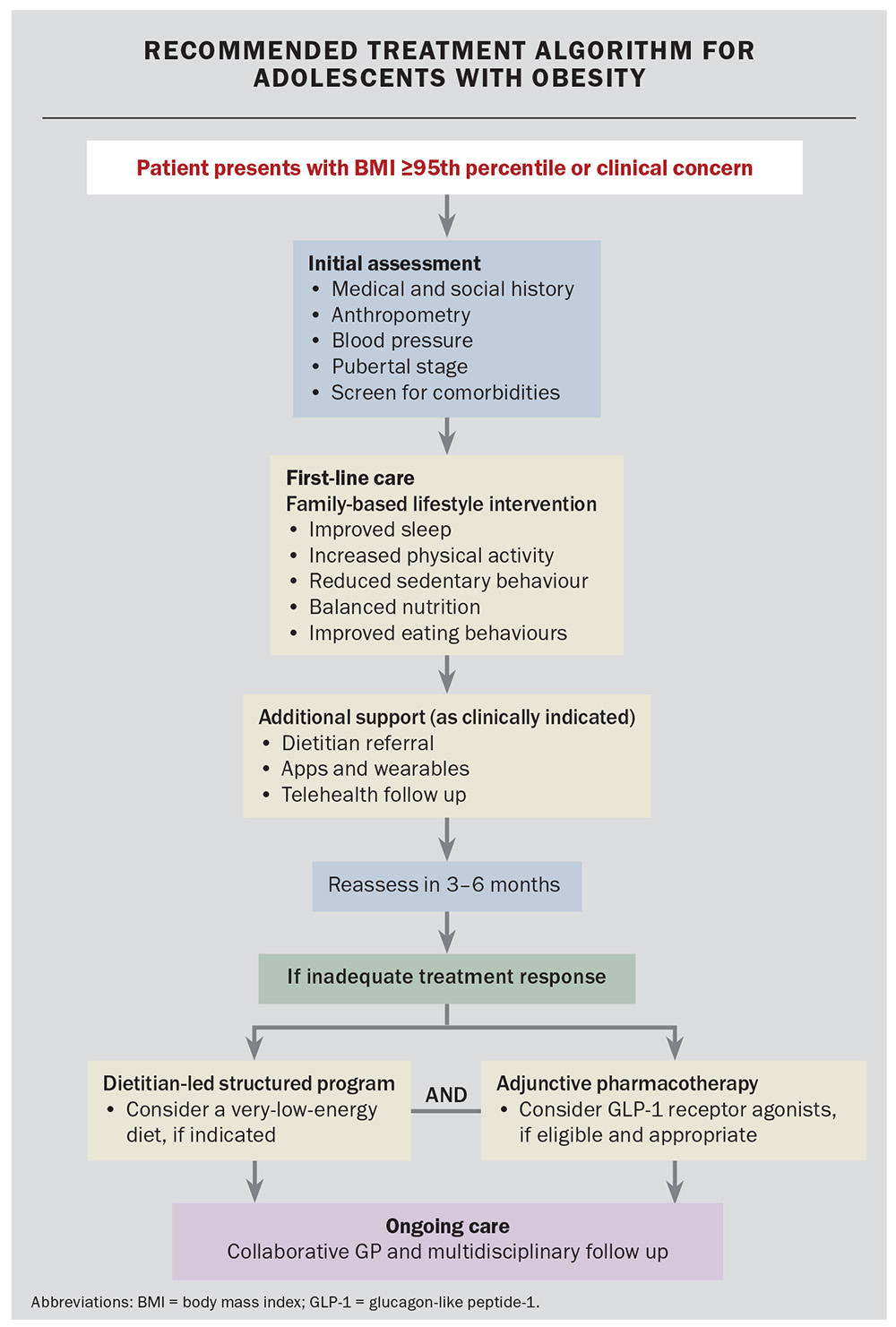
For GPs, this shift has practical implications. Management should move beyond short-term weight reduction towards longitudinal, individualised care that targets the underlying drivers of obesity. A recommended approach for adolescent obesity management is discussed in this article and outlined in the Flowchart.
How and why do adolescents present?
Adolescents usually do not present with obesity as the primary complaint. More often, weight gain is identified incidentally or in the context of related concerns such as fatigue, low mood, sleep disturbance or menstrual irregularity.
Puberty is a crucial window. Hormonal changes, including increased levels of growth hormone, sex steroids and insulin-like growth factor, may alter appetite, body composition and metabolism.5 At the same time, insulin sensitivity declines physiologically. In adolescents with obesity, this decline is greater and may persist, contributing to ongoing weight gain and metabolic risk.
Behavioural changes compound these effects. Common features include:
- irregular eating patterns and increased autonomy over food choices
- reduced sleep duration and disrupted circadian rhythms
- increased sedentary, screen-based activity
- decreased physical activity
- mood changes, low self-esteem, bullying and peer pressure.
These biological and behavioural changes interact, accelerating weight gain and reinforcing the need for early intervention.
Hormonal and metabolic drivers: what GPs need to understand
Obesity reflects dysregulation of a complex neuroendocrine system controlling appetite and energy balance.
At a central level, hypothalamic pathways integrate signals from:
- leptin (largely secreted by adipose tissue)
- insulin
- gut-derived incretin hormones,
- such as glucagon-like peptide-1 (GLP-1) and glucose-dependent insulinotropic polypeptide.
These systems regulate hunger and energy expenditure but also defend a biological set point. When weight is reduced, compensatory responses are triggered, including increased appetite and decreased metabolic rate.3
Adipose tissue further contributes as an active endocrine organ, releasing adipokines and inflammatory mediators that impair insulin signalling and drive metabolic dysfunction.6 Over time, this promotes insulin resistance, dyslipidaemia and MASLD.
Puberty amplifies these processes through transient insulin resistance.5 In adolescents with obesity, this physiological change becomes exaggerated and may not fully resolve.
Sleep is a key but often overlooked factor. Short or irregular sleep is associated with:
- increased levels of ghrelin
(the ‘hunger hormone’) - reduced leptin signalling
- worsening insulin sensitivity
- increased risk of mental health
- problems and low motivation
- reduced physical activity.
Addressing sleep is therefore a practical intervention that aligns directly with underlying hormonal pathways.
What must not be missed
Although most adolescent obesity is multifactorial, secondary causes should be excluded when clinically indicated, including hypothyroidism, Cushing’s syndrome or rarer genetic causes of obesity. Clinical features suggestive of pathological causes of obesity may include poor linear growth, developmental delay, dysmorphic features, severe hyperphagia, early-onset obesity (<5 years of age) or pubertal abnormalities.
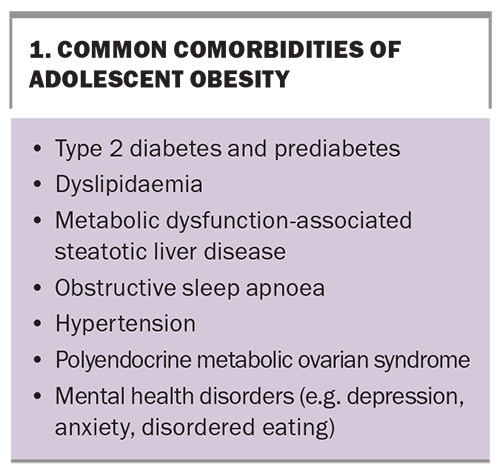
More commonly, GPs should actively identify comorbidities, which are often under-recognised. Common comorbidities of adolescent obesity are outlined in Box 1. Particular attention should be given to coexisting mental health disorders; depression, anxiety and disordered eating frequently coexist and may significantly impact engagement with treatment.
Initial assessment
A collaborative, nonjudgmental approach to an initial assessment (and on an ongoing basis) is crucial. Weight stigma can be a barrier to care and may reduce engagement, trust and follow up. GPs should use respectful, person-centred language and provide a safe, nonjudgmental clinical environment.
Assessment should be structured but pragmatic. The BMI percentile should be assessed.7 Clinicians should also assess for clinical obesity, including evaluation of blood pressure, pubertal stage, sleep patterns, family environment and eating behaviours, and mental health.1
Suggested investigations include:
- glycated haemoglobin
- fasting glucose
- lipid profile
- liver function tests.
Assessment should be repeated over time rather than viewed as a one-off screen. Fasting insulin levels should not be routinely measured to screen or diagnose insulin resistance in adolescents with obesity, as they do not reliably differentiate between adolescents with normal versus impaired glucose tolerance. Other investigations may be indicated depending on the clinical scenario.
Practical management: tailoring the intensity of intervention
Management of adolescent obesity is most effective when delivered using a stepped-care approach, with progression in intensity based on severity, comorbidities and response to treatment. This is particularly important given that many adolescents may not be appropriate candidates for pharmacotherapy because of age, access or preference.
First-line: structured behavioural and family-based intervention
Initial management should focus on sustainable changes within a family-based behavioural approach, as evidence is strongest for interventions that actively involve caregivers. Adolescent engagement is crucial, with evidence showing that management is more effective when goals are realistic and negotiated.8 Key components include:
- establishing regular, culturally appropriate meal patterns and reducing grazing
- improving sleep consistency and duration
- reducing the intake of energy-dense, nutrient-poor foods
- increasing physical activity through enjoyable, achievable activities.
Escalation: intensive dietary interventions
For adolescents who do not respond adequately to first-line care, escalation to more structured, intensive dietary intervention is appropriate. Escalation may be appropriate for:
- adolescents who cannot access GLP-1 receptor agonist therapy because of cost
- patients with moderate to severe obesity
- patients with emerging metabolic complications.
Dietitian-led interventions allow for individualised, developmentally appropriate care, addressing both nutritional intake and eating behaviours. Common evidence-based approaches include:
- structured meal plans with defined portions and macronutrient balance
- a reduction in the intake of ultra-processed foods, targeting energy density and satiety
- family-based behavioural programs, through which caregivers implement environmental change
- very-low-energy diets in selected adolescents with severe obesity, under specialist multidisciplinary supervision.
More intensive, individualised approaches can produce meaningful short-term reductions in weight and metabolic risk, particularly when combined with behavioural support. However, they require careful monitoring to ensure nutritional adequacy and to support adherence.
Other possible referrals
Bariatric surgery may be an appropriate treatment option for selected adolescents with severe obesity when delivered within a multidisciplinary, stepped-care model. However, access remains very limited in Australia, with procedures performed infrequently and very limited availability within the public health system.
Referral to mental health services, social work, exercise physiology, physiotherapy, sleep medicine or other specialist services may also be indicated based on the adolescent’s clinical, psychosocial and family needs.
The role of the dietitian
Dietitians play a central role in adolescent obesity management and should be involved early in care, particularly if more intensive intervention is required. Dietitians can:
- tailor dietary strategies to developmental stage and family context
- address maladaptive eating patterns (e.g. binge eating, irregular meals, grazing)
- support the implementation of structured diets
- monitor nutritional adequacy and eating disorder risk during intensive interventions, particularly during pharmacotherapy
- support the management of side effects of pharmacotherapy (e.g. gastrointestinal upset, dehydration)
- provide ongoing behavioural support.
A GP may refer an adolescent to a dietitian through:
- Medicare-funded allied health visits under a chronic disease management plan
- private referral, if appropriate
- multidisciplinary paediatric weight management services.
Integrating treatment pathways in general practice
In practice, management often involves combining approaches rather than progressing linearly. A typical pathway may involve:
- initial GP-led assessment and brief intervention
- early referral to a dietitian for structured dietary support
- use of digital tools to improve engagement
- escalation to more intensive dietary approaches if progress is limited
- referral to other allied health professionals, such as a clinical psychologist, exercise physiologist, social worker, sleep specialist or paediatrician
- consideration of pharmacotherapy, if appropriate.
This flexible, patient-centred approach allows care to be tailored to the individual adolescent, while recognising obesity as a chronic, relapsing condition.
Pharmacotherapy in adolescent obesity: where it fits
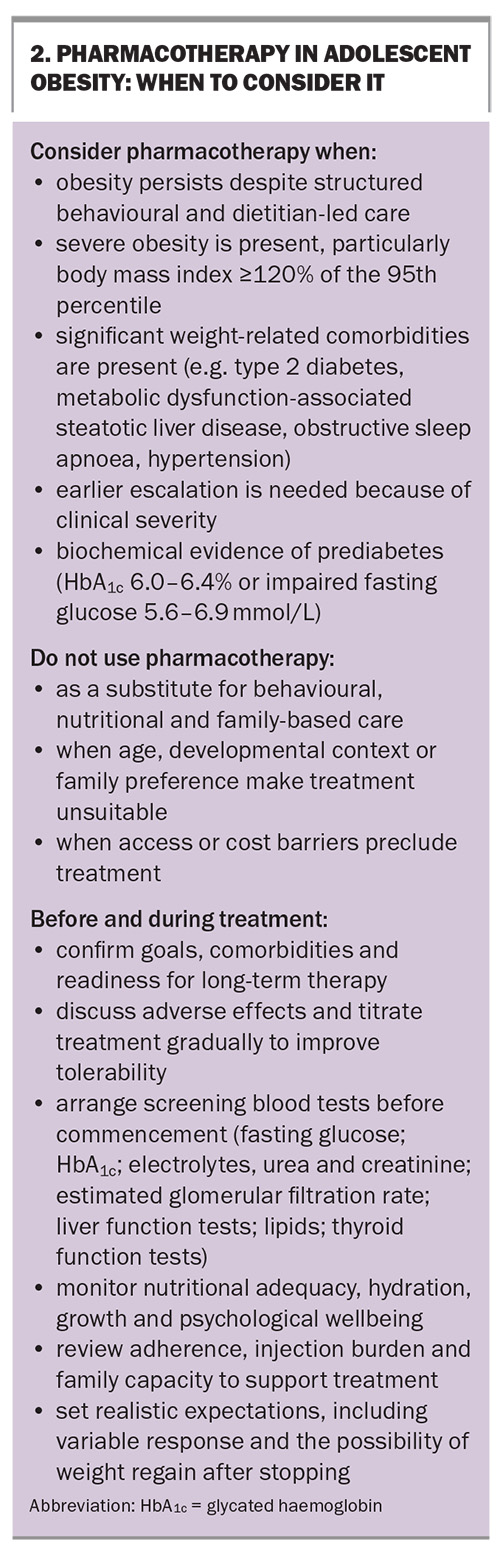
Pharmacotherapy is best understood as part of a stepped-care model. It may be considered for adolescents with persistent obesity despite structured behavioural intervention, particularly when obesity-related comorbidities are present (Box 2). It may also be considered in adolescents with severe obesity or significant comorbidities, if earlier treatment is clinically indicated, and need not be deferred until behavioural intervention alone has been shown to be insufficient. Decisions should be individualised and made within a broader multidisciplinary plan.
Among the available options, incretin therapies such as GLP-1 receptor agonists are the main emerging therapy in adolescent obesity because they target the neuroendocrine pathways that regulate appetite.9 Metformin may be considered, primarily for the management of clinical insulin resistance, prediabetes or polyendocrine metabolic ovarian syndrome.
In adolescents, these agents are typically considered in those with:
- severe obesity, defined as a BMI 120% or greater of the age- and sex-specific 95th percentile, indicating a BMI substantially above the standard obesity threshold
- obesity with significant weight-related comorbidities, such as prediabetes, type 2 diabetes, MASLD, obstructive sleep apnoea or hypertension
- persistent obesity despite structured behavioural and dietitian-led intervention.
Evidence of glucagon-like peptide-1 receptor agonists in adolescents
The strongest evidence comes from the Semaglutide Treatment Effect in People with Obesity (STEP) TEENS trial, in which once-weekly semaglutide 2.4 mg delivered subcutaneously, combined with behavioural intervention, resulted in an average BMI reduction of about 16% over 68 weeks, compared with minimal change with placebo.10 Improvements in cardiometabolic risk markers were also observed. The effects of GLP-1 receptor agonists include enhanced satiety, reduced hunger and improved insulin sensitivity, which are particularly relevant in adolescence, when puberty-related hyperphagia and disrupted satiety signalling can drive ongoing weight gain.
In practice, GLP-1 receptor agonists are:
- used within a multidisciplinary framework combined with behavioural and family-based interventions
- framed as long-term therapy rather than a short-term solution.
Findings from a recent systematic review and network meta-analysis of 42 randomised clinical trials, including 3835 participants, found that the most effective treatment for weight management in children and adolescents was a combined pharmacotherapy and behavioural treatment approach, superior to pharmacotherapy monotherapies.11 This finding highlights the importance of continued behavioural therapies. It is important to note there are limited long-term safety data for adolescent populations. There is also no established optimal duration of therapy, and weight regain occurs following treatment discontinuation.
Practical prescribing considerations
Incretin-based therapies, such as GLP-1 analogues, should be prescribed within a comprehensive care plan rather than as standalone treatment. In general practice, this means shared decision-making through clarifying goals, reviewing comorbidities and ensuring that behavioural, nutritional and family-based supports remain in place throughout treatment (Box 2). Consultation with a paediatrician or with multidisciplinary paediatric weight management services may be appropriate when initiating therapy. When considering incretin-based therapy, some key factors include:
- confirming that pharmacotherapy is being used as an adjunct to structured behavioural care, rather than as a substitute
- discussing likely adverse effects, particularly nausea, vomiting, abdominal discomfort and constipation, and the use of gradual dose escalation to improve tolerability
- monitoring nutritional intake, hydration and overall adequacy to support ongoing growth, including sufficient lean protein intake to help preserve muscle mass during marked appetite suppression or rapid weight loss
- screening for psychological vulnerability, including body image concerns, anxiety, depression and disordered eating behaviours, with ongoing monitoring for emerging psychological concerns
- reviewing adherence, injection tolerance and burden, and family capacity to support regular administration and follow up, including consideration of exposure therapy for injection anxiety
- setting realistic expectations, including that weight loss is gradual, response varies and regain may occur if treatment is discontinued
- confirming that there is no personal or family history of thyroid cancer or pancreatitis.
Regular review is important to assess tolerability, the trajectory of weight change, metabolic markers and broader wellbeing. Ongoing treatment decisions should consider the clinical benefit, adverse effects, adherence, cost and adolescent’s developmental context. Oral semaglutide, approved by the US Food and Drug Administration for adults with obesity and type 2 diabetes, may be a future option for the management of adolescent obesity.
Australian access and PBS context
GPs are increasingly managing requests for incretin therapies and need clear, realistic discussions with adolescents and families about indications, expected benefits, access barriers and the need for long-term follow up.
However, many adolescents will not receive incretin therapy (e.g. GLP-1 receptor agonists) because of:
- the lack of PBS access for adolescent obesity treatment
- cost barriers in private prescribing for some families
- younger age or developmental concerns
- patient or family preference.
Recent Australian data suggest a marked increase in GLP-1 receptor agonist use, including substantial private prescribing for obesity.12 Although semaglutide has TGA approval for use in adolescents with obesity, PBS access is currently restricted to adolescents and adults with type 2 diabetes or other indications, although the policy is evolving.13,14 Tirzepatide, a combined glucose-dependent insulinotropic polypeptide/GLP-1 receptor agonist, is not approved for children and adolescents younger than 18 years of age.
In adolescents who are not eligible for or do not wish to use pharmacotherapy, intensive behavioural and dietitian-led interventions remain the cornerstone of care and should be optimised before further escalation.
Follow up
Adolescent obesity requires ongoing care. Regular follow up enables monitoring, support and adjustment of management strategies. Short, frequent consultations are often more effective than infrequent longer visits. Addressing stigma remains crucial. Using neutral language and focusing on health, rather than weight alone, improves engagement and therapeutic relationships.
Conclusion
Adolescent obesity is a chronic, biologically driven condition shaped by hormonal, metabolic and behavioural factors.
By integrating an understanding of neuroendocrine mechanisms with practical, patient-centred strategies, including behavioural intervention and emerging pharmacotherapy, GPs play a central role in improving long-term outcomes for adolescents. MT
COMPETING INTERESTS: None.
References
1. Rubino F, Cummings DE, Eckel RH, et al. Definition and diagnostic criteria of clinical obesity. Lancet Diabetes Endocrinol 2025; 13: 221-262.
2. Australian Institute of Health and Welfare (AIHW). Overweight and obesity. Canberra: AIHW; 2026. Available online at: https://www.aihw.gov.au/reports/overweight-obesity/overweight-and-obesity (accessed June 2026).
3. Lister NB, Baur LA, Felix JF, et al. Child and adolescent obesity. Nat Rev Dis Primers 2023; 9: 24.
4. Juonala M, Magnussen CG, Berenson GS, et al. Childhood adiposity, adult adiposity, and cardiovascular risk factors. N Engl J Med 2011; 365: 1876-1878.
5. Haymond MW, Chung ST. Commentary on the impact of obesity and puberty on insulin sensitivity. J Clin Endocrinol Metab 2020; 105: e2082-e2083.
6. Cao Y, Xu R, Zhang J. Insulin resistance in obese children and adolescents: from mechanisms to screening and exercise intervention. Front Pediatr 2026; 14: 1679527.
7. Centers for Disease Control and Prevention (CDC). Summary and references: using BMI-for-age growth charts. Atlanta, GA: CDC; 2025. Available online at: https://www.cdc.gov/growth-chart-training/hcp/using-bmi/summary.html (accessed June 2026).
8. Hampl SE, Hassink SG, Skinner AC, et al. Clinical practice guideline for the evaluation and treatment of children and adolescents with obesity. Pediatrics 2023; 151: e2022060640.
9. Stefater-Richards MA, Jhe G, Zhang YJ. GLP-1 receptor agonists in pediatric and adolescent obesity. Pediatrics 2025; 155: e2024068119.
10. Weghuber D, Barrett T, Barrientos-Pérez M, et al. Once-weekly semaglutide in adolescents with obesity. New Engl J Med 2022; 387: 2245-2257.
11. Wan KW, Lei EF, Liu Y, et al. Obesity management pharmacotherapies and lifestyle treatment for pediatric obesity management: a systematic review and network meta-analysis. JAMA Pediatr 2026 Jun 22; e-pub (https://doi.org/10.1001/jamapediatrics.2026.2248).
12. Falster MO, de Oliveira Costa J, Milder T, et al. The GLP-1 RA boom: trends in publicly subsidised and private access in Australia, 2020-2025. medRxiv 2025; e-pub (https://doi.org/10.1101/2025.10.30.25339120).
13. Woodley M. PBS restrictions placed on diabetes medicines. Melbourne: Royal Australian College of General Practitioners; 2024. Available online at: https://www1.racgp.org.au/newsgp/clinical/pbs-restrictions-placed-on-diabetes-medicines (accessed June 2026).
14. Liotta M. PBAC issues update on subsidised access to GLP-1s. Melbourne: Royal Australian College of General Practitioners; 2026. Available online at: https://www1.racgp.org.au/newsgp/clinical/pbac-issues-update-on-subsidised-access-to-glp-1s (accessed June 2026).