
Patient care after heart failure hospitalisation – key messages from a recent consensus statement
Practice-changing messages for GPs
Featuring Professor Andrew Sindone AM and Dr Anita Sharma
SUPPORTED BY

This episode of Conversations with Medicine Today is supported by Roche Diagnostics.
Overview
In this episode, Professor Andrew Sindone AM discusses the key recommendations from the new consensus statement on the transition of care after heart failure hospitalisation. He explores the critical first four to six weeks following discharge, the central role of GPs in preventing readmissions and practical strategies for rapidly optimising guideline-directed medical therapy to improve patient outcomes and reduce the risk of rehospitalisation and death.
KEY DISCUSSION POINTS
- Transition of care after heart failure hospitalisation
- Early post-discharge follow-up and shared care co-ordination
- Rapid initiation and optimisation of guideline-directed medical therapy
- Preventing readmissions during the critical first four to six weeks post discharge
- Practical strategies for GPs, including monitoring, medication titration and management of comorbidities
Transcript
Patient care after heart failure hospitalisation – key messages from a recent consensus statement
Introduction
Dr Anita Sharma: Today I’m joined by Professor Andrew Sindone, Consultant Cardiologist, Director of the Heart Failure Unit at Concord Hospital, and Head of Cardiology at Ryde Hospital, to discuss practical, practice-changing messages from the new consensus statement on patient care after heart failure hospitalisation. The big questions, Professor Sindone, are these: firstly, as more management shifts into the community, what should optimal GP-led post-discharge heart failure care look like; and secondly, what are the most important priorities in the first few weeks post-discharge for a heart failure admission?
Early priorities after discharge [0:43]
Professor Andrew Sindone: Thanks very much for having me. Those are really good questions. The priorities, as far as I’m concerned, for any patient with heart failure, are to make them feel better, make them live longer and keep them out of hospital. And when we think about that, the critical period is the first month after hospitalisation, because, up until recently, there was a 29% 30-day readmission rate to hospital and 80% of those readmissions were in the first two weeks. That’s come down a bit in the last few years as we’re getting better at managing heart failure, and we’re getting more early post-discharge reviews, but still, there’s a long way to go.
It’s all about trying to get the patients onto the four pillars, guideline-directed medical therapy in heart failure with reduced ejection fraction, or on the best therapy we can provide for heart failure with preserved ejection fraction. The GP is the key. The GP is the cornerstone of care. From my point of view, I want the patient perfect. That’s a perfect blood pressure, about 105 systolic, and a perfect pulse, about 55 to 60. And it means avoiding medications which can worsen heart failure, not making the patient dehydrated, and taking action as quickly as we can in the first six weeks without upsetting the patient. To try and explain what I’m talking about, we’ve written a few papers about this, and I just want to show you some slides that I prepared which talk all about this, because I think this is such a key area.
This is the consensus guidance on transition of heart failure care from hospital to the home (Slide 1). These are my disclosures (Slide 2).
In Australia, hospitalisation for heart failure is associated with high rates of readmission, as I said earlier, but also high rates of death (Slide 3). People who are hospitalised with heart failure have about a 5 to 6% risk of dying in hospital, and as I said earlier, the readmission rates used to be about 29% at 30 days. We’ve got that down to about 17% in a number of the states in Australia, but by 12 months, 56% of people will have been hospitalised again, and at one year, up to 25% of patients will have passed away. That key critical period is that first month, four to six weeks after hospitalisation.
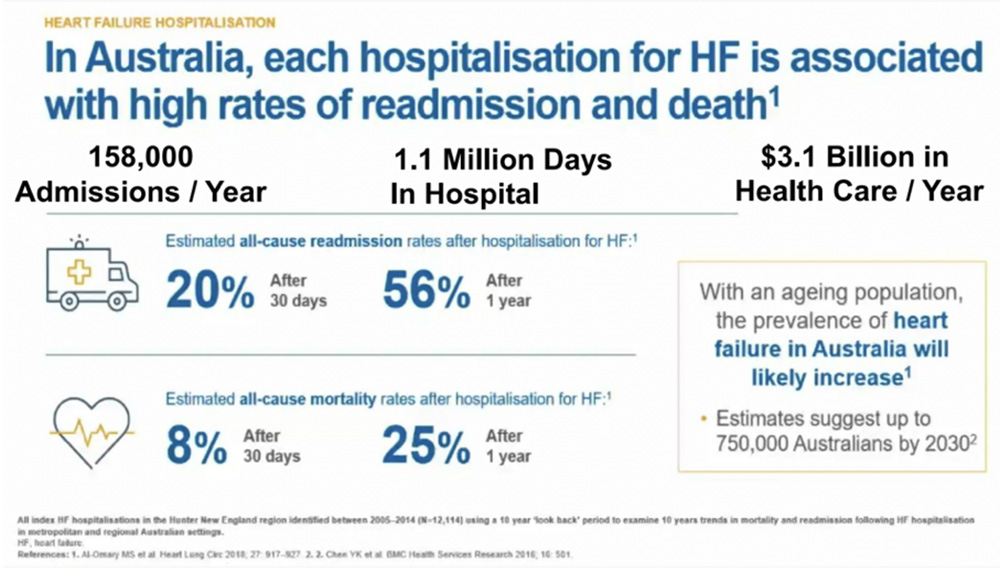
There will be about 750,000 people in Australia who have heart failure in 2030. But that’s probably an underestimate because it’s mainly looking at people with diagnosed heart failure, and there are a lot of people out there with heart failure with preserved ejection fraction who have not been diagnosed. It’s common, and unfortunately, it’s expensive, with 3.1 billion healthcare dollars per year spent on heart failure.
The four pillars of therapy [3:15]
Professor Andrew Sindone: This is the heart failure with reduced ejection fraction management algorithm, which we wrote in 2022, where we said up the top there, that all patients with heart failure should be on the four pillars (Slide 4). That’s an ARNi, preferably, a heart failure beta blocker, a mineralocorticoid receptor antagonist (MRA) like eplerenone or spironolactone, and an SGLT-2 inhibitor like dapagliflozin or empagliflozin. If the patient is congested, we prefer to start with an ARNi and an SGLT-2 inhibitor and quickly add on an MRA, and once the patient is euvolaemic, add on a beta blocker. If the patient is euvolaemic at diagnosis, we can use an ARNi and a beta blocker to try and block those two important systems, the renin-angiotensin system and the sympathetic nervous system, and then quickly add on a mineralocorticoid receptor antagonist and an SGLT-2 inhibitor.
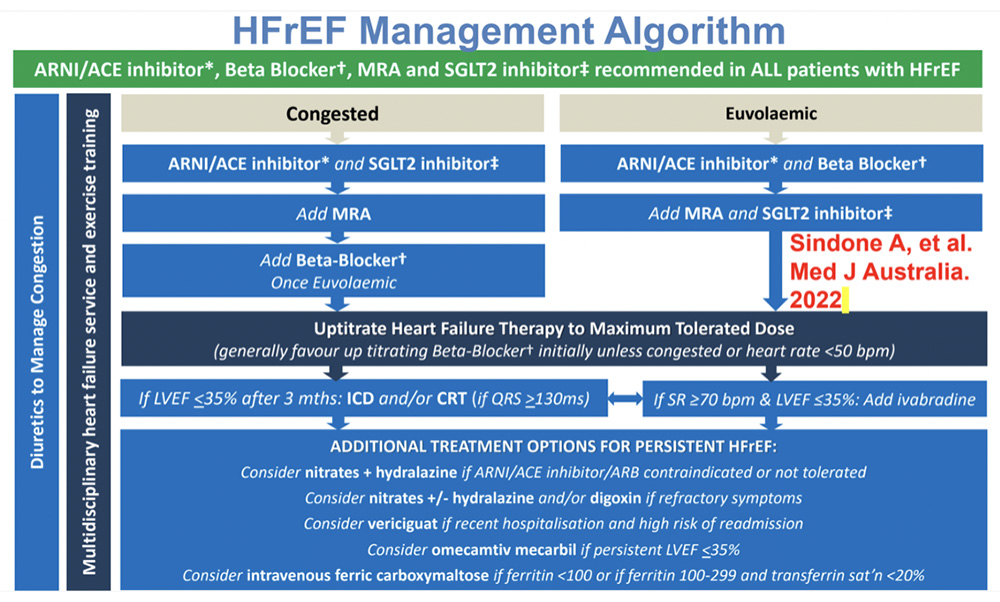
We go slowly. We say ‘MasterChef’: a little bit of this, a little bit of that – small doses of each medication quickly over the next six weeks or so, if possible. And then if the patient, by three months, still has a heart rate greater than 70 beats a minute in sinus rhythm, we would use ivabradine. If the patient has an ejection fraction that persists as being less than 35%, we’d think about putting in a defibrillator. If they’ve got a broad QRS, think about cardiac resynchronisation. After that, there are more complex treatments that the cardiologists will try to treat their patients. And multidisciplinary care is really important with our heart failure nurses, physiotherapists, occupational therapists, dietitians and pharmacists.
Add diuretics only to manage symptoms from congestion, because if you give diuretics, it does worsen kidney function, lower sodium, lower potassium, lower magnesium, and they’re our guilty pleasure. They help symptoms. They do not improve survival.
It’s really important to remember that if we can get the patients onto guideline-directed medical therapy, that we can save up to 8.3 years of additional life free from cardiovascular death if someone is diagnosed with heart failure at around age 55. That’s up to a 61% reduction in all-cause mortality compared to conventional therapy.
You can see there the four pillars that I mentioned: the ARNi, the beta blocker, the mineralocorticoid receptor antagonist and the SGLT-2 inhibitor (Slide 5).
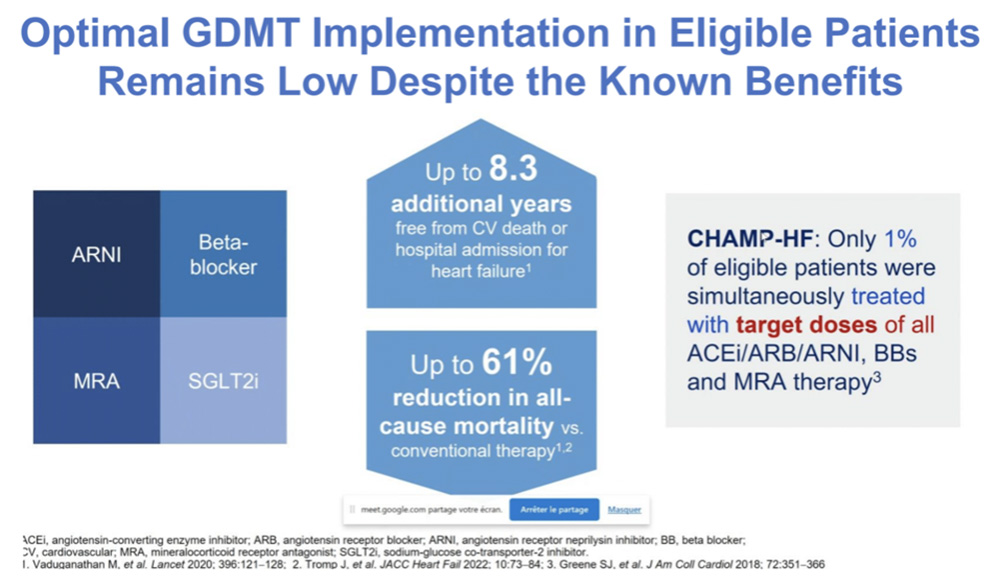
But when you look at some of the registries, for example, in the United States, only 1% of eligible patients were simultaneously treated with target doses of all three pillars – the ARNi, the beta blocker, the MRA. This is before SGLT-2 inhibitors came to the fore. So it’s not very good. We’ve got to do better. If we can get the patients onto these medications, we can really save lives and keep people out of hospital. That’s why it’s so important that GPs do this, because in hospital, the patients are there for a really short period of time. There’s a lot of pressure, and often the patients may not be seen very often by a specialist. They may be managed by a registrar, and the person who writes that discharge summary is the most junior person on the team, usually the intern, maybe the resident. So the communication is key. It’s important, but you may not get the right information, or any information.
Heart failure in general practice [6:07]
Professor Andrew Sindone: Here’s a study that we did a few years ago called the Shape Study, where we looked at 10% of the Australian population, so about 2.1 million adults going to GPs (Slide 6). We looked at those with definite or probable heart failure. There were about 20,000 patients with heart failure. We found that things weren’t as good as we’d like. We found less than 15% of patients had heart failure recorded as a diagnosis in their diagnostic group on their software. Only one in five were on a heart failure-specific medication – one in five, or 20% – and 23% had symptoms of heart failure. All they were on was a diuretic. The standard prevalence meant that we estimated there’s about 420,000 people living in Australia with heart failure.
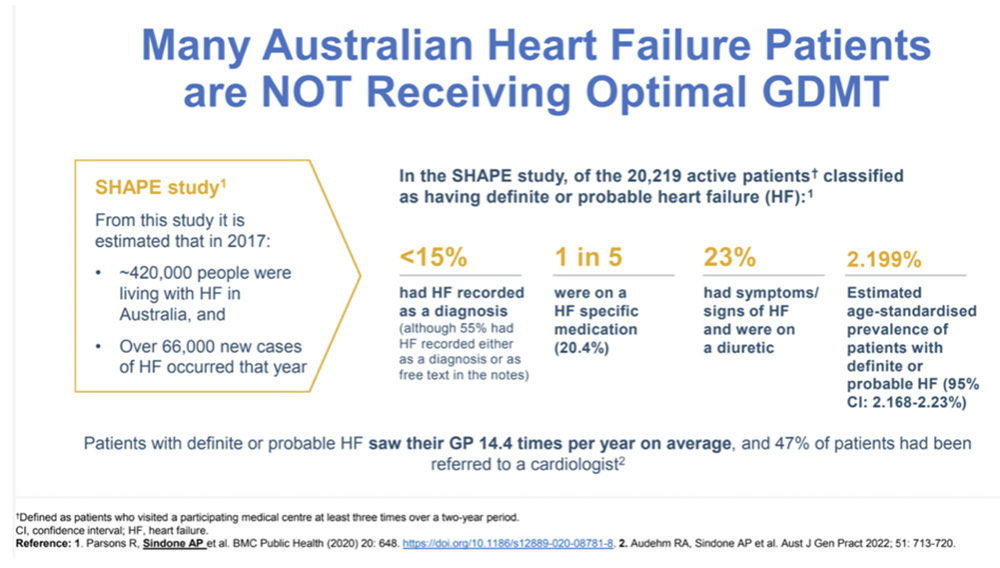
The thing is, as Dr Sharma said earlier, that patients with heart failure are looked after by their GPs. They see their GP on average 14.4 times per year. That’s more than once a month. They’ll only see someone like me, a cardiologist, if they’re lucky, once or twice a year, unless they’re very symptomatic. In this study, only less than half the patients had seen a cardiologist at all. If you don’t think about heart failure, you’ll never find it. It’s not getting old, it’s not getting unfit, it’s not just getting a bit of swelling in the legs and giving them a diuretic. Think about heart failure. It’s a serious condition. We’ve got so much we can do to help them out.
Why speed matters [7:30]
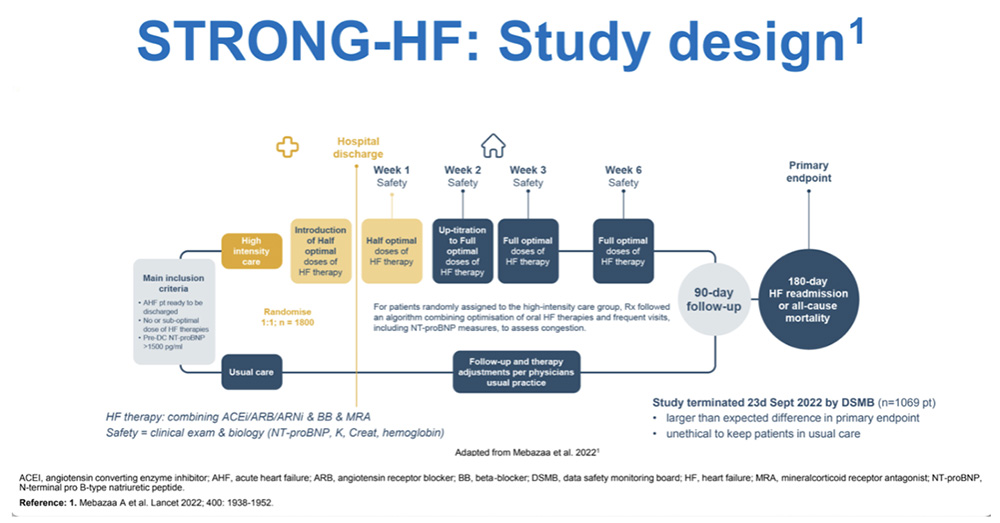
Professor Andrew Sindone: This is a landmark study which changed everything. This is the STRONG-HF trial, which was published in 2022 (Slide 7). What they did there was they looked at people hospitalised with heart failure, and they randomised them to usual care or to what we call the STRONG protocol, where they were started on, in this case, it was the three pillars, before SGLT-2 inhibitors were available, with the ARNi, the beta blocker and the MRA. Small, tiny, tiny doses were given in a hospital, and they were uptitrated once a week for six weeks to try and get patients to the maximum tolerated dose. That was guided by using the NT-proBNP test in that study. Then after six weeks, they just said, ‘Bye’, and they rang the patients again at 90 days and 180 days just to see if they were alive and to see if they’d been hospitalised.
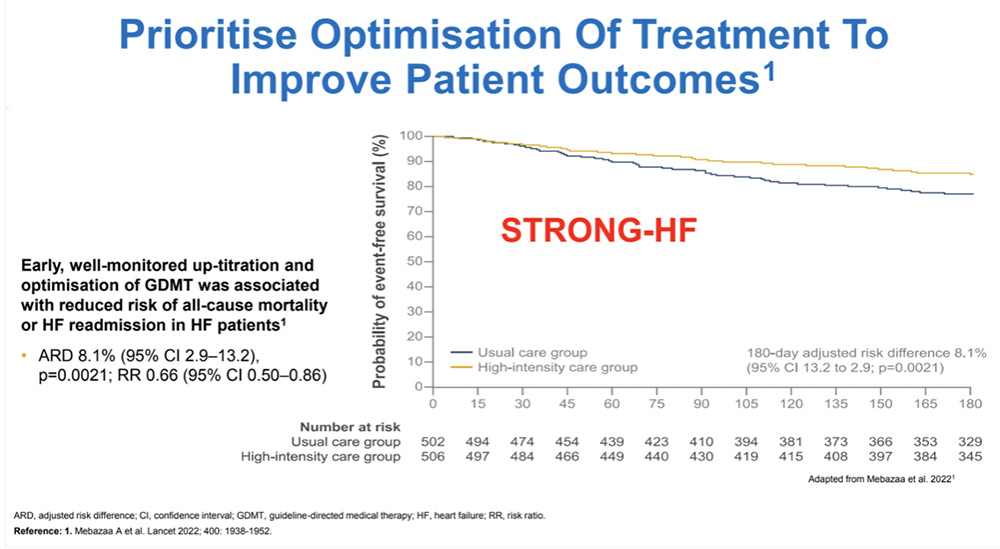
What they showed was amazing (Slide 8). They showed a 34% reduction in total mortality or heart failure hospitalisation. That’s by just putting them on the three pillars early and then following them up regularly compared to usual care. Usual care wasn’t nothing. It was just what we were doing already. So we can make a difference. It’s the need for speed, getting them onto the medications early in a six-week period, because heart failure has a worse prognosis than stage three bowel cancer. If someone has stage three bowel cancer, you’re not going to say, ‘Come back in three or six months. We’ll see how you’re feeling.’ No, we start medications that make you throw up and lose your hair, make you feel really sick. In heart failure, we should be doing the same thing: starting medications early, not to make them throw up or lose their hair, but to make them feel better.
So this can be done, and it’s super important because we have treatments that can make a difference. We’re just not doing it and not doing it fast enough.
Australian strategy for early optimisation [9:07]
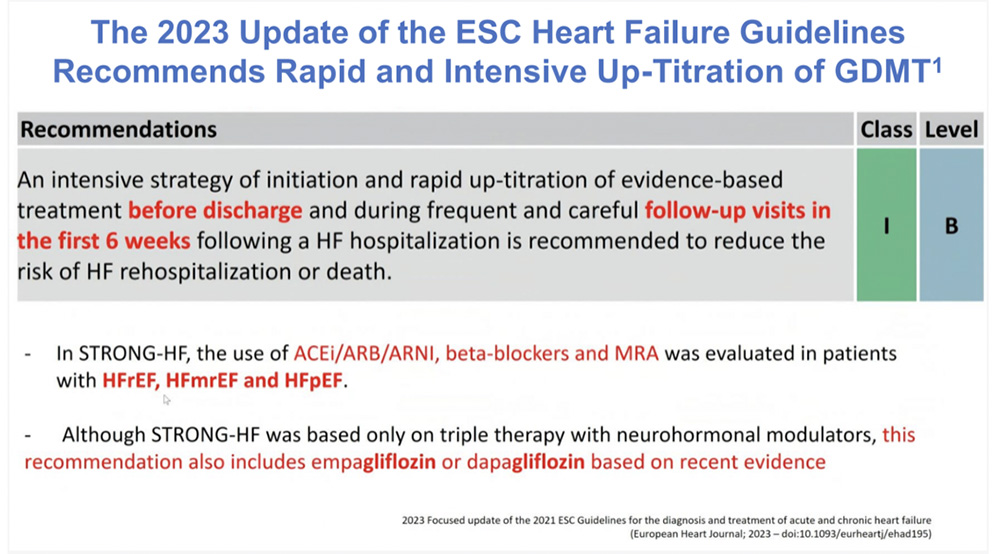
Professor Andrew Sindone: On the basis of that, the European Society of Cardiology put out a statement that intensive strategy of initiation and rapid uptitration of evidence-based treatment before discharge and during frequent and careful follow-up visits in the first six weeks following a heart failure hospitalisation is recommended to reduce the risk of heart failure hospitalisation or death (Slide 9). And in the STRONG study, as I said, they used the ACEi/ARNi with the ARNi preferred, a beta blocker for heart failure, an MRA, and it was regardless of whether they had reduced, preserved or mildly reduced ejection fraction. So they had triple therapy. They didn’t use an SGLT-2 inhibitor at the time, but now we would add that on based on other studies. This is a really strong recommendation, Class 1 level B evidence.
When we wrote this recent article in Heart Lung Circulation, we came up with an Australian strategy for heart failure management (Slide 10). What we did was we put the heart failure with reduced ejection fraction at the top, again, with those four pillars, the ARNi, the MRA, the SGLT-2 inhibitor and the beta blocker. Only start the beta blocker once the patient is decongested. You can use diuretics early with rapid administration to get rid of the congestion and then before discharge, try and uptitrate to around 50% of the targeted dose. Maybe do an NT-proBNP before discharge, and have early contact, preferably within seven to 10 days maximum of discharge, with the GP, or with a heart failure nurse, or with a cardiologist or in a heart failure clinic.
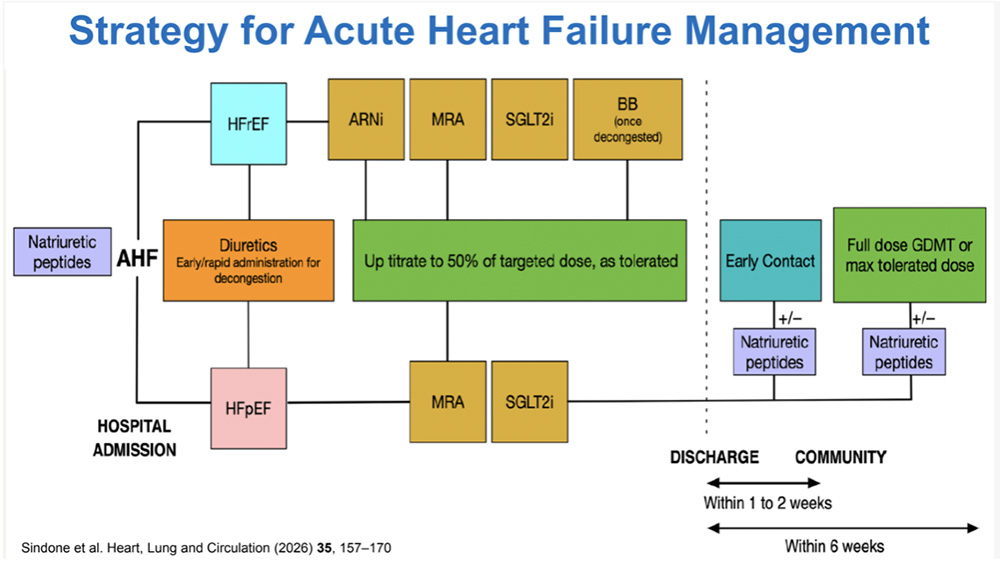
Then see them again, at least twice, and hopefully, a little more often in that first six-week period, trying to uptitrate the treatment to maximum tolerated dose, and if necessary, have that guided by NT-proBNP measurement. At the top of the slide is the reduced ejection fraction guidance, and down the bottom is preserved ejection fraction, where the only evidence-based treatment is the SGLT-2 inhibitors, and more recently, MRA, and the one which has the data is finerenone, which is currently going through the regulatory processes. So, that’s the way we recommend to do things.
As you’re also aware the GLP-1 agonists and the GLP-1 combined GIP agonists have been shown to have some improvements in cardiovascular death and heart failure hospitalisation in people with a body mass index greater than 30, and also improvements in quality of life and reductions in rehospitalisations, and improvements in the six-minute walk test and NT-proBNP. That’s the schematic for management of patients hospitalised with heart failure, but that critical period, that high-risk period is that first six weeks after discharge.
See the patients really early and see them a few times in that six-week period, uptitrate their treatment, go for that blood pressure of 105 systolic, go for the pulse of 60 beats a minute, try and get rid of the diuretics, and get them onto those four pillars if they have reduced ejection fraction, and those two pillars if they have preserved ejection fraction.
The GP as co-ordinator of shared care [12:05]
Professor Andrew Sindone: What are the strategies for the effective management of patients after discharge (Slide 11)? The GP, as I said, is key. The GP is the gatekeeper, the quarterback that co-ordinates everything and they’ll see the patients, as I said earlier, much more frequently than the cardiologist and they play a central role in managing the patient in the community and optimising holistic care. I tell people I mend broken hearts. The GP looks after the rest of the body, and it’s that collaborative care, where the GP has that shared care model. They’ve got their heart failure nurses in the community. The GPs have their practice nurses as well. The GPs can look after all the other important things, like vaccination, for all the conditions that can exacerbate heart failure. They’re managing their comorbidities.
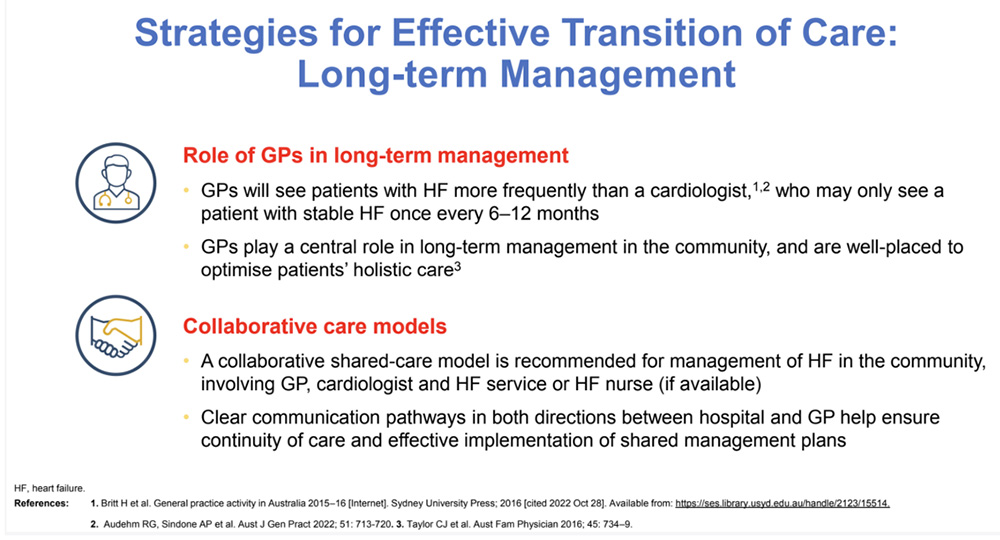
Remember, patients with heart failure have a lot of comorbidities, like chronic obstructive pulmonary disease, diabetes, atrial fibrillation, hypertension, ischaemic heart disease, all of those things which can impact on their heart failure, and their heart failure can impact on those conditions. It’s a matter of getting those things under control and having that clear communication pathway with the discharge from the patient to the community and from the GP to all the various specialists, particularly the cardiologist, so that we can ensure they’re all on the same page and ensure that we’ve got effective implementation of those strategies. That’s what I’ve been trying to explain, Anita, and now we’ve got to try and see how we can implement all those recommendations.
Common failures in the handover [13:30]
Dr Anita Sharma: Absolutely. Thank you very much. That was a very comprehensive review and overall discussion on where the GPs are critical. And thank you for acknowledging the big role that GPs play in managing complex heart failure patients and the multiple comorbidities that we have to grapple with. You’ve said very clearly that the most risky and critical period is the first 30 days or six weeks, and that starts the day the patient gets discharged. What, in your view, are the common failures in this handover between the heart failure clinics and the GPs?
Professor Andrew Sindone: Unfortunately, the first one is the discharge summary. It’s just often not adequate. Talking about what happened to the patient in hospital, often they don’t say the patient’s discharge weight. They may not always say what the medications are. They may not talk about some of the things that happened in hospital, like whether they had a urinary tract infection or a cannula infection, or which doctors saw them – if they were seen by a respiratory physician or seen by a renal physician.
Dr Anita Sharma: You’re right – just not enough detail.
Professor Andrew Sindone: That’s number one. Number two – and don’t take this personally – but it’s often hard to get an appointment to see a GP. We say to the patients, ‘Go and see a GP within three to four days,’ and they say, ‘I can’t get an appointment to see my GP in two weeks.’
Dr Anita Sharma: In that respect, I would say that’s why a phone call from someone in the unit, whether it’s a heart failure nurse or it’s a registrar, to the GP’s practice means that that GP will then prioritise an appointment for that patient by saying to the practice nurse, ‘Please get this patient in. I have to see them within those 7 days or 14 days because they’ve just been discharged. They’re fragile.’ I think that could help. That handover process could become better with comprehensive, timely summaries being sent to the GP, and perhaps a little trigger to say, ‘This is an urgent patient.’
You also mentioned the four pillars. Sorry, were you going to say something?
Professor Andrew Sindone: I always say, there’s no ‘I’ in team. So it’s all about teamwork. I get by with a little help from my friends. So don’t just think the GP is someone by themselves. The GP has all these support mechanisms. As I said, they have their practice nurse. We have our heart failure nurses who will go and see the patient in their house within seven to 10 days of discharge, making sure they’re taking their tablets, making sure they’ve got an appointment to see their GP…
Dr Anita Sharma: That would help.
Professor Andrew Sindone: …making sure they’re not taking the wrong medications. Making sure they’ve got an appointment to see their specialists. They ring them once a week for four weeks because they’re not as scary as someone called Professor. And then they are trying to just keep people on the right track, because unfortunately, one of the most common reasons for ending up back in hospital is not taking medications.
Dr Anita Sharma: Yes, absolutely.
Professor Andrew Sindone: If they don’t take the tablets, they’re not going to get better. It’s so important.
High-impact interventions in the first 30 to 90 days [16:00]
Dr Anita Sharma: And you can understand…they’re overwhelmed, they’re sick, and they’re really not just dealing with heart failure, they’re dealing with a lot of other comorbidities, including depression sometimes.
Now, you’ve shown very clearly that optimising treatment by introducing all the four pillars of heart failure as soon as possible is critical, and as you said, you don’t have to wait to max out the dose of one – please introduce a little bit of everything. So in terms of these four pillars and GPs trying to quickly introduce them and uptitrate them, what would you say are the highest impact interventions in the first 30 to 90 days that a GP can introduce?
Professor Andrew Sindone: Well, as I said try to get them onto those four pillars. The other thing is NT-proBNP blood tests. At the moment, NT-proBNP is reimbursed in Australia for one test per patient per year for the diagnosis or exclusion of heart failure. We’re currently going through the Medical Services Advisory Committee to see whether we can follow the STRONG protocol, where people can get two early NT-proBNP tests performed within the first six weeks of discharge to try and guide us. But I’m not a sophisticated person, I’m pretty dumb, and so the way we do things is just the blood pressure – easy, 105 systolic is good, and a pulse of about 55 to 60 beats per minute. That’s haemodynamic optimisation.
The other thing is that you get no prizes for putting someone on dialysis. Don’t smash their kidneys. Don’t go too hard with the diuretics. Monitor their potassium. The other thing it would be great for the GP to do is a blood test, check their electrolytes, urea and creatinine, eGFR, and also make sure they’re not getting other things, like anaemia. Check their full blood count – that they are not bleeding. Iron studies are super important.
Dr Anita Sharma: Very important, yes.
Professor Andrew Sindone: They are not done in hospital because people don’t think about them, they are not educated, or they just don’t have the time. Those are the sorts of things that’d be lovely for the GP to do early on. As I said earlier, managing those comorbidities, making sure their lungs are okay, making sure if they’ve got sleep apnoea, that they’re using their CPAP or BiPAP devices.
Diuretics and decongestion [17:59]
Dr Anita Sharma: Yes, absolutely, I agree. And I think what you said is very true, that we need to try and make sure that we almost work on a checklist: blood pressure, weight, electrolytes, your renal function. But I think my wish list would include a succinct checklist sent by the hospital to the GP who’s not that confident yet, like a cheat sheet, that this is what our target doses need to be if you can get there. If you get into trouble with your potassium going high, this is what you do. If you get your blood pressure dropping too low, this is what you do, and as you said previously, sacrifice the diuretic, but keep the life-saving medications in there. Those kinds of tips will get the GP much more confident, and I think empowered to do that. I think that would really help.
I take your note on the iron studies as being very important. We need to make sure these patients are replete and know that their ferritin cutoffs are different from patients who don’t have heart failure, and, try to get them boosted.
I wanted to ask you a bit about diuretics because these are almost sometimes the bad cops when we overuse them and we smash the kidneys. When you’re dumping more and more diuretics, you’re still getting a lot of congestion, you’re not getting the patient better, how do we then decide this oral diuretic is not working, there’s resistance, and this patient now needs to go into hospital for IV diuretics?
Professor Andrew Sindone: Well, one of my jobs is to keep people away from hospital. If someone’s not responding to furosemide I do what’s called sequential nephron block. Think about using other diuretics. Spironolactone, as an add-on, we’ve already mentioned, or eplerenone, but there are other drugs that we can use as well. I use hydrochlorothiazide very judiciously, just a small dose, maybe 25 milligrams once, twice, or three times a week. That can really get people to pass extra urine because it works on the proximal convoluted tubule, as well as the distal convoluted tubule. If someone’s got high potassium, it fixes the high potassium, but it can cause low potassium, it can also cause low sodium. But it really can help a lot and keep people away from hospital and away from IV diuretics.
Another trick is acetazolamide, which is a carbonic anhydrase inhibitor, because furosemide, acetazolamide and a lot of the treatments we use can cause alkalosis. The acetazolamide can reverse that alkalosis. I’m the only person who looks at the electrolytes, urea and creatinine and looks at that bicarb. I want it about 23. If it’s more than 23, they’re alkalotic, which is negatively inotropic, and makes the heart work less strongly and makes it more sluggish. So correcting that alkalosis with acetazolamide, 250 milligrams three times a week, not only gets them to pass urine, but can correct that alkalosis. So they’re little short-term tricks just to get extra fluid off.
But remember that the four pillars are one of the best ways of decongesting. An ARNi will get rid of congestion, as well as an ACEi or ARB. MRA will get rid of congestion, and certainly an SGLT-2 inhibitor will cause an osmotic diuresis as well as a natriuresis. So that could help.
Dr Anita Sharma: Besides giving all the other cardiorenal benefits, SGLT-2 inhibitors are definitely wonder drugs for these patients.
Now, going back to your NT-proBNP question… Yes, unfortunately, at this point in time, GPs can only order one a year, so until it’s introduced that we can get the second test under Medicare reimbursement, I guess what you’re saying is GPs need to use clinical judgment in assessing that patient’s state and stability – clinical stability.
Professor Andrew Sindone: Or a patient can pay. It’s around $70 to $80.
Escalation and advice pathways [21:30]
Dr Anita Sharma: Yes, and you can definitely broach that. You don’t assume that they won’t pay. It’s good to check with them. But I think in addition to this, with questions vexing GPs, such as is this patient congested, is it heart failure, is it something else, or anything similar with renal function or titration, it would be really good for GPs to have a contact point in the hospital. Who do they ring when they’re suddenly not sure what to do? Who do they ring if they think this patient needs to go back into hospital or needs a cardiology review? Do you feel that having a ‘phone-a-friend’ sort of option really helps GPs quickly troubleshoot?
Professor Andrew Sindone: Absolutely. So, your port of call depends on your geographical and logistic circumstances. But a heart failure nurse can be a really good person because they can act as a conduit between the GP and the specialist, or you might have to ring the admitting physician in the emergency department if you want to send them straight to hospital, or ring the cardiologist who’s looking after them, or the community cardiologist or just your friendly neighbourhood cardiologist if you want them to take over the care of the patient. If they were in hospital before you can ring them up and say, ‘This is the story. This person was in the hospital. They’ve come out. They’re falling apart. Can you give me a hand?’ A lot of it’s about hospital avoidance – trying to get someone to see a cardiologist. And a heart failure nurse can act as a conduit between the GP and the cardiologist because it’s sometimes hard to get hold of cardiologists, especially if they’re interventional cardiologists and they’re in the catherisation lab a lot.
Balancing optimisation and quality of life [22:57]
Dr Anita Sharma: I think a lot of issues could be resolved just by this quick advice line or something, because GPs just need a bit of guidance. It will be very, I think, time efficient to do it that way, because GPs sometimes find it too hard to do everything in a short consult in the midst of other issues that the patients come in with. On that point, how do we balance optimisation of all the therapies you’ve outlined to be very good for that patient, and quality of life for the patient, especially in frail patients and older patients?
Professor Andrew Sindone: One of the things that’s important is not to dry someone out, because if you dry someone out, they’ll get diastolic hypotension, and they will feel dizzy. So it’s all about keeping their heart rate slow, their blood pressure low, but keeping them a little full. So not drying them out too much. Remember to give the once-daily medications, like the once-daily beta blockers at night and if you’re giving the once-daily ACE inhibitor and ARB, give it at night so they don’t get tired during the day. And maybe not going quite so low with the blood pressure if someone is elderly or frail. Remember, the medications have each been shown independently not only to improve survival and reduce hospitalisation, but they actually improve symptoms as well.
Also make sure they’re well nourished. There’s lots of data from the heart failure obesity paradox that the heavier someone is with heart failure, the better they do. So getting them some protein supplementation is important, getting them to do early rehabilitation, if you can, getting them to come to cardiac rehab or heart failure rehab, if it’s available. It’s also important to increase their strength. Maybe having someone, a family member, stay with them for the first few weeks after discharge so that they can pick up when they’re not as good as they were or helping prepare meals for them. Those sorts of little things can really make a difference.
Dr Anita Sharma: What GPs do very well is a very comprehensive management plan for the patient. We know our patients, so we can see what’s really troubling them. We know what matters to them, so we need to really be focusing on those areas that help patients feel better at the end of the day. The patients are not interested in mortality statistics of the whiz-bang drugs. They want to just feel better, and I think that’s where we all need to be working together towards.
Are there any other glaring areas that you feel could be improved? Not because GPs aren’t trying hard enough, but because maybe there’s things that we haven’t thought of that could be implemented in a busy practice, without too much angst?
Professor Andrew Sindone: Well, yes. Trying to make sure that your patients with heart failure are on all four pillars is so important. And avoiding drugs which worsen heart failure. People often forget about that. One of the guilty things that I hate is calcium channel blockers because they do cause oedema. Avoiding calcium channel blockers, nonsteroidal anti-inflammatories, corticosteroids, type 1 antihistamines, macrolide antibiotics, some of the thiazolidinediones we used to use for diabetes. Those are important things. Making sure the patients are taking the tablets. A Webster pack is just so important for these patients because if they don’t take the tablets, they’re not going to get better.
Dr Anita Sharma: Oh, yes. Of course.
Professor Andrew Sindone: And following fluid restrictions is not quite so critical as we used to think. But make sure just they’re drinking to thirst, but not over-drinking. And salt restriction – again, not going overboard with salt.
Dr Anita Sharma: So thank you, Professor Sindone, for that really exhaustive and eloquent explanation of the consensus statement. What’s become very clear is that post-discharge heart failure care is no longer managed solely within specialist clinics. It is increasingly a shared care model with general practice playing a central role in early follow-up, optimisation of therapy, monitoring, patient education and prevention of readmission. Today’s discussion has definitely highlighted that successful heart failure management depends not only on the right medications, but on the continuity of care, co-ordination and empowering patients to recognise and respond to changes early. Professor Sindone, I’d like to thank you for sharing your expertise and practical insights into this very important topic.
Professor Andrew Sindone: Thanks very much, Anita. It was a pleasure.
Speakers

Dr Anita Sharma
General Practitioner
Dr Sharma is a Specialist GP, Brisbane, Qld; National Medical Educator for the RACGP; Member of the RACGP Education Committee; a Faculty Member of the National Specific Interest Group for Diabetes; and Member of Medicine Today's Board of Honorary Consultants.

Professor Andrew Sindone AM
Cardiologist
Professor Sindone AM is the Director of the Heart Failure Unit and Department of Cardiac Rehabilitation at Concord Hospital, Concord; and the Head of Cardiology at Ryde Hospital, Sydney, NSW.
Read the accompanying articles
Patient care after heart failure hospitalisation – key messages from a recent consensus statement
Cardiology Today June 2026
Consensus statement on optimisation of patient care after hospitalisation for acute heart failure
Heart Lung and Circulation February 2026