
Cardiac amyloidosis – when should I suspect it and what should I do?

Transthyretin-related cardiac amyloidosis is a progressive disease with significant morbidity and mortality if left untreated. With both hereditary and wild-type forms, and an often insidious presentation of symptoms, the diagnosis may easily be missed. Early specialist referral is essential if red flags are present.
- Transthyretin-related cardiac amyloidosis (ATTR-CA) is a frequently under-recognised cause of heart failure, particularly in older men.
- There are two forms of ATTR-CA: wild-type ATTR, which typically affects older people, and hereditary or variant ATTR, which is caused by a genetic mutation.
- Amyloid deposits often cause noncardiac problems years before cardiac symptoms appear. Key red flags include bilateral carpal tunnel syndrome, lumbar spinal stenosis and biceps tendon rupture.
- Patients often present with symptoms of heart failure, heart arrhythmia (atrial fibrillation) and conduction disease abnormalities (heart block) and poor tolerance of heart failure medications.
- Cardiac imaging, particularly technetium pyrophosphate-based nuclear scans, can now diagnose ATTR-CA without the need for cardiac biopsy, provided light chain amyloidosis is first ruled out.
- Disease-modifying therapy with a transthyretin stabiliser and RNA silencer can reduce mortality and cardiovascular hospitalisations, especially when started early.
Cardiac amyloidosis is the most common form of infiltrative cardiac disease. In most cases, amyloidosis is caused by extracellular deposition of either transthyretin (TTR) protein or free light chains (kappa or lambda) in various organs, including the heart and nervous system. TTR is a liver-derived circulating protein that acts as a transporter for thyroxine and retinol-binding protein. In TTR-related amyloidosis (ATTR), the protein is dysfunctional, becomes insoluble and aggregates to form fibrils, which are deposited in organs (including the heart) as amyloid.
There are two forms of ATTR: hereditary or variant ATTR and nonhereditary or wild-type ATTR (formerly called senile amyloidosis in older adults). TTR-related cardiac amyloidosis (ATTR-CA) is the most common form of cardiac amyloidosis.
In variant ATTR, specific mutations in the TTR gene present with either isolated nervous system or cardiac involvement. There are also forms of variant ATTR where single peptide substitution could result in age-dependent differences in disease expression. For example, some mutations may manifest at an early age with almost exclusive nerve involvement but then affect the heart to a greater extent later in life. These differences are likely to be caused by complex interactions between genes and environment. This uncertainty is reflected in the clinical assessment of patients with TTR deposition. Genetic testing is considered for almost all patients with suspected ATTR. The autosomal dominant inheritance means there is a 50% chance of an affected person passing the variant gene to their offspring, with major implications for those affected.
Wild-type TTR deposition often starts in the sixth decade of life and may manifest with overt clinical symptoms, sometimes with limited involvement of the autonomic and peripheral nervous systems in the seventh decade of life.
Epidemiology
Myocardial TTR deposition leads to cardiac wall thickening, resulting in an increase in wall stiffness and raised filling pressures. Untreated ATTR-CA is a progressive disease associated with significant morbidity and reduced survival.1
Amyloid deposition in the heart has been identified in up to 25% of autopsy specimens from patients older than 80 years, showing that ATTR-CA is more common than previously thought.2 The disease was also previously thought to be highly sex-specific, with a male to female ratio of between 25 and 50 to one. However, recent data suggest that female cases may be underreported.3,4 The prevalence of cardiac uptake on nuclear bone scans increases to more than 5% in patients over the age of 85 years.5
In symptomatic patients with heart failure and a thickened left ventricle on imaging, the prevalence of ATTR-CA has been reported to be up to 13%.6 The prevalence of wild-type ATTR is likely to increase with the continued growth of the ageing Australian population.
Red flags
Amyloidosis may present insidiously, with mild peripheral sensory neuropathy or carpal tunnel syndrome (Figure). Bilateral carpal tunnel release often precedes the onset of symptomatic cardiac disease by an average of five to 10 years.7
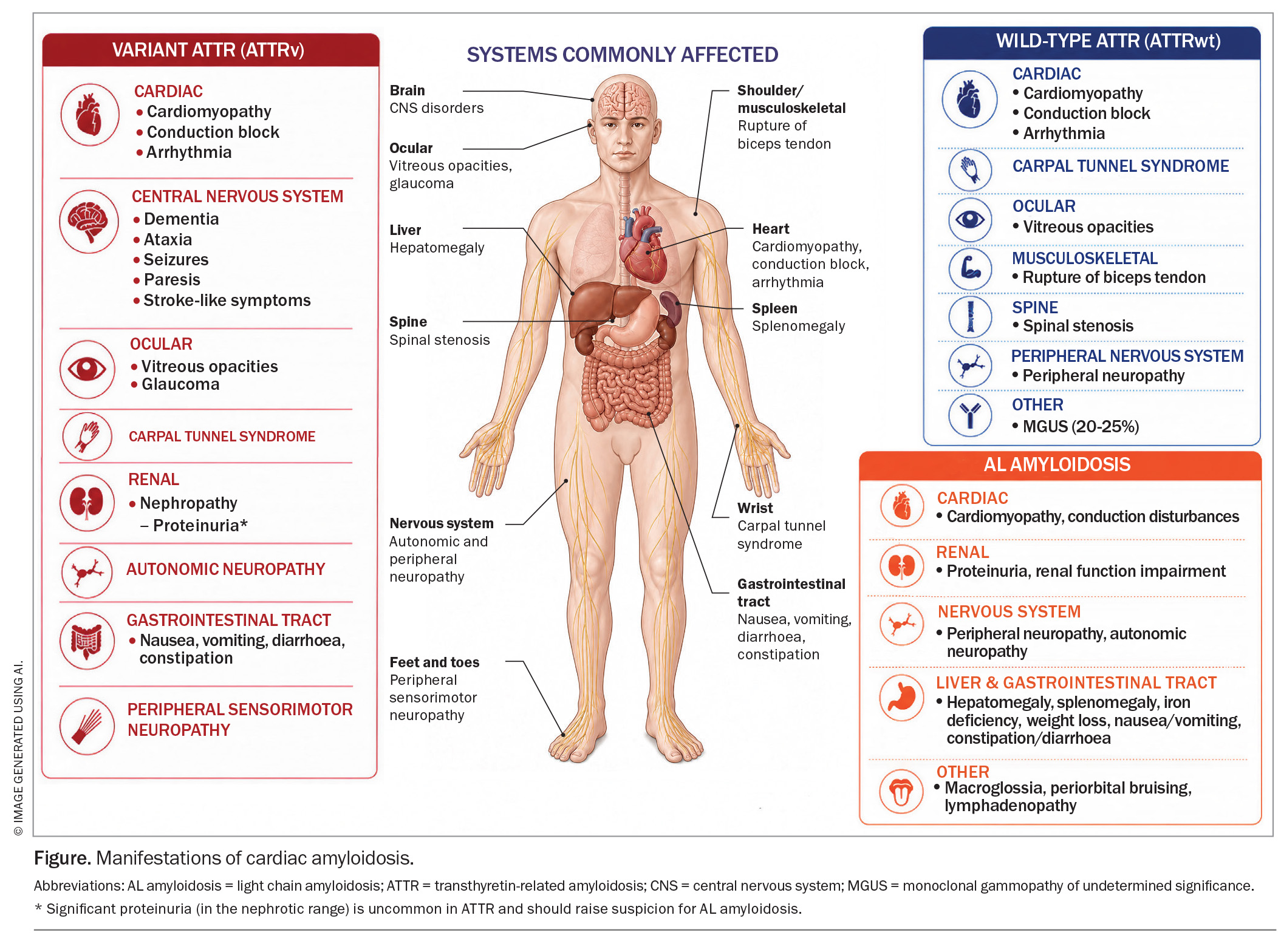
The onset of sensory neuropathy or nerve entrapment syndrome, with or without cardiac symptoms (e.g. dyspnoea, palpitations), in individuals from the fifth decade of life onwards should immediately trigger a detailed history and consideration of referral to a specialist (neurologist or cardiologist).
In general, the presence of monoclonal protein in serum or urine, as well as the presence of an abnormal serum free light chain ratio with clonal restriction, may suggest underlying light chain amyloidosis (AL amyloidosis). Prompt referral to a haematologist is recommended for such patients.
As treatment differs depending on the type of amyloidosis or precursor protein, the correct diagnosis is crucial in guiding appropriate and timely therapy.
Investigations
When cardiac amyloidosis is suspected based on a patient’s presentation and clinical features, a structured work‑up involving clinical examination, laboratory tests and imaging is essential to confirm the diagnosis and guide management.
Clinical examination
A thorough clinical examination to look for both cardiac and extracardiac involvement is the first step. This should include postural blood pressure measurements to screen for autonomic neuropathy and a focused neurological assessment for peripheral neuropathy, as these can be manifestations of nervous system involvement.
Careful assessment of fluid status for signs of heart or kidney failure is crucial, as cardiac and renal involvement accounts for most systemic amyloidosis presentations.8 Hepatomegaly or splenomegaly in a patient with suspected cardiac amyloidosis can suggest AL amyloidosis, although enlargement is often only mild to moderate and may be confounded by right-sided heart failure or an unrelated abnormality.
Classic signs such as periorbital bruising and macroglossia are highly suggestive of AL amyloidosis. Bilateral carpal tunnel syndrome is a common preclinical marker of ATTR, with up to half of patients with wild-type ATTR developing this symptom five to 10 years before cardiac manifestations.9,10 Trigger finger is also strongly associated with ATTR, with both this and carpal tunnel syndrome arising from amyloid deposition in connective tissues of the hands and feet, causing nerve entrapment syndromes.
A bedside ECG is helpful to look for findings associated with cardiac amyloidosis, such as low-voltage QRS complexes (≤0.5 mV in limb leads or ≤1.0 mV in precordial leads), which are discordant with the degree of left ventricular wall thickness, and Q waves in precordial leads (‘pseudoinfarct pattern’). Rates of these ECG changes are variable but reported in up to 60% of patients, with low-voltage QRS complexes being more prevalent in people with AL amyloidosis than in those with ATTR-CA. Atrial fibrillation or a degree of conduction disease (heart block) is also often present, more so in those with ATTR-CA (up to 30%) than AL amyloidosis.11-13
Laboratory assessment
The current gold standard for diagnosing amyloidosis is histological confirmation with positive Congo red staining of tissue and subsequent amyloid typing by immunohistochemistry, immunofluorescence or laser microdissection with tandem mass spectrometry.14 However, cardiac biopsy is invasive and carries procedural risk, so alternative diagnostic pathways have been developed to avoid it where possible.
A nonbiopsy algorithm for diagnosing ATTR-CA has now been validated, but its use depends on careful evaluation for an underlying monoclonal gammopathy.15 A complete monoclonal gammopathy screen includes three tests:
- serum electrophoresis with immunofixation
- serum level of free light chains
- urine electrophoresis with immunofixation.
If any of these tests detects a monoclonal protein or abnormal free light chains, further evaluation is needed to distinguish cardiac AL amyloidosis from ATTR-CA with a coexisting but unrelated plasma cell dyscrasia, which occurs in up to 30% of cases.16
Additional laboratory testing should include measurement of levels of cardiac biomarkers (cardiac troponin and brain natriuretic peptide or N-terminal pro B-type natriuretic peptide [NT-proBNP]) and assessment of other organ involvement, with tests of renal function and liver enzymes and a random urine test for proteinuria.
Imaging assessment
Transthoracic echocardiography with strain imaging is the cornerstone imaging modality in the investigation of suspected cardiac amyloidosis. Typical echocardiographic features of cardiac amyloidosis include concentric left ventricular wall thickening (mean wall thickness greater than 12 mm, although this may be less in female patients), reduced global longitudinal strain with relative apical sparing, and a restrictive filling pattern with diastolic dysfunction, often in the context of preserved ejection fraction.17
Where available, cardiac MRI with late gadolinium enhancement provides further support for an infiltrative cardiomyopathy, with characteristic findings such as diffuse or global subendocardial enhancement, increased extracellular volume and elevated native T1 values.
Nuclear cardiac scintigraphy using bone-seeking tracers (technetium-99m [99mTc]-diphosphono-1,2-propanodicarboxylic acid, 99mTc-pyrophosphate or 99mTc-hydroxymethylene diphosphonate), originally developed for skeletal imaging, has been repurposed for the noninvasive diagnosis of ATTR-CA. In the presence of grade 2 or 3 myocardial tracer uptake on the Perugini scale and a negative monoclonal gammopathy screen, a diagnosis of ATTR-CA can be made with high confidence and without the need for tissue biopsy.17
Cardiac MRI and nuclear scintigraphy do not need to be routinely requested by the GP, and obtaining these scans should not delay referral to the appropriate specialist.
Referral and treatment
When clinical or imaging assessment raises suspicion of cardiac amyloidosis, early referral to a cardiologist with expertise in heart failure, or to an amyloidosis service, is recommended. In Australia, a statewide amyloidosis clinic is available in each capital city. These clinics can co-ordinate multidisciplinary assessment, definitive diagnostic pathways and access to specialised therapies and clinical trials.
A positive monoclonal gammopathy screen should trigger urgent haematology involvement, as AL amyloidosis represents a plasma cell dyscrasia that requires prompt systemic antiplasma cell therapy. Delays in initiating treatment for AL amyloidosis are consistently associated with worse cardiac outcomes and survival.18
Conversely, patients with confirmed or strongly suspected ATTR-CA (typical bone scintigraphy findings with a negative monoclonal gammopathy screen) should be referred to a centre with experience in ATTR management and with access to disease-modifying therapies and the ability to arrange TTR gene testing. When a pathogenic TTR variant is identified, co-ordination of cascade testing, genetic counselling and long-term surveillance for at-risk family members should form part of the specialist service’s remit.
In general, therapy for ATTR-CA consists of disease-modifying drugs (the TTR stabiliser tafamidis and gene silencers patisiran and vutrisiran) and contemporary heart failure therapies (sodium-glucose cotransporter-2 inhibitors, mineralocorticoid receptor antagonists and diuretics).19-21 Beta blockers and digoxin are used cautiously, mainly for rate control in patients with atrial fibrillation. Vasodilators (ACE inhibitors, angiotensin receptor blockers and angiotensin receptor neprilysin inhibitors) are poorly tolerated and are generally avoided. Several novel therapies, including gene editing and TTR cardiac depleters, are the subject of current clinical research.22
Prognosis in ATTR-CA has improved, with median survival depending on the serum level of cardiac biomarkers and renal function. In patients with a low NT-proBNP level and preserved renal function, median survival is four to six years.23 Disease-modifying therapies significantly improve patient outcomes.
Shared care
Treatment for ATTR-CA is typically supervised by a cardiologist, who ideally has experience in treating the condition. However, as ATTR can involve multiple organs and affect different areas of a person’s health, a patient will need to see multiple healthcare providers. The healthcare team would typically include:
- a GP
- a genetic counsellor
- radiologists and imaging technicians
- nurses
- pharmacists
- physical and occupational therapists
- social workers and mental health professionals.
A treating doctor (GP or cardiologist) may need to collaborate with appropriate specialists if amyloidosis involves other organs or systems, such as the nervous system, kidneys, eyes, joints and bones, gastrointestinal system or genitourinary system. Co-ordinating care when working with multiple healthcare providers is important to ensure that easily accessible communication channels remain in place.
One of the approaches to managing patients with amyloidosis is to work with a multidisciplinary team that specialises in the diagnosis and treatment of cardiac amyloidosis. A specialised team is often based at a specific location, such as a hospital or medical centre. This makes co-ordinating care between healthcare providers easier and more straightforward.
However, the provision of care is often dictated by which healthcare providers are available where the patient lives. Not everyone will have access to a specialised healthcare team, and patients should make use of local resources, including their GP as the co-ordinating person in charge.
Follow up
Regular follow up is required to assess the patient’s condition and monitor response to therapy. Performing a combination of clinical, laboratory and imaging examinations at regular intervals is suggested.
To guide the trajectory of the illness, the following information should be elicited at each follow up:
- history of admission with acute decompensated heart failure
- diuretic dosage
- New York Heart Association class
- evidence of fluid overload on clinical examination.
Although the definition of therapeutic response has not yet been clarified in detail, it appears reasonable to establish a multimodal approach to capture the complexity of the disease. This includes a longitudinal assessment of patients with cardiac amyloidosis to determine the individual patient’s response to current therapies (progression, stability or improvement) and a multiparametric assessment, employing clinical and functional endpoints, biomarker levels and cardiac imaging values.
Sustained changes in multiple parameters are superior for tracking disease activity and response to treatment. In the future, accurate and reproducible imaging techniques (cardiac MRI and positron emission tomography) may become the modality of choice in longitudinal assessment of patients with ATTR CA if new ‘amyloid-depleting’ therapies become available.
Conclusion
ATTR-CA is an under-recognised cause of heart failure, with wild-type ATTR particularly affecting older men. The hereditary or variant form of ATTR is caused by a genetic mutation.
ATTR-CA may present insidiously, with amyloid deposits causing noncardiac problems years before cardiac symptoms first appear. Red flags include bilateral carpal tunnel syndrome, lumbar spinal stenosis and biceps tendon rupture. Patients may present with symptoms of heart failure, atrial fibrillation and heart block. Cardiac biopsy remains the gold standard in diagnosing all types of cardiac amyloidosis, but a nonbiopsy pathway using nuclear imaging can now be used to diagnose ATTR-CA without the need for biopsy.
When cardiac amyloidosis is suspected, early referral to an amyloidosis service or a cardiologist with expertise in heart failure is recommended. Disease-modifying therapy can reduce mortality and improve patient outcomes, especially when treatment is started early. MT
COMPETING INTERESTS: Dr Korczyk has received payment or honoraria for lectures or presentations from Medison, Pfizer and Novo Nordisk; and has participated on advisory boards of Novo Nordisk and Medison. Dr Ranjit Anderson has received honoraria for speakers bureaus or educational events from GSK; and support for attending meetings or travel from GSK and Johnson & Johnson.
References
1. Ruberg FL, Grogan M, Hanna M, Kelly JW, Maurer MS. Transthyretin amyloid cardiomyopathy: JACC state-of-the-art review. J Am Coll Cardiol 2019; 73: 2872-2891.
2. Tanskanen M, Peuralinna T, Polvikoski T, et al. Senile systemic amyloidosis affects 25% of the very aged and associates with genetic variation in alpha2-macroglobulin and tau: a population-based autopsy study. Ann Med 2008; 40: 232-239.
3. Chan N, Einstein AJ, Teruya S, et al. The impact of active ascertainment on sex-specific differences in the prevalence and phenotype of transthyretin cardiac amyloidosis: the Screening for Cardiac Amyloidosis With Nuclear Imaging in Minority Populations Study. Am J Cardiol 2025: 237: 60-64.
4. Prasad M, Kim M, Chandrashekar P, et al. Evolving epidemiology of transthyretin amyloid cardiomyopathy due to increased recognition in women. Int J Cardiol 2023; 374: 116-119.
5. Cuscaden C, Ramsay SC, Prasad S, Goodwin B, Smith J. Estimation of prevalence of transthyretin (ATTR) cardiac amyloidosis in an Australian subpopulation using bone scans with echocardiography and clinical correlation. J Nucl Cardiol 2021; 28: 2845-2856.
6. González-López E, Gallego-Delgado M, Guzzo-Merello G, et al. Wild-type transthyretin amyloidosis as a cause of heart failure with preserved ejection fraction. Eur Heart J 2015; 36: 2585-2594.
7. Sperry BW, Reyes BA, Ikram A, et al. Tenosynovial and cardiac amyloidosis in patients undergoing carpal tunnel release. J Am Coll Cardiol 2018; 72: 2040-2050.
8. Muchtar E, Dispenzieri A, Magen H, et al. Systemic amyloidosis from A (AA) to T (ATTR): a review. J Intern Med 2021; 289: 268-292.
9. Yamada T, Takashio S, Arima Y, et al. Clinical characteristics and natural history of wild-type transthyretin amyloid cardiomyopathy in Japan. ESC Heart Fail 2020; 7: 2829-2837.
10. Milandri A, Farioli A, Gagliardi C, et al. Carpal tunnel syndrome in cardiac amyloidosis: implications for early diagnosis and prognostic role across the spectrum of aetiologies. Eur J Heart Fail 2020; 22: 507-515.
11. Cyrille NB, Goldsmith J, Alvarez J, Maurer MS. Prevalence and prognostic significance of low QRS voltage among the three main types of cardiac amyloidosis. Am J Cardiol 2014; 114: 1089-1093.
12. Teresi L, Trimarchi G, Liotta P, et al. Electrocardiographic patterns and arrhythmias in cardiac amyloidosis: from diagnosis to therapeutic management–a narrative review. J Clin Med 2024; 13: 5588.
13. Cappelli F, Vignini E, Martone R, et al. Baseline ECG features and arrhythmic profile in transthyretin versus light chain cardiac amyloidosis. Circ Heart Fail 2020; 13: e006619.
14. Mollee P, Renaut P, Gottlieb D, Goodman H. How to diagnose amyloidosis. Intern Med J 2014; 44: 7-17.
15. Gillmore JD, Maurer MS, Falk RH, et al. Nonbiopsy diagnosis of cardiac transthyretin amyloidosis. Circulation 2016; 133: 2404-2412.
16. Phull P, Sanchorawala V, Connors LH, et al. Monoclonal gammopathy of undetermined significance in systemic transthyretin amyloidosis (ATTR). Amyloid 2018; 25: 62-67.
17. Phelan D, Collier P, Thavendiranathan P, et al. Relative apical sparing of longitudinal strain using two-dimensional speckle-tracking echocardiography is both sensitive and specific for the diagnosis of cardiac amyloidosis. Heart 2012; 98: 1442-1448.
18. Staron A, Zheng L, Doros G, et al. Marked progress in AL amyloidosis survival: a 40-year longitudinal natural history study. Blood Cancer J 2021; 11: 139.
19. Maurer MS, Schwartz JH, Gundapaneni B, et al. Tafamidis treatment for patients with transthyretin amyloid cardiomyopathy. N Engl J Med 2018; 379: 1007-1016.
20. Adams D, Gonzalez-Duarte A, O’Riordan WD, et al. Patisiran, an RNAi therapeutic, for hereditary transthyretin amyloidosis. N Engl J Med 2018; 379: 11-21.
21. Garcia-Pavia P, Rapezzi C, Adler Y, et al. Diagnosis and treatment of cardiac amyloidosis: a position statement of the ESC Working Group on Myocardial and Pericardial Diseases. Eur Heart J 2021; 42: 1554-1568.
22. Kadakia KT, Kittleson MM, Krumholz HM. The evolving therapeutic paradigm for cardiac amyloidosis. J Am Coll Cardiol 2025; 85: 1907-1910.
23. Gillmore JD, Damy T, Fontana M, et al. A new staging system for cardiac transthyretin amyloidosis. Eur Heart J 2018; 39: 2799-2806.
Single article purchases are temporarily unavailable due to site maintenance.
If you would like to purchase an article during this time, please email us at [email protected] with the article details and we'll assist you directly. We'll also let you know when online purchasing is available again.
Thank you for your patience and understanding.