

June 2026
Reassuring findings on NSAID use and IBD-related hospital admissions
By Melanie Hinze
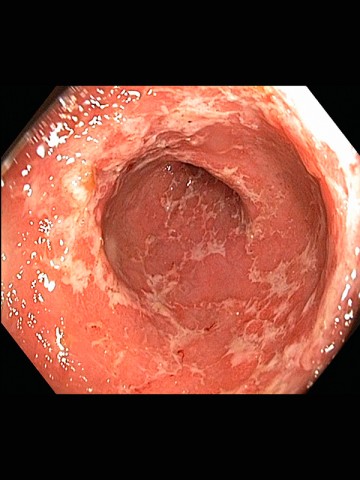
Prescription NSAID use is not associated with an increase in inflammatory bowel disease (IBD)-related hospitalisation in patients with ulcerative colitis, although similar conclusions could not be definitively reached for those with Crohn’s disease, according to new US research.
The retrospective cohort study, published in Arthritis Care & Research, used data from a national database of administrative health claims from 2000 to 2022 to evaluate the association between NSAID exposure and time to IBD-related hospitalisation across IBD subtypes (a proxy for severe IBD flares). Data from adults with IBD who had a new NSAID prescription filled during the study period were matched with patients with IBD without one.
Patients were followed until they had an IBD-related hospitalisation lasting more than one day, were unenrolled from the database or stopped continuous NSAID use (defined as refilling prescriptions at least every six months).
Of 348,095 patients with IBD, 80,710 NSAID-exposed and 190,526 matched unexposed patients were included. Exposed patients had a median of two NSAID prescriptions filled, with 12.8% receiving a COX-2 selective NSAID.
NSAID exposure was associated with a small increase in IBD-related hospitalisation in the overall cohort (hazard ratio [HR], 1.07), meeting the prespecified noninferiority margin of 1.2. Noninferiority was met for the ulcerative colitis subgroup (HR, 0.97) but not for the Crohn’s disease subgroup (HR, 1.16).
NSAID exposure was associated with increased risks of all-cause hospitalisation (HR, 1.29) and gastrointestinal surgery (HR, 1.21) above the noninferiority margin. More than half of NSAID-exposed patients had a baseline code for joint or chronic musculoskeletal pain, which the authors said indicated that musculoskeletal symptoms were an important indication for NSAID prescription in IBD.
Commenting on the findings, Dr Britt Christensen, Head of the Inflammatory Bowel Disease Unit, Gastroenterology Department, The Royal Melbourne Hospital, told Medicine Today the findings were reassuring but not definitive.
‘NSAID use in IBD has historically been approached with caution due to concerns about triggering disease flares,’ she said. ‘This study adds to contemporary data suggesting that the relationship may be more nuanced.’
However, she said it was important to recognise that these findings were based on retrospective data, and were therefore likely influenced by selection bias, with NSAIDs more often prescribed in patients with stable disease.
Dr Christensen told Medicine Today that a more individualised approach was increasingly adopted in current clinical practice.
‘Short courses of NSAIDs in patients with well-controlled or inactive IBD are generally reasonable, particularly when alternative analgesic options are limited,’ she said. ‘In contrast, in patients with active disease, NSAIDs are not ideal and should be avoided where possible.’
Dr Christensen added that NSAID use in IBD should be individualised rather than avoided altogether. They can be used cautiously in stable disease, at the lowest effective dose and shortest duration, with close monitoring.
For GPs, she said the issue was less about ‘safe versus unsafe’ and more about context.
‘Check disease activity, use the lowest dose for the shortest time and reassess early if symptoms change,’ she said.