
Adolescent heavy menstrual bleeding: a practical guide for general practice
Heavy menstrual bleeding in adolescents is common and often under-recognised. A structured, developmentally appropriate approach in general practice can identify anaemia, iron deficiency and underlying bleeding disorders; guide safe initial management; and avoid unnecessary pelvic ultrasonography.
- Heavy menstrual bleeding in adolescents is defined by its impact on physical, emotional, social or material quality of life, rather than by a specific volume of blood loss.
- Anovulatory dysfunction due to immaturity of the hypothalamic–pituitary–ovarian axis is the most common cause, but bleeding disorders are also important and may first present at menarche.
- All adolescents presenting with heavy menstrual bleeding should be screened for bleeding disorders using the four-criterion tool, and referred to a haematologist if any criterion is met.
- Iron deficiency should be assessed and treated in every patient. A normal haemoglobin level does not exclude iron deficiency.
- Pelvic ultrasound should not be ordered routinely as a first-line investigation in adolescents because structural causes are rare and ultrasound findings rarely change management.
Heavy menstrual bleeding (HMB) is one of the most common menstrual problems seen in general practice. In adolescents, it carries particular complexity: the hypothalamic–pituitary–ovarian (HPO) axis is still maturing, bleeding disorders often remain undiagnosed and the young person’s evolving developmental needs should shape every clinical interaction.
HMB is defined as excessive menstrual blood loss that interferes with a person’s physical, emotional, social or material quality of life.1,2 This article outlines a clear, practical approach to recognition, initial investigation and management, including when to refer.
Recognising heavy menstrual bleeding: what is normal and what is not?
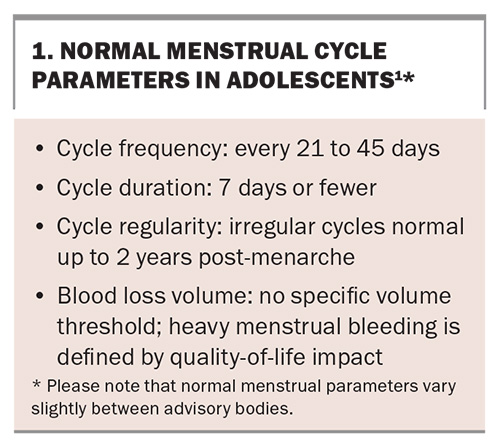
Irregular menstrual cycles are expected in the first two years after menarche, reflecting immaturity of the HPO axis. Beyond this period, ongoing irregularity warrants assessment.1 Normal menstrual parameters in adolescents are shown in Box 1.1
HMB should be considered when an adolescent reports bleeding that soaks through a pad or tampon within two hours, passage of clots larger than 2.5 cm, bleeding that lasts for more than eight days or the need to change sanitary products overnight. Other important clues include a flooding or gushing sensation (which a patient might describe as ‘soaking through clothing’) and any disruption to daily life, such as missing school, sport or social activities because of bleeding.1,2
Aetiology
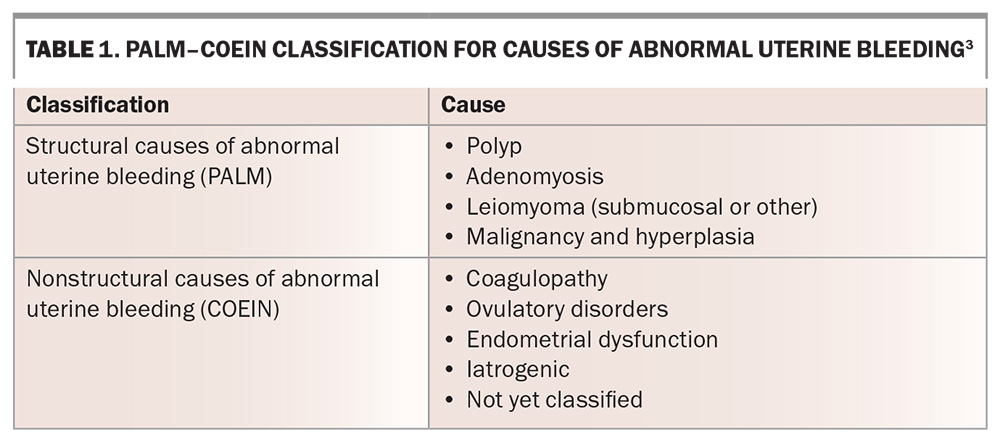
The PALM–COEIN classification system, developed by the International Federation of Gynaecology and Obstetrics, provides a useful framework for considering the causes of abnormal uterine bleeding. It groups causes as structural (PALM: polyp, adenomyosis, leiomyoma, malignancy and hyperplasia), nonstructural (COEIN: coagulopathy, ovulatory dysfunction, endometrial, iatrogenic and not yet classified) (Table 1).3
In adolescents, the most important causes of HMB are usually anovulatory dysfunction and bleeding disorders.1 Anovulatory dysfunction is the most common cause and reflects immaturity of the HPO axis, which can lead to unopposed oestrogen exposure and irregular, heavy endometrial shedding. It is often self-limiting as menstrual cycles mature.1,4 Bleeding disorders are also important to consider, particularly because they are often underdiagnosed. They are present in about 10 to 20% of adolescents with HMB and about one-third of those who require hospitalisation; von Willebrand disease, platelet function defects, thrombocytopenia and clotting factor deficiencies are the most common bleeding disorders seen in adolescents with HMB.1,5,6 About half of all adolescents with an underlying bleeding disorder present at menarche, and the results of standard clotting tests may be normal.1
Endocrine causes, such as hypothyroidism and hyperprolactinaemia, although uncommon, should be considered when clinically suspected, with thyroid function tests and prolactin testing guided by the presentation. Polyendocrine metabolic ovarian syndrome (PMOS), previously known as polycystic ovary syndrome, can also cause anovulatory HMB, but the diagnosis should be made carefully in adolescents.
Pelvic ultrasound has a limited role in adolescents presenting with HMB. Structural causes are uncommon in this age group, and routine pelvic ultrasound is not recommended solely to exclude polyps, leiomyomas, adenomyosis, malignancy or hyperplasia, or to diagnose PMOS.7,8
Assessment in general practice
Assessment in the primary care setting should aim to identify the severity of bleeding, assess for anaemia and iron deficiency, recognise features suggestive of an underlying bleeding disorder and determine whether urgent referral to a haematologist is needed. In most adolescents, a careful history will provide the most useful diagnostic information. The assessment should be sensitive, developmentally appropriate and conducted in a way that supports confidentiality, particularly when asking about sexual activity, contraception, pregnancy risk and sexually transmitted infection risk.
History taking
A sensitive, structured history is the most important diagnostic tool. The menstrual history should include the age at menarche, cycle length, duration of bleeding, reported heaviness of bleeding, whether there is the passage of clots and the effect of bleeding on daily life. Asking about the number of pads, tampons or pairs of period underwear used each day, whether products become soaked through, whether the young person needs to use two forms of menstrual hygiene product at once and whether they need to change products overnight or have bled onto bedsheets can help clarify the severity of bleeding.1,2
Symptoms of anaemia should be noted, including fatigue, breathlessness, headaches and impaired concentration. A bleeding history is also important and should include questions about prolonged epistaxis and excessive bleeding after dental work, surgery or minor injuries. Family history should cover known bleeding disorders, HMB or postpartum haemorrhage in female relatives and unexplained anaemia.1,2
A confidential sexual health history should be included, where appropriate. This should include sexual activity, contraception, pregnancy risk and sexually transmitted infection risk. The young person should be offered time alone with the GP, with an explanation that this is a routine part of adolescent care.1,2
Adolescents often underestimate their own blood loss, particularly if they have no reference point for normal menstruation or have a family history of HMB. Questions about specific behaviours may be more informative than questions about volume. For example, ask whether they avoid swimming, miss sport or social activities, or plan their day around access to toilets. Adolescents may not recognise or use the term ‘flooding’, so it is helpful to ask about concrete experiences, such as bleeding through onto bedding overnight, having to change clothes, carrying spare clothing or having unexpected ‘leaks’ or ‘accidents’ at school or during activities.
Examination
Examination of an adolescent with HMB should be guided by the presentation and should first include an assessment of haemodynamic stability. In acute presentations, measure orthostatic blood pressure and pulse. Look for signs of anaemia, such as conjunctival pallor or sublingual pallor, and for signs of a bleeding disorder, including bruising, petechiae or mucosal bleeding. Clinical features that may suggest an underlying endocrine disorder should also be assessed, including hirsutism and acne, as well as thyroid enlargement or galactorrhoea.
A speculum or bimanual examination should not be performed routinely in adolescents with HMB, unless there is a specific clinical concern, such as sexual trauma, presence of a foreign body or sexually transmitted infection.1
Bleeding assessment tools
Bleeding assessment tools can help quantify bleeding severity and identify patients who may need to be referred to a haematologist. The International Society on Thrombosis and Haemostasis Bleeding Assessment Tool (ISTH-BAT) scores bleeding across multiple anatomical sites, with a score of three or more considered abnormal in adolescents.9 The Paediatric Bleeding Questionnaire is adapted for children and adolescents and captures age-relevant bleeding domains.10,11 Patients can also be directed to the online self-administered bleeding assessment tool (available at www.letstalkperiod.ca), which can help them recognise whether their bleeding pattern warrants further assessment. These tools can be used when the bleeding history is unclear, a bleeding disorder is suspected or a referral letter needs more detail. They are not required for every presentation of HMB and should support, not replace, clinical judgement.
The Pictorial Blood Loss Assessment Chart is not required as part of the routine assessment of HMB. It was validated against the alkaline haematin method of measuring menstrual blood loss volume, rather than the current quality-of-life-centred definition of HMB. It also has limited relevance for adolescents and other patients who use contemporary menstrual products, such as menstrual cups or period underwear, which are not calibrated for chart scoring. Qualitative research has shown that women value direct clinical discussion, shared decision-making and acknowledgement of the impact of bleeding on quality of life, rather than a narrow focus on quantitative estimates of menstrual blood loss.12 The Pictorial Blood Loss Assessment Chart remains useful in clinical trials, but it should not be a focus of routine GP or patient care.
Investigations
In a stable adolescent presenting with HMB, initial investigations should include a full blood count and measurement of serum ferritin to assess for anaemia and iron deficiency, noting that ferritin may be falsely elevated in inflammation. Thyroid function tests, a prolactin level measurement and a coagulation screen should be requested if there is suspicion of endocrine dysfunction or bleeding disorder, and a pregnancy test should be performed in any sexually active adolescent.2
Screening for a bleeding disorder should be performed when the history suggests an increased bleeding tendency, such as an abnormal ISTH-BAT score or a family history of abnormal bleeding. Testing for von Willebrand disease should include von Willebrand factor antigen, von Willebrand factor activity, von Willebrand cofactors and factor VIII. Normal prothrombin time and activated partial thromboplastin time do not exclude the disease.13 If the findings of the von Willebrand disease screen are abnormal, repeat testing should be performed before the diagnosis is confirmed. At this stage, ABO blood group testing should also be performed, as von Willebrand factor levels are lower in people with group O blood.14
Platelet function testing should also be considered when the history suggests a bleeding disorder or when the results of other screening tests are abnormal. A platelet function analyser can be used as a broad screening test for platelet dysfunction. Platelet aggregometry can also be used to assess platelet function but is more complex, requires co-ordination with the laboratory and is usually arranged in consultation with a haematologist.15,16
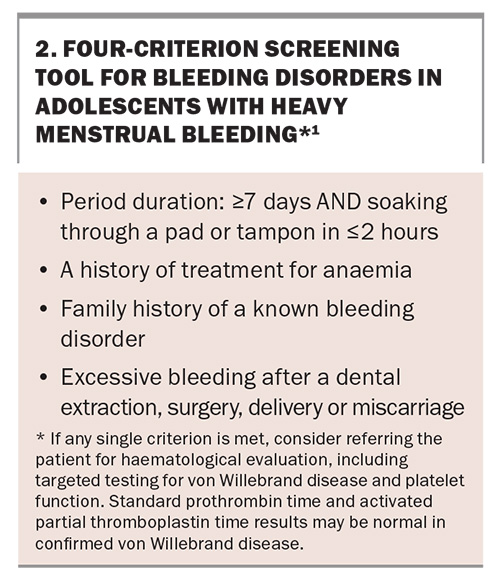
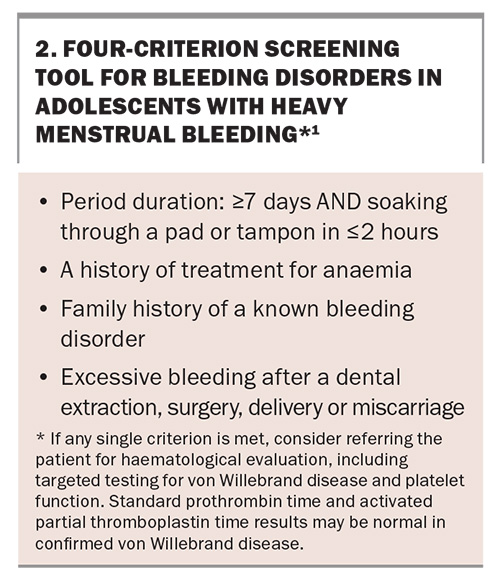
The four-criterion bleeding disorder screen recommended by the American College of Obstetricians and Gynecologists can be used as a practical prompt in general practice for adolescents presenting with HMB (Box 2).1 The tool is designed to identify adolescents who need laboratory screening for an underlying bleeding disorder. Referral to or discussion with a haematologist should be considered if any one criterion is met, particularly if von Willebrand disease or another bleeding disorder is strongly suspected. Referral should not be delayed solely because initial von Willebrand disease or platelet function testing is normal, as the results can be falsely reassuring during acute bleeding or severe anaemia.1
Pelvic ultrasound should not be ordered routinely as a first-line investigation for HMB in adolescents. Structural causes are rare in this age group, and anovulatory dysfunction accounts for most presentations. Experience from tertiary paediatric gynaecology services suggests that findings of pelvic ultrasound ordered for adolescents with HMB rarely alter management. Requests for pelvic ultrasound remain common, likely because structural causes are common in adult women; however, the epidemiology is fundamentally different in adolescents. Pelvic ultrasound should not be ordered routinely as a first-line investigation for HMB in adolescents. It is usually reserved for atypical pelvic pain or examination findings suggesting nonmenstrual pathology, or considered by a paediatric and adolescent gynaecologist when bleeding remains difficult to control despite appropriate management.1,2
Polyendocrine metabolic ovarian syndrome in adolescents
The condition previously known as polycystic ovary syndrome was renamed PMOS in May 2026 to reduce the misleading emphasis on ovarian cysts and better reflect its broader endocrine and metabolic features.17 PMOS can cause anovulatory HMB and should be considered when an adolescent has features of polyendocrine metabolic problems and androgen excess, as well as menstrual irregularity. However, the 2023 International Evidence-Based Guideline for the Assessment and Management of Polycystic Ovary Syndrome places important limits on how the condition should, and should not, be diagnosed in adolescents.8
In adolescents, diagnosis requires both of the following:
- ovulatory dysfunction – defined by menstrual cycle irregularity according to years after menarche (Table 2)
- hyperandrogenism – which may be clinical (such as hirsutism or severe acne), biochemical or both, after other causes have been excluded.8
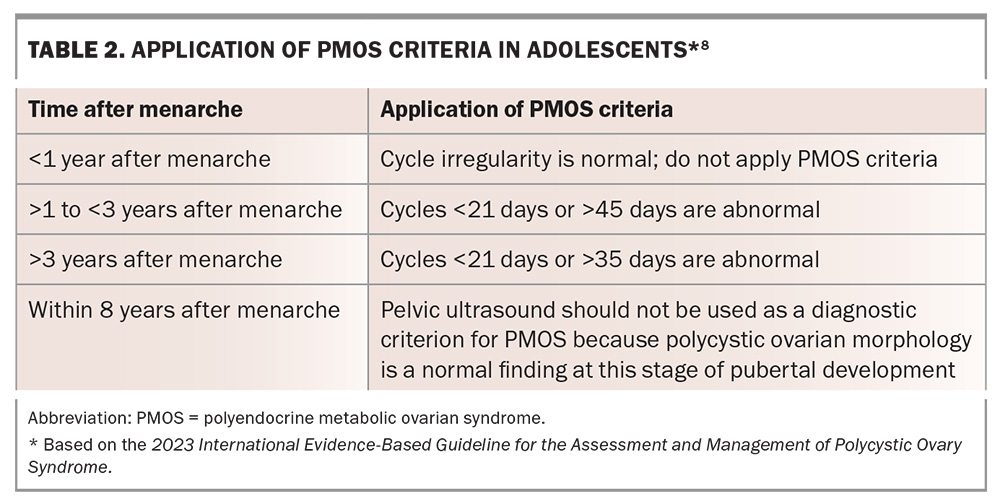
Unlike in adults, polycystic ovarian morphology on ultrasound and anti-Müllerian hormone levels should not be used as diagnostic criteria in adolescents because both can yield normal findings during pubertal development.8 Care should be taken when labelling and diagnosing adolescents with PMOS, as some may interpret the diagnosis as meaning they are infertile and therefore not use contraception, increasing the risk of unplanned pregnancy.
The timing after menarche is central to interpretation (Table 2).8 In the first year after menarche, cycle irregularity is normal and diagnostic criteria should not be applied. Between one and three years after menarche, cycles shorter than 21 days or longer than 45 days are considered abnormal. More than three years after menarche, cycles shorter than 21 days or longer than 35 days are considered abnormal. Pelvic ultrasound should not be used as a diagnostic criterion within eight years after menarche because polycystic ovarian morphology is a normal finding at this stage of pubertal development.8
For GPs, the practical implication is that pelvic ultrasound should not be ordered to confirm PMOS in any adolescent within eight years of menarche. A finding of polycystic ovarian morphology at this age is expected and does not establish the diagnosis. PMOS should not be diagnosed on the basis of irregular cycles alone; hyperandrogenism must also be present. Irregular cycles in adolescents may reflect immaturity of the HPO axis but can also be associated with stress at home or school, excessive exercise, low body weight or overweight.18 The diagnosis of PMOS should not be made within the first year after menarche, when cycle irregularity is normal.
When clinical features suggest PMOS but the diagnostic criteria are not fully met, the young person may be considered at risk of PMOS. Symptoms can be treated and the diagnosis reassessed over time, with formal re-evaluation three years after menarche. Other causes of hyperandrogenism and irregular cycles should be excluded before confirming a PMOS diagnosis, including congenital adrenal hyperplasia, hyperprolactinaemia and thyroid disease. Testing may include 17-hydroxyprogesterone, prolactin and thyroid function tests, guided by the clinical presentation.
The combined oral contraceptive pill is appropriate for symptom management in adolescents who are at risk of PMOS while the diagnosis is being clarified.
Management of heavy menstrual bleeding
Management of HMB depends on severity, haemodynamic status, the suspected underlying cause and the young person’s preferences. The overall goals are to reduce menstrual blood loss, prevent recurrence, correct iron deficiency and maintain quality of life. Where appropriate, options used continuously, without withdrawal bleeding, are preferred.
The 52 mg levonorgestrel-releasing intrauterine system (IUS) is currently the most effective medical therapy for HMB in women without significant pathology, reducing menstrual blood loss by up to 90%.2,19 It requires careful counselling about insertion, initial irregular spotting and the possibility of amenorrhoea over time. In adolescents, particularly younger adolescents, acceptance may vary; some young people and families may be hesitant about an intrauterine device, even when it is clinically appropriate. Shared decision-making and clear explanation of the noncontraceptive role of the device are therefore important.20 It may need to be inserted under brief general anaesthesia. Pelvic ultrasound is not required before insertion, and younger age is not a contraindication to insertion.
Efficacy data on the 52 mg levonorgestrel-releasing IUS in adolescents are limited, but available evidence is promising, including in those with bleeding disorders – although such patients may require additional hormonal medications to help with ongoing spotting.21,22 Adolescents with complex comorbid pain conditions may have lower continuation rates and a higher likelihood of requesting removal; specialist review is appropriate when pain is a major concern.23
The 19.5 mg levonorgestrel-releasing IUS is smaller than the 52 mg levonorgestrel-releasing IUS, but it has not been specifically studied or licensed for HMB, and there is no evidence that its smaller size provides a clinical advantage for menstrual suppression in adolescents.24
A continuous combined oral contraceptive pill is an effective option for HMB and is suitable for most adolescents.1,2 Breakthrough bleeding can often be managed by temporarily increasing the dose until bleeding settles, under clinical guidance.1 This should be weighed against the increased risk of venous thromboembolism, particularly in adolescents with risk factors such as obesity. Drospirenone-containing pills, such as those containing 20 to 30 microg ethinylestradiol and 3 mg drospirenone, are emerging as a well-tolerated option. The antiandrogenic and antimineralocorticoid properties of drospirenone may help reduce bloating, fluid retention and acne, and clinical experience suggests they may be particularly useful in adolescents with features of PMOS or androgen excess.8,25
Norethisterone is an oral progestogen that may be used when an adolescent cannot tolerate oestrogen-containing therapy or when oestrogen is contraindicated. A dose of 5 to 10 mg/day may be used continuously. It is important to explain that norethisterone at this dose and regimen is not contraceptive.1 Depot medroxyprogesterone acetate 150 mg administered intramuscularly every 12 weeks may also be considered to reduce HMB.2
Tranexamic acid is an effective nonhormonal option. It is taken during menstruation on days of heavy bleeding, and is useful for adolescents who decline hormonal therapy or as an adjunct to hormonal treatment.26 In the author’s experience, combining tranexamic acid with the 52 mg levonorgestrel-releasing IUS during the first few cycles after insertion can help manage initial heavy bleeding, if present, although more research is needed. NSAIDs, such as mefenamic acid 500 mg three times daily or naproxen 500 mg twice daily, can reduce menstrual blood loss when taken regularly during menstruation. They may be used with tranexamic acid, provided there are no contraindications. They should be avoided or used only with specialist advice in adolescents with a suspected or confirmed bleeding disorder because of their potential effect on platelet function.1,2
Iron deficiency: treat in every patient
Iron deficiency is almost universal in adolescents with significant HMB and is often undertreated. Serum ferritin levels should be checked in every patient because a normal haemoglobin level does not exclude iron deficiency. In the author’s opinion, maintaining target iron stores (e.g. ferritin level 80–100 microg/L) may improve longer-term wellbeing and reduce recurrent iron deficiency; however, further research is needed. Alternate-day dosing of oral elemental iron (60–100 mg) is preferred in patients with iron deficiency, as it can help overcome hepcidin-induced reduced absorption and is associated with fewer gastrointestinal side effects. This strategy may not be adequate in patients with iron-deficiency anaemia but can be considered in those who experience side effects with daily dosing.27 Intravenous iron should be used when oral therapy is not tolerated or when rapid repletion is needed.28
Management specific to von Willebrand disease
Adolescents with confirmed von Willebrand disease should be co-managed with a haematologist. Desmopressin may be used for type 1 von Willebrand disease in patients who respond to formal challenge testing, but it should not be used for type 2B or type 3 disease. Von Willebrand factor or factor VIII concentrate may be needed for moderate-to-severe disease or disease that does not respond to desmopressin.29 Tranexamic acid is an effective adjunct at all levels of severity. Hormonal therapy, including the combined oral contraceptive pill, the levonorgestrel-releasing intrauterine system or a progestin, can reduce menstrual blood loss and may be used first line in mild von Willebrand disease or as adjunctive therapy.29
An important clinical caveat is that von Willebrand factor is an acute phase reactant. Testing von Willebrand factor levels during hospitalisation for acute bleeding or severe anaemia may produce falsely normal results.30 Von Willebrand disease-specific testing should be arranged in the outpatient setting, four to six weeks after an acute episode has resolved.
Practical management tips
Management should be developmentally appropriate and centred on the young person’s needs. Offering to see the patient alone for part of the consultation is best practice and often supports more accurate disclosure about sexual activity, mental health and concerns about treatment. Plain language should be used, and understanding should be checked before the patient leaves the consultation.
It is also important to validate the impact of HMB on the young person’s life. For many adolescents, it is not ‘just a heavy period’; the symptoms can substantially affect quality of life, school attendance, academic performance, and sport and social participation. Treatment options should be discussed in terms of how they fit with the young person’s life, not only in terms of clinical efficacy. Cultural or family values that may affect acceptance of hormonal therapy should be acknowledged, and nonhormonal or alternative options explored where appropriate. These discussions often need to be revisited at follow up, as health literacy, confidence and readiness to engage may develop over time.
When to refer
Consider referral of an adolescent with HMB to haematology if any criterion on the four-criterion bleeding disorder screen is met (Box 2), or if von Willebrand disease, platelet dysfunction or another bleeding disorder is confirmed or strongly suspected.1 Referral is also indicated if there is significant or recurrent iron-deficiency anaemia, particularly when the haemoglobin level is less than 80 g/L.
Consider referral of a young person with HMB to an adolescent gynaecologist if they are haemodynamically unstable or require hospitalisation for HMB. Referral is also appropriate if structural pathology is suspected (e.g. haematocolpos, endometriosis, ovarian cyst requiring intervention), if insertion of a 52 mg levonorgestrel-releasing IUS is being considered and procedural expertise is required, or if HMB does not respond despite appropriate management.2
Conclusion
HMB in adolescents is common, frequently under-recognised and sometimes the first sign of an underlying bleeding disorder. In general practice, the most important steps are to screen for a bleeding disorder using the four-criterion tool, treat iron deficiency in every patient and avoid routine pelvic ultrasound.
When considering PMOS as a cause of anovulatory HMB, apply the 2023 International Evidence-Based Guideline criteria carefully. Pelvic ultrasound should not be used as a diagnostic criterion within eight years of menarche, and both hyperandrogenism and ovulatory dysfunction are required for diagnosis. The label ‘at risk of PMOS’ is appropriate when features are present but the full criteria are not yet met.
Medical management, including the 52 mg levonorgestrel-releasing IUS, combined hormonal therapy, tranexamic acid, NSAIDs and iron supplementation, is safe and effective in adolescents. Treatment decisions are best made through shared decision-making tailored to the young person’s developmental stage, values and life context. MT
COMPETING INTERESTS: Associate Professor Uppal is a Bayer media spokesperson for HMB on The Period Perspective Survey, Hologic media spokesperson for Living Comfortably, CSL Vifor speaker, Ambassador for Heidi and Remie Australia, and is part of the Bayer APAC Digital Thought Leader Academy program. She has also received payment from Bayer, Orion, CSL Vifor, Seqirus, Menarini, Organon and Besins for GP Education and Implanon trainer sessions.
References
1. Screening and management of bleeding disorders in adolescents with heavy menstrual bleeding: ACOG COMMITTEE OPINION, number 785. Obstet Gynecol 2019; 134: e71-e83.
2. Australian Commission on Safety and Quality in Health Care (ACSQHC). Heavy menstrual bleeding clinical care standard. Sydney: ACSQHC; 2024. Available online at: https://www.safetyandquality.gov.au/clinical-care-standards/heavy-menstrual-bleeding (accessed June 2026).
3. Munro MG, Critchley HO, Fraser IS; FIGO Menstrual Disorders Working Group. The FIGO classification of causes of abnormal uterine bleeding in the reproductive years. Fertil Steril 2011; 95: 2204-8, 2208.e1-3.
4. Jones K, Sung S. Anovulatory bleeding. In: StatPearls [Internet]. Treasure Island (FL): StatPearls Publishing; 2026. Available online at: https://www.ncbi.nlm.nih.gov/books/NBK549773/ (accessed June 2026).
5. O’Brien B, Mason J, Kimble R. Bleeding disorders in adolescents with heavy menstrual bleeding: the Queensland Statewide Paediatric and Adolescent Gynaecology Service. J Pediatr Adolesc Gynecol 2019; 32: 122-127.
6. Jayasinghe Y, Moore P, Donath S, Campbell J, Monagle P, Grover S. Bleeding disorders in teenagers presenting with menorrhagia. Aust N Z J Obstet Gynaecol 2005; 45: 439-443.
7. Lazanyi M, Grover SR. Reducing unnecessary investigations in adolescent gynaecology: the utility of pelvic ultrasonography for adolescents presenting with heavy menstrual bleeding. Aust J Gen Pract 2020; 49: 70-72.
8. Teede HJ, Tay CT, Laven JJE, et al. Recommendations from the 2023 international evidence-based guideline for the assessment and management of polycystic ovary syndrome. J Clin Endocrinol Metab 2023; 108: 2447-2469.
9. Rodeghiero F, Tosetto A, Abshire T, et al. ISTH/SSC bleeding assessment tool: a standardized questionnaire and a proposal for a new bleeding score for inherited bleeding disorders. J Thromb Haemost 2010; 8: 2063-2065.
10. Bowman M, Riddel J, Rand ML, Tosetto A, Silva M, James PD. Evaluation of the diagnostic utility for von Willebrand disease of a pediatric bleeding questionnaire. J Thromb Haemost. 2009; 7: 1418-1421.
11. Biss TT, Blanchette VS, Clark DS, Wakefield CD, James PD, Rand ML. Use of a quantitative pediatric bleeding questionnaire to assess mucocutaneous bleeding symptoms in children with a platelet function disorder. J Thromb Haemost; 8: 1416-1419.
12. Ramsay J, Wilson L, Copp T, Carlini J, Doust J. Clinicians’ perspectives on managing and treating heavy menstrual bleeding in Australia: a qualitative study. Sex Reprod Healthc 2026. Epub ahead of print. https://doi.org/10.1016/ j.srhc.2026.101235.
13. Royal College of Pathologists of Australasia (RCPA). Von Willebrand disease. RCPA Manual. Sydney: RCPA; 2024. Available online at: https://www.rcpa.edu.au/Manuals/RCPA-Manual/Clinical-Presentations-and-Diagnoses/V/von-Willebrand-disease (accessed June 2026).
14. Royal College of Pathologists of Australasia (RCPA). Von Willebrand studies. RCPA Manual. Sydney: RCPA; 2024. Available online at: https://www.rcpa.edu.au/Manuals/RCPA-Manual/Pathology-Tests/V/von-Willebrand-studies (accessed June 2026).
15. Royal College of Pathologists of Australasia (RCPA). Platelet function screen. RCPA Manual. Sydney: RCPA; 2024. Available online at: https://www.rcpa.edu.au/Manuals/RCPA-Manual/Pathology-Tests/P/Platelet-function-screen (accessed June 2026).
16. Royal Children’s Hospital (RCH) Melbourne. Platelet aggregometry. Specimen collection. Melbourne: RCH; 2024. Available online at: https://www.rch.org.au/specimen-collection/Platelet_Aggregometry/ (accessed June 2026).
17. Teede HJ, Khomami MB, Morman R, et al; Global Name Change Consortium. Polyendocrine metabolic ovarian syndrome, the new name for polycystic ovary syndrome: a multistep global consensus process. Lancet 2026: S0140-6736(26)00717-8.
18. Huhmann K. Menses requires energy: a review of how disordered eating, excessive exercise, and high stress lead to menstrual irregularities. Clin Ther 2020; 42: 401-407.
19. Creinin MD, Barnhart KT, Gawron LM, Eisenberg D, Mabey RG Jr, Jensen JT. Heavy menstrual bleeding treatment with a levonorgestrel 52-mg intrauterine device. Obstet Gynecol 2023; 141: 971-978.
20. ACOG Committee Opinion No. 735: adolescents and long-acting reversible contraception: implants and intrauterine devices. Obstet Gynecol 2018; 131: e130-e139.
21. Khalighi M, Wheeler AP, Adeyemi-Fowode OA, et al. Does a bleeding disorder lessen the efficacy of the 52-mg levonorgestrel-releasing intrauterine system for heavy menstrual bleeding in adolescents? A retrospective multicenter study. J Adolesc Health 2022; 71: 204-209.
22. Adeyemi-Fowode OA, Santos XM, Dietrich JE, Srivaths L. Levonorgestrel-releasing intrauterine device use in female adolescents with heavy menstrual bleeding and bleeding disorders: single institution review. J Pediatr Adolesc Gynecol 2017; 30: 479-483.
23. Baum A, Chan K, Sachedina A, Grover SR. Factors predicting removals of the levonorgestrel-releasing intrauterine system in an adolescent cohort. J Pediatr Adolesc Gynecol 2024; 37: 171-176.
24. Pearson S, Boerma CJ, McNamee K, Bateson D. Long-acting reversible contraceptives: new evidence to support clinical practice. Aust J Gen Pract 2022; 51: 246-252.
25. Mathur R, Levin O, Azziz R. Use of ethinylestradiol/drospirenone combination in patients with the polycystic ovary syndrome. Ther Clin Risk Manag 2008; 4: 487-492.
26. Bryant-Smith AC, Lethaby A, Farquhar C, Hickey M. Antifibrinolytics for heavy menstrual bleeding. Cochrane Database Syst Rev 2018; 4: CD000249.
27. Moretti D, Goede JS, Zeder C, et al. Oral iron supplements increase hepcidin and decrease iron absorption from daily or twice-daily doses in iron-depleted young women. Blood 2015; 126: 1981-1989.
28. Mansour D, Hofmann A, Gemzell-Danielsson K. A review of clinical guidelines on the management of iron deficiency and iron-deficiency anemia in women with heavy menstrual bleeding. Adv Ther 2021; 38: 201-225.
29. Connell NT, Flood VH, Brignardello-Petersen R, et al. ASH ISTH NHF WFH 2021 guidelines on the management of von Willebrand disease. Blood Adv 2021; 5: 301-325.
30. Geevar T, Mathews NS, Bowyer A. Von Willebrand disease lab investigation. In: World Federation of Hemophilia (WFH). Diagnosis of hemophilia and other bleeding disorders: a laboratory manual. Montreal: WFH; 2024. p. 70-104.