
Technology and tools in youth-onset type 2 diabetes – evidence, care and clinical practice
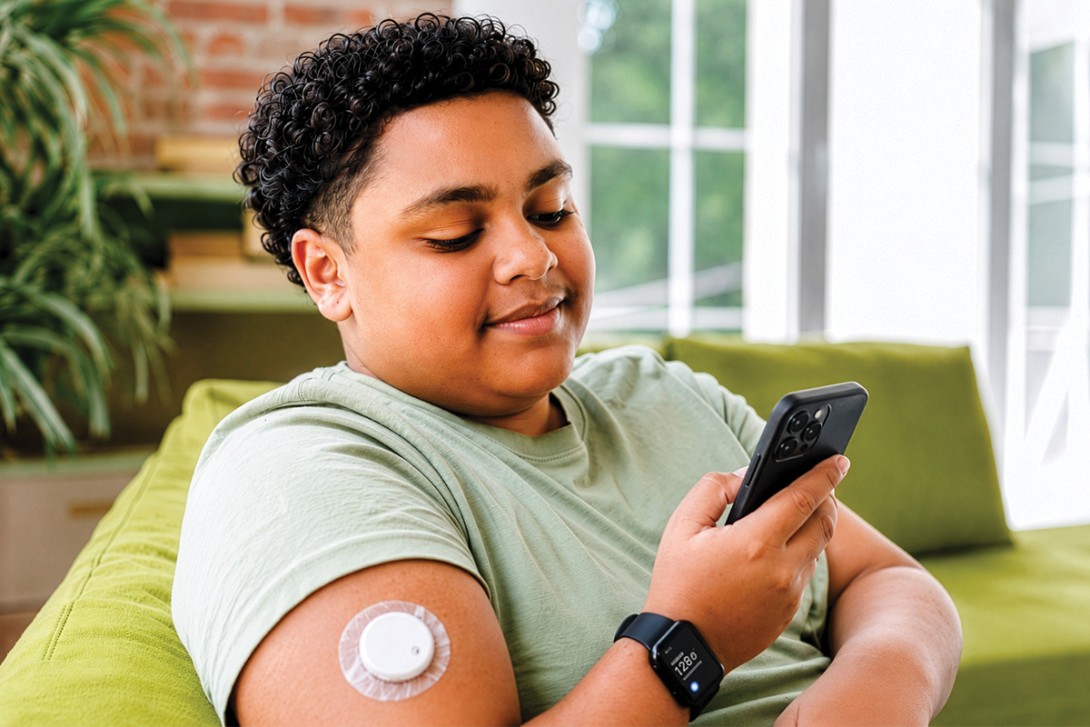
Young people with type 2 diabetes present distinct challenges compared with adults with the disease and young people with type 1 diabetes. The use of digital health technologies and tools for this group requires careful attention to developmental stage, family context, school environment and equity,
as well as ongoing involvement of the diabetes multidisciplinary care team.
- Youth-onset type 2 diabetes (YOT2D) shares the biology of young-adult type 2 diabetes, with a more aggressive disease course, but developmental differences dictate how technology must be used.
- Technology and digital tools lack specific evidence for YOT2D, requiring evidence from adults with type 2 diabetes, or young people with type 1 diabetes or obesity, to be carefully adapted.
- Continuous glucose monitoring in YOT2D has possible benefits in family oversight and behaviour change, but it is not currently funded under the National Diabetes Services Scheme.
- Digital health tools – such as continuous glucose monitoring systems, wearable monitors, lifestyle apps and messaging support – require embedding into a structured framework with involvement from the young person, family and multidisciplinary team.
- Addressing social media health misinformation within the consultation is the youth-preferred and recommended method of preventing adverse health effects.
- Transitioning to adult care is a high-risk time for young people with diabetes. Technology can help, provided it is part of a structured framework that is commenced well before the transition.
Youth-onset type 2 diabetes (YOT2D) has a unique biology. Compared with adult-onset type 2 diabetes, it progresses more rapidly and is associated with a poorer prognosis, including earlier development of comorbidities such as hypertension, metabolic dysfunction-associated fatty liver disease, and psychological comorbidities, as well as earlier onset of vascular complications and premature mortality.1,2 However, guidance specific to support the care of young people with YOT2D is limited. Evidence gaps are significant; most data are derived from adults with type 1 diabetes or type 2 diabetes, requiring cautious extrapolation to YOT2D. Poor adherence to treatment, inconsistent clinic attendance and loss to follow up, particularly after transition to adult care, are significant impediments to supporting care in YOT2D. As this is an aggressive condition, lack of engagement with the care team or GP may have an adverse impact on clinical outcomes. Models of care that include technology may help improve engagement and outcomes, as has been demonstrated in young people with obesity.3
Continuous glucose monitoring
The Royal Australian College of General Practitioners recommends that continuous glucose monitoring (CGM) should be considered for continual or intermittent use in all individuals with type 2 diabetes on intensive insulin therapy (multiple daily injections or insulin pumps), subject to individual factors and the availability of resources. Given that many young people with YOT2D require intensive insulin therapy, CGM is recommended. It may also be beneficial in specific groups not receiving intensive insulin therapy, including those who:
- do not perform adequate finger-prick blood glucose level monitoring for safe diabetes management
- have suboptimal diabetes management
- have suspected hypoglycaemia
- are undergoing treatment changes.4
Use of CGM and other technologies should account for school environments, varying self-management abilities and psychosocial factors (e.g. stigma, peer differences). Many schools do not permit students to carry mobile phones in the classroom, creating practical challenges for the use of smartphone-linked CGM devices and other digital apps. Acceptance of these digital tools by the young person and their peers, families and schools is as important as their clinical usefulness.
The evidence base for the benefits of CGM is overwhelmingly drawn from adults with type 2 diabetes, where modest benefits have been demonstrated in randomised controlled trials, particularly in insulin-treated patients compared with non-insulin-treated patients.5 In Australia, CGM is not currently funded under the National Diabetes Services Scheme (NDSS) for type 2 diabetes in people of any age. Current private pricing for TGA-approved sensors are available on the manufacturers’ websites.
The emerging evidence for CGM in young people with type 2 diabetes is discussed in a previous article by Middleton and Wong in the May 2026 issue of Endocrinology Today, and is briefly summarised here.6 In YOT2D, studies have shown acceptability of CGM and improved quality of life, but it is too early to conclude any significant glycaemic benefit. Chesser and colleagues’ 12-week pilot (n = 9; median age, 19.1 years; baseline glycated haemoglobin, 11.9%) found no glycaemic change, but the participants’ quality of life improved and all those who completed the pilot wished to continue using CGM.7 A subsequent pilot randomised controlled trial involving young adolescents (mean age, 15 years; glycated haemoglobin, 7.4%) found CGM to be feasible and well tolerated, but the study was not sufficiently powered to demonstrate an effect on glycaemia.8 Wear time decreased from 71% to 38% by month 3 because of skin adhesion issues. The most common reason for declining participation was reluctance to wear the device.
There may be an opportunity to use CGM intermittently in young people with YOT2D to support family or individual behaviour change, with emerging evidence in the area. A practical takeaway is to set expectations with patients and family; CGM in this age group should be framed as a tool for engagement and behavioural insight.
A particular paediatric advantage of CGM is remote monitoring. In children with type 1 diabetes, parents can track glucose levels remotely during school, sport, excursions and camps, as well as overnight, which can meaningfully reduce parental anxiety.9 This benefit, however, is built around hypoglycaemia avoidance and insulin titration. In non-insulin-treated YOT2D, the anticipated mechanism of benefit is behavioural rather than safety-driven, and so the same rationale does not transfer in whole. Remote monitoring may still reassure parents, but the clinical justification is weaker.
One further practical point is that not every CGM device on the market meets the accuracy standards GPs would assume. The December 2025 Australian Diabetes Society/Australian Diabetes Educators Association/Australasian Diabetes in Pregnancy Society/Australian and New Zealand Society for Paediatric Endocrinology and Diabetes/New Zealand Society for the Study of Diabetes consensus statement on CGM performance notes that regulatory oversight has eased in Australia and that unapproved devices can enter the New Zealand market without meeting recommended standards.10 Clinicians should advise patients to use TGA-approved, NDSS-eligible systems and remain cautious about cheaper, direct-to-consumer sensors. With any sensor, accuracy can drift with sensor age, site of insertion, hydration status and glycaemia – finger-prick blood glucose levels should be favoured over CGM readings with any discrepancy. Furthermore, high-dose vitamin C (more than 500–1000 mg), paracetamol (above the recommended dose of 1000 mg every 6 hours), salicylic acid and hydroxyurea have been noted by various manufacturers to interfere with CGM readings; users and clinicians should check manufacturer user manuals for specific details.
Insulin pumps and automated insulin delivery
Evidence for insulin pump therapy and automated insulin delivery in type 2 diabetes remains limited across all age groups, and in children and adolescents with type 2 diabetes, the data are essentially absent. Family capacity to support insulin pump therapy is an additional prerequisite beyond individual patient suitability. Current expert opinion supports reserving these technologies for carefully selected patients with significant insulin deficiency or refractory hyperglycaemia, within specialist multidisciplinary settings.
Digital self-management tools
Children and adolescents with YOT2D share substantial clinical overlap with those managed in paediatric obesity programs: high rates of overweight and obesity, similar lifestyle goals and comparable psychosocial pressures. The digital health intervention evidence in paediatric obesity, although not directly applicable, offers several insights that translate meaningfully to this context.3
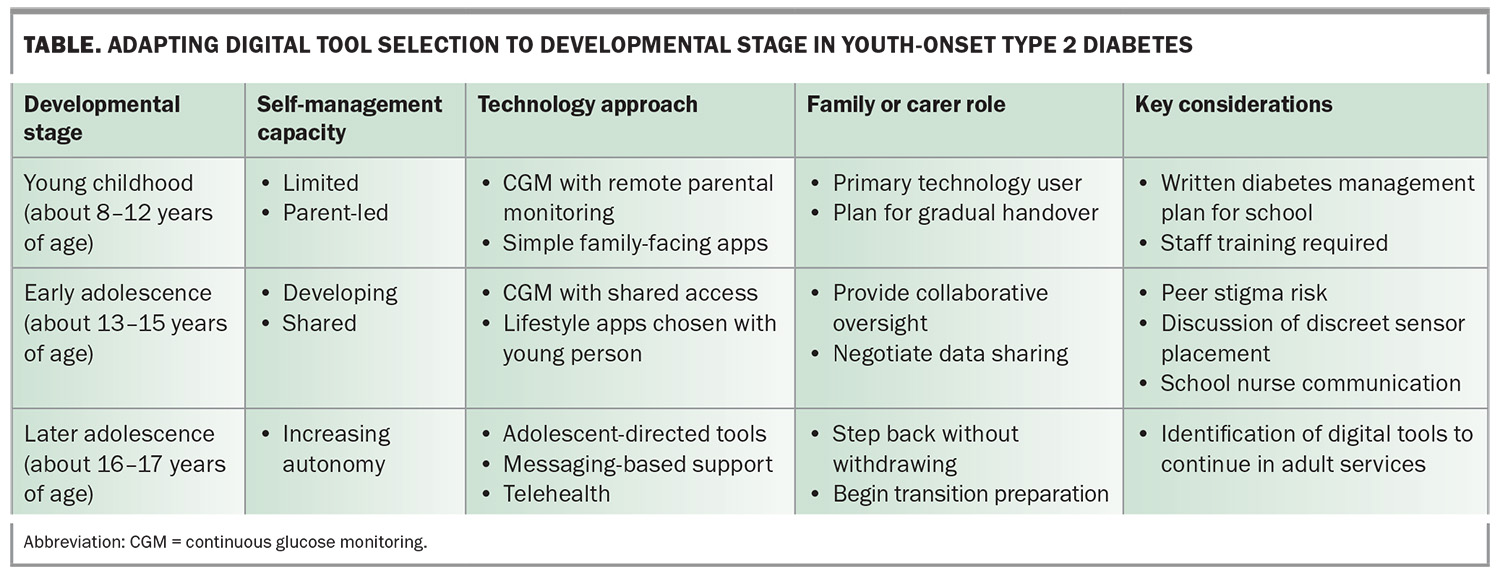
Tool selection should track developmental stage. Younger children should access parent-led, simple-interface programs, whereas adolescents can take on more self-directed tracking with gradually reduced parental oversight (Table).
Systematic reviews and meta-analyses of technology-based obesity interventions in children and adolescents consistently find that digital tools are the most effective as adjuncts to conventional care.11,12 Parental involvement is among the strongest predictors of digital intervention success, particularly in younger children. One meta-analysis found that family engagement is specifically associated with improved outcomes in children younger than 12 years.11 A rapid review of family-based digital interventions in primary school-aged children found meaningful improvements in dietary behaviour and physical activity when the family unit, rather than the child alone, was the target of the intervention.12
Engagement with digital health tools in adolescents is higher when the content is goal-directed, personalised and interactive; passive information delivery alone is consistently ineffective across this age group. App selection for YOT2D should be guided by these engagement principles, favouring tools that support goal-setting, provide immediate behavioural feedback and allow for clinician review of data.
Wearable activity monitors and lifestyle apps have an established evidence base extrapolated from paediatric obesity and physical activity data, rather than YOT2D specifically. Some notable examples were covered by Middleton and Wong in their article, noting that access and usage should be guided by appropriate clinician and family supervision.6 Wearable wrist accelerometers provide real-time feedback on activity, sedentary time and sleep, whereas diet- and lifestyle-tracking apps can support food literacy and habit formation. Their main value lies in translating nonspecific lifestyle advice into measurable, achievable goals that can be reviewed regularly. As with CGM, engagement tends to decline without structured clinician review; therefore, these tools work best as an adjunct rather than a standalone intervention and should be introduced incrementally to avoid digital overload. Moreover, their clinical utility is heavily determined by the structured support framework in which they are embedded, rather than by the technology itself.
School integration: lessons from type 1 diabetes
Schools are key care environments for young people with diabetes, and written diabetes management plans are essential.13 Although these plans are standard practice for young people with type 1 diabetes, management plans also need to be individualised for young people with YOT2D depending on their therapeutic and monitoring regimens. School staff should also be educated that type 1 diabetes and YOT2D are distinct conditions with different management needs.
School diabetes management plans are usually organised by the diabetes care team and include details of the treatment regimen (particularly if the young person is receiving insulin therapy), glucose targets and the use of technology, as well as an emergency plan with clear information on what to do and who to call when urgent action is needed. The plans are essential to ensure the student’s wellbeing and ability to participate in school activities, without discrimination. The plans should be reviewed and revised as needed annually, particularly as treatment for YOT2D typically evolves over time.
It is now standard practice for healthcare teams to collaborate proactively with schools rather than leaving the responsibility to families. Parents and carers should not be expected to attend school regularly to support the student. Accordingly, school plans should clearly describe the young person’s use of diabetes technologies and the responsibilities of school staff.
CGM use can reduce classroom disruption and enable external parental monitoring during school hours. Technical issues can arise with CGM (e.g. sensor dislodgement or error messages), but these are generally outweighed by the benefits of continuous glucose levels over finger-prick glucose testing. Peer support and peer-led education for young people with YOT2D likely have a role in improving care, with notable programs underway already among young Aboriginal and Torres Strait Islander people (such as those organised by the Menzies School of Health Research, available here: https://diabeteslifecourse.org.au/youth-diabetes/). Evidence from young people with type 1 diabetes suggests positive clinical, behavioural and psychosocial outcomes with peer-based interventions; however, the quality of the evidence is imprecise and may not be directly translatable to YOT2D.14
Technology-supported models of care
In paediatric practice, diabetes technologies must be implemented with the family as a primary participant. Shared access to CGM data by family members should be negotiated explicitly with the young person, with increasing adolescent autonomy over data sharing supported as they mature.
Multidisciplinary telehealth case conferencing offers a complementary and actionable mechanism for GPs. In adult cases of type 2 diabetes, structured multidisciplinary telehealth case conferencing has produced sustained reductions in glycated haemoglobin levels and cardiometabolic risk factors over three years of follow up in a multiethnic South Western Sydney population.15 Given the high prevalence of psychological comorbidities in young people with YOT2D, embedding mental health review within the same case conferencing structure could improve both engagement and continuity. Of note, Medicare rebates are provided for GPs and other healthcare professionals to organise, co-ordinate and participate in multidisciplinary case conferences.
As discussed in the review by Middleton and Wong in the May 2026 issue of Endocrinology Today, nurse-led telemedicine surveillance models are particularly well suited to paediatric settings, where the clinical complexity of managing diabetes during normal growth and development requires regular, low-intensity contact rather than infrequent specialist reviews.6 These models are intended to extend, rather than replace, specialist paediatric and GP care, and their applicability to paediatric diabetes nursing teams warrants further investigation.
Social media is now a primary source of health information for adolescents with chronic disease. In one study involving young people with chronic conditions, nearly 95% of participants searched online for information and peer support, and 99% did not want clinicians present in those spaces.16 Moreover, diabetes and nutrition content on platforms such as TikTok is frequently inaccurate, commercially driven and poorly sourced. The American Academy of Pediatrics recommends that clinicians proactively ask adolescents what health information they have seen on social media and whether they have questions about it, framing this as an opportunity to identify and correct misinformation within the consultation rather than outside it.17
A particularly high-risk manifestation of social media health misinformation in the context of YOT2D is the promotion of unregulated injectable peptides, such as counterfeit versions of approved glucagon-like peptide-1 receptor agonists and experimental agents such as retatrutide for weight loss and metabolic management. Clinicians managing young people with obesity or YOT2D should be aware of this phenomenon and its clinical risks, and their role in proactive patient counselling.
Transition to adult services
Transition to adult diabetes care, typically around the age of 16 to 18 years is a high-risk period for YOT2D, with a risk of loss to follow up and worsening glycaemia.18 However, evidence specific to YOT2D transition is lacking, as structured transition programs are limited and underdeveloped. Ideally, transition should be to a multidisciplinary team with expertise in YOT2D, in close collaboration with the primary healthcare team. When a young person with YOT2D is transitioned to adult services, technology can be supportive to maximise engagement and minimise loss to follow up. This includes the young person providing the adult team with access to their CGM account (there are various programs depending on the CGM device). This enables the multidisciplinary clinic team to review the young person’s CGM data. Simple measures include ensuring the young person provides the adult team with their mobile number and email address (not their parents’ contact details). The young person should also know their Medicare details, NDSS number and MyGov account details.
Digital tools, such as text messaging reminders, can provide continuity across services and reduce disruption, while joint clinical or telehealth appointments and messaging support can ease transition. Social support from family members, support figures or peer support programs (which may be web-based) should complement this process.
Future directions
There are several priorities for future research and policy in the use of technology for YOT2D. Randomised controlled trials of digital health interventions specifically in children and adolescents with type 2 diabetes are the highest priority, as the evidence base currently relies on extrapolation from studies in adults or young people with other chronic conditions such as type 1 diabetes. Co-design with young people with YOT2D and their families is largely absent from existing research and should be a priority to more consistently produce interventions with greater engagement and perceived relevance than developer-led approaches.
Advocacy for NDSS funding of CGM in YOT2D is warranted. The Diabetes Australia 2024 Equitable Access to Diabetes Technology position statement recommends extending subsidies to people younger than 21 years and, specifically, young Aboriginal and Torres Strait Islander people with type 2 diabetes, a group with a 20-fold higher incidence than non-Indigenous young people.19,20 Finally, culturally appropriate digital health interventions for Aboriginal and Torres Strait Islander young people with type 2 diabetes are an urgent and underserved research and policy priority.
Conclusion
YOT2D presents clinical and technological challenges that are distinct from those of adult type 2 diabetes and paediatric type 1 diabetes and cannot be adequately addressed by extrapolation from either evidence base. For clinicians, the central principle is that digital health tools such as CGM, wearable monitors, lifestyle apps and messaging support, derive their value from the structured framework in which they are embedded; without family engagement and clinician data review, they consistently underperform. CGM is currently a tool for behavioural insight and family oversight rather than a glycaemic intervention, and GPs should set expectations accordingly while advocating for NDSS funding that would make access more equitable. Across all domains, the evidence base is nascent; randomised controlled trials conducted specifically in children and adolescents with type 2 diabetes, co-designed with young people and families, are urgently needed, as are culturally grounded digital health tools for Aboriginal and Torres Strait Islander young people, who carry a disproportionate burden of this disease. MT
COMPETING INTERESTS: None.
References
1. Viner R, White B, Christie D. Type 2 diabetes in adolescents: a severe phenotype posing major clinical challenges and public health burden. Lancet 2017; 389: 2252-2260.
2. Al-Saeed AH, Constantino MI, Molyneaux L, et al. An inverse relationship between age of type 2 diabetes onset and complication risk and mortality: the impact of youth-onset type 2 diabetes. Diabetes Care 2016; 39: 823-829.
3. Soltero E, Lopez C, Mihail S, et al. An SMS text message–based type 2 diabetes prevention program for Hispanic adolescents with obesity: qualitative co-design process. JMIR Form Res 2023; 7: e46606.
4. Shah AS, Barrientos-Pérez M, Chang N, et al. ISPAD clinical practice consensus guidelines 2024: type 2 diabetes in children and adolescents. Horm Res Paediatr 2024; 97: 555-583.
5. Kwon SY, Moon JS. Advances in continuous glucose monitoring: clinical applications. Endocrinol Metab (Seoul) 2025; 40: 161-173.
6. Middleton T, Wong J. Type 2 diabetes: technology and tools for young adults. Endocrinology Today 2026; 15(2): 6-10.
7. Chesser H, Srinivasan S, Puckett C, Gitelman SE, Wong JC. Real-time continuous glucose monitoring in adolescents and young adults with type 2 diabetes can improve quality of life. J Diabetes Sci Technol 2024; 18: 911-919.
8. Patel T, Sala NGL, Macheret NA, et al. Continuous glucose monitoring use in youth with type 2 diabetes: a pilot randomized study. Diabetes Technol Ther 2025; 27: 623-630.
9. Bratina N, Battelino T. Insulin pumps and continuous glucose monitoring (CGM) in preschool and school-age children: how schools can integrate technology. Pediatr Endocrinol Rev 2010; 7 Suppl 3: 417-421.
10. Australian Diabetes Society (ADS), Australian Diabetes Educators Association (ADEA), Australasian Diabetes in Pregnancy Society (ADIPS), Australian and New Zealand Society for Paediatric Endocrinology and Diabetes (ANZSPED), New Zealand Society for the Study of Diabetes (NZSSD). Strengthening safety through regulatory standardisation for continuous glucose monitoring systems (anzCGM) in Australia and New Zealand. ADS, ADEA, ADIPS, ANZSPED, NZSSD; 2025. Available online at: https://www.diabetessociety.com.au/wp-content/uploads/2025/12/Ads-Adea- Adips-Anzsped-Nzssd-anzCGM-Minimum-Standards-December-2025.pdf (accessed July 2026).
11. Kouvari M, Karipidou M, Tsiampalis T, et al. Digital health interventions for weight management in children and adolescents: systematic review and meta-analysis.
J Med Internet Res 2022; 24: e30675.
12. Chai LK, Farletti R, Fathi L, Littlewood R. A rapid review of the impact of family-based digital interventions for obesity prevention and treatment on obesity-related outcomes in primary school-aged children. Nutrients 2022; 14: 4837.
13. Diabetes in Schools. Diabetes Management Plans. Canberra: National Diabetes Services Scheme; 2025. Available online at: https://www.diabetesinschools.com.au/life-at-school/diabetes-management-plans/ (accessed July 2026).
14. Cockcroft EJ, Clarke R, Dias RP, et al. Effectiveness of educational and psychoeducational self-management interventions in children and adolescents with type 1 diabetes: a systematic review and meta-analysis. Pediatr Diabetes 2024; 2024: 2921845.
15. Zarora R, Simmons D. Effectiveness of diabetes case conferencing program on diabetes management. Int J Integr Care 2023; 23: 2.
16. De Nardi L, Trombetta A, Ghirardo S, Genovese MRL, Barbi E, Taucar V. Adolescents with chronic disease and social media: a cross-sectional study. Arch Dis Child 2020; 105: 744-748.
17. American Academy of Pediatrics (AAP). Helping patients find trusted health information and identify mis- and disinformation. Itasca, IL: AAP; 2024. Available online at: https://www.aap.org/en/patient-care/media-and-children/center-of-excellence-on-social-media-and-youth-mental-health/qa-portal/qa-portal-library/qa-portal-library-questions/helping-patients-find-trusted-health-information-and-identify-mis-and-disinformation/ (accessed July 2026).
18. Position statement: equitable access to diabetes technology. Canberra: Diabetes Australia; 2024. Available online at: https://www.diabetesaustralia.com.au/wp-content/uploads/2024-Diabetes-Australia-Position-Statement-Equitable-Access-to-Diabetes-Technology.pdf (accessed July 2026).
19. James S, Donaghue KC, Couper JJ, et al. Higher HbA1c following younger age of transfer from pediatric to adult type 1 diabetes services: data from the Australasian Diabetes Data Network (ADDN) registry. Diabetes Care 2026; 49: 1231-1236.
20. Haynes A, Kalic R, Cooper M, Hewitt JK, Davis EA. Increasing incidence of type 2 diabetes in Indigenous and non-Indigenous children in Western Australia, 1990–2012. Med J Aust 2016; 204: 303.