
Type 2 diabetes in Aboriginal and Torres Strait Islander youth: inequity and intergenerational risk

Aboriginal and Torres Strait Islander young people are at high risk of developing type 2 diabetes. The condition reflects inequity in the social determinants of health and carries significant intergenerational risk. Supportive, holistic and strengths-based healthcare provides the basis for effective primary management.
- Youth-onset type 2 diabetes (YOT2D), diagnosed before 25 years of age, progresses more rapidly and is associated with increased cardiometabolic complications compared with later-onset type 2 diabetes.
- In recent years, Aboriginal and Torres Strait Islander young people have experienced the highest reported prevalence of YOT2D worldwide.
- Intergenerational transmission of cardiometabolic risk plays a key role in the high prevalence, particularly through in utero exposure.
- Aboriginal and Torres Strait Islander young people living with YOT2D report stigma and distress at the diagnosis.
- GPs are central to the holistic and multidisciplinary care required to adequately and appropriately support young people living with YOT2D.
- Annual screening for YOT2D using glycated haemoglobin should be undertaken in all Aboriginal and Torres Strait Islander young people with any risk factor.
The prevalence of type 2 diabetes among children and adolescents is increasing worldwide, including in Australia.1 Youth-onset type 2 diabetes (YOT2D), defined as type 2 diabetes diagnosed before the age of 25 years, disproportionately affects young people from high-risk ethnic groups, particularly First Nations communities.2,3 This pattern is also seen in Australia, although data for Aboriginal and Torres Strait Islander youth remain limited in some areas, and the risk is likely to vary substantially across language groups and regions. Aboriginal and Torres Strait Islander youth have the highest reported prevalence of type 2 diabetes in the world, at 14.4 per 1000 (95% confidence interval, 12.2–17.0) in the Central Australian region and 6.7 per 1000 (95% confidence interval, 6.0–7.4) across Northern Australia.4 In Western Australia, the incidence of type 2 diabetes in young people aged less than 16 years is 18.3 times higher in Aboriginal and Torres Strait Islander youth compared with non-Indigenous Australians.5 Aboriginal and Torres Strait Islander adolescents across Australia also have a 10 times higher likelihood of hospitalisation for type 2 diabetes than non-Indigenous adolescents.6 In addition, Aboriginal and Torres Strait Islander youth tend to be affected by type 2 diabetes at a younger age than non-Indigenous youth, with cases reported in early childhood.7
Although an increase in the prevalence of type 2 diabetes has been seen among all Australian youth over the past 20 years, Aboriginal and Torres Strait Islander youth have experienced a much greater rise in new diagnosis rates.8 Data from Western Australia indicate a high burden of comorbidity in Aboriginal and Torres Strait Islander children with type 2 diabetes, with 59% affected by hypertension, 24% by dyslipidaemia and 61% by obesity.5 These findings have significant implications for future morbidity and mortality.
However, new phenotypes of type 2 diabetes are emerging in Aboriginal and Torres Strait Islander young people, in which obesity is less prominent. Risk factors for diabetes and metabolic syndrome have been reported at a significantly earlier age and at much higher frequency among Aboriginal and Torres Strait Islander people, suggesting that the prevalence of YOT2D will continue to increase in the future.9
Youth-onset type 2 diabetes is a condition of inequity
YOT2D is recognised internationally as a ‘disease of poverty’ and the condition reflects underlying structural and social inequities.10,11 These inequities contribute to an increased risk of YOT2D and diabetes- related complications, limit access to culturally safe healthcare and effective clinical management, and exacerbate food insecurity. The social determinants of health underpin these inequities by shaping both diabetes risk and the extent to which health systems enable equitable access to care and support effective lifestyle change.12,13 These social determinants of health have impacts at the individual, family and community level. For Aboriginal and Torres Strait Islander young people, these determinants include education, income, food and housing security, psychological trauma, and structural, commercial and political forces, including the ongoing experience of racism and discrimination.14 The influence of these factors extends beyond individual behaviours or healthcare quality, accounting for up to 55% of health outcomes.15 Current models of healthcare often do not adequately address these issues or holistically consider the sociopolitical inequity a young person faces.
A further issue is the limited data on pharmaceutical options for type 2 diabetes in children and adolescents. Globally, it is estimated that only 2% of youth with type 2 diabetes are eligible and able to participate in randomised controlled trials, despite YOT2D being a high-risk condition for poor outcomes.16 In the limited trials taking place, First Nations youth are particularly under-represented.16
Intergenerational transmission of type 2 diabetes
Intergenerational transmission of type 2 diabetes has been described as an epidemic affecting Aboriginal and Torres Strait Islander youth (Figure).11,17 YOT2D is associated with exposure to maternal hyperglycaemia during pregnancy, compounding any underlying genetic susceptibility to diabetes. This is likely an important factor in the intergenerational transmission of cardiometabolic conditions at successively younger ages, a pattern that has been observed in other First Nations populations worldwide.18,19 Among First Nations peoples of Canada, 43% of children born to mothers diagnosed with type 2 diabetes in adolescence developed diabetes themselves by 10 to 19 years of age and 25% developed diabetes by 7 years of age.20
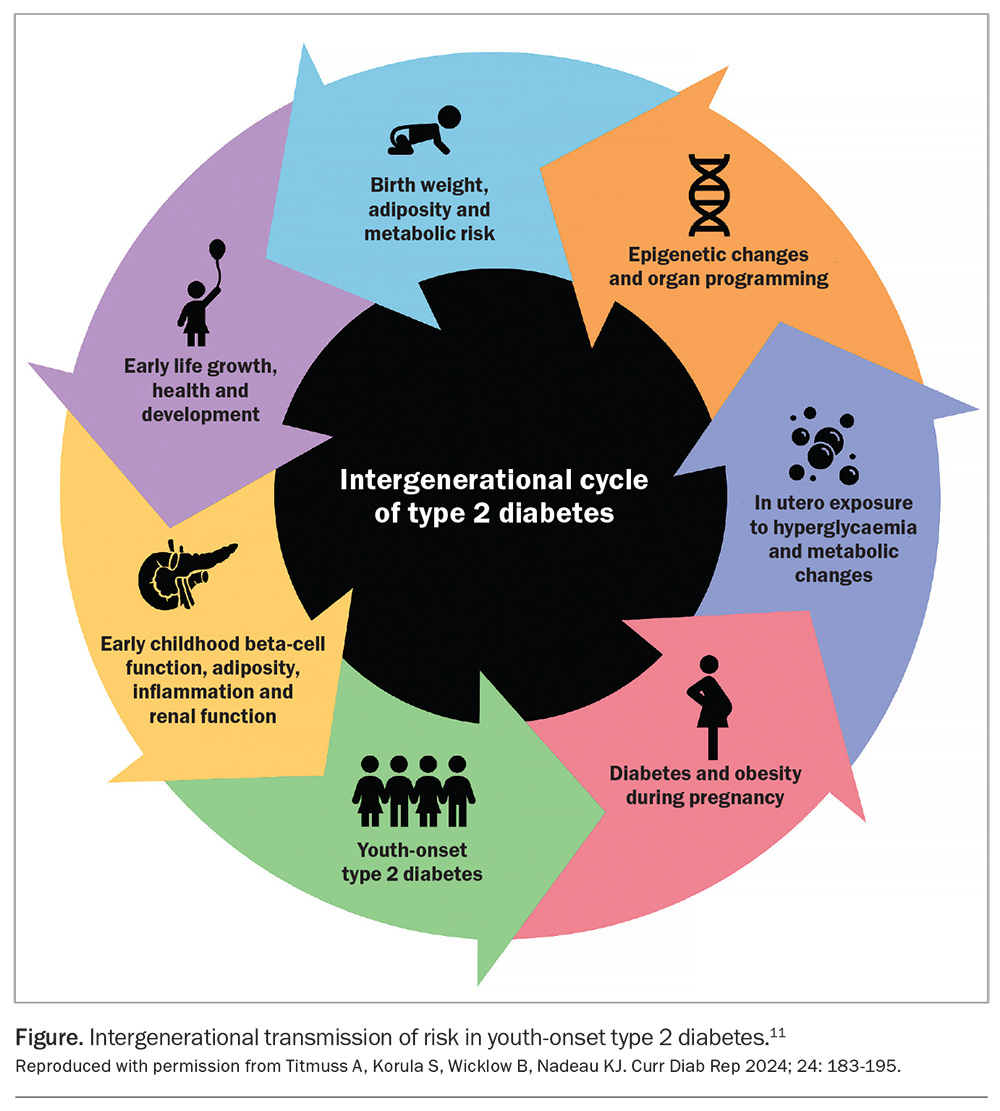
Offspring exposed to maternal type 2 diabetes during pregnancy are at greater risk of adverse outcomes than those exposed to gestational diabetes mellitus, potentially reflecting sustained hyperglycaemia preconception and throughout pregnancy.18 The mechanism of increased cardiometabolic risk may relate to epigenetic changes and in utero organ programming in offspring.11 This highlights the importance of optimising cardiometabolic health in adolescence and preconception, enhancing the health of any future offspring.
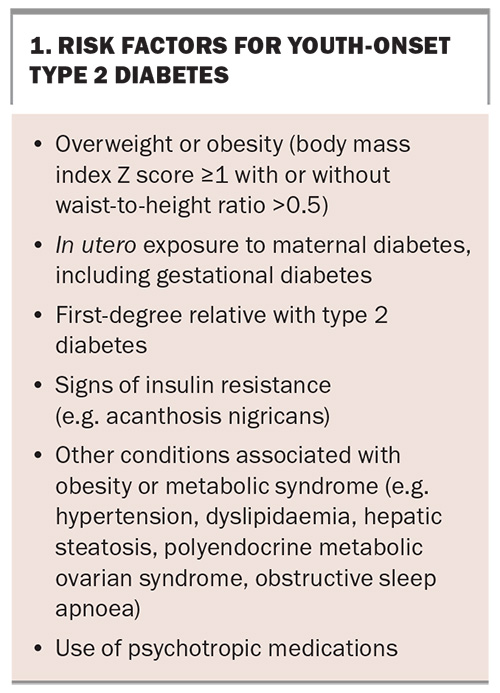
In utero exposures may also influence the diabetes phenotype. The classic phenotype for type 2 diabetes includes a high body mass index, central adiposity and clinical evidence of insulin resistance. However, young people exposed to maternal hyperglycaemia in pregnancy may have less overweight or obesity, lower insulin secretion, milder but evident insulin resistance and earlier onset of type 2 diabetes.21,22 Aboriginal youth diagnosed with type 2 diabetes before 15 years of age have a lower prevalence of overweight or obesity (87%), compared with those diagnosed between 15 and 24 years of age (97%).4
These differing phenotypes are still poorly understood, but in utero organ programming likely affects pancreatic beta-cell function, potentially reducing the age of diagnosis and resulting in altered adiposity to that seen in the past. Waist-to-height ratio, as a marker of central adiposity, may be more clinically useful than body mass index in Aboriginal and Torres Strait Islander youth, using a ratio of greater than 0.5 as a marker of increased cardiometabolic risk.23,24 The Pregnancy and Neonatal Diabetes Outcomes in Remote Australia (PANDORA) birth cohort study in the Northern Territory, in which 175 women (15%) had type 2 diabetes in pregnancy, is expected to provide further insights into intergenerational risk in Aboriginal and Torres Strait Islander communities as the offspring reach adolescence.25
Screening for youth-onset type 2 diabetes
Active screening for type 2 diabetes is recommended in all Aboriginal and Torres Strait Islander young people with any risk factor, even if they are asymptomatic, from 10 years of age or earlier if puberty occurs before this age (Box 1).24 Upcoming Australian and New Zealand consensus guidelines will lower the recommended age of screening to 8 years. Annual screening can be carried out using glycated haemoglobin (HbA1c), including point-of-care testing. An HbA1c level of 6.5%(48 mmol/mol) or more is consistent with a diagnosis of diabetes. Complication screening for cardio-metabolic comorbidities should begin at the time of diagnosis.
Concerning future trajectories
The concerning trajectory of YOT2D represents an equity issue. The pathophysiology, phenotype, comorbidities, complications and treatment response of YOT2D all appear significantly worse than later- onset diabetes.2,11 Glycaemic control is chronically suboptimal in YOT2D, with only 14% of Aboriginal and Torres Strait Islander young people living in Northern Australia meeting glycaemic targets.4 Very limited data are available for non-Indigenous Australian youth. These glycaemic control outcomes are consistent with the situation worldwide; 34% of youth with type 2 diabetes are reported to have HbA1c levels greater than 10% (86 mmol/mol), and 80% to have at least one microvascular or macrovascular complication, at 15 years after diagnosis.12 Canadian data suggest that almost 50% of youth will have end-stage renal failure by 20 years after diagnosis with type 2 diabetes.26 YOT2D is associated with a 23 times higher risk of kidney failure and a 39 times higher risk of requiring dialysis compared with young people without diabetes.26
The implications for Aboriginal and Torres Strait Islander families and communities are substantial if young people diagnosed with diabetes in adolescence progress to requiring dialysis by 30 years of age. Data from Far North Queensland demonstrate worse outcomes for young people with type 2 diabetes compared with type 1 diabetes, even with shorter diabetes duration and lower median HbA1c levels.27
Young people with type 2 diabetes appear to respond differently to pharmacological management, with a higher rate of treatment failure compared with adult cohorts.16,28,29 In light of these concerns, YOT2D has been described as a ‘severe aggressive phenotype’ and must be considered and managed differently from later-onset type 2 diabetes.30 Guidelines suggest focused and intensive clinical management, active treatment to tight glycaemic targets, and collaborative shared care between primary healthcare and paediatricians or endocrinologists from the time of diagnosis.31
Models of care
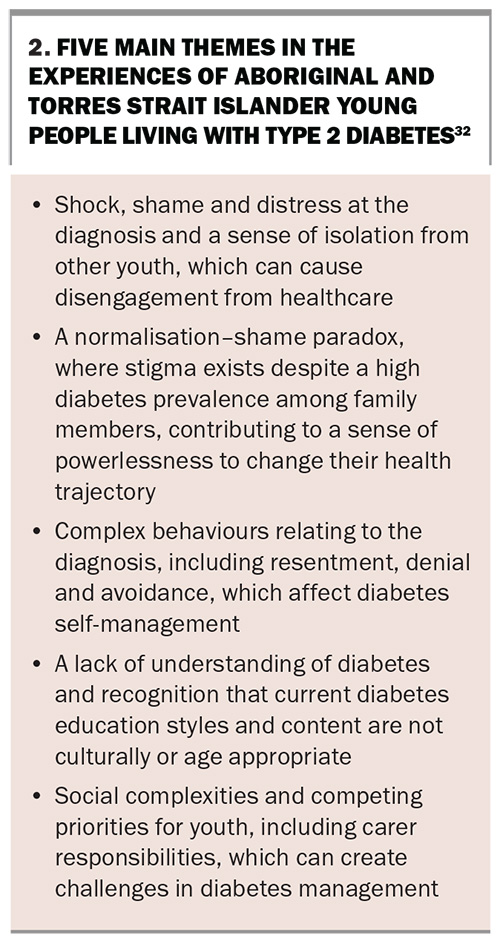
Pharmaceutical treatments provide a limited solution in the context of such inequity in social determinants of health and access to services. Research with Aboriginal and Torres Strait Islander young people living with type 2 diabetes has highlighted some key experiences and perceptions that influence their lives.32,33 Five main themes emerged (Box 2).32
Type 2 diabetes is associated with a greater risk of mental health concerns, potentially further isolating affected young people.34,35 Addressing the social and emotional wellbeing needs of young people is an essential first priority, with ongoing engagement and effective clinical care possible only once this has been achieved.
This research has highlighted the voices of Aboriginal and Torres Strait Islander youth and what they need from health services and health professionals. Current models of care use individual patient education and management approaches that are incongruent with the needs or world views of Aboriginal and Torres Strait Islander youth. Persistent barriers to care include insufficient cultural safety, intergenerational trauma, stigma and shame, structural inequities, and limited understanding by health professionals of young people’s priorities and perceptions.32,33
There are significant differences in access to health services and multidisciplinary diabetes teams across Australia. Primary healthcare services, particularly community-controlled health services, are crucial in providing culturally safe, contextually relevant and holistic care that addresses the social determinants of health. Effective communication and a collaborative approach between primary care and diabetes services are essential. This includes integrating specialist diabetes outreach services into primary care and acknowledging the fundamental importance of continuity of care and the therapeutic relationship that is developed between the young person and their primary care service.
Innovative strategies are urgently required to alter the trajectories for those at risk and to ensure strengths-based models of care. One such strategy is to incorporate peers with lived experience of type 2 diabetes to provide peer support and peer-led diabetes education from the time of diagnosis. This strengths-based approach of engaging peers to support youth affected by YOT2D has been shown in other First Nations populations to be culturally appropriate, strengthen health systems, improve health outcomes and enhance wellbeing, building capacity, connection and support.36-38 Peers can support continuity of care and facilitate navigation of the health system in a way that is person-centred and enhances cultural safety.
Aboriginal and Torres Strait Islander young people have provided some clear messages to health professionals regarding optimal models of care (Table).32,33,39 They have called for health professionals to actively explore holistic support that is strengths-based, reduces stigma, and enhances wellbeing and social connections. They have also highlighted the crucial role of Aboriginal health practitioners and community-based workers in providing culturally tailored and contextually appropriate healthcare, acknowledging the unique differences in Aboriginal and Torres Strait Islander communities across Australia.
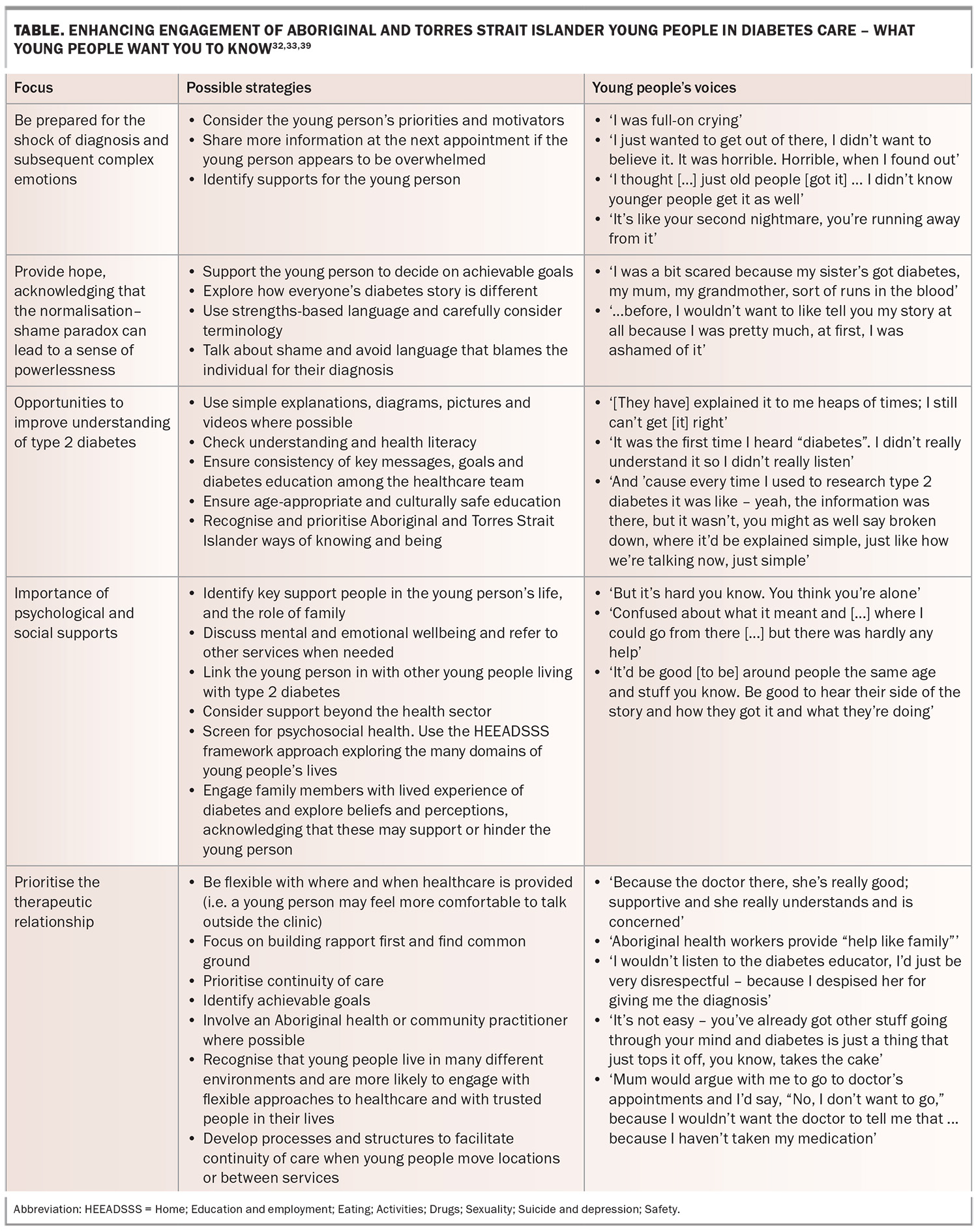
Young people have called for intersectoral responses to provide wraparound support. Codesign of support strategies with Aboriginal and Torres Strait Islander youth living with YOT2D has highlighted the importance of schools in enhancing diabetes management and capacity building for diabetes self-care.39 This has also highlighted the need for community awareness of YOT2D to reduce stigma and isolation.32,39
Conclusion
Aboriginal and Torres Strait Islander young people are facing an intergenerational epidemic of type 2 diabetes, a condition reflecting inequity and social determinants of health. The condition is associated with a high risk of cardiometabolic complications at an early age. Effective primary healthcare needs to be community-led, person-centred, culturally safe, strengths-based and holistic, aimed at enhancing support, maintaining connection and building capacity. Current evidence gaps in terms of emerging phenotypes, reducing intergenerational risk, effective treatment and enhanced models of care require research that is conducted in true partnership with Aboriginal and Torres Strait Islander communities and reconsiders the existing paradigm. Meaningful progress will depend on ensuring that the voices of Aboriginal and Torres Strait Islander young people, families and communities are central to service design, research priorities and models of care. MT
COMPETING INTERESTS: Dr Titmuss has received grants from MRFF Indigenous Health Research; is Co-Chair of the T2D Working Group of the Australian and New Zealand Society for Paediatric Endocrinology and Diabetes; and is Lead of the 2026 Consensus Guidelines for Screening, Diagnosis and Management of Type 2 Diabetes in Children and Adolescents in Australia and New Zealand from the Australasia Paediatric Endocrine Group.
References
1. Perng W, Conway R, Mayer-Davis E, Dabelea D. Youth-onset type 2 diabetes: the epidemiology of an awakening epidemic. Diabetes Care 2023; 46: 490-499.
2. Bjornstad P, Chao LC, Cree-Green M, et al. Youth-onset type 2 diabetes mellitus: an urgent challenge. Nat Rev Nephrol 2023; 19: 168-184.
3. Papadimos ER, Claussen C, Magliano DJ, et al. Prevalence of youth type 2 diabetes in global Indigenous populations: a systematic review. Diabetologia 2026; 69: 568-581.
4. Titmuss A, Davis EA, O’Donnell V, et al. Youth-onset type 2 diabetes among First Nations young people in northern Australia: a retrospective, cross-sectional study. Lancet Diabetes Endocrinol 2022; 10: 11-13.
5. Haynes A, Curran JA, Davis EA. Two decades of increasing incidence of childhood-onset type 2 diabetes in Western Australia (2000–2019). Med J Aust 2021; 214: 285-285.e1.
6. Azzopardi PS, Sawyer SM, Carlin JB, et al. Health and wellbeing of Indigenous adolescents in Australia: a systematic synthesis of population data. Lancet 2018; 391: 766-782.
7. Kevat D, Wilson D, Sinha A. A 5-year-old girl with type 2 diabetes. Lancet 2014; 383: 1268.
8. Haynes A, Kalic R, Cooper M, Hewitt JK, Davis EA. Increasing incidence of type 2 diabetes in Indigenous and non-Indigenous children in Western Australia, 1990–2012. Med J Aust 2016; 204(8): 303.
9. Australian Institute of Health and Welfare (AIHW). Australia’s health 2020: data insights. Canberra: AIHW; 2020. Available online at: https://www.aihw.gov.au/reports/australias-health/australias-health-2020-data-insights/data (accessed June 2026).
10. McGavock J, Wicklow B, Dart AB. Type 2 diabetes in youth is a disease of poverty. Lancet 2017; 390: 1829.
11. Titmuss A, Korula S, Wicklow B, Nadeau KJ. Youth-onset type 2 diabetes: an overview of pathophysiology, prognosis, prevention and management. Curr Diab Rep 2024; 24(8): 183-195.
12. TODAY Study Group; Bjornstad P, Drews KL, Caprio S, et al. Long-term complications in youth-onset type 2 diabetes. N Engl J Med 2021; 385: 416-426.
13. McGavock J, Durksen A, Wicklow B, et al. Determinants of readiness for adopting healthy lifestyle behaviors among Indigenous adolescents with type 2 diabetes in Manitoba, Canada: a cross-sectional study. Obesity 2018; 26: 910-915.
14. Australian Institute of Health and Welfare (AIHW). Aboriginal and Torres Strait Islander adolescent and youth health and wellbeing 2018. Canberra: AIHW; 2018. Available online at: https://www.aihw.gov.au/reports/indigenous-australians/atsi-adolescent-youth-health-wellbeing-2018/contents/summary (accessed June 2026).
15. World Health Organization (WHO). World report on social determinants of health equity. Geneva: WHO; 2025. Available online at: https://www.who.int/teams/social-determinants-of-health/equity-and-health/world-report-on-social-determinants-of-health-equity (accessed June 2026).
16. Kelsey MM, Zeitler PS, Nadeau KJ, Shah AS. Type 2 diabetes in youth: rationale for use of off-label antidiabetic agents. Pediatr Diabetes 2022; 23: 615-619.
17. Titmuss A, Davis EA, Brown A, Maple-Brown LJ. Emerging diabetes and metabolic conditions among Aboriginal and Torres Strait Islander young people. Med J Aust 2019; 210: 111-113.e1.
18. Wicklow BA, Sellers EA, Sharma AK, et al. Association of gestational diabetes and type 2 diabetes exposure in utero with the development of type 2 diabetes in First Nations and non-First Nations offspring. JAMA Pediatrics 2018; 172(8): 724-731.
19. Pettitt DJ, Lawrence JM, Beyer J, et al. Association between maternal diabetes in utero and age at offspring’s diagnosis of type 2 diabetes. Diabetes Care 2008; 31: 2126-2130.
20. Mendelson M, Cloutier J, Spence L, et al. Obesity and type 2 diabetes mellitus in a birth cohort of First Nation children born to mothers with pediatric-onset type 2 diabetes. Pediatric Diabetes 2011; 12: 219-228.
21. Urakami T. Clinical characteristics in Japanese children with nonobese type 2 diabetes. Ann Pediatr Endocrinol Metab 2018; 23: 113-118.
22. Prasad RB, Asplund O, Shukla SR, et al. Subgroups of patients with young-onset type 2 diabetes in India reveal insulin deficiency as a major driver. Diabetologia 2022; 65: 65-78.
23. Sellers EA, Singh GR, Sayers SM. Large waist but low body mass index: the metabolic syndrome in Australian Aboriginal children. J Pediatr 2008; 153: 222-227.
24. Peña AS, Curran JA, Fuery M, et al. Screening, assessment and management of type 2 diabetes mellitus in children and adolescents: Australasian Paediatric Endocrine Group guidelines. Med J Aust 2020; 213: 30-43.
25. Lee IL, Purbrick B, Barzi F, et al. Cohort profile: the Pregnancy and Neonatal Diabetes Outcomes in Remote Australia (PANDORA) study. Int J Epidemiol 2018; 47: 1045-6h.
26. Dart AB, Sellers EA, Martens PJ, Rigatto C, Brownell MD, Dean HJ. High burden of kidney disease in youth-onset type 2 diabetes. Diabetes Care 2012; 35: 1265-1271.
27. Hawke K, Ng SZ, Anderson J, et al. Diabetes complications among inpatients with childhood and young adult-onset type 1 and 2 diabetes. Pediatr Diabetes 2024; 2024: 9926090.
28. Nadeau KJ, Anderson BJ, Berg EG, et al. Youth-onset type 2 diabetes consensus report: current status, challenges, and priorities. Diabetes Care 2016; 39: 1635-1642.
29. TODAY Study Group. A clinical trial to maintain glycemic control in youth with type 2 diabetes. N Engl J Med 2012; 366: 2247-2256.
30. Viner R, White B, Christie D. Type 2 diabetes in adolescents: a severe phenotype posing major clinical challenges and public health burden. Lancet 2017; 389: 2252-2260.
31. Shah AS, Barrientos-Perez M, Chang N, et al. ISPAD clinical practice consensus guidelines 2024: type 2 diabetes in children and adolescents. Horm Res Paediatr 2024; 97: 555-583.
32. Weaver E, Freeman N, Mack S, et al. “I don’t really know what diabetes is”: a qualitative study exploring the experiences of Aboriginal and Torres Strait Islander young people aged 10 to 25 years living with type 2 diabetes in Northern and Central Australia. Can J Diabetes 2022; 46: 722-729.
33. Spry E, Seear K, Harkin B, et al. Aboriginal young people’s experiences of type 2 diabetes diagnosis, management and support: a qualitative study in the Kimberley region of Western Australia. Health Promot J Austr 2025; 36: e919.
34. Sellers EAC, McLeod L, Prior HJ, Dragan R, Wicklow BA, Ruth C. Mental health comorbidity is common in children with type 2 diabetes. Pediatr Diabetes 2022; 23: 991-998.
35. McGavock J, Wicklow B, Sellers E, Kroeker K, Blydt-Hansen T, Dart A. 1246-P: mental health among youth living with type 2 diabetes in Manitoba: a cross-sectional study. Diabetes 2020; 69: 1246-P.
36. Huynh E, Rand D, McNeill C, et al. Beating diabetes together: a mixed-methods analysis of a feasibility study of intensive lifestyle intervention for youth with type 2 diabetes. Can J Diabetes 2015; 39: 484-490.
37. Dias T, MacKay D, Canuto K, et al. Supporting healthy lifestyles for First Nations women and communities through co-design: lessons and early findings from remote Northern Australia. Front Clin Diabetes Healthc 2024; 5: 1356060.
38. Eskicioglu P, Halas J, Sénéchal M, et al. Peer mentoring for type 2 diabetes prevention in First Nations children. Pediatrics 2014; 133: e1624-e1631.
39. Puszka S, Titmuss A, Weaver E, et al. Co-design of school-based strategies and supports for Aboriginal and Torres Strait Islander youth living with type 2 diabetes: a qualitative study. Aust N Z J Public Health 2025; 49: 100265.