
The evolving immunisation landscape – new vaccines and schedule changes

Dr Said is a Paediatric Infectious Diseases Fellow at the Department of Infectious Diseases and Microbiology, The Children’s Hospital at Westmead, Sydney.
Dr Sharp is a Paediatric Allergy and Immunology Fellow at the Department of Allergy and Immunology, The Children’s Hospital at Westmead, Sydney.
Ms Prasad is a Project Officer at the National Centre for Immunisation Research and Surveillance, The Children’s Hospital at Westmead, Sydney.
Dr Koirala is a Paediatric Infectious Disease Specialist and General Paediatrician at the National Centre for Immunisation Research and Surveillance, The Children’s Hospital at Westmead, Sydney; and a Senior Clinical Lecturer at the Faculty of Medicine, Sydney Institute for Infectious Diseases, School of Public Health, The University of Sydney, Sydney, NSW.
Childhood immunisation
Immunisation

Recent advances in Australia’s immunisation program have introduced important changes for primary care, including new vaccines, updated schedules and expanded eligibility across multiple vaccine-preventable diseases. For GPs, staying informed about these changes is integral to providing comprehensive patient care and promoting vaccine uptake.
Note: This online article and full-text PDF (link above) contain additional material and are expanded versions of the article published in print.
- Respiratory syncytial virus prevention now includes National Immunisation Program (NIP)-funded maternal vaccination in every pregnancy, as well as state- or territory-funded infant monoclonal antibody administration and adjuvanted vaccination for eligible older adults.
- Influenza vaccines for 2026 are trivalent, and the intranasal live attenuated influenza vaccine is registered for children and adolescents aged 2 years to less than 18 years.
- NIP-funded infant pneumococcal vaccination now includes the 20-valent pneumococcal conjugate vaccine, with higher-valency conjugate vaccines also emerging. Adult pneumococcal vaccination recommendations will change to the 21-valent pneumococcal conjugate vaccine from 1 July 2026.
- The recombinant zoster vaccine is a NIP-funded, two-dose, nonlive vaccine that provides robust protection against herpes zoster for up to 10 years.
- In adults aged 65 years and older, coronavirus disease 2019 vaccination within the preceding three months substantially reduces mortality risk compared with being unvaccinated.
- Australian Immunisation Register reporting is mandatory for NIP-funded vaccines, as well as influenza, coronavirus disease 2019 and Japanese encephalitis virus vaccines, and this supports accurate vaccination histories and eligibility assessment.
- Immunisation recommendations change; clinicians should refer to the online Australian Immunisation Handbook for up-to-date guidance.
Vaccination remains a cornerstone in preventing serious illness and reducing healthcare burden across all age groups. Australia’s National Immunisation Program (NIP) continues to adapt in response to changing epidemiology, emerging preventive strategies and advances in vaccine science. Over the past two years, substantial updates have been introduced across several disease areas, with implications for vaccine scheduling, eligibility assessment and patient counselling in primary care.
Recent developments include the rollout of respiratory syncytial virus (RSV) vaccines for older adults, maternal RSV vaccination and national expansion of nirsevimab for infants, marking a major shift in RSV prevention. The approval of Australia’s first intranasal live-attenuated influenza vaccine (LAIV) for children and adolescents, and the transition to higher-valent pneumococcal vaccines, further demonstrate the evolving immunisation landscape. These updates also reflect a growing focus on protecting vulnerable groups, including young children, Aboriginal and Torres Strait Islander people and individuals with immunocompromise, who remain at increased risk of severe vaccine-preventable disease.
This article provides a concise overview of these updates to support GPs in navigating schedule changes, advising patients and optimising immunisation in primary care.
Respiratory syncytial virus
RSV usually causes mild symptoms but can lead to severe illness and hospitalisation in infants and young children, especially those born prematurely or with comorbidities (Box 1), as well as in older adults and those with medical risk conditions (Box 2).1-6
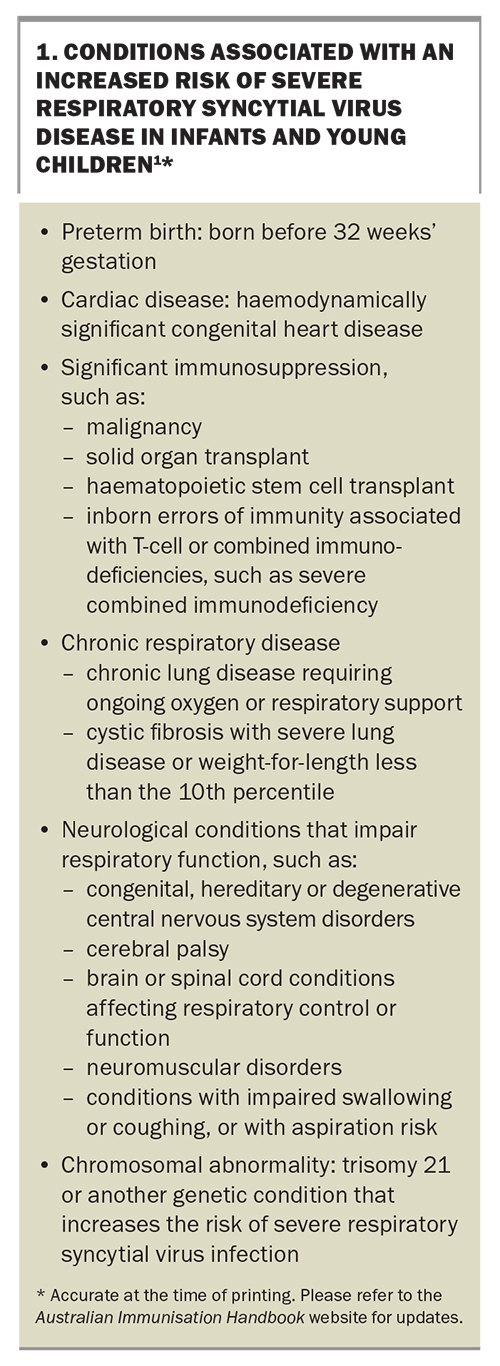
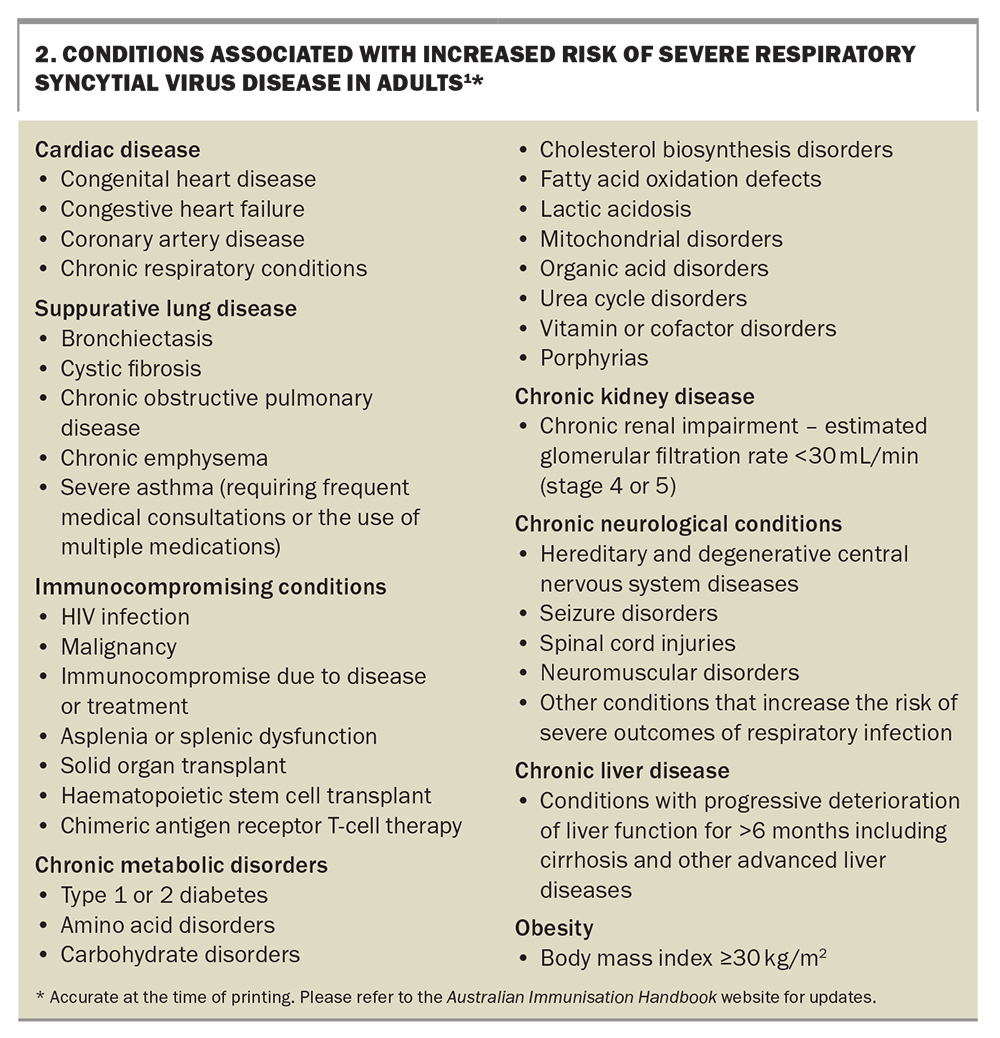
Children aged younger than 5 years account for most RSV-related hospitalisations, with the highest rates in infants aged 0 to 2 months (about one in 36). Preterm infants face a markedly higher risk, up to eight times greater for those born before 28 weeks.3,7 Aboriginal and Torres Strait Islander children experience about twice the hospitalisation rates compared with non-Indigenous children.8-10 In older adults, RSV-associated hospitalisations increase steadily from 50 years of age, with a 20-fold rise in those aged 65 years and older compared with younger adults.11 A modelling study estimated that adults aged 75 years and older have a hospitalisation rate of 256 per 100,000.12
RSV relies on its fusion (F) protein to enter lung cells and cause infection. RSV vaccines and monoclonal antibodies are specifically designed to target the F protein in its prefusion conformation. This form exposes critical neutralising epitopes that are hidden or altered after fusion, enabling high-affinity antibody binding and stronger virus neutralisation. Stabilising the F protein in this state maximises immunogenicity and provides robust, long-lasting protection while reducing the risk of vaccine-enhanced disease.13,14 Vaccine-enhanced disease was a particular issue to overcome in the early vaccination trials of the 1960s with vaccine recipients developing more severe illness after exposure to RSV. Attention then turned to passive immunisation for high-risk infants in the 1990s.15
The Australian immunisation strategy has been to target and protect those at high risk: young infants and older adults. In 2024, the first modern RSV immunisation products became available in Australia. Five products have been registered in the last three years with the TGA: the recombinant RSV prefusion F protein (RSVPreF) vaccine, the RSVPreF3 OA (AS01E adjuvanted) vaccine, nirsevimab, the RSV F protein mRNA (nucleoside modified) vaccine and clesrovimab. These are in addition to palivizumab, a short-acting monoclonal antibody registered since 2015, and now largely superseded by newer agents. These products have differing indications, age approvals and funding criteria (Table 1).5,16,17
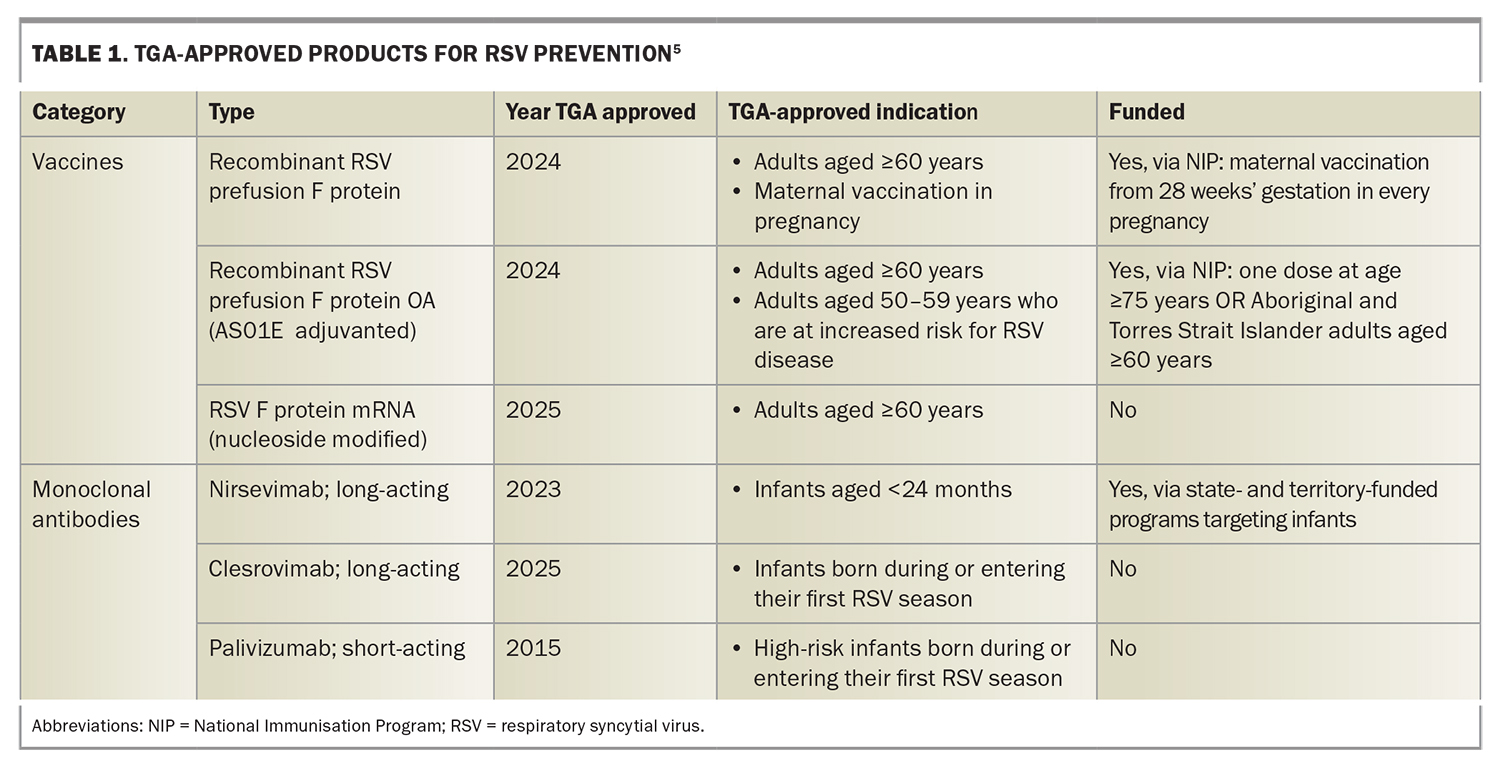
For infant protection, the RSVPreF vaccine is recommended as maternal immunisation from 28 weeks’ gestation in every pregnancy to provide passive protection for up to six months. In a clinical trial, the RSVPreF vaccine demonstrated 57% efficacy against RSV-associated hospitalisation and 70% efficacy against severe RSV infection in infants during the first six months of life.10,18 The RSVPreF vaccine became available for free under the NIP in February 2025.10
Common adverse events following maternal RSVPreF vaccination are predominantly mild injection-site reactions, with systemic and serious adverse event rates similar to placebo.18,19 Postmarketing surveillance, including AusVaxSafety data (n = 968, as of 31 March 2026), confirms mostly mild, short-lived reactions, with fewer than 2% of patients seeking medical care.20 Clinical trial results suggested a possible tendency towards increased preterm birth, but this has not been observed in early postmarketing surveillance, with US data showing rates within expected ranges and no increased risk identified among women vaccinated between 32 and 36 weeks’ gestation.18,21
In addition, since April 2025, nirsevimab has been available as a long-acting monoclonal antibody offering up to six months of protection after a single dose. Clinical trials and postmarketing surveillance show nirsevimab is highly effective and well tolerated.14,22 Most reported adverse events, such as injection-site reactions and fever, were mild and short-lived. Serious adverse events were rare (<1%) and unrelated to the drug, with no cases of antibody-dependent enhancement or severe hypersensitivity reported. Postmarketing surveillance in Spain, Western Australia and Italy confirmed these findings, showing consistent tolerability and no safety concerns.14,22-24 Overall, nirsevimab remains well tolerated across different settings, supporting its use for RSV prevention in infants.
Nirsevimab is provided free through state and territory initiatives to protect infants and young children at increased risk of severe RSV infection. It is available in all Australian jurisdictions, with some offering year-round administration (Australian Capital Territory, New South Wales, Queensland, Northern Territory) and others running seasonal programs aligned with RSV peak periods (South Australia, Tasmania, Victoria, Western Australia).25
The Australian Immunisation Handbook recommends nirsevimab for the following groups (funded eligibility varies by state and territory):26
- infants younger than eight months of age who have not received adequate maternal RSV protection, including those whose mothers were unvaccinated or vaccinated less than two weeks before birth.
- children younger than 24 months of age with certain high-risk conditions, regardless of maternal vaccination status (Box 1).1
To maintain protection, high-risk children aged 8 to younger than 24 months should receive an additional dose before their second or third RSV season, with a minimum six-month interval between doses and administration ideally timed just before the RSV season.
Since rollout, RSV prevention programs have reduced infant hospitalisations by 57% in Western Australia and 48% in Queensland, preventing over 1000 admissions among infants aged younger than 6 months. In 2024, the effectiveness of nirsevimab against RSV hospitalisation in these jurisdictions was estimated at 83.1% (95% confidence interval [CI], 67.4–91.3).24,27,28
By 2025, all jurisdictions had access to NIP-funded maternal vaccination and state- or territory-funded nirsevimab. A sentinel hospital analysis of infants admitted with acute respiratory infection between 1 April 2024 and 30 November 2025 estimated an overall immunisation effectiveness against RSV hospitalisation of 82.0% (95% CI, 70.0–89.2), with effectiveness of 80.8% (95% CI, 67.8–88.6) for maternal vaccination and 89.5% (95% CI, 73.4–95.8) for nirsevimab.29 Program impact was associated with reductions in hospitalisations of 43.8% among infants aged 0 to younger than 3 months, 20.1% among those aged 3 to younger than 6 months, and 8.5% among those aged 6 to 12 months.29 These data highlight the substantial impact of Australia’s RSV prevention strategy in reducing severe RSV disease and hospitalisations among vulnerable populations.
A single dose of an RSV vaccine – RSVPreF or RSVPreF3 OA (AS01E adjuvanted) – is recommended for adults aged 75 years and older, adults aged 60 years and older with medical comorbidities, and Aboriginal and Torres Strait Islander adults aged 60 years and older.30 From 15 May 2026, the RSVPreF3 OA (AS01E adjuvanted) vaccine is NIP-funded for adults aged 75 years and older, and Aboriginal and Torres Strait Islander adults aged 60 years and older. Adults aged 50 to 59 years with medical conditions can also consider vaccination with the RSVPreF3 OA (AS01E adjuvanted) vaccine after discussion with their GP.
Given the recent introduction of RSV vaccines globally, longitudinal data on the duration of protection are currently limited to three years. In adults aged 60 years and older who received a single preseason dose of the RSVPreF3 OA (AS01E adjuvanted) vaccine, the efficacy against RSV-related lower respiratory tract disease was 82.6% (95% CI, 57.9–94.1) in season one, declining to 56.1% (95% CI, 28.2–74.4) in season two and 48.0% (95% CI, 8.7–72.0) in season three. In a subgroup that received a booster before season two, the efficacy in season three was higher at 68.4% (95% CI, 24.6–89.1), although not statistically significant. These data suggest that protection from one dose appears to persist for at least two to three years; the need for further doses remains uncertain.31
Postmarketing surveillance of more than 2000 RSVPreF3 OA (AS01E adjuvanted) vaccine recipients in Australia showed that over 63% reported no side effects in the first three days after vaccination, whereas the remaining 37% experienced mostly mild reactions (predominantly local injection-site reactions).
Influenza
Influenza is a highly contagious RNA virus of the Orthomyxoviridae family that causes an acute respiratory illness and is a major contributor to hospitalisation and mortality.32 Children younger than 5 years of age, and adults aged 65 years and older experience the highest rates of influenza- related hospitalisation.33
In 2025, Australia recorded one of the highest numbers of laboratory-confirmed influenza cases since influenza became nationally notifiable in 2001, with more than 480,000 cases reported.34 Influenza notifications were the highest among children aged 5 to 9 years, followed by those aged 0 to 4 years. Contributing factors include suboptimal influenza vaccination coverage and an extension of influenza activity to November 2025, associated with the late emergence of a rapidly spreading H3N2 subclade (subclade K).35,36
The Australian influenza vaccination program recommends vaccination for all individuals aged 6 months and older and uses the Southern Hemisphere influenza vaccine formulation. Annual influenza vaccine effectiveness varies depending on how well circulating strains match those included in the vaccine and can range between 40 and 60%, with higher effectiveness against intensive care unit admissions.37,38 Vaccinated people have a lower estimated incidence of influenza (0.9%) compared with unvaccinated people (2.3%).39 Moreover, over eight seasons, between 2010 to 2017, influenza vaccination was associated with a 31% (95% CI, 3–51%) reduction in influenza-related mortality.40
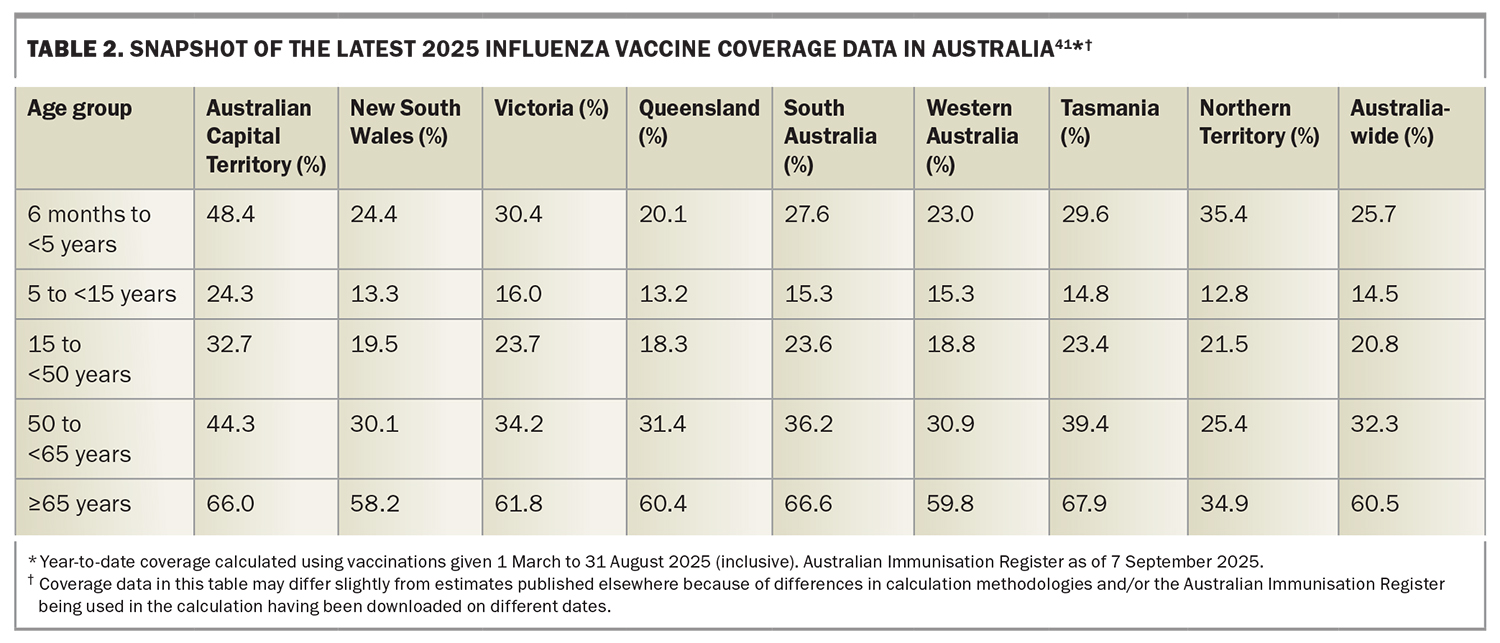
Despite a well-established vaccination program, influenza vaccine uptake in Australia has been suboptimal and remained so in 2025. Data on age-specific coverage between 1 March and 31 August are shown in Table 2.41
Influenza vaccination campaigns in temperate regions of Australia commence in autumn (usually March to April). In tropical areas of Australia, where influenza circulation is less seasonal, vaccination can be administered year-round. Protection following immunisation generally persists for about four to six months.32 Influenza vaccination is funded under the NIP for children aged 6 months to 5 years, pregnant women, all Aboriginal and Torres Strait Islander people aged 6 months and older, and individuals aged 6 months and older with underlying medical conditions that increase their risk of severe influenza.
Two doses of influenza vaccine, given four weeks apart, are recommended for:42
- children aged 6 months to younger than 2 years receiving the influenza vaccine for the first time
- individuals of any age receiving their first influenza vaccine following haematopoietic stem cell transplant, solid organ transplant or chimeric antigen receptor T-cell therapy
- children aged 6 months to younger than 9 years with a medical risk condition receiving the influenza vaccine for the first time.
Influenza vaccination is recommended in every pregnancy, at any gestational age, using an inactivated influenza vaccine. If vaccination occurred before pregnancy or earlier in the same year, revaccination during pregnancy is recommended, including with the subsequent annual vaccine if available while pregnant, to optimise maternal and infant protection.42 Travellers are advised to receive a repeat influenza vaccine before overseas travel if more than six months have elapsed since receiving their previous dose.32 Until recently, all influenza vaccines in Australia were inactivated quadrivalent, containing two strains of influenza A and two strains of influenza B. In 2026, Australia transitioned to trivalent influenza vaccines, containing two A strains and one B lineage, because of the lack of circulation of the B/Yamagata lineage virus since 2020.42 The currently available influenza vaccines include injectable (inactivated) and intranasal (live attenuated) vaccines, which have comparable effectiveness.43
The trivalent inactivated influenza vaccine (surface antigen, inactivated, prepared in cell cultures) is the first cell-based vaccine to be added to the NIP and has been available since 2024 for eligible high-risk groups aged 5 to 64 years. Cell-based influenza vaccines provide an alternative to traditional egg-based formulations and may reduce the risk of egg‑adapted mutations during production.44 They also allow for faster, egg-independent manufacturing and rollout in response to significant genetic shifts.45
Individuals with egg allergy can safely be vaccinated with egg-based vaccines as the amount of residual egg protein is less than 1 microgram.43 The absolute contraindication to influenza vaccination is anaphylaxis to a previous influenza vaccine or any of its components. Anyone who has experienced a severe reaction after a prior dose should consult their immunisation provider to discuss the risks and benefits of vaccination.
Newly approved live-attenuated vaccine in Australia
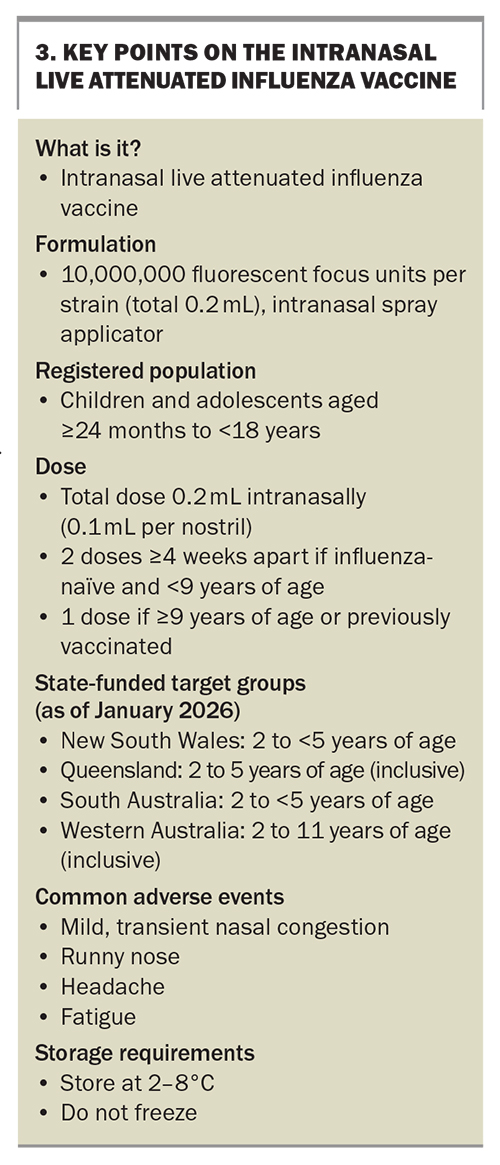
The intranasal LAIV was approved by the TGA in November 2025 for children and adolescents aged 2 to less than 18 years, offering a needle-free option.46 Several states – including New South Wales, Queensland, South Australia and Western Australia – fund the intranasal LAIV for children aged 2 to 4 years (Queensland includes children aged 5 years [inclusive] and Western Australia extends coverage to 11 years of age [inclusive]). Children younger than 18 years of age outside these programs can access it privately.47-50 The vaccine is administered intranasally, with 0.1 mL given per nostril. Its needle-free delivery aims to support improved uptake among paediatric populations in Australia.
The intranasal LAIV delivers live, attenuated influenza viruses to the nasal passages, where they replicate locally without causing illness, inducing mucosal immunoglobulin A and T-cell-mediated immune responses in the respiratory tract.26,51 By targeting the primary site of viral entry, this mucosal immune response limits viral replication and more closely mimics the protection induced by natural influenza infection compared with intramuscular vaccines.51
The intranasal LAIV has been widely used in the Northern Hemisphere since 2003, with international data showing comparable effectiveness to injectable vaccines in children. A recent European systematic review found no overall difference in efficacy between intranasal LAIVs and inactivated intramuscular vaccines, whereas subgroup analysis of large multicentre trials showed trivalent LAIVs were significantly more effective than trivalent inactivated intramuscular vaccines (odds ratio [OR], 0.50; 95% CI, 0.28–0.88).52 Safety data were reassuring, with only 23 serious vaccine-related adverse events reported among 17,833 participants and no significant difference between vaccine types.52
International experience demonstrates that high influenza vaccine uptake in children can confer broader community benefits. In England, a pilot program delivering LAIVs to primary school children through a targeted school-based strategy achieved uptake of 56.8%.53 Compared with nonpilot areas, this was associated with a 94% reduction in GP consultations for influenza-like illness and a 74% reduction in emergency department respiratory presentations. Notably, indirect effects were also observed in adults aged 17 years and older, with a 59% reduction in GP consultations for influenza-like illness in pilot compared with nonpilot areas. Studies from Ireland and Spain have also demonstrated significant increases in influenza vaccine uptake with school-based delivery models and provide valuable insights for similar programs in the future in Australia.54,55
Expected side effects are generally mild and transient, including nasal congestion, runny nose, headache and fatigue, whereas serious adverse events are extremely rare. The intranasal LAIV has been added to the Australian Immunisation Register and should be reported, as with all other influenza vaccines. Key points regarding the intranasal LAIV are summarised in Box 3.
Influenza vaccination for older people
Influenza-related mortality is the highest in adults aged 65 years and older, and vaccination in this group significantly reduces hospitalisations from influenza and pneumonia, as well as all-cause mortality.32,56
High-dose or adjuvanted vaccines help overcome age-related immunosenescence and offer enhanced protection over standard influenza vaccines. Postlicensure studies among adults aged 65 years and older have shown that adjuvanted influenza vaccines are 4.7 to 33% more effective than standard-dose vaccines in preventing hospitalisation because of influenza or pneumonia.57-59
Recommended vaccines include the trivalent influenza vaccine (surface antigen, inactivated, adjuvanted), which is registered for use in adults aged 50 years and older and NIP funded for adults aged 65 years and older, and the high‑dose trivalent inactivated influenza vaccine (split virion) available via private prescription for adults aged 60 years and older.16 Both are preferred over standard influenza vaccines in these age groups, with no preference between them. Aged care settings are particularly vulnerable to respiratory viral outbreaks, with high rates of severe disease and mortality. Accordingly, influenza vaccination is strongly recommended for both residents and staff.60
Herpes zoster
Reactivation of varicella zoster virus causes herpes zoster, also known as shingles, an inflammation of the dorsal root ganglion resulting in neuropathic pain and a vesicular rash with a dermatomal distribution.61
About 20 to 30% of people will have herpes zoster in their lifetime, even in the absence of a reported or recalled history of chickenpox.62 The risk of herpes zoster is greater in older adults because of waning immunity and in people with immunocompromise. Complications of herpes zoster include postherpetic neuralgia, which can cause debilitating pain more than 90 days after rash onset, and herpes zoster ophthalmicus, an ophthalmic emergency involving the trigeminal nerve and orbital structures.63,64 In the most severe cases, herpes zoster can cause disseminated infection with multiorgan involvement.64
The nonlive recombinant herpes zoster vaccine replaced the live-attenuated herpes zoster vaccine on the NIP in November 2023.65 The live-attenuated herpes zoster vaccine was subsequently withdrawn from use in Australia in December 2024.62 The nonlive recombinant herpes zoster vaccine contains varicella-zoster virus glycoprotein E and the AS01B adjuvant, which enhances the vaccine-related immune response. A two-dose schedule is recommended, administered two to six months apart for people who are immunocompetent and one to two months apart for people with immunocompromise.
An international open-label phase 3b study demonstrated sustained efficacy of the recombinant herpes zoster vaccine against herpes zoster, with an effectiveness of 79.8% (95% CI, 73.7–84.6) in adults aged 50 years and older, and 73.2% (95% CI, 62.9–80.9) in those aged 70 years and older, as well as high protection against postherpetic neuralgia (87.5%; 95% CI, 64.8–96.8) and other zoster‑related complications (91.7%; 95% CI, 43.7–99.8). Protection remained durable for up to 11 years after completion of the two‑dose schedule, with efficacy sustained at 82.0% (95% CI, 63.0–92.2).66
An additional benefit of the recombinant herpes zoster vaccine may be a reduction in dementia risk. Promising research has demonstrated a statistically significant reduction in the risk of dementia among patients who receive two doses of recombinant zoster vaccine, especially in women.67 This research was conducted in adults aged 65 years and older, but there may also be benefits to administering the recombinant herpes zoster vaccine to younger individuals.68 More recently, a large retrospective cohort study reported a 21% reduction in cardiovascular events among vaccinated individuals.69
The nonlive recombinant herpes zoster vaccine is funded under the NIP for the following high-risk groups:70
- all people aged 65 years and older
- Aboriginal and Torres Strait Islander people aged 50 years and older
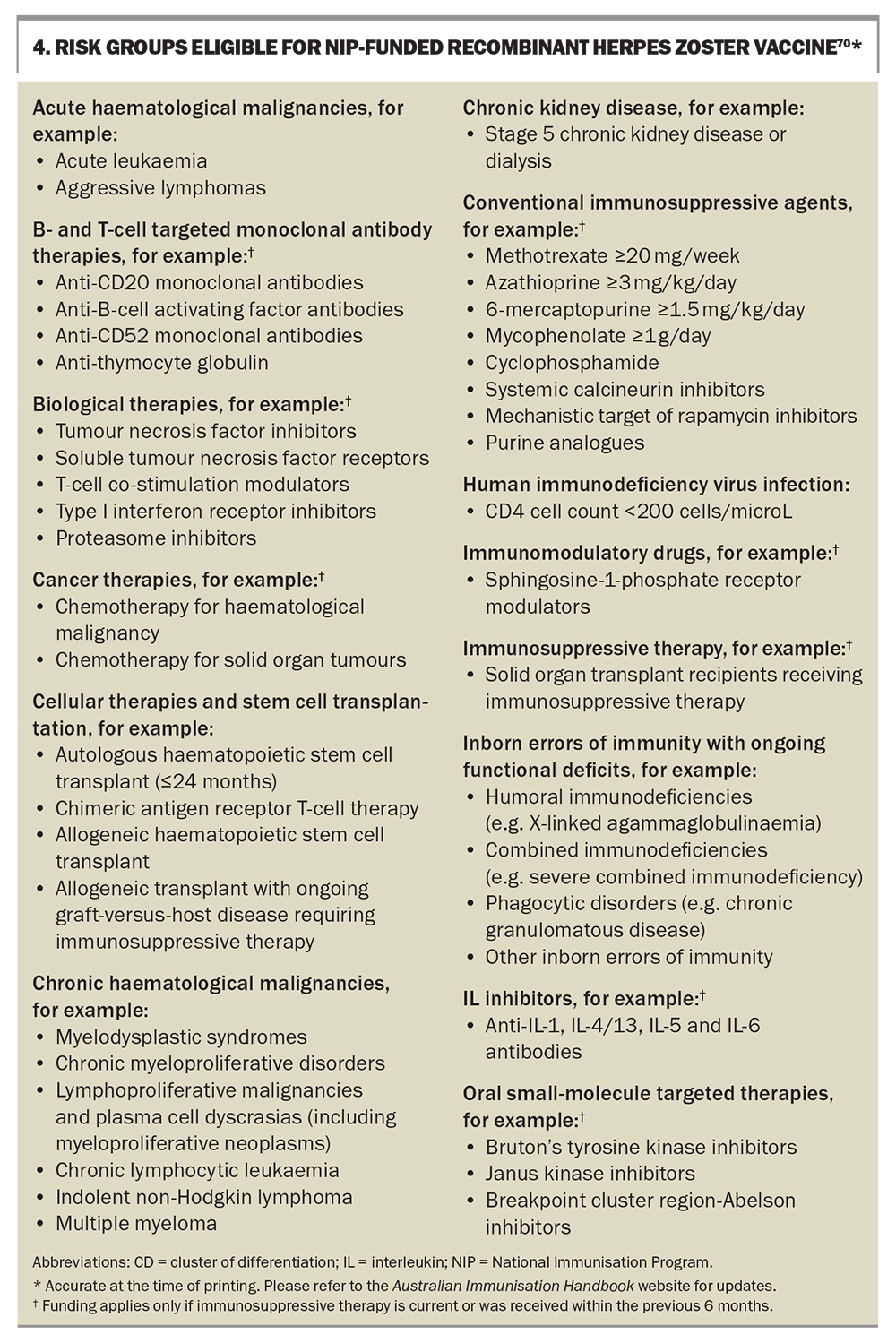
- immunocompromised patients aged 18 years and older who are considered at increased risk of herpes zoster because of an underlying condition, immunomodulatory treatments or immunosuppressive treatments (Box 4).
The nonlive recombinant herpes zoster vaccine is recommended but not funded for adults aged 50 years and older who are immunocompetent.70
Herpes zoster may result from reactivation of the wild-type virus or, extremely rarely, the vaccine strain.70 If an individual received the varicella vaccine at the recommended age of 18 months and has no history of chickenpox, they may not require a herpes zoster vaccine. If their varicella infection or vaccination history is unknown, it is safe and recommended to administer a herpes zoster vaccine at the appropriate age, given the significant morbidity associated with herpes zoster episodes.70 The nonlive recombinant herpes zoster vaccine is not interchangeable with varicella vaccines and is not indicated for the prevention of chickenpox.71
For optimal long-term immunity, the two-dose nonlive recombinant herpes zoster vaccine schedule should be completed even if an individual develops herpes zoster infection after the first dose, as this is not a contraindication. Following shingles infection, vaccination should be deferred for 12 months in immunocompetent individuals and for three months in people with immunocompromise, because of conferred natural immunity.70
The nonlive recombinant herpes zoster vaccine is a highly reactogenic vaccine, with reactions more frequent after the second dose than the first. It frequently causes mild, short-lived injection‑site reactions such as pain, swelling and redness, as well as systemic symptoms such as fatigue, myalgia, fever and gastrointestinal upset, which typically resolve within a few days.70 A transient increase in herpes zoster incidence has been observed shortly after the first dose in adults aged 65 years and older; however, these episodes are typically mild, with good vaccine effectiveness after completion of the two-dose schedule.72 Educating patients about the expected reactogenicity can help support adherence to the second dose.73,74
Pneumococcal disease
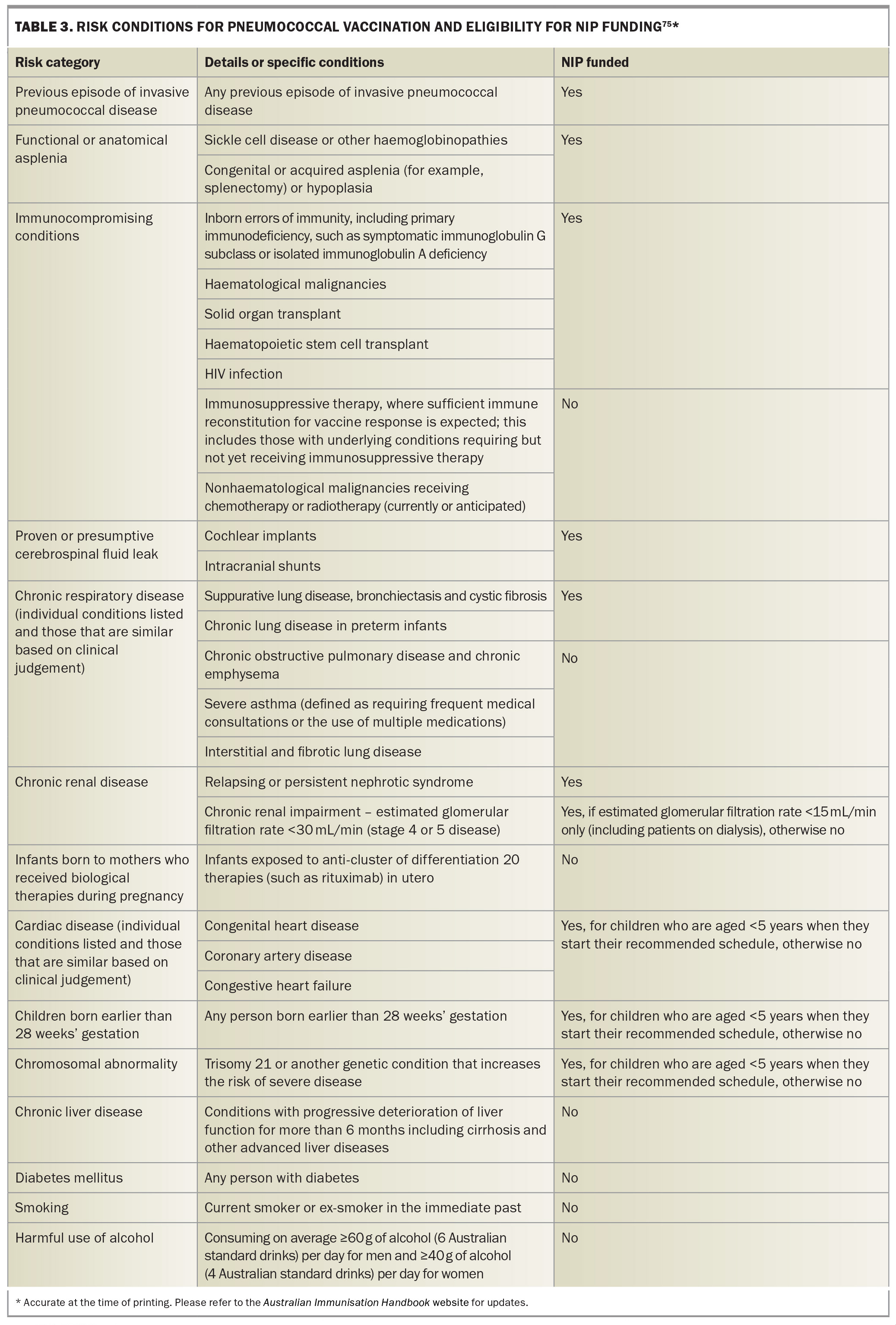
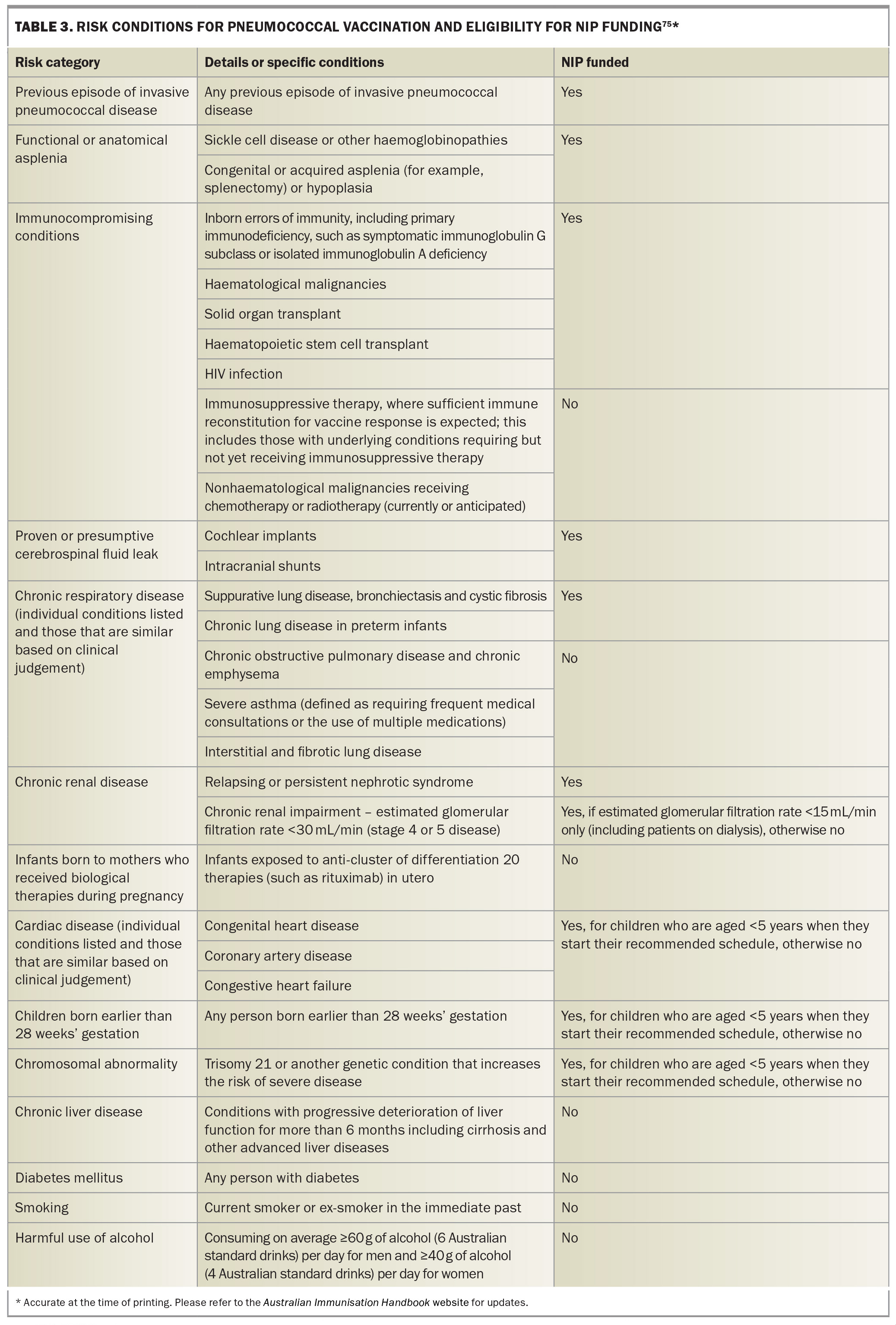
Streptococcus pneumoniae can lead to invasive pneumococcal disease (IPD), a serious bacterial infection that includes meningitis, bacteraemic pneumonia and sepsis. Pneumococcal disease poses a significant health burden in Australia, contributing to severe illness and mortality among vulnerable groups. Children aged younger than 2 years, older adults, individuals with underlying medical conditions, and Aboriginal and Torres Strait Islander peoples are at increased risk of severe disease (Table 3).75,76
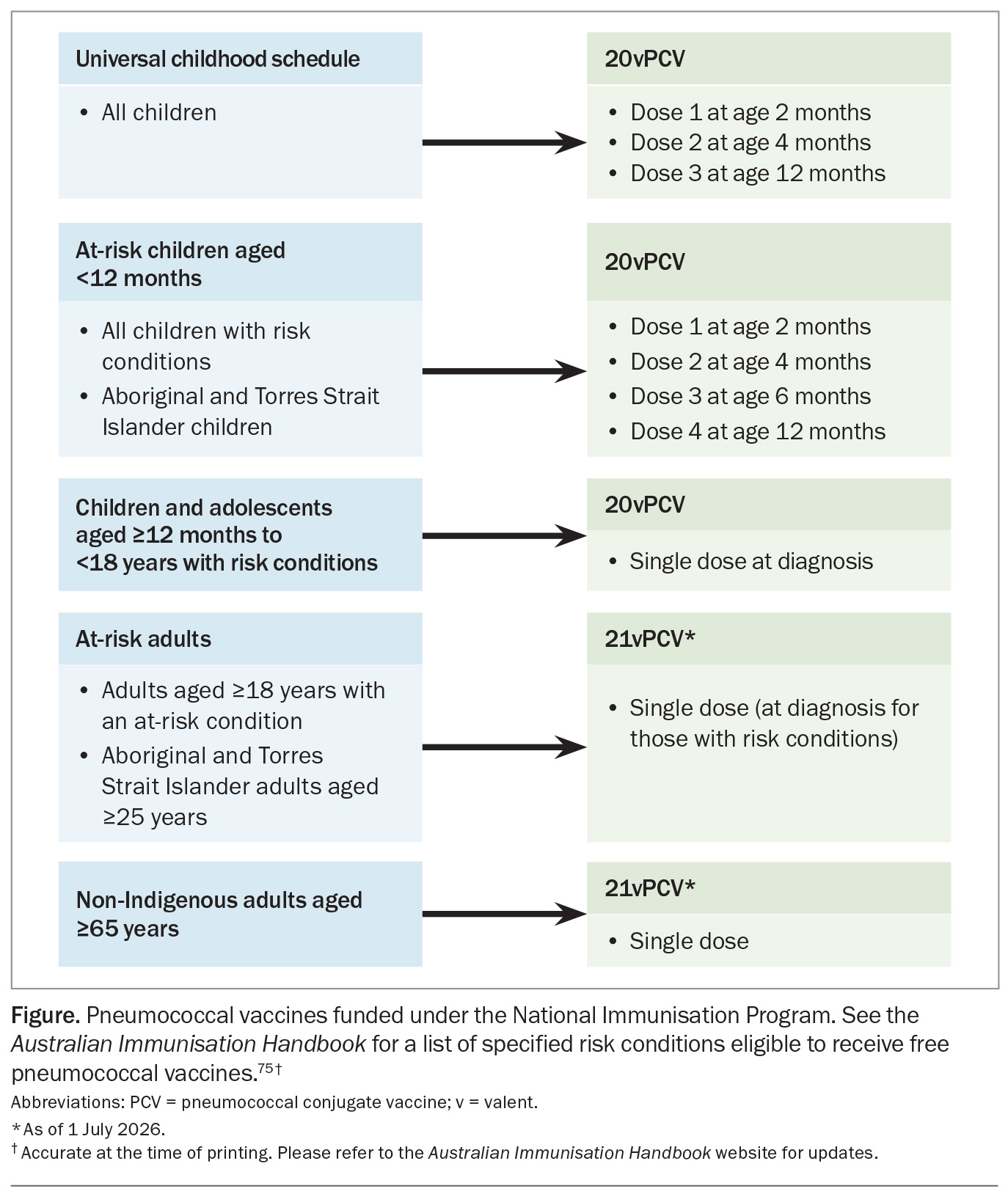
Australia’s pneumococcal vaccination program has evolved to address changing disease patterns. More than 100 pneumococcal serotypes exist, and a subset causes invasive disease. Two principal vaccine platforms are available: pneumococcal conjugate vaccines (PCVs) and polysaccharide vaccines (PPVs), with PCVs eliciting a T-cell-dependent response with establishment of B-cell memory and longer-term immunity.77,78 7vPCV was NIP funded for all infants in 2005 and replaced by 13vPCV in 2011, leading to a substantial reduction in IPD caused by vaccine serotypes.79 However, this was accompanied by serotype replacement, with an increased incidence of disease because of an emergence of non-13vPCV serotypes.76,80 In response, higher-valency PCVs have been developed, with the TGA having approved 15vPCV (adding serotypes 22F and 33F), 20vPCV (adding five more: 8, 10A, 11A, 12F and 15B) and 21vPCV (discussed in more detail below), which now account for a growing proportion of IPD cases.75,81 From 1 September 2025, 20vPCV became the NIP-funded vaccine for all children aged younger than 18 years, replacing both 13vPCV and 23vPPV.82,83
The current pneumococcal vaccination schedule for all ages is shown in the Figure. The infant pneumococcal schedule now has 20vPCV administered at 2 months (or from 6 weeks), 4 months and 12 months (2+1 schedule) of age, and a 6-month dose (3+1 schedule) for children at increased risk, including Aboriginal and Torres Strait Islander children and those with specified risk conditions (Table 3).75 Children who commenced vaccination with 13vPCV or 15vPCV should complete the series with 20vPCV, whereas those who have completed an age-appropriate schedule do not require additional doses.
The 20vPCV includes seven of the 11 additional serotypes previously covered by 23vPPV, and the remaining four serotypes now account for a minimal IPD burden. Therefore, 23vPPV is no longer recommended in children, including those at increased risk. This transition simplifies the schedule while maintaining broad serotype coverage and protection against IPD.
For Aboriginal and Torres Strait Islander children and children with risk conditions who completed a primary series with 13vPCV or 15vPCV, a single dose of 20vPCV is recommended in place of 23vPPV at the age of 4 years or at least 12 months after the last PCV dose, whichever is later. If 23vPPV has already been administered, 20vPCV replaces the second 23vPPV dose and should be given at an interval of at least five years after the first dose.75
The 20vPCV has been shown in clinical trials to be safe for use in children, with a safety profile comparable with that of 13vPCV. The most common reaction is pain at the injection site. Systemic reactions may include irritability, drowsiness and mild fever, and are typically transient, with no evidence of increased serious adverse events compared with 13vPCV. The only absolute contraindication is anaphylaxis to the vaccine or its components.75,84
The adult pneumococcal vaccination program (Figure) is currently under review, with updates expected in mid-2026.74
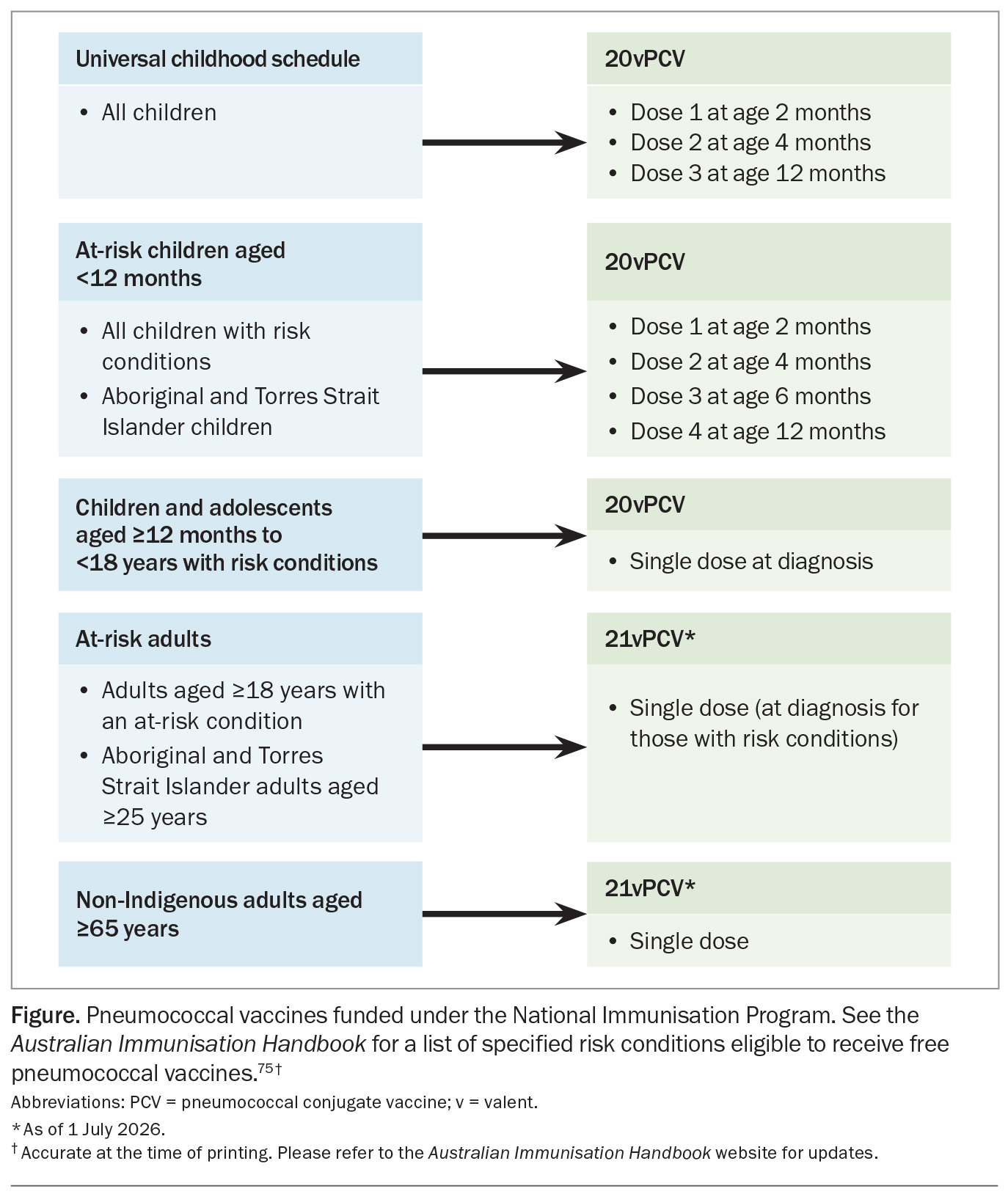
Other conjugate vaccines (15vPCV and 20vPCV) are registered for adult use but are not NIP funded and are available on private prescription.82 Australia’s adult pneumococcal vaccination program has been under review. 21vPCV has been recommended by Australia’s Pharmaceutical Benefits Advisory Committee for listing to prevent pneumococcal disease in individuals aged 18 years and older with an at-risk condition, Aboriginal and Torres Strait Islander adults aged 25 years and older, and non-Indigenous adults aged 65 years and older, and will be NIP funded for these groups from 1 July 2026.85 It targets a different set of serotypes (15A, 15C, 16F, 23A, 23B, 24F, 31 and 35B) that tend to cause pneumococcal disease in older adults.86 This vaccine will replace the previous recommendation of 13vPCV with or without 23vPCV in adults. It is important for vaccine providers to be abreast of the current vaccines available and the recommendations and schedules for different population groups in this evolving environment.
Coronavirus disease 2019
Australia’s national coronavirus disease 2019 (COVID-19) vaccination program was launched in February 2021. Although the pandemic saw an initial mass vaccine uptake among eligible Australians, ongoing exposure to COVID-19 in the community since then has resulted in widespread hybrid immunity, and the COVID-19 vaccination strategy has shifted towards protecting vulnerable populations (namely, the elderly and people with medical comorbidities) from hospitalisation and severe disease.87,88 Of the 110,000 hospitalisations involving a COVID-19 diagnosis in a 12-month period between 2023 and 2024, 45% were in people aged 65 to 84 years.89 There were 25,500 hospitalisations of patients with one recorded comorbid chronic condition; 8.2% spent time in intensive care and 7.5% died in hospital.89 Crucially, among patients aged 65 years and older, receiving a COVID-19 vaccine in the past three months reduced the risk of death from COVID-19 by as much as 74.9% compared with those who were unvaccinated. After six months, the risk was reduced by more than 50%.90 Therefore, continuing to offer boosters to these groups significantly reduces mortality and hospitalisation.
Additional benefits of vaccination have been seen in relation to long COVID. Vaccination appears to prevent the prolongation of acute COVID-19 symptoms and may ameliorate symptoms such as fatigue and brain fog in some patients with long-term sequelae after infection.91
Two COVID-19 mRNA vaccine formulations are currently available in Australia, targeting the severe acute respiratory syndrome coronavirus 2 (SARS-CoV-2) JN.1 and LP.8.1 subvariants. Both mRNA vaccines are designed to target more recent circulating SARS-CoV-2 variants and are expected to be more effective than older formulations. Original and bivalent COVID-19 vaccine formulations containing the ancestral SARS-CoV-2 strain are no longer available in Australia.92
COVID-19 vaccines are generally well tolerated. Common side effects of COVID‑19 vaccination include injection-site pain, fatigue, headache, muscle aches, chills and joint pain.92
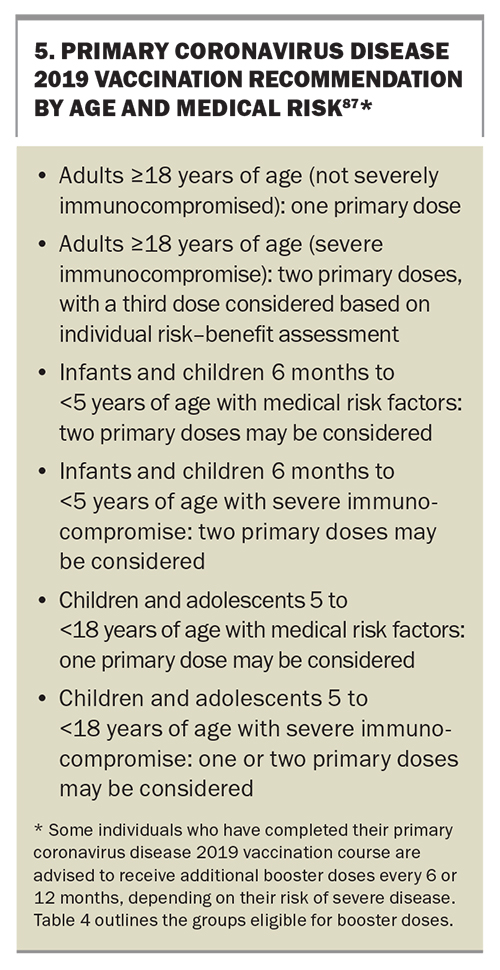
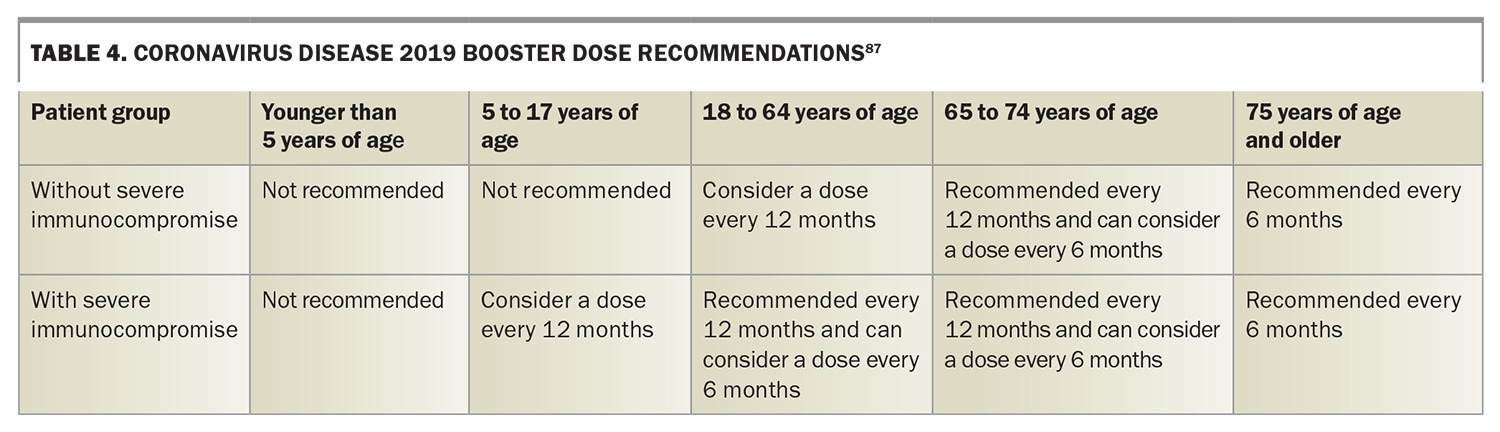
The recommended primary COVID-19 vaccination schedule varies according to age and medical risk (Box 5).87 The groups recommended for booster doses are summarised in Table 4.87
Vaccination in people with immunocompromise
All previously discussed vaccines include specific recommendations for people who are medically at risk and those who have immunocompromise. This reflects the increased susceptibility of these populations to severe vaccine-preventable diseases. Weakened immunity arises from inherited disorders or secondary causes such as underlying medical conditions (e.g. diabetes) or immunosuppressive therapy.93,94 Vaccine responses are often attenuated in these populations, necessitating modified schedules, including additional or booster doses. Both susceptibility to infection and vaccine responsiveness vary according to the nature and severity of immunosuppression, concomitant therapies and age.95 Vaccination should be individualised, considering history, type and duration of immunosuppressive therapy, and degree of immunocompromise. Further details on medical conditions, immunosuppressive therapies and associated levels of immunocompromise can be found in the Australian Immunisation Handbook.96
Live vaccines are contraindicated in moderate to severe immunosuppression because of infection risk, whereas nonlive vaccines are safe. Ideally, all vaccines should be completed before starting immunosuppressive therapy, with live vaccines given at least four weeks before treatment.96 Infants exposed to immunosuppressive biological agents in utero should not receive live vaccines, including the Bacille Calmette–Guérin vaccine, until at least 6 months of age. The rotavirus vaccine is an exception and can be given safely to most infants, except those exposed to anti-cluster of differentiation 20 antibodies (e.g. rituximab).96,97
Advances in immunomodulatory therapies and complex treatment regimens make assessing immunosuppression challenging. If uncertainty exists regarding vaccine safety, timing or the appropriateness of serological testing, guidance should be sought from an immunisation or infectious diseases specialist.
Role of serological testing
Serology is not routinely recommended but may guide decision-making in specific situations, such as vaccination planning before immunosuppression, confirming immunity after vaccination, determining booster needs or informing postexposure management (e.g. the need for immunoglobulin post-measles exposure). Serological testing should be considered only when:94
- a reliable assay is available
- a clear correlate of protection (a measurable immune marker indicating immunity) is established
- results will inform clinical decisions such as revaccination or prophylaxis.
Evidence supports serology for certain vaccines, such as hepatitis B, measles, rubella, rabies and varicella.94 Even with these pathogens, unnecessary testing should be avoided because of difficulty in interpretation, which can lead to inappropriate decisions and delays in immunisation. Serology guidance within the Australian Immunisation Handbook is likely to evolve as new assays become available, and when in doubt, guidance should be sought from an immunisation or infectious diseases specialist.
Australian Immunisation Register
The Australian Immunisation Register is a national, whole-of-life register that records vaccines administered to individuals in Australia. It evolved from the Australian Childhood Immunisation Register, which was expanded to include all age groups in 2016.98,99 It is mandatory for vaccine providers to record NIP-funded, COVID-19, influenza and Japanese encephalitis virus vaccines (including route of administration) and it is recommended that all vaccines, including those administered overseas, are reported. From 1 March 2025, it also became mandatory to report whether an individual was pregnant at the time of vaccination.100
The Australian Immunisation Register has become a valuable central resource for both individuals and vaccinators, including clinicians, immunisation nurses and pharmacists, supporting the review of vaccination histories and informing eligibility and timing of subsequent vaccines, particularly as new vaccines are incorporated into the NIP.100
Adverse events following immunisation
Vaccines are generally safe, although adverse reactions may occasionally occur. An adverse event following immunisation (AEFI) refers to any undesirable or unexpected event that occurs after a vaccine is administered.101
AEFIs may arise from an individual’s response to a vaccine component, the vaccination procedure itself, coincidental events unrelated to vaccination or issues with vaccine handling or administration. Most serious AEFIs develop within the first 10 minutes after vaccination, making close observation during this period essential for timely recognition and management of acute reactions.101
Of the vaccines discussed, most have mild acute AEFIs, including fever, myalgia and local reactions, although the nonlive recombinant herpes zoster vaccine is particularly reactogenic. Data on current, up-to-date Australian experience can be found at https://www.ausvaxsafety.org.au/. Notable adverse events of special interest include Guillain–Barré syndrome (GBS), myocarditis and thrombosis with thrombocytopenia syndrome.
GBS is a rare, immune-mediated neuropathy. Although most cases follow gastrointestinal or respiratory infections, it has been infrequently associated with certain vaccines. GBS occurs in the general population at a rate of one to two cases per 100,000 people per year. Seasonal influenza vaccines are linked to an estimated one additional case per 1,000,000 doses. The risk of developing GBS is several times higher after influenza infection than after influenza vaccination.102
There is also a rare risk of GBS after the nonlive recombinant herpes zoster vaccine.81,103 Postmarketing data for this vaccine in adults aged 65 years and older show a rare risk of about six cases per 1,000,000 doses after the first dose, with no increased risk after the second dose. Vaccination is recommended unless the patient experienced GBS within six weeks of a vaccine without a trigger. An increased risk of GBS following RSVPreF or RSVPreF3 OA (AS01E adjuvanted) vaccines has been reported. A US analysis presented in October 2024 estimated an excess of nine cases of GBS per 1,000,000 doses of the RSVPreF vaccine and seven per million doses of the RSVPreF3 OA (AS01E adjuvanted) vaccine in adults aged 65 years and older.10 A large national study from England identified a small but measurable increase in GBS following RSV vaccination, with a relative incidence of 3.34 and an attributable risk of about 23 cases per 1,000,000 doses with the RSVPreF vaccine.104
For patients with a previous history of GBS, irrespective of what the trigger may have been, the risk of recurrence of GBS following vaccination is thought to be low. Overall, GBS remains a rare event following immunisation, and the absolute risks are far exceeded by the protective benefits of vaccination.
Myocarditis and pericarditis following COVID-19 vaccination are very rare, with the highest incidence reported in adolescent males after a second dose of an mRNA vaccine. Of note, no cases of myocarditis have been reported in children aged 6 months to 11 years. Although uncommon, COVID-19 vaccine recipients should be informed of this risk.105,106
Individuals with recent myocarditis or pericarditis within the past three months, acute rheumatic fever or acute rheumatic heart disease with myocardial inflammation, or acute decompensated heart failure should seek advice from their GP, immunisation specialist and cardiologist before vaccination to determine appropriate timing.87
Emerging evidence supports a favourable long-term prognosis for vaccine-associated myocarditis. A recent prospective follow-up study of 256 people with confirmed or probable myocarditis after mRNA COVID-19 vaccination conducted between April 2021 and July 2022 found that 60% reported ongoing symptoms at three to six months, decreasing to 35% at 12 to 18 months. Overall, clinical severity remained mild among the individuals, with low hospitalisation rates and improved quality of life over time.107
Thrombosis with thrombocytopenia syndrome has not been associated with any of the current COVID-19 vaccines used in Australia. The syndrome was previously observed only after the first dose of the COVID-19 ChAdOx1-S vaccine at about two to three cases per 100,000 doses, and this vaccine was discontinued nationally in March 2023.108
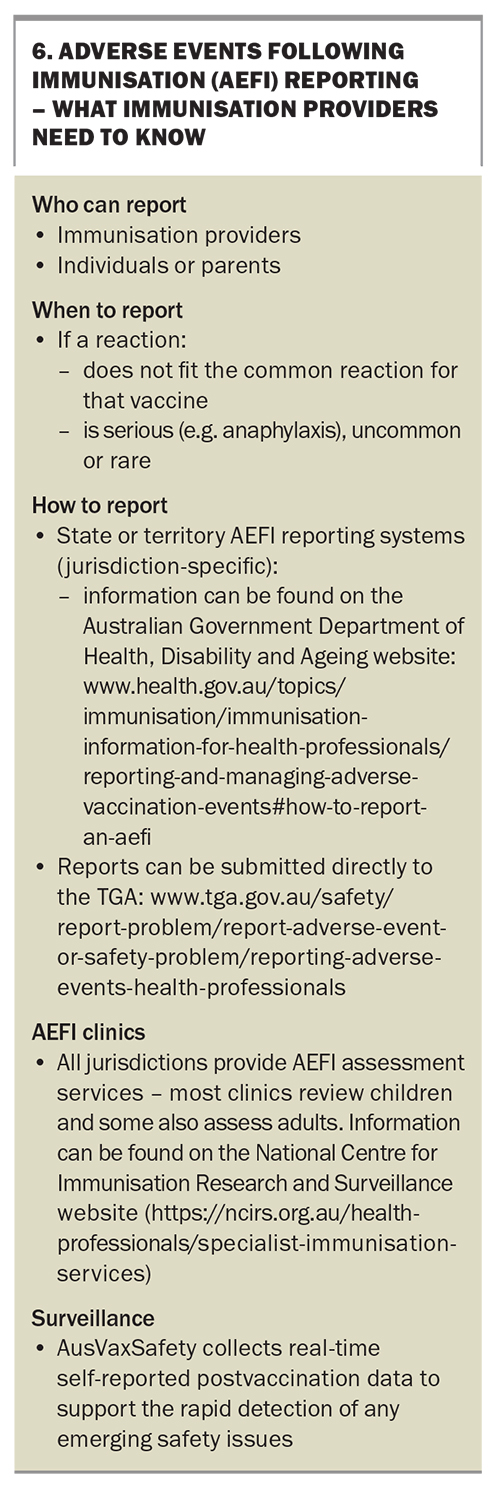
Australia has robust surveillance systems that support early identification of potential vaccine safety issues.101 AEFIs should be reported to the local public health unit and the TGA. This helps identify and understand safety concerns with newly introduced vaccines, monitor AEFI rates across Australia and detect problems related to vaccine manufacture, storage, delivery or administration.
Immunisation providers should be familiar with the appropriate pathways for reporting adverse events following immunisation, as highlighted in Box 6.
Conclusion
Overall, immunisation has evolved into a truly life-course intervention, with an expanding repertoire of vaccines providing protection against an increasing number of infectious diseases across all age groups. Although this progress reflects remarkable scientific and public health achievement – ‘for every generation, vaccines work’ – the growing complexity of schedules and risk-based recommendations can present challenges for providers. In this context, the Australian Immunisation Register serves as a crucial tool, enabling accurate, real-time access to individual vaccination histories and supporting informed clinical decision-making. Clinicians, particularly GPs, play a central role in using this resource to optimise vaccine delivery, while also empowering patients and families to engage with and understand their own immunisation status. In a setting with robust infrastructure and access, there is both an opportunity and a responsibility to maximise the benefits of immunisation across the lifespan through clear communication, system integration and equitable implementation. MT
The print version of this article can be accessed here.
COMPETING INTERESTS: Dr Said, Dr Sharp and Ms Prasad: None. Dr Koirala is Chair of the Vaccination Special Interest Group for the Australasian Society for Infectious Diseases.
The authors would like to acknowledge Dr Tamishka De Silva for her contributions to the respiratory syncytial virus, influenza and COVID-19 sections.
References
1. Australian Government Department of Health, Disability and Ageing. Australian Immunisation Handbook. Table. Conditions associated with increased risk of severe RSV disease in infants and young children. Canberra: Australian Government Department of Health, Disability and Ageing; 2025. Available online at: https://immunisationhandbook.health.gov.au/resources/tables/table-conditions-associated-with-increased-risk-of-severe-rsv-disease-in-infants-and-young-children (accessed May 2026).
2. Prasad N, Newbern EC, Trenholme AA, et al. Respiratory syncytial virus hospitalisations among young children: a data linkage study. Epidemiol Infect 2019; 147: e246.
3. Vartiainen P, Jukarainen S, Rhedin SA, et al. Risk factors for severe respiratory syncytial virus infection during the first year of life: development and validation of a clinical prediction model. Lancet Digit Health 2023; 5: e821-e30.
4. Australian Government Department of Health, Disability and Ageing. Australian Immunisation Handbook. Table. Conditions associated with increased risk of severe RSV disease in adults. Canberra: Australian Government Department of Health, Disability and Ageing; 2025. Available online at: https://immunisationhandbook. health.gov.au/resources/tables/table-conditions-associated-with-increased-risk-of-severe-rsv-disease-in-adults (accessed May 2026).
5. National Centre for Immunisation Research and Surveillance (NCIRS). Respiratory syncytial virus (RSV) immunisation. Sydney: NCIRS. Available online at: https://ncirs.org.au/respiratory-syncytial-virus-rsv/respiratory-syncytial-virus-rsv-immunisation (accessed May 2026).
6. Branche AR, Falsey AR. Respiratory syncytial virus infection in older adults: an under-recognized problem. Drugs Aging 2015; 32: 261-269.
7. Saravanos GL, Sheel M, Homaira N, et al. Respiratory syncytial virus-associated hospitalisations in Australia, 2006–2015. Med J Aust 2019; 210: 447-453.
8. Homaira N, Oei JL, Mallitt KA, et al. High burden of RSV hospitalization in very young children: a data linkage study. Epidemiol Infect 2016; 144: 1612-1621.
9. Moore HC, Lim FJ, Fathima P, et al. Assessing the burden of laboratory-confirmed respiratory syncytial virus infection in a population cohort of Australian children through record linkage. J Infect Dis 2020; 222: 92-101.
10. Australian Government Department of Health, Disability and Ageing. Australian Immunisation Handbook. Respiratory syncytial virus (RSV). Canberra: Australian Government Department of Health, Disability and Ageing; 2025. Available online at: https://immunisationhandbook.health.gov.au/contents/vaccine-preventable-diseases/respiratory-syncytial-virus-rsv (accessed May 2026).
11. Ching NS, Kotsanas D, Easton ML, Francis MJ, Korman TM, Buttery JP. Respiratory virus detection and co-infection in children and adults in a large Australian hospital in 2009-2015. J Paediatr Child Health 2018; 54: 1321-1328.
12. Nazareno AL, Muscatello DJ, Turner RM, Wood JG, Moore HC, Newall AT. Modelled estimates of hospitalisations attributable to respiratory syncytial virus and influenza in Australia, 2009-2017. Influenza Other Respir Viruses 2022; 16(6): 1082-1090.
13. McLellan JS, Chen M, Joyce MG, et al. Structure-based design of a fusion glycoprotein vaccine for respiratory syncytial virus. Science 2013; 342: 592-598.
14. Hammitt Laura L, Dagan R, Yuan Y, et al. Nirsevimab for prevention of RSV in healthy late-preterm and term infants. N Engl J Med 2022; 386: 837-846.
15. Noor A, Krilov LR. A Historical perspective on Respiratory Syncytial Virusprevention: a journey spanning over half a century from the setback of an inactive vaccine candidate to the success of passive immunization strategy. J Pediatric Infect Dis Soc 2024; 13: S103-S9.
16. Australian Government Department of Health, Disability and Ageing. ATAGI statement on the administration of seasonal influenza vaccines in 2024. Canberra: Australian Government Department of Health, Disability and Ageing; 2024. Available online at: https://www.health.gov.au/resources/publications/atagi-statement-on-the-administration-of-seasonal-influenza-vaccines-in-2024?language=en (accessed May 2026).
17. National Centre for Immunisation Research and Surveillance (NCIRS). Evaluation of and expected access to RSV immunisation products in Australia. Sydney: NCIRS; 2026. Available online at: https://ncirs.org.au/respiratory-syntactical-virus-rsv-immunisation/evaluation-and-expected-access-rsv-immunisation (accessed May 2026).
18. Kampmann B, Madhi Shabir A, Munjal I, et al. Bivalent prefusion F vaccine in pregnancy to prevent RSV illness in infants. N Engl J Med 2023; 388: 1451-1464.
19. Simões EAF, Center KJ, Tita ATN, et al. Prefusion F protein-based respiratory syncytial virus immunization in pregnancy. N Engl J Med 2022; 386: 1615-1626.
20. AusVaxSafety, National Centre for Immunisation Research and Surveillance (NCIRS). Abrysvo RSV vaccine safety data – pregnant participants. Sydney: NCIRS; 2026. Available online at: https://ausvaxsafety.org.au/rsv-vaccines/abrysvo-rsv-vaccine-safety-data-pregnant-participants (May 2026).
21. Son M, Riley LE, Staniczenko AP, et al. Nonadjuvanted bivalent respiratory syncytial virus vaccination and perinatal outcomes. JAMA Netw Open 2024; 7: e2419268.
22. Estrella-Porter P, Correcher-Martínez E, Orrico-Sánchez A, Carreras JJ. Post-marketing surveillance of nirsevimab: safety profile and adverse event analysis from Spain’s 2023-2024 RSV immunisation campaign. Vaccines (Basel) 2025; 13: 623.
23. Griffin MP, Yuan Y, Takas T, et al; Nirsevimab Study Group. Single-dose nirsevimab for prevention of RSV in preterm infants. N Engl J Med 2020; 383: 415-425.
24. Bloomfield LE, Pingault NV, Foong RE, et al. Nirsevimab immunisation of infants and respiratory syncytial virus (RSV)-associated hospitalisations, Western Australia, 2024: a population-based analysis. Med J Aust 2025; 222: 568-570.
25. National Centre for Immunisation Research and Surveillance (NCIRS). State and territory nirsevimab (Beyfortus) infant program summary. Sydney: NCIRS; 2025. Available online at: https://mvec.mcri.edu.au/wp-content/uploads/2023/06/State-and-territory-nirsevimab-program-summary-2025-1.pdf (accessed May 2026).
26. National Centre for Immunisation Research and Surveillance (NCIRS). Respiratory syncytial virus (RSV): frequently asked questions (FAQs). Sydney: NCIRS; 2025. Available online at: https://ncirs.org.au/ncirs-fact-sheets-faqs-and-other-resources/respiratory-syncytial-virus-rsv-frequently-asked (accessed May 2026).
27. Queensland Health. RSV immunisation prevents more than 1,000 babies from hospitalisation in Queensland 2025. Brisbane: Queensland Health; 2025. Available online at: https://www.health.qld.gov.au/newsroom/doh-media-releases/rsv-immunisation-prevents-more-than-1,000-babies-from-hospitalisation-in-queensland (accessed May 2026).
28. Blyth CC, Wadia U, Britton PN, et al. Respiratory syncytial virus epidemiology and effectiveness of infant nirsevimab: 2024 results from the Australian Sentinel Hospital Network (FluCAN-PAEDS). Euro Surveill 2026; 31: 2500275.
29. Wadia U, Richmond P, Britton P, et al. Impact and effectiveness of Australia’s 2025 bybrid RSV immunisation program: results from the PAEDS-FluCAN network. SSRN; 2026. Available online at: https://ssrn.com/abstract=6334429 (accessed May 2026).
30. Australian Government Department of Health, Disability and Ageing. Free RSV vaccine for older Australians. Canberra: Australian Government Department of Health, Disability and Ageing; 2026. Available online at: https://www.health.gov.au/ministers/the-hon-mark-butler-mp/media/free-rsv-vaccine-for-older-australians (accessed May 2026).
31. Ison MG, Papi A, Athan E, et al; AReSVi-006 study group. Efficacy, safety, and immunogenicity of the AS01E-adjuvanted respiratory syncytial virus prefusion F protein vaccine (RSVPreF3 OA) in older adults over three respiratory syncytial virus seasons (AReSVi-006): a multicentre, randomised, observer-blinded, placebo-controlled, phase 3 trial. Lancet Respir Med 2025; 13: 517-529.
32. Australian Government Department of Health, Disability and Ageing. Australian Immunisation Handbook. Influenza (flu). Canberra: Australian Government Department of Health, Disability and Ageing; 2025. Available online at: https://immunisationhandbook.health.gov.au/contents/vaccine-preventable-diseases/influenza-flu (accessed May 2026).
33. Australian Institute of Health Welfare (AIHW). Influenza in Australia. Canberra: AIHW; 2025. Available online at: https://www.aihw.gov.au/getmedia/5beb5b51-d4d5-476d-bc29-0b205bbce9f6/aihw-phe-236_influenza_2025.pdf (accessed May 2026).
34. Immunisation Coalition. Influenza Statistics. Melbourne: Immunisation Coalition; 2026. Available online at: https://immunisationcoalition.org.au/influenza-statistics/(accessed May 2026).
35. Doherty Institute. 2025, the year that influenza surprised us. Melbourne: Doherty Institute; 2025. Available online at: https://www.doherty.edu.au/news-events/news/2025-the-year-that-influenza-surprised-us (accessed May 2026).
36. Dapat C, Peck H, Jelley L, et al. Extended influenza seasons in Australia and New Zealand in 2025 due to the emergence of influenza A(H3N2) subclade K viruses. Euro Surveill 2025; 30: 2500894.
37. Jackson ML, Chung JR, Jackson LA, et al. Influenza vaccine effectiveness in the United States during the 2015-2016 season. N Engl J Med 2017; 377: 534-543.
38. Andrews N, McMenamin J, Durnall H, et al. Effectiveness of trivalent seasonal influenza vaccine in preventing laboratory-confirmed influenza in primary care in the United Kingdom: 2012/13 end of season results. Euro Surveill 2014; 19: 5-13
39. Gharpure R, Regan AK, Nogareda F, et al. Effectiveness of 2023 southern hemisphere influenza vaccines against severe influenza-associated illness: pooled estimates from eight countries using the test-negative design. Lancet Glob Health 2025; 13: e203-e211.
40. Nation ML, Moss R, Spittal MJ, Kotsimbos T, Kelly PM, Cheng AC. Influenza vaccine effectiveness against influenza-related mortality in Australian hospitalized patients: a propensity score analysis. Clin Infect Dis 2021; 72: 99-107.
41. National Centre for Immunisation Research and Surveillance (NCIRS). Influenza vaccination coverage data. Sydney: NCIRS; 2025. Available online at: https://ncirs.org.au/influenza-vaccination-coverage-data (accessed May 2026).
42. Australian Government Department of Health, Disability and Ageing. Statement on the administration of seasonal influenza vaccines in 2026. Canberra: Australian Government Department of Health, Disability and Ageing; 2026. Available online at: https://www.health.gov.au/sites/default/files/2026-03/atagi-statement-on-the-administration-of-seasonal-influenza-vaccines-in-2026.pdf (accessed May 2026.)
43. National Centre for Immunisation Research and Surveillance (NCIRS). Influenza vaccines – frequently asked questions (FAQs). Sydney: NCIRS; 2026. Available online at: https://ncirs.org.au/influenza/influenza-vaccines-frequently-asked-questions-faqs (accessed May 2026).
44. Rockman S, Laurie K, Ong C, et al. Cell-based manufacturing technology increases antigenic match of influenza vaccine and results in improved effectiveness. Vaccines (Basel) 2022; 11: 52.
45. Gärtner BC, Beier D, Gosch G, et al. Cell-based influenza vaccines: an effective vaccine option for under 60-year-olds. GMS Hyg Infect Control 2024; 19: Doc21.
46. Therapeutic Goods Administration (TGA). FLUMIST influenza virus vaccine 10,000,000 FFU/strain (0.2mL) nasal spray applicator (470065). Canberra: TGA; 2025. Available online at: https://www.tga.gov.au/resources/artg/470065 (accessed May 2026).
47. NSW Health. NSW Nasal Spray Influenza Vaccination Program – information for health professionals. Sydney: NSW Government; 2026. Available online at: https://www.health.nsw.gov.au/immunisation/professionals/Pages/intranasal-flu-vaccine.aspx (accessed May 2026).
48. Queensland Health. 2026 Queensland Nasal Spray Flu Immunisation Program. Brisbane: Queensland Health; 2026. Available online at: https://www.health.qld.gov.au/clinical-practice/guidelines-procedures/diseases-infection/immunisation/schedule/2026-queensland-nasal-spray-flu-immunisation-program (accessed May 2026).
49. Government of South Australia. Needle-free flu vaccine for SA children. Adelaide: Government of South Australia. Available online at: https://www.premier.sa.gov.au/media-releases/news-archive/needle-free-flu-vaccine-for-sa-children (accessed May 2026).
50. Government of Western Australia Department of Health. New needle-free influenza vaccine to protect WA children. Perth: Government of Western Australia; 2025. Available online at: https://www.health.wa.gov.au/News/2025/New-needle-free-influenza-vaccine-to-protect-WA-children (accessed May 2026).
51. Song Y, Mehl F, Zeichner SL. Vaccine strategies to elicit mucosal immunity. Vaccines (Basel) 2024; 12: 191.
52. Garai R, Jánosi Á, Krivácsy P, et al. Head-to-head comparison of influenza vaccines in children: a systematic review and meta-analysis. J Transl Med 2024; 22: 903.
53. Pebody RG, Green HK, Andrews N, et al. Uptake and impact of vaccinating school age children against influenza during a season with circulation of drifted influenza A and B strains, England, 2014/15. Euro Surveill 2015; 20.
54. Gilroy J, O’Leary M, Domegan L, et al. Increasing the uptake of Live Attenuated Influenza Vaccine through a new school-based vaccination programme in Ireland. Vaccine 2025; 62: 127467.
55. Pérez-Martín J, Zornoza Moreno M, Bernal-Alonso A. Influenza school-based vaccination: a way to increase equity among children. Hum Vaccin Immunother 2025; 21: 2497207.
56. Antonelli Incalzi R, Consoli A, Lopalco P, et al. Influenza vaccination for elderly, vulnerable and high-risk subjects: a narrative review and expert opinion. Intern Emerg Med 2024; 19: 619-640.
57. Izurieta HS, Lu M, Kelman J, et al. Comparative effectiveness of influenza vaccines among US Medicare beneficiaries ages 65 years and older during the 2019–2020 season. Clin Infect Dis 2021; 73: e4251-e9.
58. Izurieta HS, Chillarige Y, Kelman J, et al. Relative effectiveness of influenza vaccines among the United States elderly, 2018-2019. J Infect Dis 2020; 222: 278-287.
59. Mannino S, Villa M, Apolone G, et al. Effectiveness of adjuvanted influenza vaccination in elderly subjects in northern Italy. Am J Epidemiol 2012; 176: 527-533.
60. Australian Centre for Disease Control (CDC). National guideline for the prevention, control and public health management of outbreaks of acute respiratory infection in residential aged care homes. Canberra: Australian CDC; 2022. Available online at: https://www.cdc.gov.au/resources/publications/cdna-national-guideline-outbreaks-respiratory-infection-rac (accessed May 2026).
61. Australian Government Department of Health, Disability and Ageing. Shingles (herpes zoster) vaccine. Canberra: Australian Government Department of Health, Disability and Ageing; 2026. Available online at: https://www.health.gov.au/topics/immunisation/vaccines/shingles-herpes-zoster-immunisation-service (accessed May 2026).
62. National Centre for Immunisation Research and Surveillance (NCIRS). Zoster (shingles) vaccine: frequently asked questions (FAQs). Sydney: NCIRS; 2026. Available online at: https://ncirs.org.au/zoster-shingles/zoster-shingles-vaccine-frequently-asked-questions-faqs (accessed May 2026).
63. Curran D, Doherty TM, Lecrenier N, Breuer T. Healthy ageing: herpes zoster infection and the role of zoster vaccination. NPJ Vaccines 2023; 8: 184.
64. Wehrhahn MC, Dwyer DE. Herpes zoster: epidemiology, clinical features, treatment and prevention. Aust Prescr 2012; 35: 143-147.
65. Australian Government Department of Health, Disability and Ageing. National Immunisation Program – changes to shingles vaccination from 1 November 2023. Canberra: Australian Government Department of Health, Disability and Ageing; 2023. Available online at: https://www.health.gov.au/news/national-immunisation-program-changes-to-shingles-vaccination-from-1-november-2023?language=en (accessed May 2026).
66. Strezova A, Díez Domingo J, Cunningham AL, et al. Final analysis of the ZOE-LTFU trial to 11 years post-vaccination: efficacy of the adjuvanted recombinant zoster vaccine against herpes zoster and related complications. EClinicalMedicine 2025; 83: 103241.
67. Taquet M, Dercon Q, Todd JA, Harrison PJ. The recombinant shingles vaccine is associated with lower risk of dementia. Nat Med 2024; 30: 2777-2781.
68. Rayens E, Sy LS, Qian L, Ackerson BK, Tubert J, Luo Y, et al. Recombinant zoster vaccine is associated with a reduced risk of dementia. Nat Commun 2026; 17: 2056.
69. Xu X, Ray I, Tang E, Arnold BF, Acharya NR. Protective effects of recombinant zoster vaccine and antiviral therapy against cardiovascular disease following herpes zoster infection. J Infect Dis 2025; 232: 465-473.
70. Australian Government Department of Health Disability and Ageing. Australian Immunisation Handbook. Zoster (herpes zoster). Canberra: Australian Government Department of Health Disability and Ageing; 2025. Available online at: https://immunisationhandbook.health.gov.au/contents/vaccine-preventable-diseases/zoster-herpes-zoster#overview (accessed May 2026).
71. Melbourne Vaccine Education Centre. Zoster (herpes zoster). Melbourne: Melbourne Vaccine Education Centre; 2025. Available online at: https://immunisationhandbook.health.gov.au/contents/vaccine-preventable-diseases/zoster-herpes-zoster#overview https://immunisationhandbook.health.gov.au/contents/vaccine-preventable-diseases/zoster-herpes-zoster#overview (accessed May 2026).
72. Shetty AN, Hennessy D, Kattan GS, Ojaimi S, Clothier HJ, Buttery JP. Transient increased risk of shingles post–shingrix vaccination: self-controlled case-series analysis. Clin Infect Dis 2025; 81: e446-e453.
73. Zeevaert R, Thiry N, Maertens de Noordhout C, Roberfroid D. Efficacy and safety of the recombinant zoster vaccine: a systematic review and meta-analysis. Vaccine X 2023; 15: 100397.
74. Schmader KE, Levin MJ, Chen M, et al. Impact of reactogenicity after two doses of recombinant zoster vaccine upon physical functioning and quality of life: an open phase III trial in older adults. J Gerontol A Biol Sci Med Sci 2021; 76: 485-490.
75. Australian Government Department of Health, Disability and Ageing. Australian Immunisation Handbook. Pneumococcal disease. Canberra: Australian Government Department of Health, Disability and Ageing; 2026. Available online at: https://immunisationhandbook.health.gov.au/contents/vaccine-preventable-diseases/pneumococcal-disease (accessed May 2026).
76. Struwig VA, Ta A, Thorat AV, Ilic A, Warren S. Evaluating the implementation of the 20-valent pneumococcal conjugate vaccine for paediatric immunization in Australia. Vaccine 2026; 69: 127996.
77. Namkoong H, Funatsu Y, Oishi K, et al. Comparison of the immunogenicity and safety of polysaccharide and protein-conjugated pneumococcal vaccines among the elderly aged 80 years or older in Japan: an open-labeled randomized study. Vaccine 2015; 33: 327-332.
78. Golos M, Eliakim‐Raz N, Stern A, Leibovici L, Paul M. Conjugated pneumococcal vaccine versus polysaccharide pneumococcal vaccine for prevention of pneumonia and invasive pneumococcal disease in immunocompetent and immunocompromised adults and children. Cochrane Database Syst Rev 2019; 2019: CD012306.
79. National Centre for Immunisation Research and Surveillance (NCIRS). Significant events in pneumococcal vaccination practice in Australia. Sydney: NCIRS; 2020. Available online at: https://ncirs.org.au/sites/default/files/2020-07/Pneumococcal-history-July-2020.pdf (accessed May 2026).
80. Australian Government Department of Health, Disability and Ageing. Australia’s notifiable disease status, 2013: annual report of the National Notifiable Diseases Surveillance System: Part 6. Canberra: Australian Government Department of Health, Disability and Ageing; 2015. Available online at: https://www1.health.gov.au/internet/main/publishing.nsf/Content/cda-cdi3903i5.htm (accessed May 2026).
81. Therapeutic Goods Administration (TGA). Prevenar 20. Canberra: TGA; 2023. Available online at: https://www.tga.gov.au/resources/auspar/auspar-prevenar-20 (accessed May 2026).
82. National Centre for Immunisation Research and Surveillance (NCIRS). Pneumococcal vaccines – frequently asked questions (FAQs). Sydney: NCIRS; 2025. Available online at: https://ncirs.org.au/ncirs-fact-sheets-faqs-and-other-resources/pneumococcal-vaccines-frequently-asked-questions-faqs (accessed May 2026).
83. Australian Government Department of Health, Disability and Ageing. NIP childhood and adolescence pneumococcal vaccine provider advice for health professionals. Canberra: Australian Government Department of Health, Disability and Ageing; 2025. Available online at: https://www.health.gov.au/resources/publications/nip-childhood-and-adolescence-pneumococcal-vaccine-provider-advice-for-health-professionals?language=en (accessed May 2026).
84. Hajdu G, Hughes T, Ouedraogo GL, et al. Safety of a 4-dose 20-valentpneumococcal conjugate vaccine series in infants: a randomized trial. Pediatrics 2024; 154: e2023065218.
85. Pharmaceutical Benefits Advisory Commitee (PBAC). Pharmaceutical Benefits Advisory Committee (PBAC) meeting outcomes. Canberra; PBAC; 2025. Available online at: https://m.pbs.gov.au/industry/listing/elements/pbac-meetings/pbac-outcomes/2025-11/pbac-web-outcomes-11-2025-v2.pdf (accessed May 2026).
86. Therapeutic Goods Administration (TGA). Australian Product Information – Capvaxive® (pneumococcal 21-valent conjugate vaccine). Canberra: TGA; 2025. Available online at: https://www.tga.gov.au/sites/default/files/2025-08/auspar-capvaxive-250820-pi.pdf (accessed May 2026).
87. Australian Government Department of Health, Disability and Ageing. Australian Immunisation Handbook. COVID-19. Canberra: Australian Government Department of Health, Disability and Ageing ; 2025. Available online at: https://immunisationhandbook.health.gov.au/contents/vaccine-preventable-diseases/covid-19 (accessed May 2026).
88. Australian Institute of Health Welfare (AIHW). COVID-19. Canberra: AIHW; 2024. Available online at: https://www.aihw.gov.au/reports/australias-health/covid-19 (accessed May 2026).
89. Australian Institute of Health Welfare (AIHW). Hospitalisations involving a COVID-19 diagnosis Canberra: AIHW; 2025. Available online at: https://www.aihw.gov.au/hospitals/topics/admitted-patient-care/hospitalisations-involving-a covid-19-diagnosis (accessed May 2026).
90. Liu B, Stepien S, Dobbins T, Gidding H, et al. Effectiveness of COVID-19 vaccination against COVID-19 specific and all-cause mortality in older Australians: a population based study. Lancet Reg Health West Pac 2023; 40: 100928.
91. Strain WD, Sherwood O, Banerjee A, Van der Togt V, Hishmeh L, Rossman J. The impact of COVID Vaccination on symptoms of long COVID: an international survey of people with lived experience of long COVID. Vaccines (Basel) 2022; 10: 652.
92. National Centre for Immunisation Research and Surveillance (NCIRS). COVID-19 vaccines: Frequently asked questions (FAQs). Sydney: NCIRS; 2025. Available online at: https://ncirs.org.au/ncirs-fact-sheets-faqs-and-other-resources/covid-19-vaccines-frequently-asked-questions-faqs (accessed May 2026).
93. Ison MG. Vaccines for use in special populations: immunocompromised hosts. J Infect Dis 2025; 231: 552-555.
94. Patel C, Wang X, Giles M, et al. The role of serological testing for vaccination with a focus on immunocompromised patients: a synthesis of current evidence. Vaccine 2025; 63: 127659.
95. National Centre for Immunisation Research and Surveillance (NCIRS). Vaccination for people with immunocompromise – frequently asked questions (FAQs). Sydney: NCIRS; 2025. Available online at: https://ncirs.org.au/ncirs-fact-sheets-faqs-and-other-resources/vaccination-people-immunocompromise-frequently-asked (accessed May 2026).
96. Australian Government Department of Health, Disability and Ageing. Australian Immunisation Handbook. Vaccination for people who are immunocompromised. Canberra: Australian Government Department of Health, Disability and Ageing; 2025. Available online at: https://immunisationhandbook.health.gov.au/contents/vaccination-for-special-risk-groups/vaccination-for-people-who-are-immunocompromised (accessed May 2026).
97. Australian Government Department of Health, Disability and Ageing. Australian Immunisation Handbook. Infants exposed to immunosuppressive therapy in utero or through breastmilk. Canberra: Australian Government Department of Health, Disability and Ageing; 2025. Available online at: https://immunisationhandbook.health.gov.au/contents/vaccination-for-special-risk-groups/vaccination-for-people-who-are-immunocompromised/infants-exposed-to-immunosuppressive-therapy-in-utero-or-through-breastmilk (accessed May 2026).
98. Australian Government Department of Health, Disability and Ageing. Check immunisation history. Canberra: Australian Government Department of Health, Disability and Ageing; 2025. Available online at: https://www.health.gov.au/topics/immunisation/getting-vaccinated/check-immunisation-history?language=und# the-australian-immunisation-register-air (accessed May 2026).
99. National Centre for Immunisation Research and Surveillance (NCIRS). Significant events in immunisation policy and practice in Australia. Sydney: NCIRS; 2024. Available online at: https://ncirs.org.au/sites/default/files/2024-08/Immunisation%20policy%20and%20practice_14%20August%202024.pdf (accessed May 2026).
100. Australian Government Department of Health, Disability and Ageing. Mandatory reporting changes to the Australian Immunisation Register (AIR) from 1 March 2025. Canberra: Australian Government Department of Health, Disability and Ageing; 2025. Available online at: https://www.health.gov.au/news/mandatory-reporting-changes-to-the-australian-immunisation-register-air-from-1-march-2025?language=en (accessed May 2026).
101. Government of Western Australia Department of Health. Adverse event following immunisation (AEFI). Perth: Government of Western Australia Department of Health; 2025. Available online at: https://www.health.wa.gov.au/articles/a_e/adverse-event-following-immunisation-aefi.
102. National Centre for Immunisation Research and Surveillance (NCIRS). AusVaxSafety. Approach to influenza vaccination in patients with a history of Guillain–Barré syndrome. Sydney: NCIRS; 2019. Available online at: https://ausvaxsafety.org.au/sites/default/files/2019-06/GBS%20Clinical%20Pathway_final.pdf (accessed May 2026).
103. National Centre for Immunisation Research and Surveillance (NCIRS). AusVaxSafety. Shingrix safety data – all participants. Sydney: NCIRS; 2025. Available online at: https://ausvaxsafety.org.au/shingrix/shingrix-safety-data-all-participants (accessed May 2026).
104. Stowe J, Watson CH, Ramsay ME, Andrews NJ. Assessing the risk of Guillain-Barré syndrome in older adults after bivalent RSV pre-F vaccination in England. Nat Commun 2025; 16: 11496.
105. Walter Emmanuel B, Talaat Kawsar R, Sabharwal C, et al. Evaluation of the BNT162b2 Covid-19 vaccine in children 5 to 11 years of age. N Engl J Med 2022; 386: 35-46.
106. Hause AM, Marquez P, Zhang B, et al. COVID-19 mRNA vaccine safety among children aged 6 months-5 years - United States, June 18, 2022-August 21, 2022. MMWR Morb Mortal Wkly Rep 2022; 71(35): 1115-1120.
107. Deng L, Van Eldik A, O’Moore M, et al. Surveillance and follow up outcomes of myocarditis after mRNA COVID-19 vaccination in Australia. NPJ Vaccines 2025; 10: 155.
108. Australian Government Department of Health, Disability and Ageing. Vaxzevria (AstraZeneca) vaccine and thrombosis with thrombocytopenia (TTS). Canberra: Australian Government Department of Health, Disability and Ageing; 2025. Available online at: https://www.health.gov.au/our-work/covid-19-vaccines/advice-for-providers/clinical-guidance/tts?language=en (accessed May 2026).