
Peer Reviewed
Feature Article
Childhood infections: diagnosis and management in general practice
Recent articles on:
Infectious diseases
Infectious diseases
Recent articles on:
Children's health
Children's health
Abstract
Infections are common in childhood, mostly self-limited and usually diagnosed clinically. A delayed antibiotic strategy or short-course empirical antibiotic therapy is often appropriate for the infections that are more frequently encountered. Possible complications and potential transmission should be considered.
Key Points
- Childhood infections often have characteristic features that enable diagnosis and management based on history and examination.
- Laboratory confirmation is important when there is potential for complications in the patient or susceptible contacts, or an unusual presentation.
- Close monitoring of clinical progress guides investigation and management, and may limit complications.
- Young infants may have atypical presentations and more severe disease.
- Rational antibiotic use is crucial to maximising patient benefit, avoiding side effects and minimising antibiotic resistance.
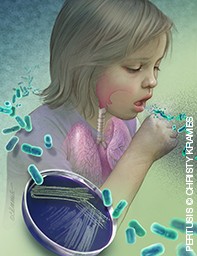
Picture credit: © Christy Krames
Get full access
Buy this article
Single article purchases are temporarily unavailable due to site maintenance.
If you would like to purchase an article during this time, please email us at [email protected] with the article details and we'll assist you directly. We'll also let you know when online purchasing is available again.
Thank you for your patience and understanding.
Already a subscriber? Login here.