
Constipation in infants and children: a practical approach to managing withholding

Constipation can present with infrequent or painful stools, faecal incontinence or more occult symptoms in older children. Withholding behaviour leads to the accumulation of hard stools and, over time, rectal dilatation, reduced sensation and soiling. Treatment involves education and a structured toileting program, with or without laxatives, and often needs to continue for several months.
- Childhood constipation is common and usually functional, with no serious underlying pathology found in most cases.
- The patient's history is central to diagnosis; stool frequency, painful defaecation, withholding behaviour, soiling, abdominal symptoms and bladder dysfunction should be explored.
- Red flags, such as poor growth, abnormal neurological findings or onset in early infancy, require further assessment or referral of the patient to a specialist.
- Routine abdominal x-rays and digital rectal examination are not recommended in most children.
- Regular toileting, sustained family support and maintenance laxative therapy, often for six months to two years, are the cornerstones of successful management.
Constipation affects up to 25% of children at some point in their lives and is a common presentation in general practice.1 Detecting constipation and treating it early and effectively is rewarding for clinicians and life-changing for children and families. Painful passage of stools and withholding behaviour is distressing for the child, and faecal incontinence has significant psychological effects on the child and their family. The approach to diagnosis and practical management outlined in this article is relevant across all primary care settings, including metropolitan, rural and remote practice.
History
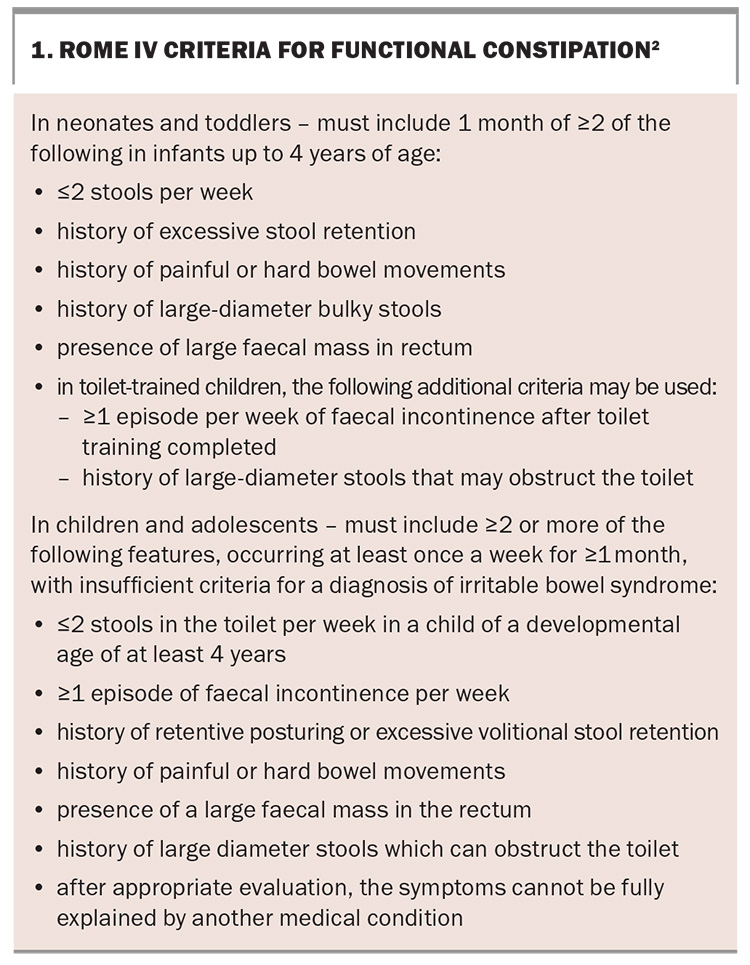
Constipation can be difficult to assess because symptoms vary with age and developmental stage. In younger children, withholding behaviour may be mistaken for straining; however, the child is often trying not to pass a stool, rather than trying to pass one. In older children, parents may not notice gradual changes in stool frequency or episodes of faecal leakage, and constipation may present with more occult symptoms, such as vague abdominal discomfort, reduced appetite or bloating. The Rome IV criteria for functional constipation provide a useful framework for identifying the key features to ask about (Box 1).2
Specifically, try to clarify from the parents and child:
- the frequency of bowel movements – fewer than four stools in a week or opening their bowels more than three times a day (suggesting incomplete emptying) may indicate difficulty
- whether there is soiling or faecal leakage
- whether there is pain, straining or bleeding from an anal fissure
- whether there is abdominal distension, reduced appetite or nausea
- whether there is associated bladder dysfunction, such as urgency, frequency or a urinary tract infection.
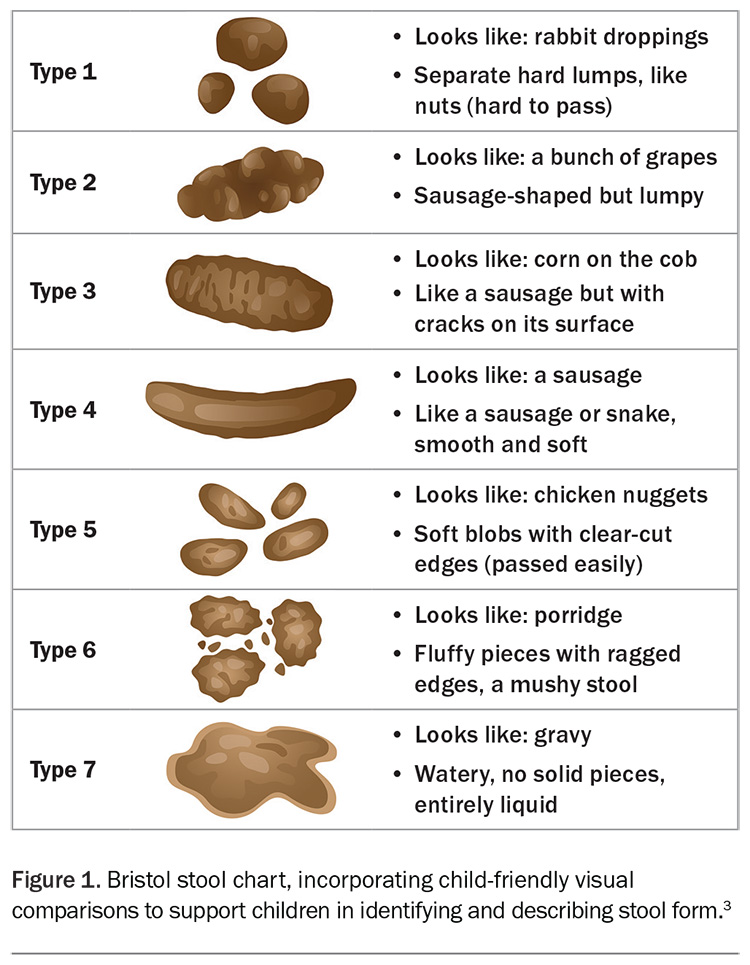
Children may find it difficult to describe their bowel habits and actions but should be encouraged to try. The Bristol stool form scale is useful as a prompt to start the conversation, and child-friendly visual comparisons can be made to help children describe stool consistency more easily (Figure 1).3 Awareness of bowel and bladder function usually begins at about 2 years of age, and children who develop painful perianal conditions or illness at this time are vulnerable to ongoing difficulties if these issues are not recognised and well managed.
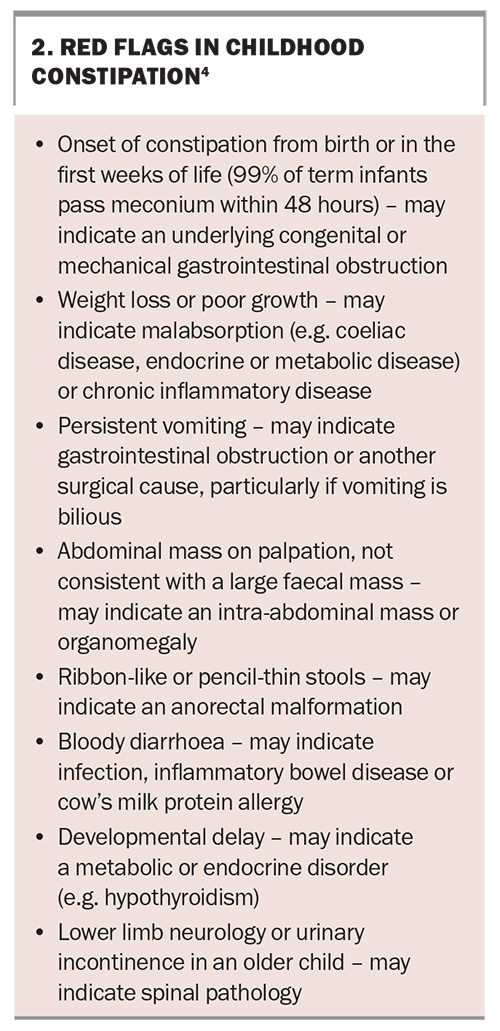
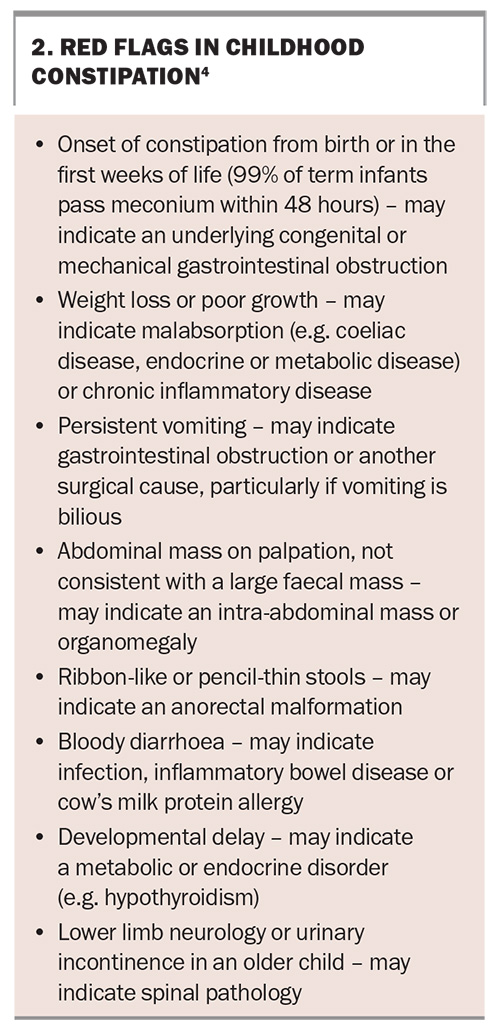
No serious underlying pathology is found in 95% of cases of childhood constipation, but important red flags require further investigation or referral (Box 2).4,5 Cow’s milk protein allergy should be considered in infants younger than 12 months of age if the onset of constipation coincided with the introduction of cow’s milk protein in the diet, particularly if other suggestive features, such as pain, are present.6,7
Examination
The focus of the examination is to exclude underlying conditions for constipation that require further assessment or investigation. Growth failure or faltering growth may indicate malabsorption, such as in coeliac disease. The spine should be inspected for pits, hair or pigmentation, and a lower limb neurological examination performed to assess for potential spinal pathology and neurogenic bowel disorders. Abdominal examination should assess for distension and palpable stool, as these findings may indicate faecal retention and the need for disimpaction before maintenance therapy. The perianal area should also be inspected for painful conditions (e.g. perianal cellulitis, anal fissures) that need management.
Do not routinely perform a digital rectal examination. It can be distressing for the child and their parents, and will not change initial management.
Investigations
Most children do not require any tests in the workup for constipation. Investigate only if features on history or examination suggest an organic aetiology. Consider screening for hypothyroidism and coeliac disease if indicated.
Abdominal x-rays should not be performed. They expose children to unnecessary radiation and are not helpful. In a systematic review, the specificity of abdominal radiographs was only 43%.8 A paediatric emergency department study found a patient’s history to be more accurate than an abdominal radiograph for diagnosing constipation.8,9
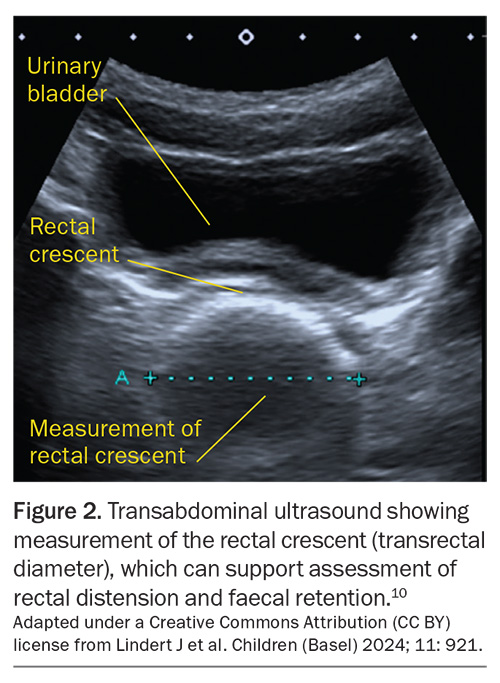
Bedside ultrasound, if available, may be a useful adjunct when the diagnosis is unclear or for following response to treatment over time. Measurement of the rectal crescent (transrectal diameter) can help identify rectal distension and faecal retention in children with suspected constipation (Figure 2).10 Ultrasound has been found to have higher specificity than abdominal radiography for identifying faecal loading. A transabdominal ultrasound rectal diameter greater than 25 to 30 mm indicates rectal distension and faecal retention.11,12
Management
Treating constipation in children involves multiple elements, underpinned by an understanding of the complex physiology of defaecation. The urge to defaecate is triggered by rectal distension. Normal defaecation requires a combination of involuntary reflexes and voluntary control. Some voluntary holding is necessary for continence, but when a child continues to use this response to the sensation of rectal filling, it can become a habitual pattern. This can lead to chronic overdistension of the rectum, which in turn reduces sensation to rectal distension.
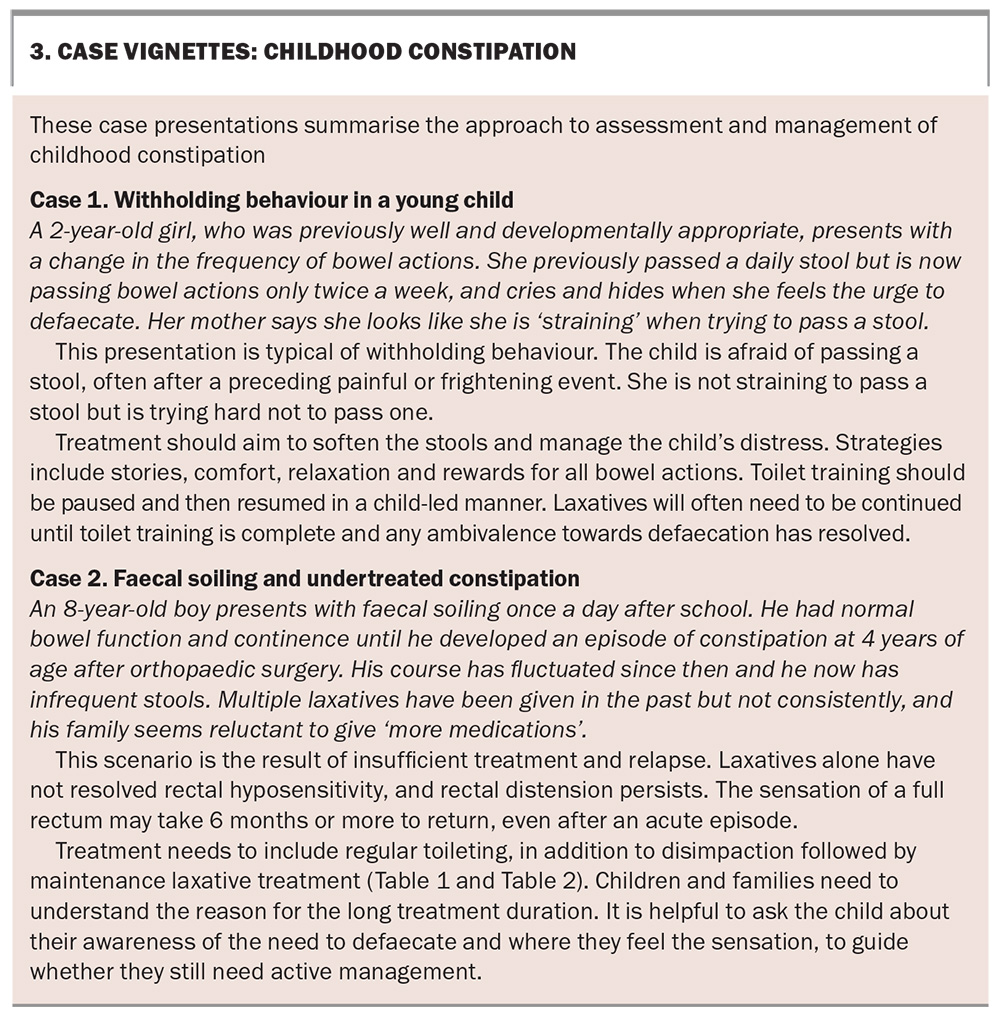
Two case vignettes of childhood constipation are described in Box 3.
Regular toileting
The most important part of treatment is establishing regular toileting, with laxatives if required, to facilitate the easy passage of soft stools. The plan needs to be individualised, taking into account the child’s age and the psychosocial situation of the child and family.
The aim is to encourage the child to sit on the toilet for five minutes, about 15 to 20 minutes after meals, to harness the gastrocolic reflex and teach the child to sit in a way that relaxes the pelvic floor and allows passage of stools. Younger children will need their feet on a step to ensure their knees are at least as high as their hips. All children should be encouraged to sit well supported, leaning slightly forward with a straight back. Strategies that assist with relaxation of the anal sphincter, including bulging the abdomen and controlled breathing, can be helpful.
Recording successful bowel actions, soiling episodes and any spontaneous bowel actions will help track progress. Children and families may not appreciate small gains in these areas until they are pointed out at review visits, and this can help motivate them to continue the program. An example of a treatment diary can be found at: https://www.rch.org.au/uploadedFiles/Main/Content/kidsinfo/
constipation-encopresis-diary.pdf.
Motivation and review
Sitting on the toilet is not intrinsically rewarding for children. There may be considerable ambivalence or even outright opposition. The toileting program should include appropriate rewards that are relevant to the child’s age, developmental level and preferences. At all ages, parental praise and time are the most valuable tools, but marking events with a sticker chart, coin or other treat may sometimes increase motivation. Rewards should be immediate and should be for following the toileting routine, rather than for clean underwear or passing stools in the toilet. Parents should be encouraged to avoid distractions while the child is on the toilet and to only use books or devices as rewards after the toilet sit.
Management should be supported by frequent reviews to maintain momentum, troubleshoot difficulties and encourage adherence. Early review is particularly important to check that the toileting routine is achievable, laxatives are being taken as prescribed and stools are soft and easy to pass. Suggested review time points are two weeks, one month and three months, followed by every three to six months. Engaging the child and family in a long-term treatment program, lasting at least six months and up to two years, is essential for treatment success.
Laxative treatment
Laxative treatment may also be required, especially initially. If there is clinical retention, that is, the presence of a faecal mass unlikely to pass spontaneously, disimpaction should be undertaken before maintenance therapy.
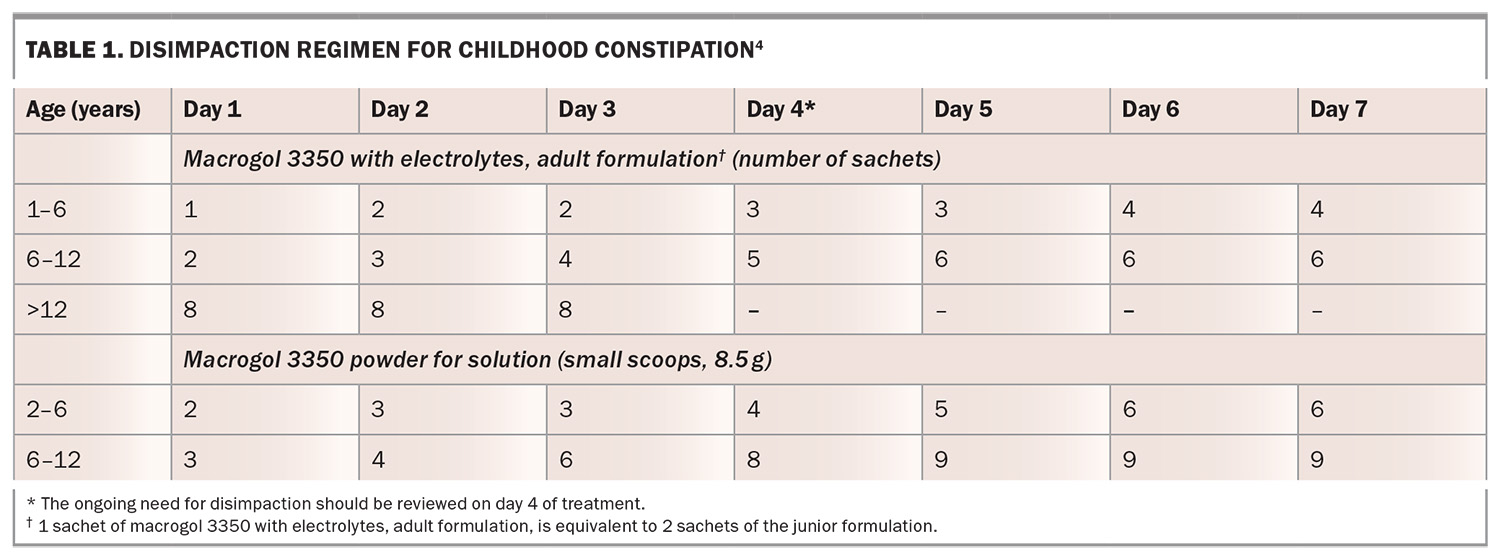
Home disimpaction is best achieved with macrogol (polyethylene glycol).4,13 The recommended number of sachets or scoops is outlined in Table 1.4 These can be mixed in liquid, kept in the refrigerator and taken throughout the day. The ongoing need for disimpaction should be reviewed on day four of treatment.
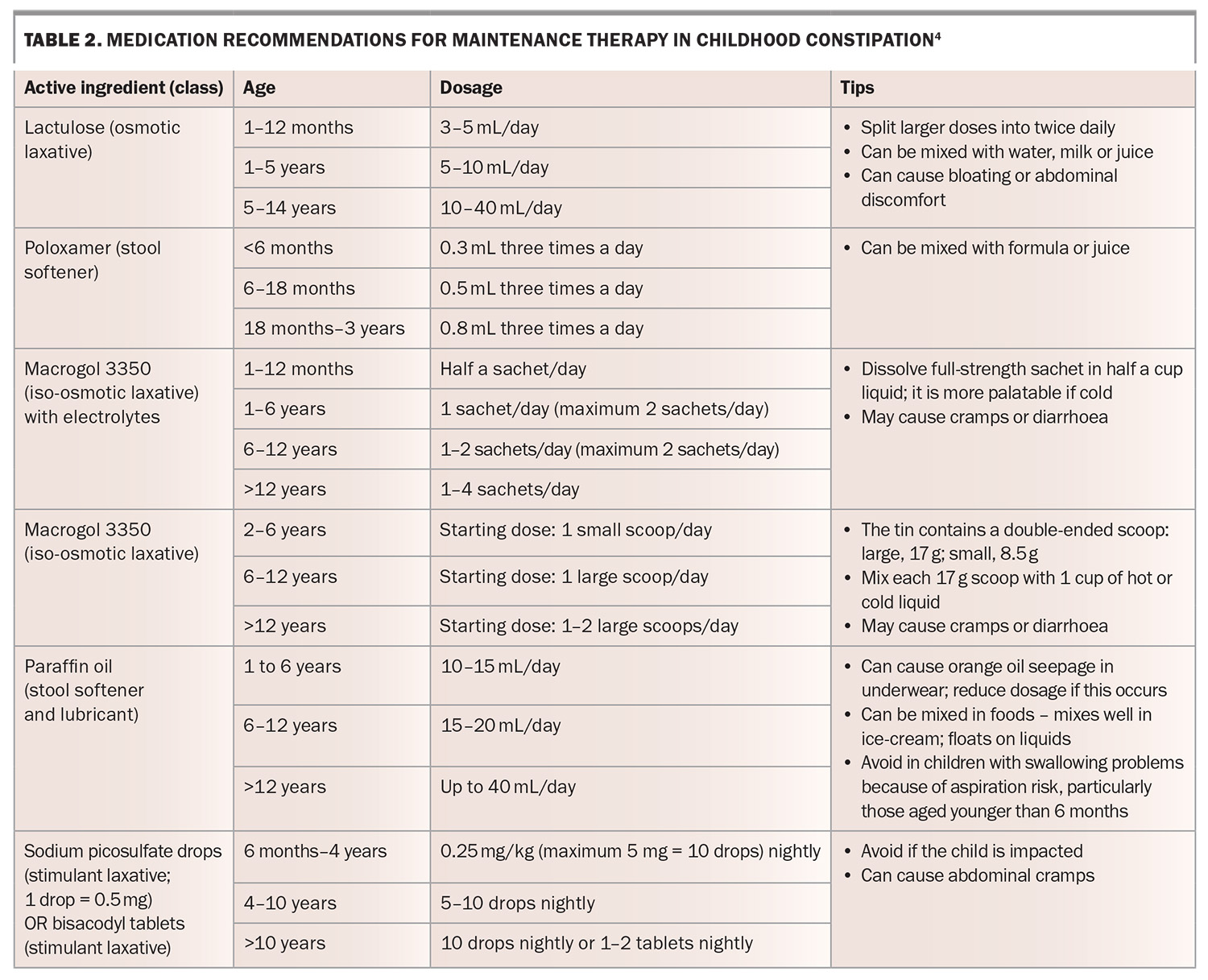
After the stools are uniformly loose (i.e. liquid with no hard lumps), treatment should switch to maintenance therapy. A range of laxative options and dosage recommendations for maintenance therapy is shown in Table 2.4 Maintenance laxatives help keep the rectum empty. The dose should be adjusted to produce daily stools and increased if signs of re-accumulation develop, such as large stools, reduced frequency, abdominal pain or recurrence of soiling.
Evidence for the efficacy of laxatives is limited, but the best evidence is for macrogol. In a systematic review, compared with other osmotic and stimulant laxatives, macrogol achieved greater treatment success for childhood constipation (pooled relative risk, 1.47; 95% confidence interval, 1.23–1.76).14 The consensus is that macrogol should be first-line treatment if tolerated and, if it is ineffective, adding a stimulant laxative should be considered.5 Some children experience very loose stools when taking macrogol or cannot manage the required volumes; in these cases, alternatives may be used. The right laxative for the child is the one they will take.
Rectal treatment with suppositories or enemas should be avoided in children. Anal fissures can be treated with topical petroleum jelly to provide pain relief.
Families are often concerned that continuing laxatives will lead to diarrhoea or dependence. It is important to address and dispel these concerns specifically, as well as other common myths, including that laxatives are dangerous, cannot be taken daily for long periods or are not effective.
Diet and fibre
Families may ask about diet and increased fibre. A poor-quality diet should be addressed but may not be a significant cause of the constipation. Families should be reassured that constipation is not necessarily due to what they have or have not fed their child. Stool-withholding behaviour can cause hard stools despite a high-fibre diet and adequate fluid intake. It is useful to advise adherence to healthy eating guidelines and encourage a variety of grains and fresh fruit and vegetables, but not to be prescriptive about specific foods or fibre amounts in otherwise healthy children.15
It is uncommon for specific foods (e.g. dairy or wheat) to contribute to constipation. However, if treatment failure occurs, it is wise to reconsider coeliac disease, cow’s milk protein allergy or other food intolerances and allergies.16
Dyschezia in infants: a special consideration
Infant dyschezia is a self-limited functional disorder resulting from inco-ordination in the evacuation mechanism. Infants aged younger than 9 months may strain, grunt or cry for 10 to 20 minutes before passing a soft stool that does not contain blood. Studies of the natural history of children with dyschezia have shown no causal relationship between dyschezia and functional constipation. Management involves education, support and reassurance for the parents. Laxatives are not required.17
Indications for specialist referral
Constipation in most children and infants can be managed in primary care. Referral to a specialist is indicated only if:
- red flags are present or there are concerns about underlying pathology (Box 2)4
- the problem continues despite optimal management for six months with regular toileting and an appropriate laxative regimen
- outpatient disimpaction fails.
Unfortunately, problems with bowel function may persist into adult life. Poor treatment outcomes have been documented in a systematic review, with constipation persisting into adulthood in 25% of people with chronic constipation in childhood.18,19 GPs have a vital role in ensuring appropriate treatment and adequate follow up from the initial presentation.
Conclusion
Childhood constipation is common and can have a substantial effect on children and families, but early recognition and a structured, sustained approach to management can lead to significant improvement. Regular toileting, appropriate use of laxatives, education, reassurance and close follow up are the cornerstones of treatment. Constipation in most children can be managed successfully in primary care, provided red flags are recognised and families are supported to continue treatment long enough for bowel function to recover. MT
COMPETING INTERESTS: Dr Gibb is a Member of the Continence Health Australia Paediatric Subcommittee.
References
1. Gatzinsky C, Sillén U, Bräutigam M, Kullberg-Lindh C, Thornberg S, Sjöström S. Bowel habits and functional constipation in healthy children-a longitudinal birth-cohort study. Acta Paediatr 2026 Apr 8; e-pub (http://doi.org/10.1111/apa.70540).
2. Zeevenhooven J, Koppen IJ, Benninga MA. The new Rome IV criteria for functional gastrointestinal disorders in infants and toddlers. Pediatr Gastroenterol Hepatol Nutr 2017; 20: 1-13.
3. Lewis SJ, Heaton KW. Stool form scale as a useful guide to intestinal transit time. Scand J Gastroenterol 1997; 32: 920-924.
4. The Royal Children’s Hospital (RCH). Clinical practice guideline on constipation. Melbourne: RCH, 2020. Available online at: https://www.rch.org.au/clinicalguide/guideline_index/Constipation (accessed June 2026).
5. Tabbers MM, DiLorenzo C, Berger MY, et al; European Society for Pediatric Gastroenterology, Hepatology, and Nutrition; North American Society for Pediatric Gastroenterology. Evaluation and treatment of functional constipation in infants and children: evidence-based recommendations from ESPGHAN and NASPGHAN. J Pediatr Gastroenterol Nutr 2014; 58: 258-274.
6. Vandenplas Y, Gottrand F, Veereman-Wauters G, et al. Gastrointestinal manifestations of cow’s milk protein allergy and gastrointestinal motility. Acta Paediatr 2012; 101: 1105-1109.
7. Haiden N, Savino F, Hill S, Kivelä L, et al. Infant formulas for the treatment of functional gastrointestinal disorders: a position paper of the ESPGHAN Nutrition Committee. J Pediatr Gastroenterol Nutr 2024; 79: 168-180.
8. Freedman SB, Thull-Freedman J, Manson D, et al. Pediatric abdominal radiograph use, constipation, and significant misdiagnoses. J Pediatr 2014; 164: 83-88.e2.
9. Pensabene L, Buonomo C, Fishman L, Chitkara D, Nurko S. Lack of utility of abdominal x-rays in the evaluation of children with constipation: comparison of different scoring methods. J Pediatr Gastroenterol Nutr 2010; 51: 155-159.
10. Lindert J, Erkel D, Schulze F, Hofer M, Rzepka E, Märzheuser S. Is the transrectal diameter (TRD) suitable for assessing faecal loads and monitoring bowel management in children with Hirschsprung disease-ReKiSo study: prospective study. Children (Basel) 2024; 11: 921.
11. Doniger SJ, Dessie A, Latronica C. Measuring the transrectal diameter on point-of-care ultrasound to diagnose constipation in children. Pediatr Emerg Care 2018; 34: 154-159.
12. Hatori R, Tomomasa T, Ishige T, Tatsuki M, Arakawa H. Fecal retention in childhood: evaluation on ultrasonography. Pediatr Int 2017; 59: 462-466.
13. Candy D, Belsey J. Macrogol (polyethylene glycol) laxatives in children with functional constipation and faecal impaction: a systematic review. Arch Dis Child 2009; 94: 156-160.
14. Gordon M, MacDonald JK, Parker CE, Akobeng AK, Thomas AG. Osmotic and stimulant laxatives for the management of childhood constipation. Cochrane Database Syst Rev 2016; 2016(8): CD009118.
15. Eat for Health, National Health and Medical Research Council (NHMRC). Recommended number of serves for children, adolescents and toddlers. Canberra: NHMRC. Available online at: https://www.eatforhealth.gov.au/food-essentials/how-much-do-we-need-each-day/recommended-number-serves-children-adolescents-and-toddlers (accessed June 2026).
16. Khatib M, Baker RD, Ly EK, Kozielski R, Baker SS. Presenting pattern of pediatric celiac disease. J Pediatr Gastroenterol Nutr 2016; 62: 60-63.
17. Gatzinsky C, Sillén U, Thornberg S, Sjöström S. Bowel habits in healthy infants and the prevalence of functional constipation, infant colic and infant dyschezia. Acta Paediatr 2023; 112: 1341-1350.
18. Mugie SM, Benninga MA, Di Lorenzo C. Epidemiology of constipation in children and adults: a systematic review. Best Pract Res Clin Gastroenterol 2011; 25: 3-18.
19. Pijpers MA, Bongers ME, Benninga MA, Berger MY. Functional constipation in children: a systematic review on prognosis and predictive factors. J Pediatr Gastroenterol Nutr 2010; 50: 256-268.
Single article purchases are temporarily unavailable due to site maintenance.
If you would like to purchase an article during this time, please email us at [email protected] with the article details and we'll assist you directly. We'll also let you know when online purchasing is available again.
Thank you for your patience and understanding.