
Treatable traits in adults with asthma: a personalised medicine strategy

The concept of treatable traits is well established in respiratory medicine, but its application in primary care remains limited. General practitioners routinely assess patients holistically and manage multimorbidity, yet when asthma control remains suboptimal, the focus is often on intensifying pharmacotherapy rather than identifying and addressing the underlying traits contributing to poor disease control.
- Treatable traits are a personalised medicine approach that targets clinically important and modifiable factors contributing to chronic airway disease.
- The treatable traits framework helps address the heterogeneity and complexity of asthma by focusing on individual patient characteristics rather than disease labels alone.
- Focusing on key ‘super traits’, such as type 2 airway inflammation, airflow limitation and poor medication adherence, can improve asthma outcomes.
- Primary care clinicians are well placed to identify and manage treatable traits through holistic assessment and ongoing patient care.
- Evidence-based online toolkits and resources are available to support implementation of a treatable traits approach in clinical practice.
Treatable traits are a personalised medicine strategy for chronic airway diseases. Central to this concept is the understanding that not all people with airway diseases are the same. Clinical, biological and functional presentations vary between individuals, a phenomenon often referred to as heterogeneity.1
This article highlights how primary care clinicians can identify treatable traits in adults with asthma, with a focus on ‘super traits’, which can be more readily implemented in time-limited consultations. Recently updated international guidelines, including those from the National Institute for Health and Care Excellence, the British Thoracic Society and the Scottish Intercollegiate Guidelines Network, complement the use of a treatable traits approach. In addition, referral information for patients who continue to experience symptoms despite optimised treatment is provided, along with a range of resources and support tools that can assist primary care clinicians in managing people with asthma.
What are treatable traits?
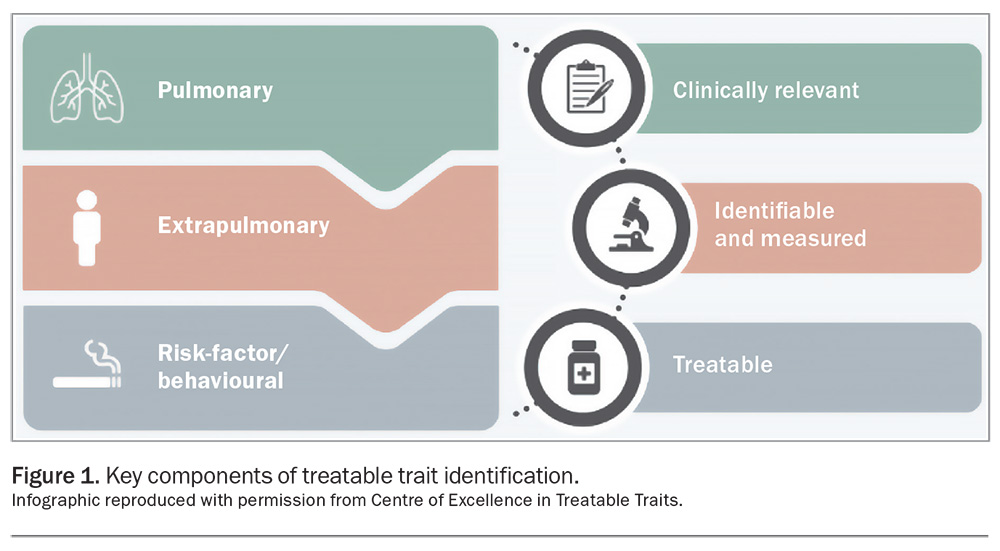
Treatable traits are individual patient characteristics identified through multidimensional assessment. These may include comorbidities (such as anxiety, vocal cord dysfunction and reflux), risk factors (such as smoking and low bone mineral density) and self-management skills (such as adherence and correct inhaler technique).1 To be considered a treatable trait, a characteristic must be clinically relevant, identifiable and measurable using validated trait identification markers, and amenable to treatment (Figure 1).2
The treatable traits approach has been shown to improve health-related quality of life, reduce breathlessness, and alleviate symptoms of anxiety and depression.3 Meta-analyses have also demonstrated fewer hospital admissions and a lower risk of death among people receiving these interventions.2,4
How can treatable traits be used in primary care to enhance asthma management?
Primary care clinicians are well versed in providing holistic patient care and performing comprehensive clinical assessments and therefore the implementation of a treatable traits framework is well aligned with this setting.5 Nevertheless, the constraints of time-limited consultations can limit what can be addressed during a patient visit.2,6
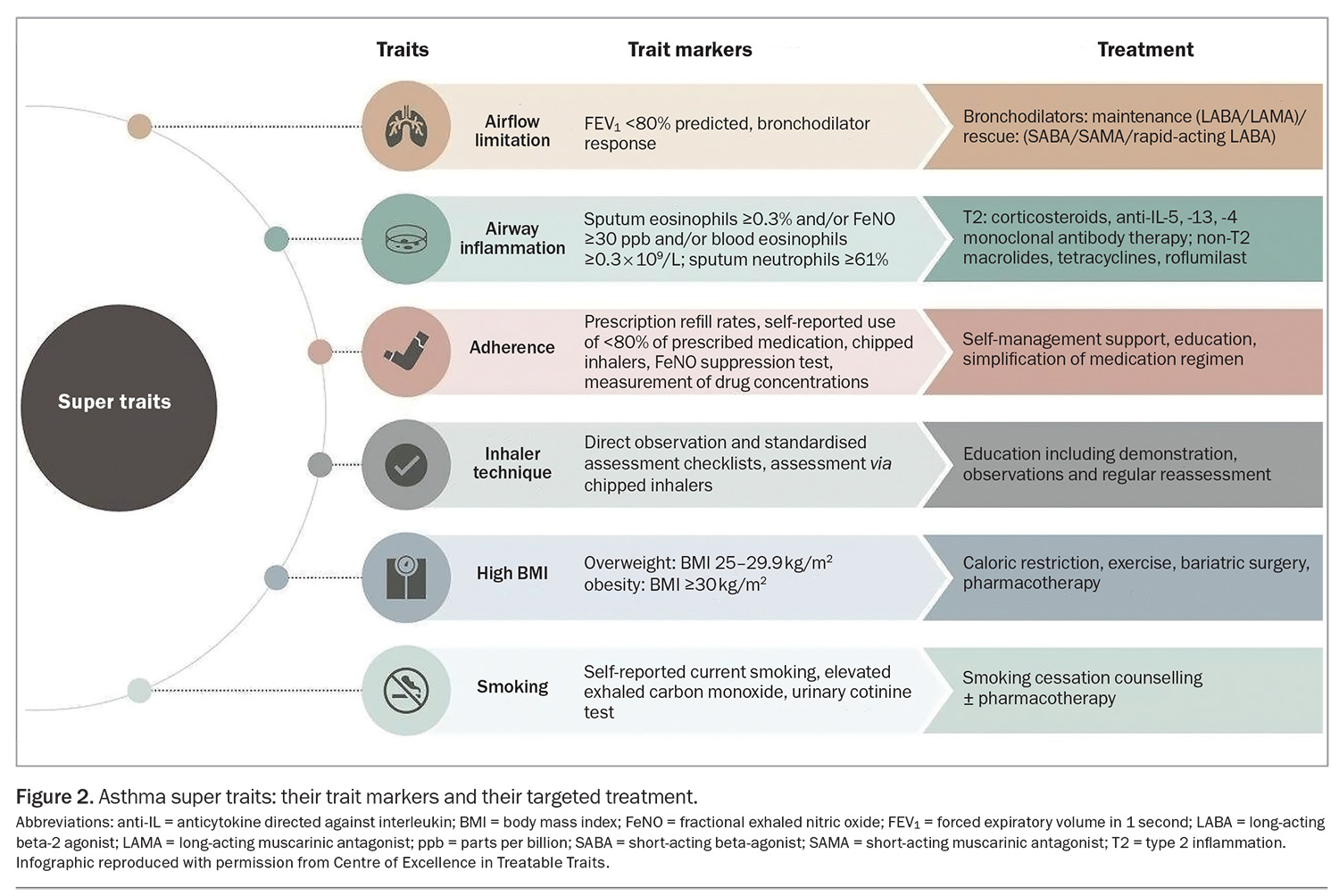
Managing multimorbidity is part of everyday general practice and helps address the inherent heterogeneity and complexity of asthma.2 However, assessing and treating the full spectrum of treatable traits is simply not feasible in routine practice. Focusing on key ‘super traits’, such as type 2 airway inflammation, airflow limitation and suboptimal medication adherence, can have a broad treatment effect (Figure 2). Once identified and addressed, these traits often lead to improvement in other traits.2,7,8
Airway inflammation, particularly type 2 inflammation, is an important super trait in asthma (Table).9,10 Type 2 inflammation can increase asthma exacerbations and reduce lung function. Asthma biomarkers associated with type 2 inflammation include:
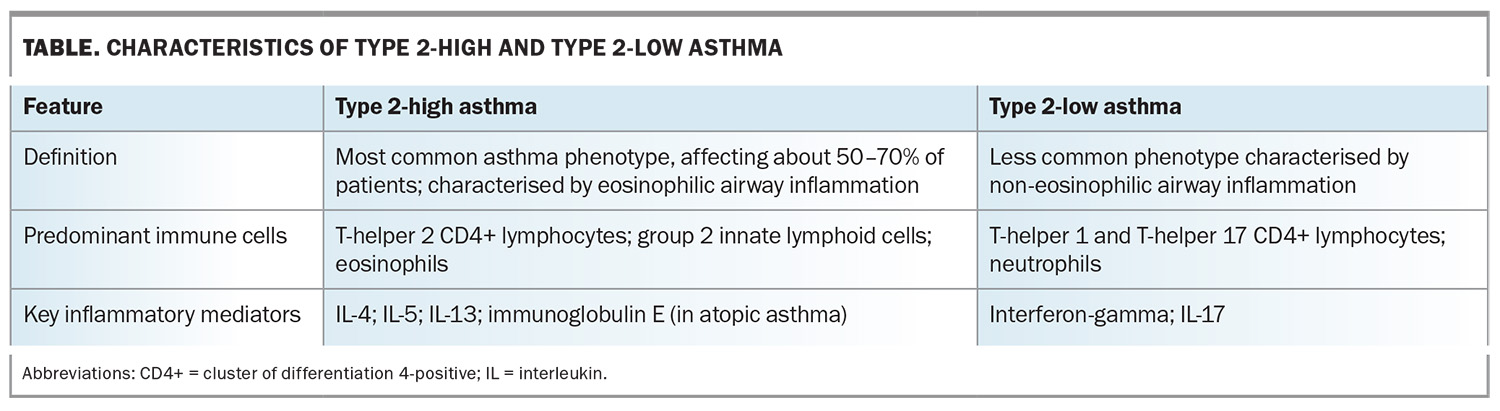
- eosinophils (white blood cells involved in airway inflammation)
- immunoglobulin E
- fractional exhaled nitric oxide (FeNO).
A high blood eosinophil count and elevated FeNO levels are associated with an increased risk of exacerbations, poorer asthma control and greater responsiveness to inhaled corticosteroids (ICS).10-12 Patients who do not exhibit these markers are considered to have type 2-low asthma.
This aligns with recent international guidelines, which recommend measurement of FeNO levels (where available) and blood eosinophil count (widely available in practice) to assist with accurate asthma diagnosis and to inform referral to a respiratory specialist.10,13 These updated guidelines also target these traits therapeutically. In people aged over 12 years, guidelines now recommend the use of a combined ICS and long-acting beta-2 agonist inhaler as single maintenance and reliever therapy (SMART). Anti-inflammatory reliever therapy using ICS/formoterol now replaces short-acting beta-2 agonist monotherapy in people with infrequent asthma symptoms because short-acting beta-2 agonists are commonly overused in the community and are associated with an increased risk of exacerbations.9,14
What to do when your patient’s asthma remains uncontrolled
Failure to address super traits, particularly in patients with severe disease, can create a ‘chaotic trait cascade’ of symptoms. People with untreated super traits experience more asthma attacks, which can lead to a range of downstream effects, including increased oral corticosteroid (OCS) use, airway remodelling, anxiety, breathlessness and adverse impacts on daily life.2,15
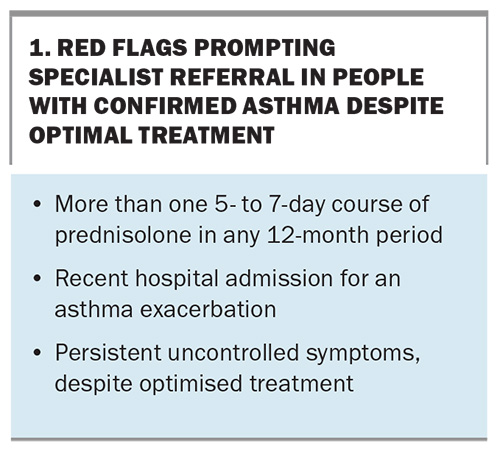
This vicious cycle can be avoided by adopting a treatable traits approach, even in mild-to-moderate asthma managed in primary care, where a large proportion of cases are treated.6 However, some patients continue to experience persistent symptoms despite a confirmed diagnosis and optimised treatment. The red flags listed in Box 1 should prompt referral to a respiratory specialist for multidimensional assessment of treatable traits and consideration of highly effective monoclonal antibody therapies, which can dramatically reduce exacerbations and OCS dependence.
Although the introduction of monoclonal antibody therapies and other add-on treatments has substantially reduced the need for maintenance OCS therapy, these agents remain overprescribed in asthma management.16 Persistent OCS use is associated with a broad range of adverse effects affecting multiple organ systems, even at cumulative lifetime doses as low as 500 mg.17,18 OCS exposure can lead to type 2 diabetes, weight gain, mood changes, cataracts and osteoporosis, with risks increasing as cumulative exposure rises.17
Primary care clinicians can substantially reduce the need for OCS prescribing by using a treatable traits approach, prescribing anti-inflammatory reliever therapy as needed in patients with mild asthma and using SMART therapy in those with moderate-to-severe asthma.19,20
Resources available to primary care clinicians
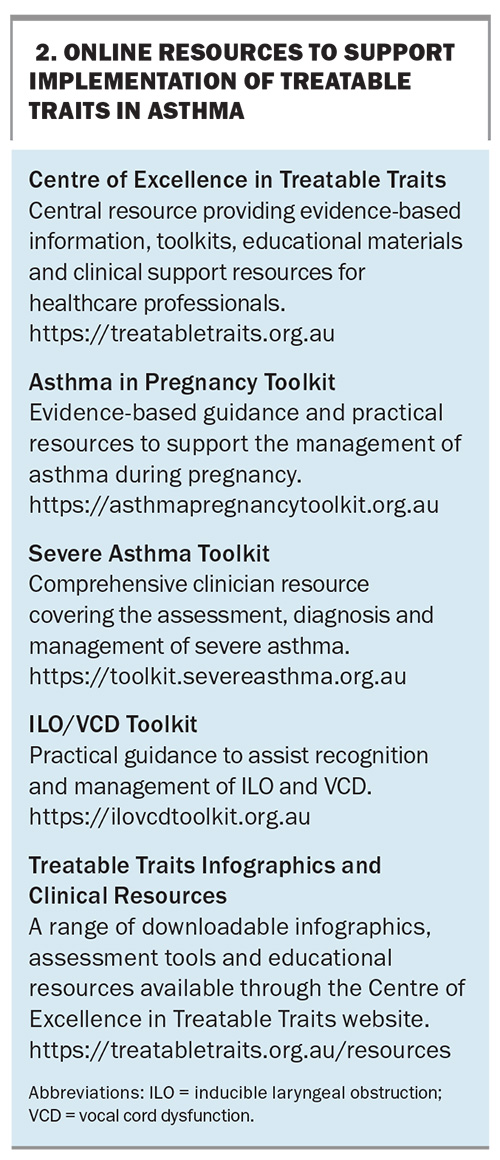
A range of practical, evidence-based resources are available to support implementation of a treatable traits approach in asthma management (Box 2). The Centre of Excellence in Treatable Traits provides educational materials, assessment tools and clinical guidance for healthcare professionals. These include the world-first Asthma in Pregnancy Toolkit, which supports evidence-based management of asthma during pregnancy; the Severe Asthma Toolkit, which provides a comprehensive approach to the assessment, diagnosis and management of severe asthma; and the ILO/VCD (inducible laryngeal obstruction and vocal cord dysfunction) Toolkit, designed to improve recognition and management of ILO and VCD, conditions that are commonly misdiagnosed as asthma. These toolkits also include a range of infographics and quick-reference guides that can be readily incorporated into primary care practice.
Conclusion
Treatable traits are already embedded in good asthma management in primary care through smoking cessation support, promotion of medication adherence, patient education and identification of triggers. When treatment appears to be failing, addressing super traits and recognising when referral to a respiratory specialist is warranted are the next steps in applying a treatable traits approach. When all levels of the healthcare system work together to address treatable traits in asthma management, the greatest benefit is to the patient, who feels heard, supported and actively involved in their personalised care. MT
COMPETING INTERESTS: Professor McDonald has received research funding from the National Health and Medical Research Council (NHMRC), the Medical Research Future Fund (MRFF) and GlaxoSmithKline; consulting fees from GlaxoSmithKline; payment for lectures and educational activities from GlaxoSmithKline, Boehringer Ingelheim and the Menarini Foundation; support for attending meetings and travel from GlaxoSmithKline, Boehringer Ingelheim and the Menarini Foundation; and is a board member of the Thoracic Society of Australia and New Zealand and a member of the COPD-X Guideline Committee. Professor Gibson has received research funding from the NHMRC, the MRFF and GlaxoSmithKline; payment for lectures and educational activities from GlaxoSmithKline, Sanofi and Orion; and has participated on an advisory board for Aer Therapeutics.
References
1. McDonald VM, Holland AE. Treatable traits models of care. Respirology 2024; 29: 24-35.
2. Gibson PG, McDonald VM. Integrating hot topics and implementation of treatable traits in asthma. Eur Respir J 2024; 64(6): 2400861.
3. Sarwar MR, McDonald VM, Abramson MJ, McLoughlin RF, Geethadevi GM, George J. Effectiveness of interventions targeting treatable traits for the management of obstructive airway diseases: a systematic review and meta-analysis. J Allergy Clin Immunol Pract 2022; 10(9): 2333-2345.e21.
4. Petsky HL, Cates CJ, Kew KM, Chang AB. Tailoring asthma treatment on eosinophilic markers (exhaled nitric oxide or sputum eosinophils): a systematic review and meta-analysis. Thorax 2018; 73: 1110-1119.
5. Pinnock H, Noble M, Lo D, McClatchey K, Marsh V, Hui CY. Personalised management and supporting individuals to live with their asthma in a primary care setting. Expert Rev Respir Med 2023; 17: 577-596.
6. Pfeffer PE, Rupani H, De Simoni A. Bringing the treatable traits approach to primary care asthma management. Front Allergy 2023; 4: 240375.
7. Agusti A, Bel E, Thomas M, Vogelmeier C, et al. Treatable traits: toward precision medicine of chronic airway diseases. Eur Respir J 2016; 47: 410-419.
8. Farinha I, Gibson PG, McDonald VM, Heaney LG. Treatable traits as a pathway to remission in asthma. J Allergy Clin Immunol Pract 2025; 13: 1542-1552.
9. Levy ML, Crooks MG. Anti-inflammatory
reliever therapy (AIR) for asthma. ERJ Open Res 2024; 10(5): 00494-2024.
10. Agusti A, Gibson PG, Heaney LG, Thomas M. Change is in the air: key questions on the
‘Treatable Traits’ model for chronic airway diseases in primary care. NPJ Prim Care Respir Med 2024; 34(1): 21.
11. Price DB, Rigazio A, Campbell JD, et al. Blood eosinophil count and prospective annual asthma disease burden: a UK cohort study. Lancet Respir Med 2015; 3: 849-858.
12. Rupani H, Kent BD. Using fractional exhaled nitric oxide measurement in clinical asthma management. Chest 2022; 161: 906-917.
13. National Institute for Health and Care Excellence (NICE), British Thoracic Society, Scottish Intercollegiate Guidelines Network. Asthma: diagnosis, monitoring, and chronic asthma management. Available online at: https://www.nice.org.uk/guidance/ng245 (accessed June 2026).
14. National Asthma Council. Principles of management Melbourne: National Asthma Council; 2026. Available online at: https://www.asthmahandbook.org.au/management/adults-and-adolescents/medication-management (accessed June 2026).
15. García Hernáez R, García-Gallardo Sanz MV, González Barcala FJ. Discovering treatable traits in asthma: toward more precise treatment. Open Respir Arch 2025; 7(3): 100451.
16. Blakey J, Chung LP, McDonald VM, et al. Oral corticosteroids stewardship for asthma in adults and adolescents: a position paper from the Thoracic Society of Australia and New Zealand. Respirology 2021; 26: 1112-1130.
17. Price DB, Trudo F, Voorham J, et al. Adverse outcomes from initiation of systemic corticosteroids for asthma: long-term observational study. J Asthma Allergy 2018; 11: 193-204.
18. Voorham J, Xu X, Price DB, et al. Healthcare resource utilization and costs associated with incremental systemic corticosteroid exposure in asthma. Allergy 2019; 74: 273-283.
19. Reddel HK, Bacharier LB, Bateman ED, et al. Global Initiative for Asthma Strategy 2021: executive summary and rationale for key changes. J Allergy Clin Immunol Pract 2022; 10(1S): S1-S18.
20. Stanley B, Chapaneri J, Khezrian M, et al. Predicting risk of morbidities associated with oral corticosteroid prescription for asthma. Pragmat Obs Res 2025; 16: 95-109.
Single article purchases are temporarily unavailable due to site maintenance.
If you would like to purchase an article during this time, please email us at [email protected] with the article details and we'll assist you directly. We'll also let you know when online purchasing is available again.
Thank you for your patience and understanding.