
The unsettled infant – holding the baby in mind

Caring for an unsettled baby is challenging. Although very few babies have a medical cause for their crying, families often access medical services for support. Alongside the medical assessment, the GP can promote a stronger infant–carer relationship and enhance families’ understanding and care of their infant.
Correction
A correction for this article appears in the July 2026 issue of Medicine Today and is available here. The online version and the full text PDF of this article have been corrected.
- Babies communicate through crying. Normally, an infant’s crying duration increases in the first 6 to 8 weeks, then begins to slowly resolve by the fifth month.
- It is important to consider and rule out medical causes of crying; however, these are identified in a very small number of babies.
- The GP plays a central role in preventing the overmedicalisation of the infant’s crying and identifying other contributors to the infant and family’s presentation.
- Individualised, multidisciplinary collaboration is often needed to support the carers and help them understand the baby’s experience of the world.
- An infant mental health approach, used alongside the infant’s medical assessment, can promote stronger connections between the carer and infant, which in turn supports the family in better understanding their infant’s communication.
Crying is a useful and effective communication tool for infants, allowing the baby to convey their emotional state and needs.1,2 It is a key attachment behaviour in very young infants and is used to seek proximity and contact with the infant’s carer.3,4 For most infants, crying peaks at 6 to 8 weeks of age and begins to stabilise at lower levels by the fourth or fifth month.5,6 However, when the crying is beyond the expectation of the carer, concerns about a medical cause are common, and families will often seek medical review and support.7 Caring for an unsettled baby can be distressing and exhausting for families and is associated with increased maternal depression symptoms and is a main trigger for shaken baby syndrome.8-10
The GP plays an important role as a trusted and accessible point of contact for families with concerns about their baby’s crying. Carers often bring preconceived ideas about their baby’s crying to the consultation and have often received conflicting advice from well-meaning family members and friends, as well as from social media.11,12 Many have sought recommendations from several health professionals or tried over-the-counter preparations or alternative therapies before the baby’s first appointment.7,13,14 Most are concerned about the cause of the baby’s crying. Although an underlying organic cause is found in fewer than 5% of crying infants, there is significant pressure in the consultation room to identify and treat a medical cause.15 The term ‘colic’ is often used to refer to excessive crying without cause. However, this term is not usually helpful to the family, as it often inaccurately implies a gastrointestinal cause and gives the infant and family a medical label.16
Although it is important to rule out medical causes of the infant’s unsettledness, it is equally important to avoid unnecessary investigations and treatments, and the pathologisation of normal infant behaviour and development, all of which can contribute to misinterpretation of infant communication and disruption of the infant–carer relationship. Therefore, timely access to care with an approach that supports the baby, carer and their relationship is vital. This is best done with a multidisciplinary approach where possible.17
In this article, the term ‘carer’ is used to refer to any person fulfilling a parental or primary caregiving role, including biological parents, adoptive parents, foster parents, guardians and other nonbiological caregivers.
Clinical assessment
The initial role of the GP is to identify and exclude common causes of crying, such as hunger, as well as acute medical causes, including:
- injury, for example, fracture or nonaccidental head injury – inconsolable crying in an infant is the most common trigger for abusive head trauma in an infant5
- raised intracranial pressure
- incarcerated inguinal hernia
- urinary tract infection
- hair tourniquet
- corneal foreign body or abrasion.18
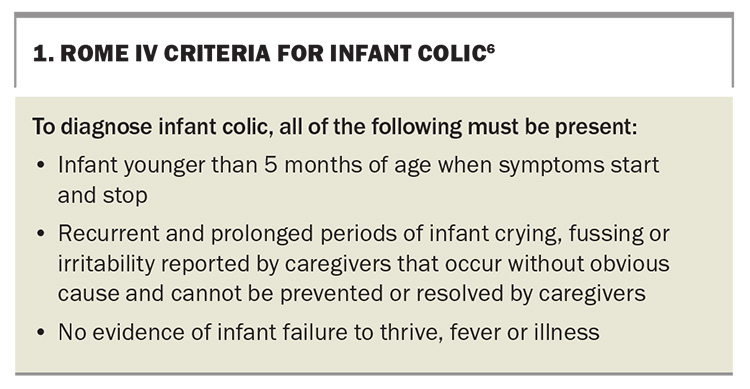
The diagnostic criteria for infant colic, often referring to a persistently unsettled infant, is defined by the Rome IV criteria (Box 1).6
Exclusion of medical conditions
For persistently unsettled infants, the following conditions should be considered.
Non-immunoglobulin E-mediated allergy
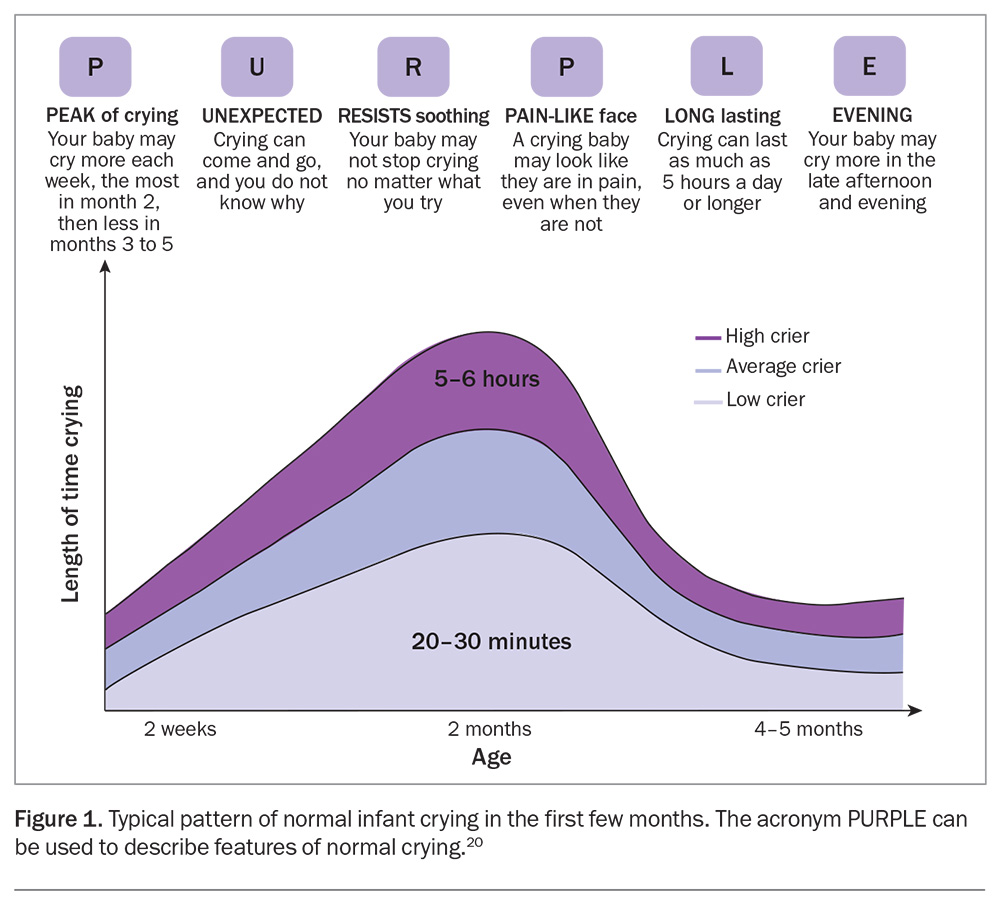
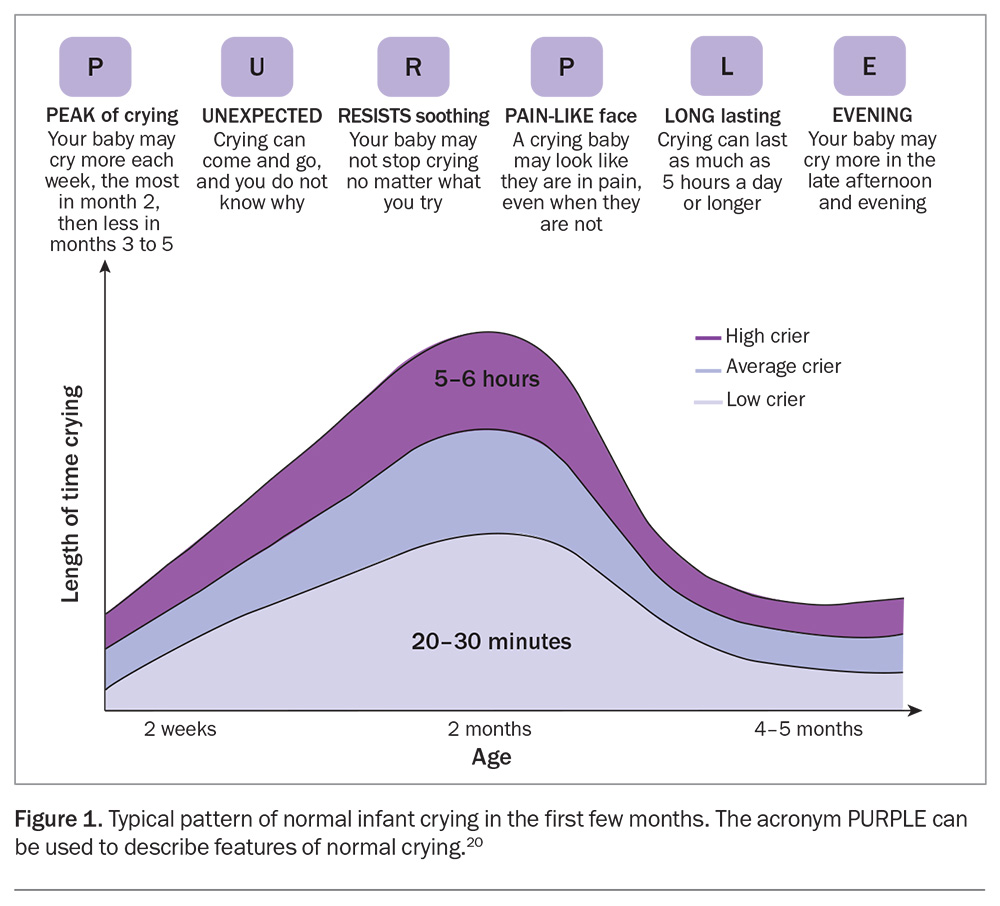
Non-immunoglobulin (Ig) E-mediated allergy is most often caused by an allergy to cow’s milk or soy protein.19 This is usually accompanied by other signs of allergy, including vomiting, mucus or blood in the stool, poor growth or extensive eczema. The diagnosis is made through clear resolution of symptoms during a two- to four-week trial of maternal exclusion of cow’s milk and soy products for breastfed infants, or hypoallergenic formula for formula-fed infants, with a response usually achieved within two weeks. The timing of the trial is useful to note in relation to the infant’s expected normal crying pattern, with crying peaking at six to eight weeks and resolving by the fifth month (Figure 1).20 To confirm the diagnosis, symptoms should recur with recommencement of cow’s milk or soy in the infant’s diet, or in the mother’s diet if the infant is breastfed.
If the diagnosis is confirmed and cow’s milk or soy exclusion is to continue, active support of the breastfeeding mother is essential, including advice about calcium supplementation. Significant dietary changes can be challenging and affect the mother’s quality of life.21 For formula-fed infants, the taste and smell of specialised formulas can vary, and the transition between formulas can be challenging depending on the baby’s sensitivity to change. A gradual transition is often needed. Specialised formulas suitable for infants with non-IgE-mediated cow’s milk or soy allergy may include rice-based, extensively hydrolysed and amino acid-based formulas.
Dietary guidance regarding non-IgE-mediated cow’s milk allergy and calcium supplementation can be found on the Australasian Society of Clinical Immunology and Allergy’s website (https://www.allergy.org.au/patients/food-allergy/ascia-dietary-avoidance-for-food-allergy/cows-milk-dairy).
Gastro-oesophageal reflux disease
Gastro-oesophageal reflux is a normal physiological finding in infants. It can present with effortless vomiting, also known as posseting, several times a day. Gastro-oesophageal reflux disease (GORD) is much rarer and can present with vomiting accompanied by feeding difficulties, poor growth or haematemesis.22 There is no evidence to support a diagnosis of reflux disease without regurgitation, often referred to as silent reflux.23 Up to 40% of infants with suspected GORD have non-IgE-mediated cow’s milk allergy, and the management outlined above is recommended.24
Antireflux medications, such as proton pump inhibitors, have been definitively shown in high-quality, robust trials to be ineffective for crying without signs of GORD.25,26 Potential side effects from antireflux medication also need to be considered, such as an increased risk of community-acquired pneumonia, gastroenteritis, osteopenia and micronutrient deficiencies.24 In otherwise well babies with vomiting and unsettledness, there is no evidence to support the use of antireflux medication.27
Lactose intolerance or overload
Unsettledness in a baby is often misattributed to lactose intolerance. Primary lactose intolerance in infancy, otherwise known as congenital lactase deficiency, is a rare genetic disorder that usually presents in the first few days of life and, if left untreated, quickly leads to severe illness.28,29
Functional lactose overload may occur in an infant because of highly frequent feeds from predominantly lactose-rich breast foremilk. In this case, breastfeeding support is needed, which may include help to space feeds.28,29
Secondary lactose intolerance may occur because of damage to the intestinal villi in the setting of non-IgE-mediated cow’s milk allergy or gastroenteritis. The condition should be considered if there is frequent watery, frothy diarrhoea associated with perianal excoriation.28,29
Treatment options
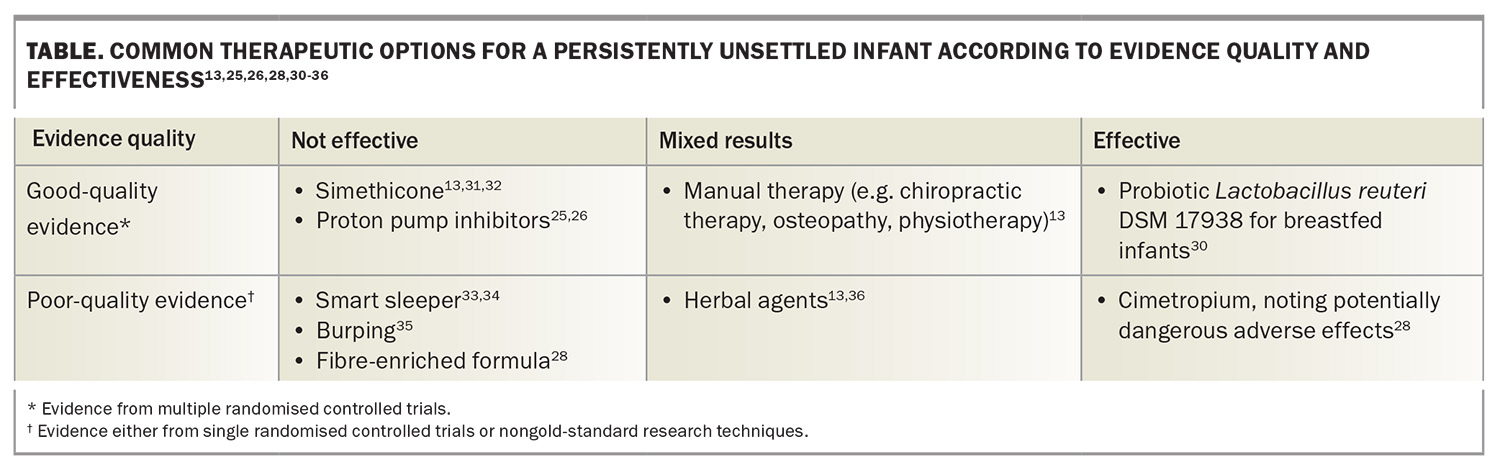
There is no single medical treatment or intervention for crying without a medical cause. However, several products and therapies are marketed to carers to treat infant unsettledness, despite limited evidence of efficacy and some safety concerns. The best-studied option with evidence of safety and effectiveness is the probiotic Lactobacillus reuteri DSM 17938. When administered for 21 days, it has been shown to reduce crying in exclusively breastfed infants, but not in formula-fed infants.30 It is important to discuss with families the evidence behind the different products and therapies and to provide them with realistic expectations. Some of the common therapeutic options and their known effectiveness are listed in the Table.13,25,26,28,30-36 When considering the evidence, also consider the risks and harms of therapy. If there are potential risks from the therapy but no good evidence for use, the therapy or medication should not be used.
Beyond the medical lens
Although considering a medical cause for an infant’s unsettledness is a key role of the GP, a medical cause is rarely found. If the baby is otherwise well, further investigation or medical specialist referral may not reveal a diagnosis, and this hunt may perpetuate the carers’ impression that there is something wrong with their baby. It is important not to medicalise the baby and to support carers in understanding normal crying patterns and being curious about their baby’s communication.37 In addition, it is important to acknowledge the carers’ fears, frustrations, resentments and other distressing experiences without judgement. Showing carers where their baby’s journey sits on the crying curve, and explaining the PURPLE crying acronym to describe a normal developmental period of increased crying that peaks and then gradually resolves, can help families develop realistic expectations (Figure 1).20
In parallel with the medical assessment, an infant mental health approach adds a broader consideration of the infant’s experience of the world and the infant–carer relationships. The field of infant mental health was first recognised in the 1970s, following the classic paper Ghosts in the Nursery, which detailed the novel approach of treating carers and their infants together, pioneering the first reflective parenting and attachment-based program.38 It refers to ‘the developing capacity of the infant and young child (from pregnancy to 3 years of age) to experience, express and regulate emotions; form close and secure relationships; and explore the environment and learn’, all in the context of the caregiving environment, which includes family, community and cultural expectations.39
When this lens is used to better understand the crying baby, the carers and clinician can move beyond the medical model and gain a much richer appreciation of the unique developing child in front of them. This, in turn, leads to enhanced communication and stronger connections between the carer and infant.
How to explore the infant’s experience within the family
Exploring the infant’s experience requires attention to the baby’s cues, relationships and caregiving environment. This broader lens can guide the history, observation of infant–carer interactions, therapeutic interventions and multidisciplinary collaboration.
History
It is helpful to gain an understanding of the family and community surrounding the baby. Several factors may affect the infant–carer relationship and should be explored:
- carer wellbeing
– carer mental health history
– current mental health status of carers, with particular consideration of postnatal depression
– carer experience of being unable to soothe the infant, which may contribute to distress; and is strongly associated with postpartum depressed mood40
– significant psychological or medical stress before, during or after pregnancy, including unexpected hospitalisations or separations
– carers’ experiences of their own childhood and expectations of taking on a parenting role - pregnancy, birth and infant history
– previous pregnancy or neonatal complications, including miscarriage or neonatal loss
– potentially painful or harmful investigations or treatments experienced by the baby - family safety, resources and support
– exposure to family violence
– poverty or socioeconomic hardship
– adequacy of the family’s resources to meet the baby’s needs
– access to supportive family and friends
– family connections to community and culture
– other social and cultural influences - professional input and explanatory models
– professional supports already involved
– number of healthcare professionals or other experts seen before this appointment
– conflicts in advice given
– importance placed by the family on finding a ‘medical cause’ or ‘answer’ to the problem.
The Edinburgh Postnatal Depression Scale is a simple screening tool used to identify symptoms of postnatal depression and anxiety in male and female carers.41,42 All carers should be screened. Translations are available at https://www. healthtranslations.vic.gov.au/resources/edinburgh-postnatal-depression-scale-epds.
Exploring these aspects of the history gives insight into the baby and family’s journey before the consultation. In highly distressed families, the baby is often forgotten or lost among concerns about carer mental health, family violence, safety or the pursuit of a medical diagnosis. Identifying contributing factors can help direct management to reduce stress on the family system and shift the focus back to the baby.
Observation and therapeutic interventions
The focus of the consultation is to gain a better understanding of the baby’s unique strengths, preferences and communication, and to strengthen the infant–carer relationship. This can be achieved by approaching the consultation with curiosity and kindness and without judgement. The family has likely received conflicting advice, including misinformation from social media, well-meaning friends and family members, and sometimes healthcare professionals. Families are trying their best but may be overwhelmed, confused or misguided in their understanding of what is happening for their baby.
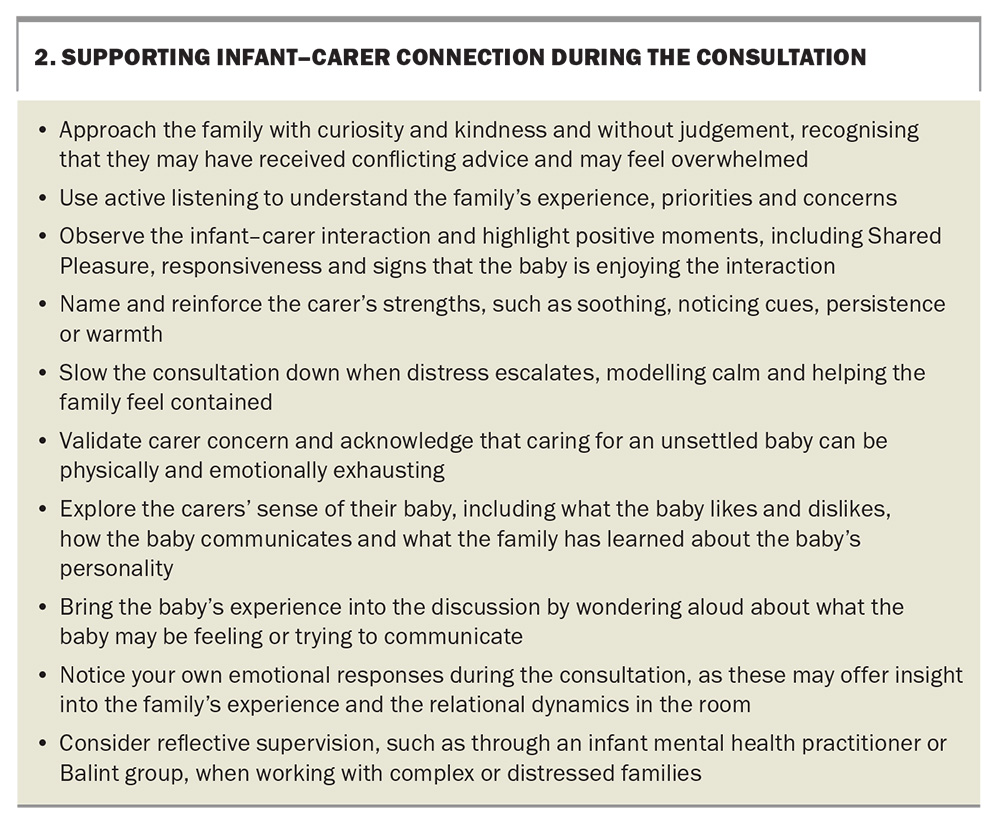
Active listening is essential. The clinician should create space for the family to share their experience and express their priorities for their child. During the consultation, positive infant–carer interactions should be highlighted and encouraged. The clinician can observe the interaction between the baby and carer, and comment when the baby shows that they are enjoying the experience. These moments are termed Shared Pleasure and are defined as high-intensity positive interactions. Longer moments of Shared Pleasure between the infant and carer promote positive psychological development and protect against the effects of parental psychopathology.43-45 These observations can also bring the carer’s attention to the baby’s unique skills, capacity and developmental progress.
The clinician should recognise and name the carer’s strengths as a parent. This includes identifying skills the carer brings to their role as a parent and highlighting these when they are demonstrated in the consultation. This may also be an opportunity for the carer to reflect on experiences that have shaped their strengths and worries in the parenting role.
It can be helpful to slow things down, tolerate and sit with the emotional experiences in the room, and practise ‘calm in the chaos’ by avoiding becoming heightened when the baby, carer or both become distressed. Slowing things down and demonstrating an ability to acknowledge the strong emotions in the consultation can help the family and infant feel contained. Showing the carer that the clinician can hold hope for their situation, even when they may feel hopeless, can be powerful.
Parental concern should be validated so that carers feel heard and believed. Although the baby may not have a medical cause for their unsettledness, caring for an unsettled baby is emotionally and physically exhausting and can take a serious toll on the carers’ mental health. It is helpful to let them know that it was important they arranged for an appointment with you and that they and their baby will be supported through this challenging time.
The consultation can also be used to explore the carers’ sense of their baby. The challenge of caring for an unsettled baby, together with parental fatigue, can overshadow the valuable first few weeks and months when the family and baby are getting to know each other. Time during the appointment can be used to look together and explore who the baby is, what they like and dislike and what the family has learned about the infant’s personality. The consultation can also provide an opportunity to observe the interaction between the baby and carer, as well as taking the opportunity to meet with the baby as a person.46 Some examples of these interactions are shown in Figure 2.
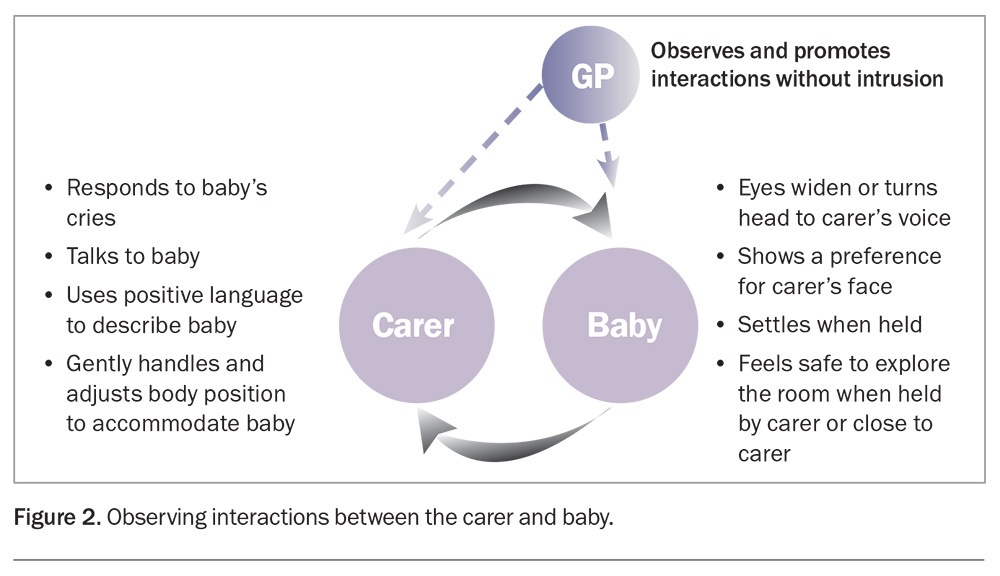
The clinician can bring the baby back to the centre of care by being curious about the baby’s experience and wondering about the baby. Asking, ‘I wonder what this must feel like for your baby?’ can help highlight the baby’s experience. It may also be useful to ask whether the carers can identify anything that helps their baby. A carer’s capacity to understand the breadth of their child’s internal experience is termed Parental Reflective Functioning.47 High Parental Reflective Functioning improves the infant–carer interaction, as well as carer and infant wellbeing.48
Clinicians should also reflect on how they feel during the consultation. Clinicians working with unsettled infants often encounter vulnerable families, complexity and intergenerational trauma. These dynamics can bring up unexpected and challenging feelings and behaviours in families and clinicians alike, which can be difficult to address in a busy clinic. Identifying when and why these feelings arise can give crucial insight into what it may feel like to be parented in that family.49
Reflective supervision should also be considered. Reflective supervision is the regular collaboration between treating clinicians and an infant mental health practitioner, creating a safe place to explore thoughts and feelings that arise when working with complex families. This can sharpen clinicians’ reflective skills to help them understand the inner experiences of infants and carers, and provide a space where the clinician feels safe and supported.50 Reflective supervision can be accessed through several organisations, including the Balint Society of Australia and New Zealand (https://balintanz.org/).
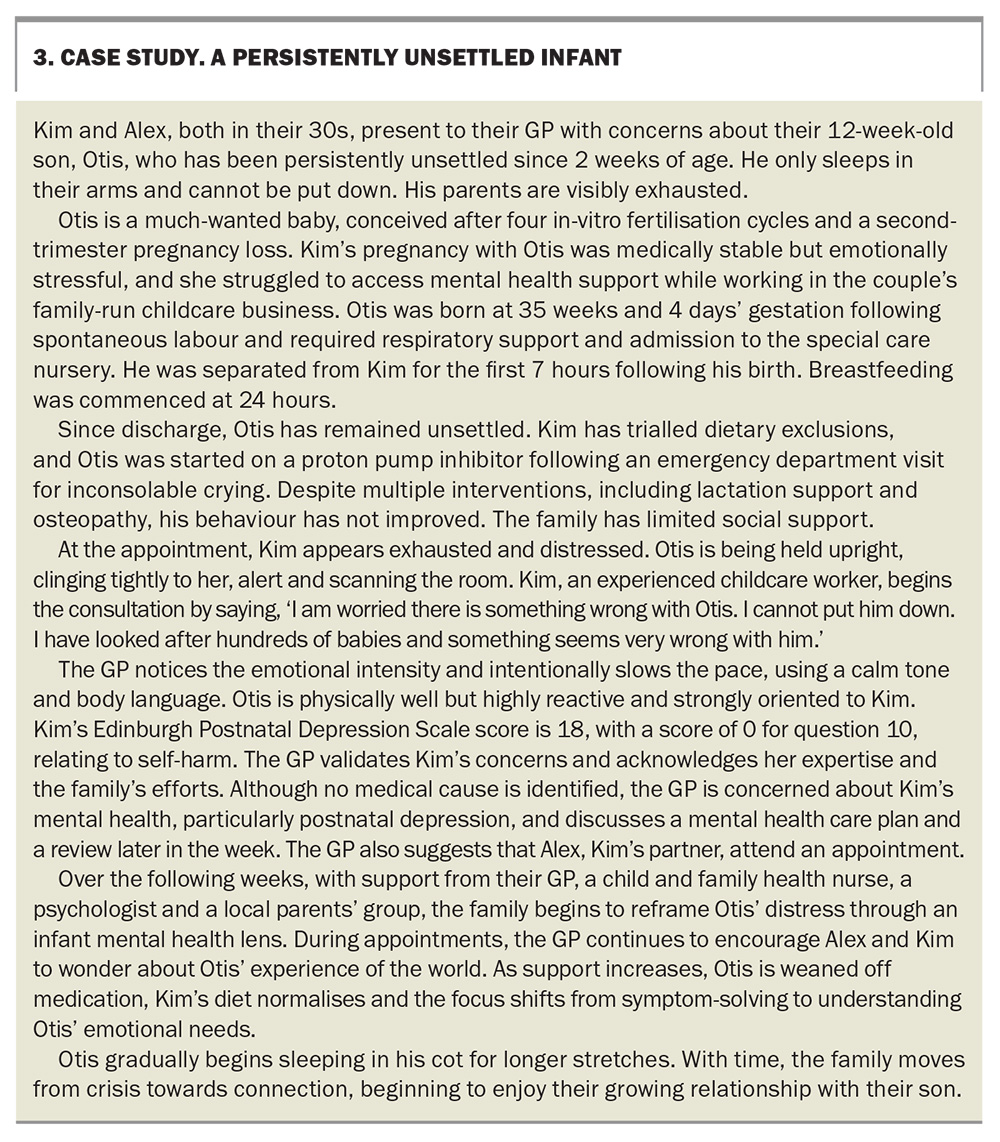
The above strategies are summarised in Box 2. A case study of a persistently unsettled infant is described in Box 3.
Multidisciplinary collaboration
There are often multiple contributors to the infant and family’s presentation, requiring a multidisciplinary approach.10 The approach should be individualised according to the family’s needs:
- GPs – to exclude medical causes, normalise the infant’s behaviour, and provide support and guidance to the whole family. The GP may also co-ordinate care with other health professionals when needed and initiate mental health support for carers
- clinic-based child and family health nurses – to provide advice and support with feeding, development, sleep and settling, as well as support for carers. The nurse can track the baby’s development and growth and can refer to local services when needed
- outreach child and family health nurses – to provide extended support for families at risk of poor outcomes, including exposure to family violence
- local breastfeeding clinics – to support breastfeeding challenges
- paediatricians – to further assess medical or developmental concerns relating to the child’s unsettledness
- Early Parenting Centres – to provide a range of services to families, from education programs for families to residential stays for support with sleep and settling, and strengthening infant–carer relationships. A list of centres around Australia can be found at https://raisingchildren.net.au/babies/sleep/solving-sleep-problems/help-with-sleep-settling
- Child and Adolescent Mental Health Services – to refer families to infant mental health clinicians for assessment and therapy
- Perinatal and Infant Mental Health Services – to provide specialised mental health services from conception through to the first year of life. For When is a free national phone line service connecting carers with appropriate services (https://forwhenhelpline.org.au/)
- Mother–Baby Units – to provide specialist clinical mental health services for mothers with significant mental health difficulties in the postnatal period. These services can be accessed through local mental health intake
- crisis mental health services – for acutely unwell carers that may require hospitalisation
- helplines – e.g. https://raisingchildren.net.au/grown-ups/services-support/about-services-support/helplines
- family violence services
- culturally appropriate supports and services.
Conclusion
An unsettled infant is a common reason that carers present to their GP. Careful history-taking and examination to exclude medical causes are important but unlikely to yield a definitive diagnosis. Excessive crying is usually multifactorial and requires thinking beyond the traditional medical model. A multidisciplinary approach is needed, centred on the infant’s experience and communication efforts. Supporting carers in understanding their baby’s experience of the world can strengthen the infant–carer relationship and improve carer and child wellbeing. MT
COMPETING INTERESTS: Dr Goldwasser, Ms Evans and Dr Tenbensel: None. Dr Paul has received support from his hospital and from the World Association for Infant Mental Health for attending conferences; and is a past President for the World Association for Infant Mental Health. Ms Gammell has held a leadership or fiduciary role in the Building Early Attachment Relationships program and on the Growing Minds steering committee. Dr Garvey sits on several government and nonfungible token advisory boards. He is the founder of a social enterprise that shares evidence on child development and mental health with the public through various formats, including books, podcasts, other media and in-person education sessions. The social enterprise is funded through several sources, which may include grants; royalties for media outputs, which resource the free community initiatives delivered; consulting fees from work delivered by the team; and presentation and educational event fees from work delivered by the team. Dr Sung has received grants or contracts from the 2024 Murdoch Children’s Research Institute Population Health Theme Grant, 2024 National Health and Medical Research Council Investigator Grant Emerging Leadership 2 (GNT2033683), 2021 National Health and Medical Research Council Hearing Health Evidence Based Support Services Grant (GNT2015735) and 2021 National Health and Medical Research Council Clinical Trials and Cohort Studies Grant (GNT2006491); has received support for attending the Diasorin IDX Symposium 2025, the Royal Australasian College of Physicians and Hong Kong College of Physicians Joint Scientific Meeting 2025 and the Australian Newborn Hearing Screening Showcase 2024; has held leadership or fiduciary roles as the Chair of the Australian National Child Hearing Health Outcomes Registry, Chair of the Childhood Hearing Australasian Medical Professionals Network, Chair of the Patient Reported Outcome Measures Working Group and Chair of the Sleep and Settling Interest Group, as well as on the Paediatrics and Child Health Research Committee, Expert Universal Newborn Hearing Screening Working Group, Australasian Newborn Hearing Screening Committee, Australasian Newborn Hearing Screening Committee Conference Organising Committee, Australian Institute of Health and Welfare Ear and Hearing Health Advisory Group, Steering Committee Children’s Healthcare Australasia to Guide the Development of the CHA Paediatric Patient Reported Experience Measure, Conference Organising Committee at the Australasian Newborn Hearing Screening Conference, Senior Leadership Group at the Centre for Community Child Health, Clinical Data Champion at the Centre for Health Analytics and Murdoch Children’s Research Institute Community and Clinical Research Advisory Committee; and has held other financial or nonfinancial interests on the BMC Pediatrics Editorial Board, Editorial Board for the Journal of Paediatrics and Child Health, as an Editor for the Journal of Clinical Medicine special issue and an Editor for the Frontiers in Pediatrics special issue.
References
1. Brazelton TB. Crying in infancy. Pediatrics 1962; 29: 579-588.
2. Winnicott DW. The child, the family and the outside world. Harmondsworth: Penguin; 1964.
3. Bowlby J. The making and breaking of affectional bonds. I. Aetiology and psychopathology in the light of attachment theory. An expanded version of the Fiftieth Maudsley Lecture, delivered before the Royal College of Psychiatrists, 19 November 1976. Br J Psychiatry 1977; 130: 201-210.
4. Ainsworth MD, Bell SM. Attachment, exploration, and separation: illustrated by the behavior of one-year-olds in a strange situation. Child Dev 1970; 41: 49-67.
5. Barr RG. Preventing abusive head trauma resulting from a failure of normal interaction between infants and their caregivers. Proc Natl Acad Sci U S A. 2012; 109 Suppl 2: 17294-17301.
6. Drossman DA, Hasler WL. Rome IV-functional GI disorders: disorders of gut-brain interaction. Gastroenterology 2016; 150: 1257–1261.
7. McCallum SM, Rowe HJ, Gurrin L, Quinlivan JA, Rosenthal DA, Fisher JR. Unsettled infant behaviour and health service use: a cross-sectional community survey in Melbourne, Australia. J Paediatr Child Health 2011; 47: 818-823.
8. Vik T, Grote V, Escribano J, et al. Infantile colic, prolonged crying and maternal postnatal depression. Acta Paediatr 2009; 98: 1344-1348.
9. Garnacho-Garnacho VE, Rodriguez-Lopez ES, Oliva-Pascual-Vaca A, Goenaga-Echave L, Otero-Campos A. Maternal psychological well-being as a protector in infantile colic. Nutrients 2024; 16: 2342.
10. Vinchon M. Shaken baby syndrome: what certainty do we have? Childs Nerv Syst 2017; 33: 1727-1733.
11. Frey E, Bonfiglioli C, Frawley J. Parents’ use of social media for health information before and after a consultation with health care professionals: Australian cross-sectional study. JMIR Pediatr Parent 2023; 6: e48012.
12. Moon RY, Mathews A, Oden R, Carlin R. Mothers’ perceptions of the internet and social media as sources of parenting and health information: qualitative study. J Med Internet Res 2019; 21: e14289.
13. Perry R, Leach V, Penfold C, Davies P. An overview of systematic reviews of complementary and alternative therapies for infantile colic. Syst Rev 2019; 8: 271.
14. Kenny B, McTaggart S, O’Loughlin R, Ranjithakumaran B, Pelly R, Hiscock H. Mothers’ experience seeking healthcare advice for their unsettled infants in Victoria, Australia. J Child Health Care 2025; 29: 891-904.
15. Freedman SB, Al-Harthy N, Thull-Freedman J. The crying infant: diagnostic testing and frequency of serious underlying disease. Pediatrics 2009; 123: 841-848.
16. Barr RG. Colic and crying syndromes in infants. Pediatrics 1998; 102: 1282-1286.
17. Douglas PS, Hiscock H. The unsettled baby: crying out for an integrated, multidisciplinary primary care approach. Med J Aust 2010; 193: 533-536.
18. Garvey W, Sung V. The crying baby. Excessive or inconsolable crying in infants. Medicine Today 2020; 21(7): 39-43.
19. Labrosse R, Graham F, Caubet JC. Non-IgE-mediated gastrointestinal food allergies in children: an update. Nutrients 2020; 12: 2086.
20. National Center on Shaken Baby Syndrome. Period of PURPLE Crying. Farmington: National Center on Shaken Baby Syndrome; 2018. Available online at: https://dontshake.org/purple-crying (accessed May 2026).
21. McWilliam V, Netting MJ, Volders E, Palmer DJ, WAO DRACMA Guideline Group. World Allergy Organization (WAO) diagnosis and rationale for action against cow’s milk allergy (DRACMA) guidelines update - X - breastfeeding a baby with cow’s milk allergy. World Allergy Organ J 2023; 16: 100830.
22. Davies I, Burman-Roy S, Murphy MS, Guideline Development Group. Gastro-oesophageal reflux disease in children: NICE guidance. BMJ 2015; 350: g7703.
23. Heine RG, Jaquiery A, Lubitz L, Cameron DJ, Catto-Smith AG. Role of gastro-oesophageal reflux in infant irritability. Arch Dis Child 1995; 73: 121-125.
24. The Royal Children’s Hospital Melbourne. Gastrooesophageal reflux disease in infants. Melbourne: The Royal Children’s Hospital Melbourne; 2019. Available online at: https://www.rch.org.au/clinicalguide/guideline_index/Gastrooesophageal_reflux_disease_in_infants/ (accessed May 2026).
25. Orenstein SR, Hassall E, Furmaga-Jablonska W, Atkinson S, Raanan M. Multicenter, double-blind, randomized, placebo-controlled trial assessing the efficacy and safety of proton pump inhibitor lansoprazole in infants with symptoms of gastroesophageal reflux disease. J Pediatr 2009; 154: 514-520.
26. Moore DJ, Tao BS, Lines DR, Hirte C, Heddle ML, Davidson GP. Double-blind placebo-controlled trial of omeprazole in irritable infants with gastroesophageal reflux. J Pediatr 2003; 143: 219-223.
27. Lopez RN, Lemberg DA. Gastro-oesophageal reflux disease in infancy: a review based on international guidelines. Med J Aust 2020; 212: 40-44.
28. Hall B, Chesters J, Robinson A. Infantile colic: a systematic review of medical and conventional therapies. J Paediatr Child Health 2012; 48: 128-137.
29. Douglas PS. Diagnosing gastro-oesophageal reflux disease or lactose intolerance in babies who cry a lot in the first few months overlooks feeding problems. J Paediatr Child Health 2013; 49: E252-E256.
30. Sung V, Cabana MD, D’Amico F, et al. Lactobacillus reuteri DSM 17938 for managing infant colic: protocol for an individual participant data meta-analysis. BMJ Open 2014; 4: e006475.
31. Metcalf TJ, Irons TG, Sher LD, Young PC. Simethicone in the treatment of infant colic: a randomized, placebo-controlled, multicenter trial. Pediatrics 1994; 94: 29-34.
32. Ellwood J, Draper-Rodi J, Carnes D. Comparison of common interventions for the treatment of infantile colic: a systematic review of reviews and guidelines. BMJ Open 2020; 10: e035405.
33. Singh JK, Menahem S. The five "S’s" and the "SNOO" Smart Sleeper-non-pharmacological interventions (NPI) to promote sleep and reduce crying of infants: a scoping review. Transl Pediatr 2023; 12: 1527-1539.
34. Gellasch P, Johnson S, Walsh TA. The experiences and perceptions of neonatal clinicians when using a responsive bassinet. Adv Neonatal Care 2023; 23: E88-E95.
35. Kaur R, Bharti B, Saini SK. A randomized controlled trial of burping for the prevention of colic and regurgitation in healthy infants. Child Care Health Dev 2015; 41: 52-56.
36. Biagioli E, Tarasco V, Lingua C, Moja L, Savino F. Pain-relieving agents for infantile colic. Cochrane Database Syst Rev 2016; 9: CD009999.
37. Hiscock H, Jordan B. 1. Problem crying in infancy. Med J Aust 2004; 181: 507-512.
38. Fraiberg S, Adelson E, Shapiro V. Ghosts in the nursery. A psychoanalytic approach to the problems of impaired infant-mother relationships. J Am Acad Child Psychiatry 1975; 14: 387-421.
39. Osofsky JT, Kandace. What is infant mental health? Zero to Three 2012; 33: 9.
40. Radesky JS, Zuckerman B, Silverstein M, et al. Inconsolable infant crying and maternal postpartum depressive symptoms. Pediatrics 2013; 131: e1857-e1864.
41. Cox JL, Holden JM, Sagovsky R. Detection of postnatal depression. Development of the 10-item Edinburgh Postnatal Depression Scale. Br J Psychiatry 1987; 150: 782-786.
42. Matthey S, Barnett B, Kavanagh DJ, Howie P. Validation of the Edinburgh Postnatal Depression Scale for men, and comparison of item endorsement with their partners. J Affect Disord 2001; 64: 175-184.
43. Mantymaa M, Puura K, Luoma I, Latva R, Salmelin RK, Tamminen T. Shared pleasure in early mother-infant interaction: predicting lower levels of emotional and behavioral problems in the child and protecting against the influence of parental psychopathology. Infant Ment Health J 2015; 36: 223-237.
44. Lachman A, Niehaus DJH, Jordaan ER, Leppanen J, Puura K, Bruwer B. Shared pleasure in early mother–infant interactions: a study in a high-risk South African sample. Early Child Development and Care 2019; 191: 230-241.
45. Lachman A, Burger M, Jordaan ER, Leppanen J, Puura K, Niehaus DJH. Maternal shared pleasure, infant withdrawal, and developmental outcomes in a high risk setting in South Africa. Front Psychiatry 2021; 12: 668009.
46. Nugent JK. The NBO system as a form of intervention and support for new parents. Zero to Three 2015; 36: 2-10.
47. Slade A. Parental reflective functioning: an introduction. Attach Hum Dev 2005; 7: 269-281.
48. Huynh T, Kerr ML, Kim CN, Fourianalistyawati E, Chang VY, Duncan LG. Parental reflective capacities: a scoping review of mindful parenting and parental reflective functioning. Mindfulness (N Y) 2024; 15: 1531-1602.
49. Seligman S. Why how you feel matters: countertransference reactions in intervention relationships. WAIMH News 1993; 1: 1-7.
50. Schafer W. Models and domains of supervision and their relationship to professional development. Zero to Three 2007; 28: 10-16.
Single article purchases are temporarily unavailable due to site maintenance.
If you would like to purchase an article during this time, please email us at [email protected] with the article details and we'll assist you directly. We'll also let you know when online purchasing is available again.
Thank you for your patience and understanding.