
Preventing cardiovascular–kidney–metabolic syndrome progression: a man with obesity, prediabetes and heart failure

A 63-year-old man presents following a non-ST-segment elevation myocardial infarction and diagnosis of heart failure with reduced ejection fraction in the setting of obesity, prediabetes and other cardiovascular–kidney–metabolic (CKM) risk factors. Assessment and management of CKM syndrome in primary care are discussed, including prevention, lifestyle intervention and pharmacological treatment.
- Cardiovascular–kidney–metabolic (CKM) syndrome describes the interconnected progression of obesity, prediabetes and type 2 diabetes mellitus, chronic kidney disease and cardiovascular disease, including heart failure.
- Primary care has a central role in identifying early CKM risk factors, including visceral obesity, hypertension, dyslipidaemia and prediabetes, before progression to advanced disease.
- Lifestyle intervention remains foundational across all CKM stages and includes healthy dietary patterns, physical activity, weight management, smoking cessation and engagement with community prevention programs.
- Contemporary CKM management includes therapies that target multiple metabolic pathways, including sodium-glucose cotransporter-2 inhibitors, glucagon-like peptide-1 receptor agonists and nonsteroidal mineralocorticoid receptor antagonists.
- Multidisciplinary care, structured chronic disease management and proactive follow up are essential to reduce the progression of CKM syndrome and improve long-term outcomes.
Case presentation
John is a 63-year-old accountant who has attended the practice for 10 years. He was recently discharged from a local tertiary hospital following a non-ST-segment elevation myocardial infarction and diagnosis of heart failure with reduced ejection fraction. During admission, an elevated glycated haemoglobin level of 6.3% (45 mmol/mol) was also identified.
Before John had been admitted to hospital, he had been treated for hypertension with telmisartan 80 mg daily. Over the preceding five years, he had experienced progressive weight gain of 10 kg, reaching a body mass index (BMI) of 33 kg/m² following separation from his wife.
His family history included ischaemic heart disease in his father at the age of 65 years and a haemorrhagic cerebrovascular accident in his mother at the age of 63 years. He stopped smoking five years ago and drinks two standard alcoholic drinks on weekend nights.
During his hospitalisation, John was commenced on aspirin daily, frusemide 40 mg every morning, rosuvastatin 20 mg daily, spironolactone 25 mg every morning, metoprolol succinate 23.75 mg daily and sacubitril/valsartan 48.6 mg/51.4 mg twice daily.
Results from investigations showed:
- fasting blood glucose level, 6.5 mmol/L, repeated two weeks later at 6.3 mmol/L
- glycated haemoglobin level, 6.3% (45 mmol/mol)
- total cholesterol level, 5.5 mmol/L
- HDL-cholesterol level, 1.1 mmol/L
- triglyceride level, 2.6 mmol/L
- LDL-cholesterol level, 2.5 mmol/L
- liver function tests (alanine aminotransferase and aspartate aminotransferase), about twice the upper limit of normal
- estimated glomerular filtration rate, 65 mL/min/1.73 m²
- haemoglobin level, 137 g/L (normal range = 135–175 g/L)
- platelet count, 225 × 10⁹/L (normal range = 150−450 × 109/L)
- normal white cell count.
On examination at the clinic, his blood pressure was 130/75 mmHg, waist circumference 110 cm, jugular venous pressure was not elevated, and there was no peripheral oedema.
John has two questions:
- How could his health crisis potentially have been prevented, and what should his children know about their own future health risks?
- How can we help keep him healthy moving forward?
Commentary
Cardiovascular disease (CVD) and heart failure often represent the culmination of multiple intersecting risks present many years before a major clinical event, as occurred in John. These risks are now broadly classified under the term cardiovascular–kidney–metabolic (CKM) syndrome.1
The CKM concept was proposed to support a more focused paradigm highlighting the multidirectional impact of clinically identifiable risk factors, particularly visceral obesity, and opportunities for both early preventive and later interventional strategies.1 The focus is on addressing the multiorgan dysfunction that may eventuate from prediabetes and type 2 diabetes mellitus through to CVD, chronic kidney disease (CKD) and metabolic dysfunction-associated fatty liver disease (MAFLD) as an interconnected clinical framework.
The pathophysiology of CKM syndrome includes progressive systemic inflammation related to visceral obesity, insulin resistance, oxidative stress and advancing inflammation from glycation end products, dysfunctional neurohormonal signalling (e.g. sympathetic overactivity and renin–angiotensin–aldosterone system activation) and abnormal haemodynamic effects.2,3
Modifiable clinical risk factors include visceral obesity, hypertension, smoking, physical inactivity, unhealthy dietary patterns, excess alcohol intake, sleep dysfunction (e.g. sleep apnoea) and serious mental illness.
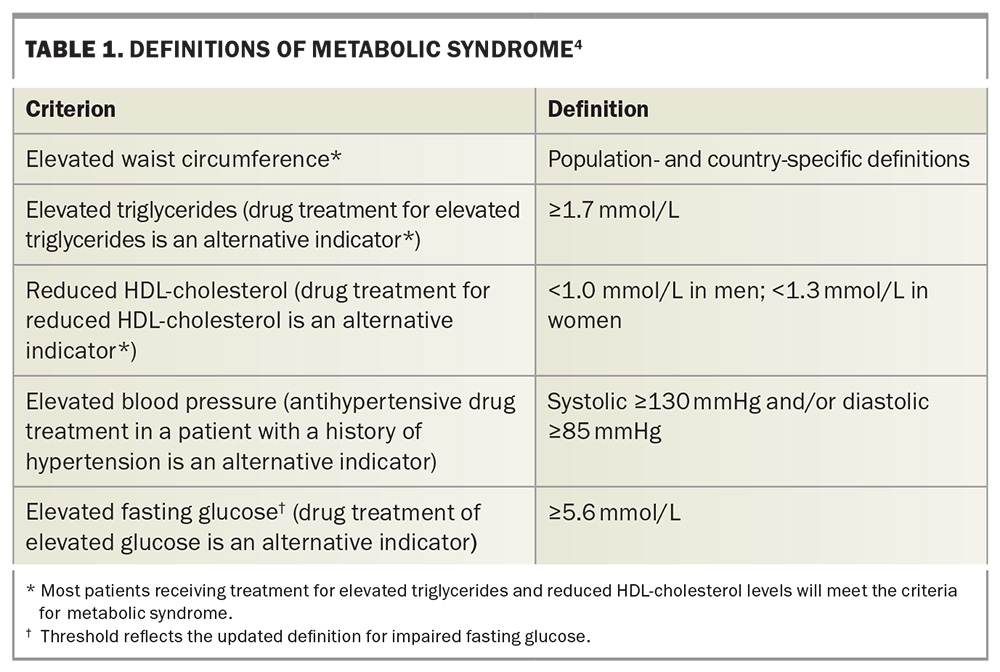
Metabolic syndrome, defined in Table 1, has traditionally been used to cluster many of these modifiable risk factors.4 However, it does not adequately incorporate risks associated with CKD and MAFLD. Historically, clinical guideline pathways have often focused on single diseases such as CVD, CKD, obesity and diabetes, potentially underemphasising the importance of a broader multisystem approach. Furthermore, metabolic measures such as the BMI may inadequately reflect risk in diverse populations, including non-Caucasian ethnic groups, First Nations peoples and those affected by social disadvantage.5-7
CKM stages
The stages of CKM syndrome are summarised as:1
- stage 0: normal weight, normal blood glucose levels, normal blood pressure and normal lipid levels
- stage 1: excess or dysfunctional adiposity (BMI >25 kg/m²), prediabetes
- stage 2: established risk factors, including hypertension, diabetes, dyslipidaemia, obesity and CKD
- stage 3: subclinical CVD with CKM risk factors; very high-risk CKD
- stage 4: clinical CVD (heart failure, coronary disease, peripheral artery disease, atrial fibrillation or cerebrovascular disease) and CKM risk factors.
Australian data demonstrate an increasing prevalence of CKM conditions in primary care since 2011. By 2020, 21.8% of patients attending primary care had at least one CKM condition, 8.3% had two CKM conditions and 1.9% had all three CKM risk conditions.⁸
Contemporary CKM frameworks therefore emphasise early identification and prevention, while supporting individualised therapy for progressively increasing multiorgan dysfunction. They also highlight the importance of multidisciplinary care and multisystem interventions rather than single disease-focused approaches.
On reflection, John’s progression through the CKM stages may have been identified earlier, potentially creating opportunities for prevention before the development of stage 4 disease, particularly in relation to cardiovascular risk and weight gain.
Primary care plays a crucial role in early CKM identification and prevention strategies in stages 1 to 3, before the emergence of advanced disease such as that seen in John, with the aim of reducing morbidity and mortality through improved standards of care.
Clinical tools for CKM prevention and intervention
Addressing John’s questions about prevention and support for his children, if risks are identified, includes facilitating access to evidence-based community programs focused on risk reduction.
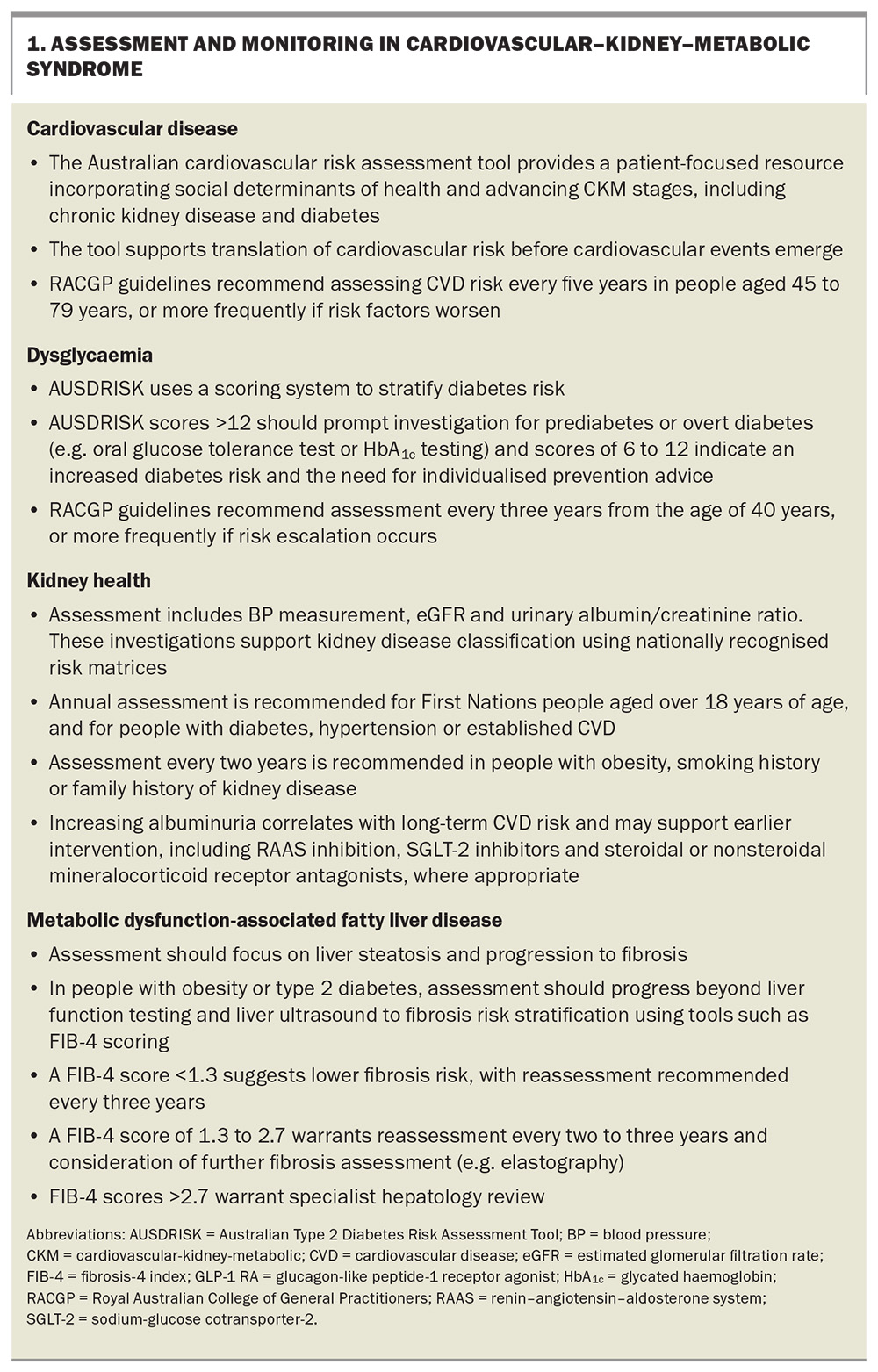
Use of a broad range of CKM tools and biomarker assessments (lipids, proteinuria and glycaemia) can help translate current clinical risks into supportive pathways aimed at reducing future complications – so-called ‘productive clinical care’ (Box 1).9 Chronic condition management programs supported through Medicare item numbers may also assist by aligning SMART (specific, measurable, achievable, relevant and timely) goals with appropriate individualised support services such as accredited practicing dietitians, exercise physiologists and psychologists.10
Healthy lifestyle: diet, activity and weight management across the CKM spectrum
Although John has stopped smoking, relapse prevention remains important and cessation support should be available across multiple domains of the healthcare system from community pharmacy to primary care.
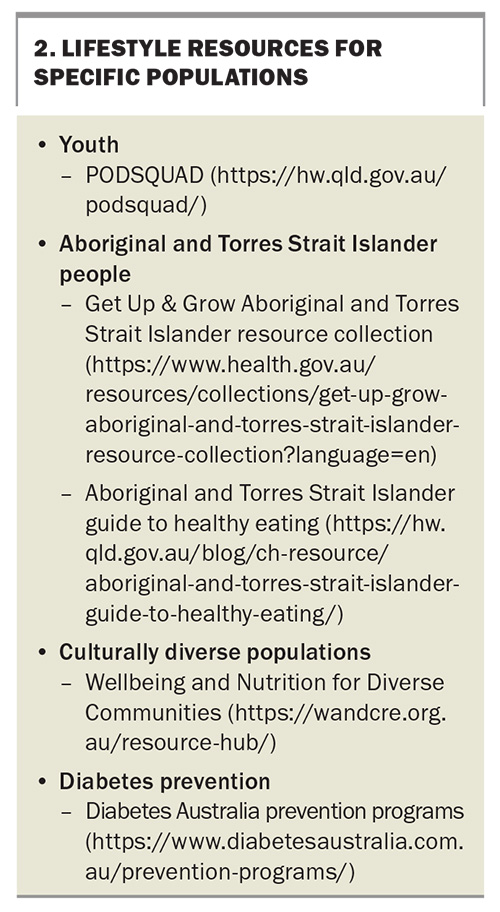
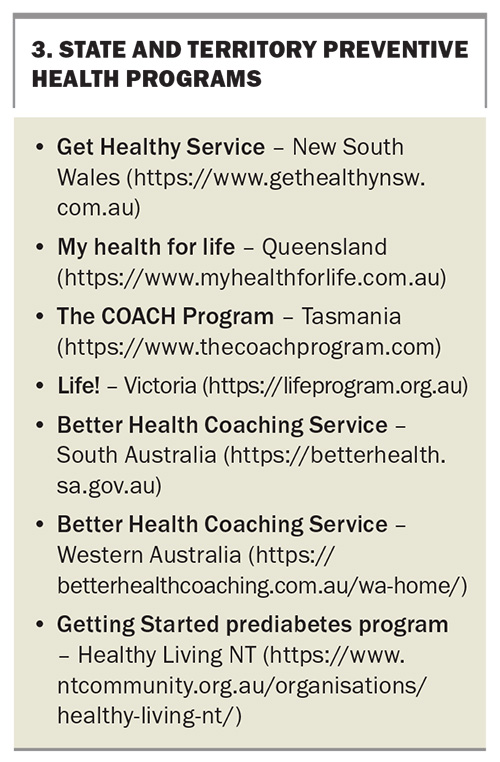
Visceral adiposity remains a core driver of CKM risk.¹ Healthy dietary management is fundamental in reducing childhood weight gain and preventing adolescent- and adult-emergent CKM risk. Community programs and resources supporting healthy lifestyle engagement are outlined in Box 2 and Box 3.
There is no universally agreed ideal diet for adults with CKM risk; however, important principles include improved fibre intake, reduced kilojoule consumption, moderation of carbohydrate quantity and quality, and reduced salt and alcohol intake. Dietary approaches consistent with these principles include the Mediterranean diet, PREDIMED and the Dietary Approaches to Stop Hypertension (DASH) diet.11,12 However, dietary support should remain individualised, culturally sensitive and sustainable, ideally with input from an accredited practising dietitian.
Physical activity goals should be negotiated collaboratively rather than imposed in ways that conflict with individual abilities or preferences. Evidence supports combined aerobic and resistance training, including high-intensity exercise, in stages 1 and 2 CKM.13
In more advanced disease, such as in John’s case, enrolment and adherence to cardiac rehabilitation, interval aerobic exercise, resistance training and home-based walking programs should be encouraged. Lifestyle intervention trials have demonstrated benefit in preventing progression from prediabetes to diabetes. Guidelines also support the benefit of similar programs in MAFLD.14
Specific interventions targeting multiple metabolic targets in CKM
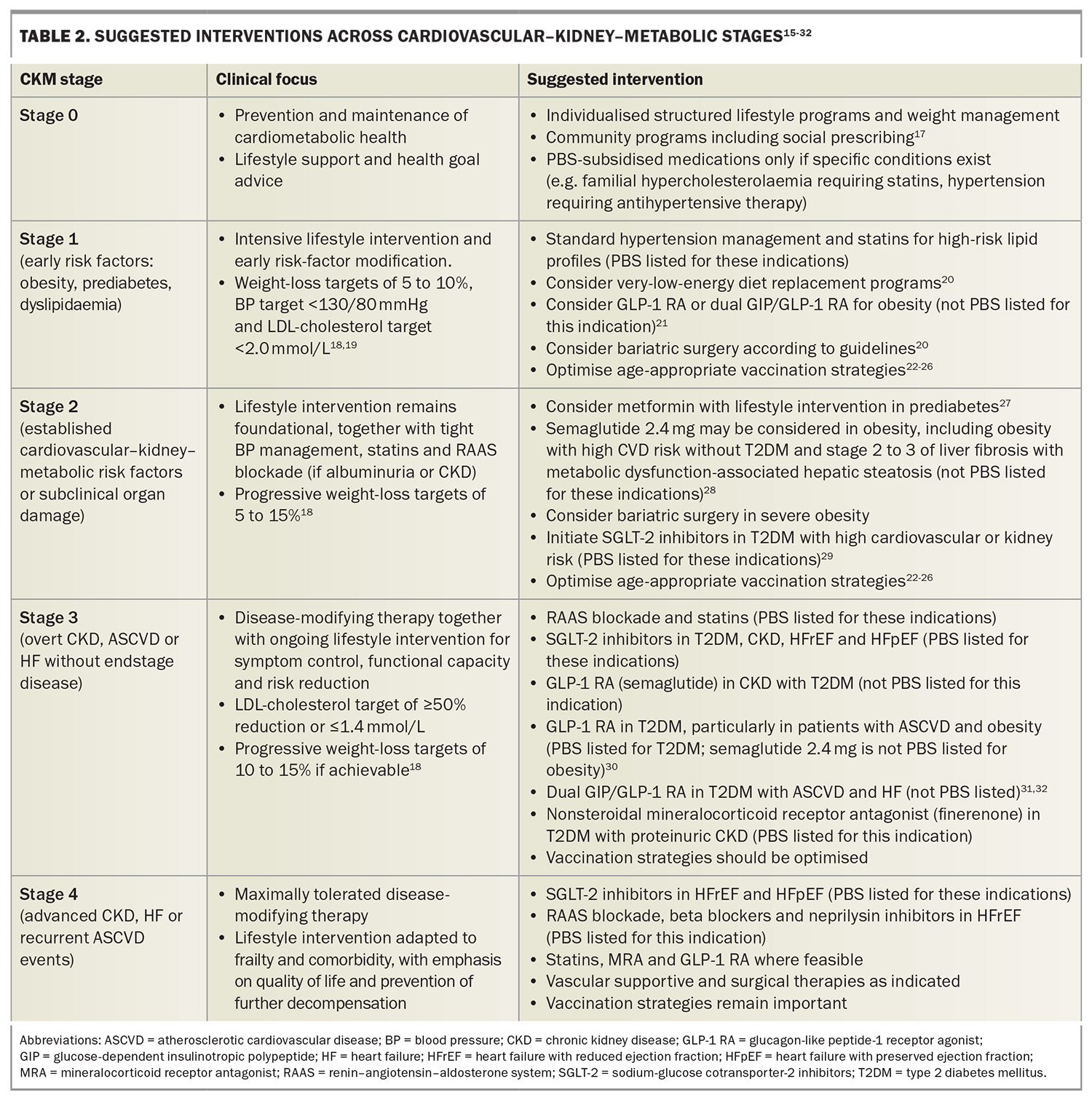
Recent therapeutic developments have created opportunities for therapies that can address the spectrum of CKM organ dysfunction when risks emerge. However, the evidence of benefit may vary according to CKM stage and across different populations, including those with or without diabetes and obesity. PBS subsidisation also varies according to indication and should be reviewed before prescribing. Therapeutic approaches across CKM stages are summarised in Table 2.15-32
Returning to John: practical management priorities
Practical management priorities for John require an organised primary care approach to include the following:
- a focus on John’s goals and values and vigilance for psychological care needs
- implementation of Australian evidence-based guidelines for heart failure management33
- titration of sacubitril/valsartan, beta blockers and mineralocorticoid receptor antagonist therapy, if required
- addition of an SGLT-2 inhibitor, consistent with guideline recommendations, and consideration of the use of semaglutide
- optimisation of lipid-lowering therapy to achieve an LDL-cholesterol target below 1.4 mmol/L
- further investigation of abnormal liver function tests. John has a fibrosis-4 (FIB-4) score of 2.1, which supports further assessment for liver fibrosis, including liver ultrasound and elastography
- assessment of iron studies in the setting of heart failure, with consideration of intravenous iron therapy where appropriate. In patients with ferritin below 100 mg/L, or transferrin saturation below 20% with ferritin between 100 and 299 mg/L, intravenous iron has demonstrated reductions in heart failure hospitalisation34
- consideration of obstructive sleep apnoea assessment
- development of a chronic condition management plan to support access to multidisciplinary care, including practice nurses, dietitians, exercise physiologists and psychologists
- encouragement of cardiac rehabilitation and transition to ongoing tailored physical activity programs.
Clear communication with his cardiologist, heart failure nurses and rehabilitation team is essential.
John remains at heightened CKM risk. Structured recall and review systems may support timely reassessment for progression of dysglycaemia, MAFLD, fibrosis and CKD. He should also be encouraged to discuss shared familial risk factors with his children and access preventive support programs where appropriate.
Summary
CKM syndrome places general practice at the centre of co-ordinated, proactive and patient-directed care for individuals with interconnected cardiometabolic disease.
Integrating lifestyle intervention, physical activity and targeted multimodal therapies provide opportunities for earlier intervention and reduction in long-term disease burden. Heart failure should be recognised as a signifier of broader CKM risk requiring comprehensive assessment.
The burden of CKM disease may be reduced through proactive primary care, structured chronic disease management and optimisation of clinical systems. Central to this approach is connecting a person’s values and knowledge with clear communication of risk, co-ordinated multidisciplinary care and agreed clinical goals. MT
COMPETING INTERESTS: Dr Deed provides education and advisory board advice to Abbott, AstraZeneca, Boehringer Ingelheim, Dexcom, Eli Lilly, MSD, Novartis, Novo Nordisk and Sanofi; has received payment for expert testimony and support for attending meetings and/or travel from the Royal Australian College of General Practitioners (RACGP); has participated in a Flash Glucose Monitoring (FlashGM) trial advisory board; and is a member of the RACGP Diabetes Specific Interest Group and the Australian Diabetes Society (ADS) Clinical Standards/Guideline Committee.
References
1. Ndumele CE, Neeland IJ, Tuttle KR, et al. A synopsis of the evidence for the science and clinical management of cardiovascular-kidney-metabolic (CKM) syndrome: a scientific statement from the American Heart Association. Circulation 2023; 148: 1636-1664.
2. Kittelson KS, Junior AG, Fillmore N, da Silva Gomes R. Cardiovascular-kidney-metabolic syndrome – an integrative review. Prog Cardiovasc Dis 2024; 87: 26-36.
3. Sebastian SA, Padda I, Johal G. Cardiovascular-kidney-metabolic (CKM) syndrome: a state-of-the-art review. Curr Probl Cardiol 2024; 49: 102344.
4. Alberti KG, Eckel RH, Grundy SM, et al. Harmonizing the metabolic syndrome: a joint interim statement of the International Diabetes Federation Task Force on Epidemiology and Prevention; National Heart, Lung, and Blood Institute; American Heart Association; World Heart Federation; International Atherosclerosis Society; and International Association for the Study of Obesity. Circulation 2009; 120: 1640-1645.
5. Brown KF, Howard NJ, Paquet C, Carrington MJ, Brown ADH. Documenting cardiovascular-kidney-metabolic risk and disease within an Aboriginal cohort. Heart Lung Circ 2025; 34: 1078-1088.
6. Sheth A, Thompson SC, Mavaddat N. Primary care practitioners’ perspectives on the utility of metabolic syndrome as a diagnosis: a qualitative study. Obesities 2025; 5(2): 27.
7. Mondal UK, Huda MM, Anyasodor AE, et al. Metabolic syndrome in Australia: nationwide survey results by remoteness and Indigenous status, 2012–2019. Int J Obes 2026; 50: 840-849.
8. Ha J, Buizen L, Wallace H, Ketema D, et al. Prevalence, overlap, and treatment of cardiovascular-kidney-metabolic conditions in Australian primary care: estimates from a national general practice dataset. Heart Lung Circ 2025; 34: S529.
9. Grudniewicz A, Gray CS, Boeckxstaens P, De Maeseneer J, Mold J. Operationalizing the chronic care model with goal-oriented care. Patient 2023; 16: 569-578.
10. White ND, Bautista V, Lenz T, Cosimano A. Using the SMART-EST goals in lifestyle medicine prescription. Am J Lifestyle Med 2020; 14: 271-273.
11. Akubo C, Washington India E, Song S, et al. DASH diet adherence and cardiovascular-kidney-metabolic syndrome stages. JACC Adv 2025; 4(6 Pt 2): 101795.
12. Shao Y, Wang Y, Luo D, Zhou X, Chen M, Li L, Zhong H. Association of dietary patterns with all-cause and cardiovascular disease mortality in cardiovascular-kidney-metabolic syndrome: a cohort study. Nutr J 2025; 25(1): 9.
13. Papadakis Z. Exercise in CKM syndrome progression: a stage-specific approach to cardiovascular, metabolic, and renal health. Cardiovasc Diabetol 2025; 24: 462.
14. Adams LA, Kemp WW, Muller KR, et al. Assessment of metabolic dysfunction-associated fatty liver disease in primary care: a consensus statement summary. Med J Aust 2025; 223: 268-276.
15. American Heart Association. Cardiovascular-kidney-metabolic health implementation guide. Dallas (TX): American Heart Association; 2026. Available online at: https://www.heart.org/en/-/media/Files/Professional/Quality%20Improvement/CKMH%20Clinical%20Implementation/
CKM%20Health%20Implementation%20Guide%2071725.pdf (accessed June 2026).
16. Theodorakis N, Nikolaou M. Integrated management of cardiovascular-renal-hepatic-metabolic syndrome: expanding roles of SGLT2is, GLP-1RAs, and GIP/GLP-1RAs. Biomedicines 2025; 13: 135.
17. Wilson A, Noble H, Galway K, Doherty J. Social prescribing for people living with long-term health conditions: a scoping review. Syst Rev 2025; 14: 114.
18. Garvey WT, Mechanick JI, Brett EM, et al. American Association of Clinical Endocrinologists and American College of Endocrinology comprehensive clinical practice guidelines for medical care of patients with obesity. Endocr Pract 2016; 22(Suppl 3): 1-203.
19. Ryan DH, Yockey SR. Weight loss and improvement in comorbidity: differences at 5%, 10%, 15%, and over. Curr Obes Rep 2017; 6: 187-194.
20. Markovic TP, Proietto J, Dixon JB. The Australian Obesity Management Algorithm: a simple tool to guide the management of obesity in primary care. Obes Res Clin Pract 2022; 16: 353-363.
21. Aamir AB, Latif R, Alqoofi JF, et al. Comparative efficacy of tirzepatide vs semaglutide in reducing body weight in humans: a systematic review and meta-analysis of clinical trials and real-world data. J Clin Med Res 2025; 17: 285-296.
22. Behrouzi B, Bhatt DL, Cannon CP, et al. Association of influenza vaccination with cardiovascular risk: a meta-analysis. JAMA Netw Open 2022; 5(4): e228873.
23. Maniar YM, Al-Abdouh A, Michos ED. Influenza vaccination for cardiovascular prevention: further insights from the IAMI trial and an updated meta-analysis. Curr Cardiol Rep 2022; 24: 1327-1335.
24. Ngwudike CJ, Villalobos A. Correlation between cardiovascular protection and influenza vaccination. Curr Cardiol Rep 2023; 25: 571-576.
25. Ip S, North TL, Torabi F, et al. Cohort study of cardiovascular safety of different COVID-19 vaccination doses among 46 million adults in England. Nat Commun 2024; 15: 6085.
26. Heidecker B, Libby P, Vassiliou VS, et al. Vaccination as a new form of cardiovascular prevention: a European Society of Cardiology clinical consensus statement. Eur Heart J 2025; 46: 3518-3531.
27. Tsironikos GI, Tsolaki V, Zakynthinos GE, et al. Metformin’s overall effectiveness and combined action with lifestyle interventions in preventing type 2 diabetes mellitus in high-risk metformin-naïve patients: an updated systematic review and meta-analysis of published RCTs. J Clin Med 2025; 14: 4947.
28. Lincoff AM, Brown-Frandsen K, Colhoun HM, et al. Semaglutide and cardiovascular outcomes in obesity without diabetes. N Engl J Med 2023; 389: 2221-2232.
29. Usman MS, Bhatt DL, Hameed I, et al. Effect of SGLT2 inhibitors on heart failure outcomes and cardiovascular death across the cardiometabolic disease spectrum: a systematic review and meta-analysis. Lancet Diabetes Endocrinol 2024; 12: 447-461.
30. Perkovic V, Tuttle KR, Rossing P, et al. Effects of semaglutide on chronic kidney disease in patients with type 2 diabetes. N Engl J Med 2024; 391: 109-121.
31. Nicholls SJ, Pavo I, Bhatt DL, et al. Cardiovascular outcomes with tirzepatide versus dulaglutide in type 2 diabetes. N Engl J Med 2025; 393: 2409-2420.
32. Packer M, Zile MR, Kramer CM, et al. Tirzepatide for heart failure with preserved ejection fraction and obesity. N Engl J Med 2025; 392: 427-437.
33. Sindone AP, De Pasquale C, Amerena J, et al. Consensus statement on the current pharmacological prevention and management of heart failure. Med J Aust 2022; 217: 212-217.
34. Salah HM, Savarese G, Rosano GMC, Ambrosy AP, Mentz RJ, Fudim M. Intravenous iron infusion in patients with heart failure: a systematic review and study-level meta-analysis. ESC Heart Fail 2023; 10: 1473-1480.
Single article purchases are temporarily unavailable due to site maintenance.
If you would like to purchase an article during this time, please email us at [email protected] with the article details and we'll assist you directly. We'll also let you know when online purchasing is available again.
Thank you for your patience and understanding.