
Residual risk in atherosclerotic cardiovascular disease: a clinical overview

Despite contemporary, guideline-directed management of traditional risk factors, patients with atherosclerotic cardiovascular disease remain at risk of ischaemic events both in the short and long term. This phenomenon, referred to as ‘residual cardiovascular risk’, is multifactorial, involving cardiometabolic, lipid, inflammatory and thrombotic pathways. In clinical practice, mitigation of this risk requires a proactive, biomarker-informed approach to guide the use of targeted adjunctive therapies according to the individual patient’s risk profile.
- Residual cardiovascular risk is the ongoing risk of recurrent cardiovascular events in patients with atherosclerotic cardiovascular disease (ASCVD) despite guideline-recommended secondary prevention. The risk is multifactorial, driven by undertreated lipid abnormalities, cardiometabolic disease, inflammation and residual thrombotic risk.
- ASCVD can occur without standard modifiable cardiovascular risk factors, showing the limits of traditional risk-factor assessment.
- Statins remain first-line therapy for lowering LDL-cholesterol; ezetimibe and proprotein convertase subtilisin/kexin type 9 inhibitors are effective adjuncts when targets are not achieved.
- High-sensitivity C-reactive protein is used to assess residual inflammatory risk. Low-dose colchicine is the only currently approved and guideline-endorsed anti-inflammatory therapy for secondary prevention in stable ASCVD.
- Cardiometabolic risk requires co-ordinated management of diabetes, obesity, hypertension and chronic kidney disease. Sodium-glucose cotransporter-2 inhibitors and glucagon-like peptide-1 receptor agonists have proven cardioprotective benefits in patients with ASCVD.
- Antithrombotic therapy should be tailored to the patient’s ischaemic and bleeding risks.
- Optimising residual risk requires individualised treatment intensification, adherence support and assessment of emerging risk markers such as lipoprotein(a).
Atherosclerotic cardiovascular disease (ASCVD) remains one of the leading causes of mortality and morbidity worldwide, despite major advances in its diagnosis and treatment. Coronary artery disease (CAD), the major underlying pathology in ischaemic heart disease, is usually characterised by the formation of inflamed, fibrofatty atherosclerotic plaques within the arterial wall. These plaques can become unstable and vulnerable to rupture or erosion, precipitating local thrombus formation (atherothrombosis) that obstructs blood flow to cause acute coronary syndrome (ACS), including myocardial infarction (MI). Atherosclerosis is a systemic disease process and, therefore, often widely distributed. This means that most patients who have an ACS are left with residual plaques in their coronary vasculature, noncoronary vasculature or both, after their culprit lesion is revascularised (e.g. by stenting or bypass grafting). The progressive growth and destabilisation of these residual plaques, as well as the de novo formation of plaques at new sites, create a lifetime risk of recurrent cardiovascular events.
A key aspect of managing ASCVD is addressing modifiable risk factors that contribute to the development and progression of plaque, such as dyslipidaemia, hypertension, diabetes mellitus, obesity and smoking.1,2 Even with guideline-recommended standard-of-care, a substantial proportion of patients continue to experience repeat, potentially life-threatening cardiovascular events. The risk of these recurrent events despite the initiation of secondary prevention therapies is referred to in the literature as ‘residual cardiovascular risk’. This is often multifactorial and mediated by a mixture of known and emerging risk factors that are either suboptimally managed because of clinician factors or patient factors, or not addressable with current treatments. Some of the most common drivers of residual risk, as summarised in the Figure, are:
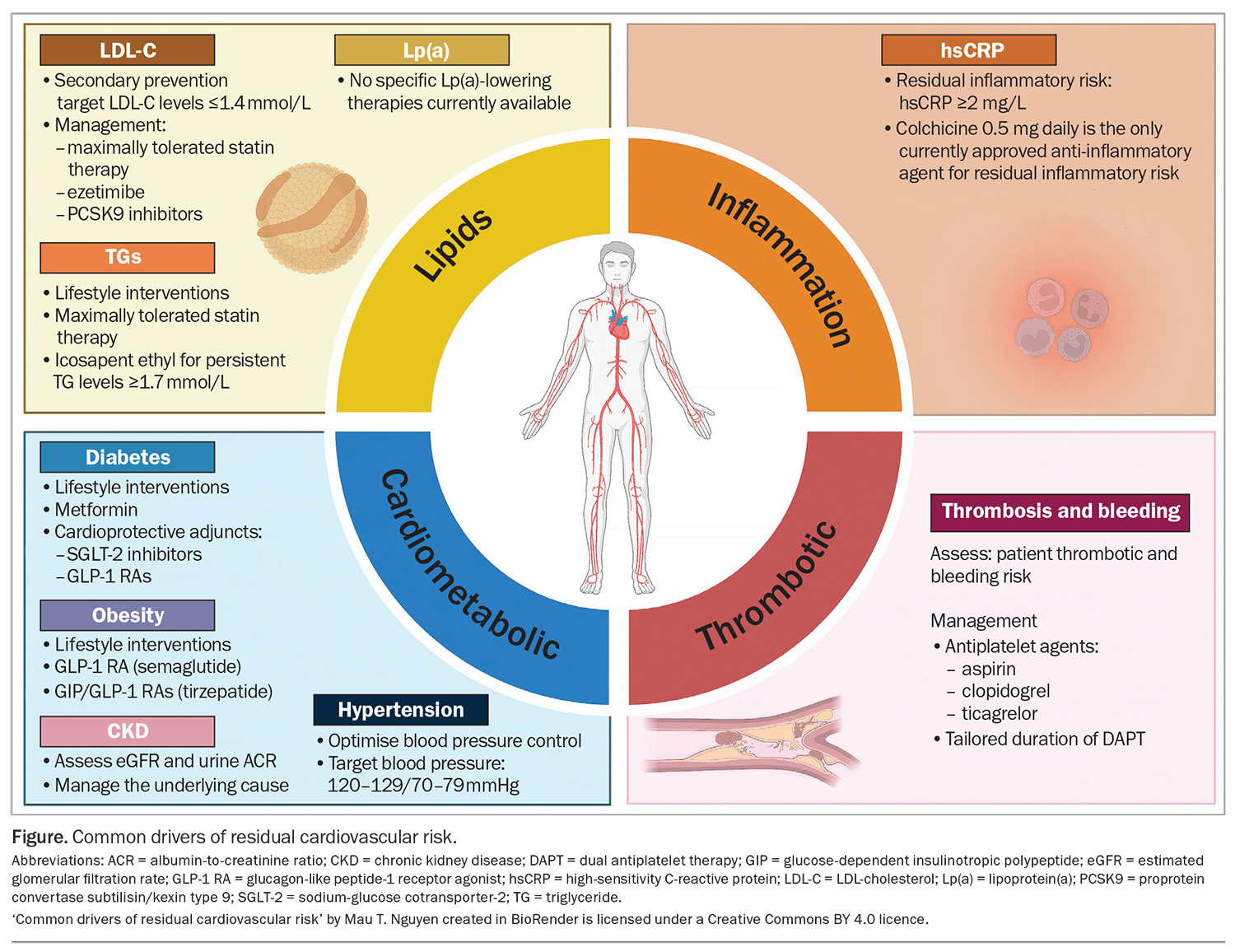
- elevated lipid levels
- inadequately managed diabetes, obesity, chronic kidney disease (CKD) and hypertension
- persistent inflammation
- inadequate antiplatelet therapy.
Importantly, a proportion of residual cardiovascular risk remains unexplained by currently recognised mechanisms. This residual risk of unknown mechanism may reflect unmeasured biological pathways, genetic susceptibility, environmental factors or risk markers that are not yet routinely assessed in clinical practice. The relationship between cardiovascular disease and both psychosocial factors and mental health conditions, such as depression and chronic stress, is bidirectional and increasingly recognised, although discussion of this is beyond the scope of this article.3
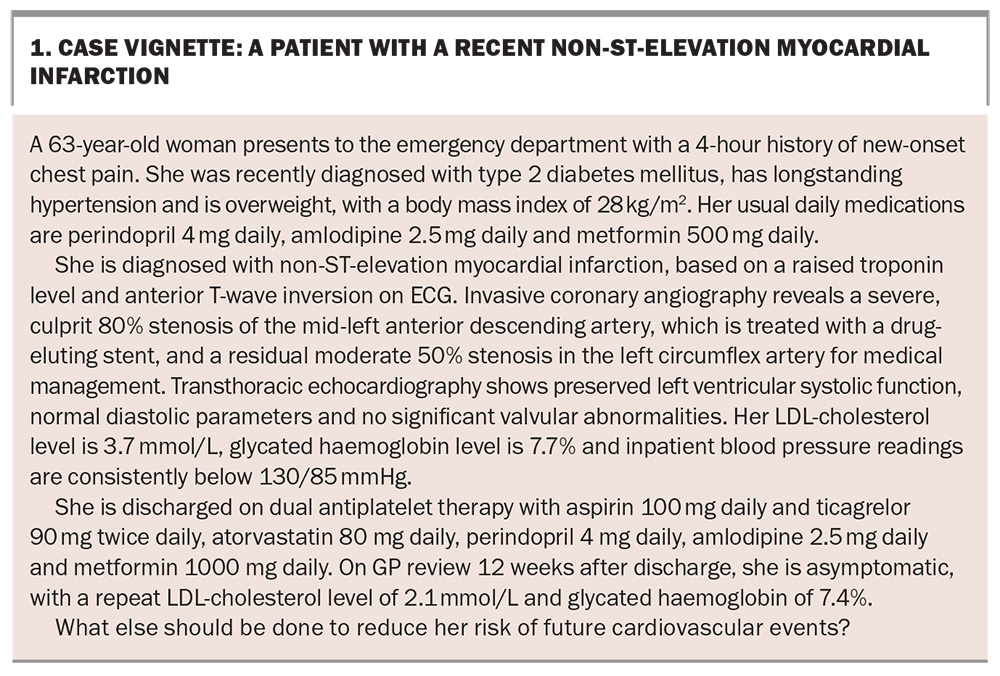
The case vignette in Box 1 illustrates residual cardiovascular risk after ACS and introduces several opportunities to address residual cardiovascular risk.
ASCVD can also occur in the absence of standard modifiable cardiovascular risk factors, usually defined as hypertension, diabetes, dyslipidaemia and smoking. These patients are a clinically important subgroup, accounting for up to 23% of patients presenting with ST-elevation MI demonstrating that cardiovascular risk is not fully captured by traditional risk factor assessment.4 This also highlights our incomplete understanding of the pathogenesis of atherosclerosis and the need for ongoing research.
In clinical practice, the concept of residual cardiovascular risk is becoming increasingly relevant as the management of ASCVD shifts towards a more personalised and nuanced approach, recognising that the underlying mechanisms driving the risk of recurrent events differ between patients. Residual cardiovascular risk should be understood in the context of prevention across a patient’s lifetime. Many patients have had years of exposure to modifiable risk factors before their first cardiovascular event, highlighting the importance of early identification, initiation and intensification of treatment, and sustained efforts in preventive care in general practice. This article provides a general overview of the major known drivers of residual cardiovascular risk.
Residual cardiometabolic risk
Cardiometabolic risk is a major contributor to residual cardiovascular risk after ASCVD and is commonly driven by coexisting diabetes, obesity, hypertension and CKD. These conditions share overlapping pathophysiological mechanisms, including insulin resistance, chronic inflammation, endothelial dysfunction and neurohormonal activation, and often require parallel management rather than treatment in isolation.
Diabetes mellitus
Individuals with type 2 diabetes mellitus are twice as likely to develop cardiovascular disease, even after adjustment for traditional risk factors.5 Conversely, many patients with ASCVD have unrecognised type 2 diabetes, with one in 10 patients meeting criteria for a new diagnosis during an acute MI admission.6 This highlights the importance of screening for diabetes in primary care and routinely checking for its new onset in patients with known ASCVD. Prediabetes is an underdiagnosed condition that occurs on the continuum of dysregulated glucose homeostasis. It encompasses impaired fasting glucose, impaired glucose tolerance or elevated glycated haemoglobin levels that do not meet diagnostic criteria for diabetes.7 The prognosis of prediabetes is not benign, with a 5 to 10% annual conversion rate to diabetes, as well as its well-recognised association with other cardiometabolic conditions.8 Early identification and aggressive management of prediabetes and diabetes are a cornerstone of managing patients at risk of, or with established, ASCVD.
Two medication classes used for the management of type 2 diabetes stand apart for their proven cardiovascular protective properties, independent of their glucose-lowering ability: sodium-glucose cotransporter-2 (SGLT-2) inhibitors and glucagon-like peptide-1 receptor agonists (GLP-1 RAs).9
SGLT-2 inhibitors, such as dapagliflozin and empagliflozin, are oral antihyperglycaemic agents that work by inhibiting the SGLT-2 protein in the proximal renal tubule, which is responsible for 90% of renal glucose reabsorption. This leads to reduced glucose reabsorption, which improves blood glucose control, and increased urinary glucose loss, or glucosuria, which is the mechanism underlying the increased risk of genital and urinary tract infections associated with their use.10 SGLT-2 inhibitors have been shown to reduce cardiovascular death and hospitalisation for heart failure in patients with type 2 diabetes who had, or were at risk of, ASCVD.11,12
GLP-1 RAs are incretin-based therapies that mimic the action of endogenous glucagon-like peptide-1. These agents enhance glucose-dependent insulin secretion from pancreatic beta-cells, improving blood glucose control, while also suppressing glucagon secretion from pancreatic alpha-cells, reducing hepatic glucose output. GLP-1 RAs also slow gastric emptying and increase satiety, thereby promoting weight loss through reduced caloric intake.13 Similar to SGLT-2 inhibitors, cardiovascular outcome trials have confirmed the cardioprotective effect of GLP-1 RAs in patients with type 2 diabetes.14
Current international guidelines recommend both SGLT-2 inhibitors and GLP-1 RAs in patients with type 2 diabetes and ASCVD, irrespective of baseline or target glycated haemoglobin levels, with class I recommendations.1,15,16 However, implementation of both classes together is restricted in Australia per the PBS authority-prescribing criteria. It should be noted that these pharmacological advances do not replace the need for adjunctive nonpharmacological approaches (e.g. smoking cessation, regular physical activity, a healthy diet, moderation of alcohol), which should be used in parallel.
Obesity
Beyond glycaemic control, overweight and obesity – although closely related – are major drivers of residual cardiometabolic risk, particularly through central adiposity, with significant multiorgan effects. Although imperfect, body mass index is the most commonly used measure of overweight or obesity in clinical practice, with values of 25 to 29.9 kg/m2 defined as overweight, and values of 30 kg/m2 or more defined as obese. The importance of nonpharmacological measures for weight loss cannot be overstated; however, current guidelines recommend adjunctive pharmacotherapy (usually with a GLP-1 RA) in patients with obesity who also have related complications, such as diabetes or ASCVD.17
The GLP-1 RA semaglutide is associated with average weight loss of about 12 to 14% when used as a 2.4 mg weekly subcutaneous dose.18 Semaglutide reduced major adverse cardiovascular events, including all-cause mortality, by 20% in patients with overweight or obesity, and established CVD (but without type 2 diabetes) in the seminal Semaglutide Effects on Heart Disease and Stroke in Patients with Overweight or Obesity (SELECT) trial.19 Much of this benefit appears to have been mediated by pleiotropic actions separate from weight loss, including through beneficial effects on other cardiovascular risk factors and inflammation.
Semaglutide has a class IIa recommendation for use in patients with overweight (body mass index ≥27 kg/m2) or obesity with stable CAD without diabetes to reduce cardiovascular risk.1 Newer incretin agents, such as the dual-acting glucose-dependent insulinotropic polypeptide/GLP-1 RA tirzepatide, are associated with even greater weight loss.20,21 Having achieved cardiovascular benefits in clinical trials for type 2 diabetes, tirzepatide is under phase 3 evaluation for patients with overweight or obesity who are at high-risk of, or have, ASCVD without type 2 diabetes.22
Other cardiometabolic factors
Hypertension and CKD are particularly important in general practice because they are common, often coexist with other cardiometabolic risk factors and substantially increase the risk of primary and recurrent cardiovascular events. Optimising blood pressure control should be a core component of secondary prevention. Current guidelines recommend a target systolic blood pressure of 120 to 129 mmHg and a diastolic blood pressure of 70 to 79 mmHg.1
Assessment for CKD should include measurement of the estimated glomerular filtration rate and urine albumin-to-creatinine ratio in the first instance. Identification of CKD should prompt more intensive management of all modifiable ASCVD risk factors and may influence treatment choices, including the use of agents with proven cardiovascular and renal benefits. Furthermore, identifying and treating the underlying cause of CKD is important to prevent further progression of renal dysfunction.
The recent 2026 guideline from the American Heart Association, American College of Cardiology, American Diabetes Association, and American Society of Nephrology on cardiovascular–kidney–metabolic syndrome provides a useful framework for recognising the overlap between cardiovascular disease, CKD, diabetes, obesity and other metabolic risk factors.23 Although it remains to be established whether the proposed cardiovascular–kidney–metabolic staging translates to improved outcomes beyond current best-practice risk factor management, the framework reinforces the importance of co-ordinated, interdisciplinary care. For patients with established ASCVD, this includes regular communication between GPs, cardiologists, endocrinologists, nephrologists, pharmacists, dietitians and other members of the care team to ensure timely risk assessment, treatment intensification and adherence support.23
Residual lipid risk
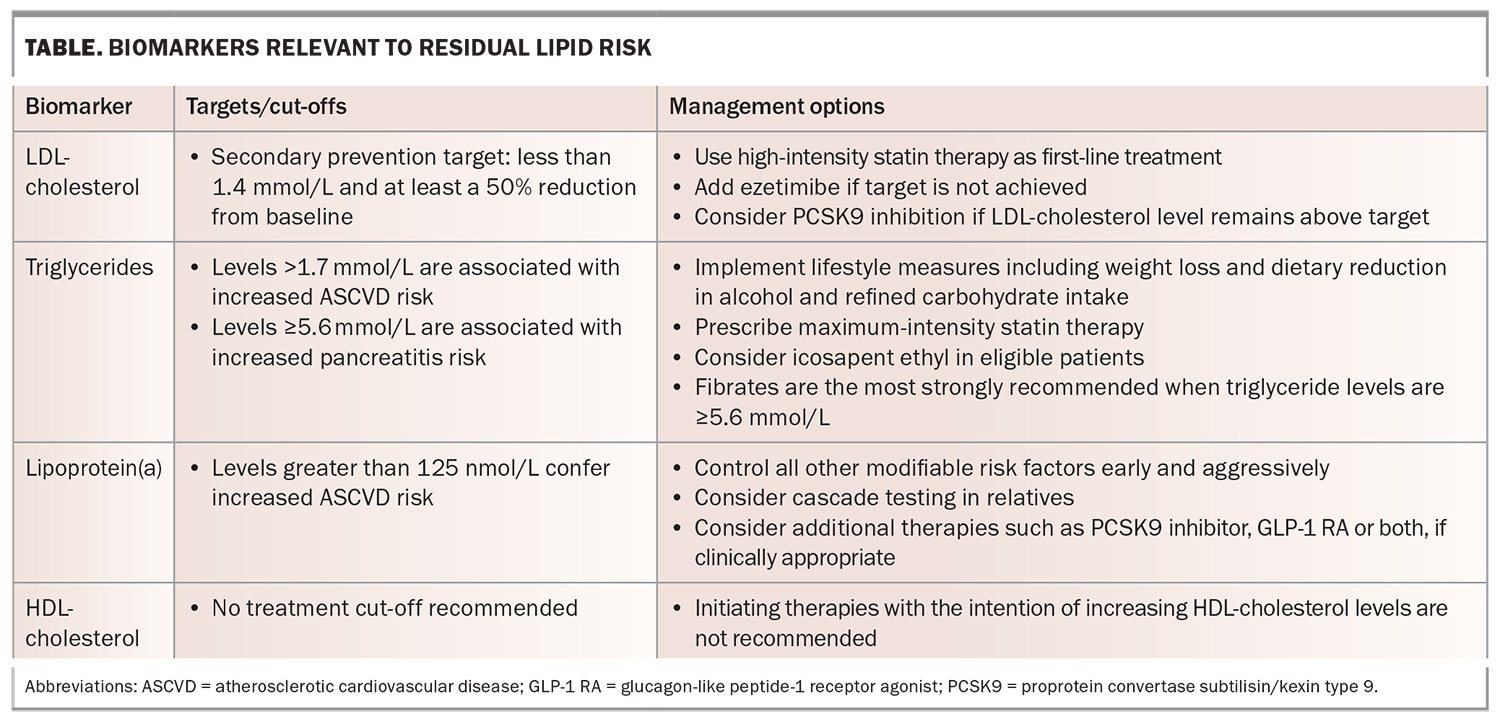
Residual lipid risk extends far beyond simply managing elevated LDL-C levels. Persistent hypertriglyceridaemia, elevated lipoprotein(a) (Lp[a]) levels and low HDL-cholesterol (HDL-C) levels can also help identify patients with ongoing ASCVD risk and may provide an opportunity to further reduce residual cardiovascular risk. The major lipid biomarkers relevant to residual cardiovascular risk are summarised in the Table.
LDL-cholesterol
Managing elevated LDL-cholesterol (LDL-C) levels is arguably the most well-recognised goal of ASCVD risk reduction in both primary and secondary prevention settings. Irrespective of the cholesterol-lowering agent used, every 1 mmol/L reduction in LDL-C concentration is associated with about a 23% reduction in the relative risk of ischaemic cardiovascular events over a five-year period, and this benefit increases with longer duration of treatment.24,25 Current guidelines recommend statins as first-line pharmacological therapy for LDL-C reduction in secondary prevention, with a target of less than 1.4 mmol/L and at least a 50% reduction from baseline levels.26 Importantly, they also highlight that further risk benefit is achieved by driving LDL-C levels as low as possible.
Despite this, a host of clinician and patient factors continue to drive the continued undertreatment of high LDL-C levels in both the primary and secondary prevention settings. These factors include:
- complete failure to prescribe
- use of suboptimal doses and premature discontinuation because of real or perceived adverse events – particularly for statins
- delayed initiation of ezetimibe, proprotein convertase subtilisin/kexin type 9 (PCSK9) inhibitors or both when LDL-C targets are not met.
The latter is of major concern, because statin monotherapy, even with the highest doses of atorvastatin or rosuvastatin, does not typically lower LDL-C levels by more than 50 to 55%, which is insufficient in high-risk patients with starting LDL-C levels of greater than 3 mmol/L. Contemporary real-world data highlight that residual cholesterol risk after statin therapy may affect up to 69% of patients.27 For this reason, a multidrug regimen with the addition of nonstatin lipid-lowering therapies is required to reach target LDL-C levels.
Ezetimibe, a Niemann-Pick C1-like 1 transporter inhibitor, reduces intestinal cholesterol absorption and is the default second-line agent for LDL-C reduction in combination with statins or in people who do not tolerate statin therapy. When added to either moderate- or high-intensity statin therapy, ezetimibe can lower LDL-C levels by an additional 15 to 20%.28
PCSK9 is a protein produced by hepatocytes that binds to intracellular LDL receptors, preventing them from being recycled to the hepatocyte surface. Inhibitors of PCSK9 lower circulating LDL-C levels by increasing LDL-C uptake by hepatocytes. Evolocumab and inclisiran are the two PCSK9 inhibitors currently available in Australia. Evolocumab is a PCSK9 monoclonal antibody administered subcutaneously every two weeks; monthly administration is also available outside of Australia. Inclisiran is a long-acting, small interfering RNA against PCSK9. Given its favourable dosing schedule of every six months after an initial loading phase, inclisiran may improve long-term adherence to lipid-lowering therapy.29 Evolocumab and inclisiran reduce LDL-C levels by about 60% and 50%, respectively, in patients taking statins.30,31
Additional evidence-based agents are expected to enter clinical practice soon, increasing clinicians’ options for reducing LDL-C levels. The first of these expected to become available in Australia is bempedoic acid, an oral inhibitor of adenosine triphosphate citrate lyase. Bempedoic acid can reduce LDL-C levels by 17 to 28% and is especially well suited to statin-intolerant patients in whom it has been shown to lower cardiovascular outcomes in both primary and secondary prevention settings.32 Obicetrapib, a highly selective cholesteryl ester transfer protein inhibitor, also reduced LDL-C levels by about 30% in patients with known ASCVD or heterozygous familial hypercholesterolaemia who were taking maximally tolerated lipid-lowering therapies.33
Hypertriglyceridaemia
Hypertriglyceridaemia is an under-recognised and often poorly managed contributor to residual lipid risk, even when LDL-C levels are well controlled. Elevated triglyceride (TG) levels above 1.7 mmol/L are associated with increased ASCVD risk and often reflect poor cardiometabolic status in patients with diabetes, chronic kidney disease or obesity. Extremely high levels are also seen in patients with genetic conditions, such as familial chylomicronaemia syndrome. For most patients, lifestyle interventions encompassing weight loss and dietary reductions in alcohol and refined carbohydrate intake can effectively lower TG levels.34
However, patients with ASCVD and persistent TG levels to 1.7 mmol/L or higher require pharmacological intervention, beginning with maximum-intensity statin therapy. Beyond this, icosapent ethyl, a purified form of the omega-3 fatty acid eicosapentaenoic acid, is approved and PBS subsidised to reduce cardiovascular risk in patients with ASCVD, type 2 diabetes or both, based on its efficacy in the Reduction of Cardiovascular Events with Icosapent Ethyl–Intervention Trial (REDUCE-IT).35 Fibrates (e.g. fenofibrate) also effectively lower TG levels but have mostly been shown to benefit microvascular, not macrovascular, complications of hypertriglyceridaemia.34 In Australia, they are most strongly recommended in those with TG levels 5.6 mmol/L or greater to reduce the risk of acute pancreatitis.
Lipoprotein(a)
Large epidemiological and genetic studies have provided strong evidence of a causative role of Lp(a) in ASCVD development, as well as calcified aortic valve disease. Lp(a) is an LDL-like but structurally unique molecule that confers a sixfold higher risk of CAD events than LDL-C on a per-molecule basis. This risk is mediated by a combination of proatherogenic, proinflammatory and prothrombotic effects.
Lp(a) is predominantly genetically determined (with more than 90% of the variation between individuals attributable to genetics), with levels that are relatively stable throughout life from the age of 5 years onwards.36 Ethnic differences in plasma concentrations are well documented, with about 20% of the Caucasian Australian population having measurements greater than 125 nmol/L that confer increased ASCVD risk. Many international guidelines recommend that all people should have their level measured at least once in their lifetime. However, current Australian recommendations support a more nuanced approach, targeting individuals with:
- a personal or family history of ASCVD before the age of 65 years
- affected relatives who have raised Lp(a)
- familial hypercholesterolaemia
- stubbornly high LDL-C levels resistant to treatment.36
Currently, Lp(a) testing is not Medicare reimbursed in Australia and there are no approved Lp(a)-lowering therapies available. However, a high Lp(a) level represents a common and compelling mediator of residual ASCVD risk, and guidelines unanimously advocate that, when present, all other modifiable risk factors should be controlled early and aggressively.36 Furthermore, several Lp(a)-lowering agents are being assessed in clinical trials, and, if shown to be beneficial, may become available soon.
HDL-cholesterol
There is an abundance of epidemiological data demonstrating an inverse relationship between HDL-C levels and ASCVD, whereby lower levels are associated with higher risk. However, clinical trials have repeatedly failed to demonstrate any meaningful benefit of raising HDL-C levels with different therapies (e.g. niacin and most cholesteryl ester transfer protein inhibitors), even in patients with established ASCVD.37 As such, therapies initiated with the intention of increasing HDL-C levels are not recommended.
Residual inflammatory risk
Atherosclerosis is now well accepted to be driven by chronic inflammation.38 The importance of inflammation in the development and progression of atherosclerosis was highlighted in human cohort studies conducted more than two decades ago in healthy individuals with no history of cardiovascular disease. These studies – namely the Physicians’ Health Study and the Women’s Health Study – found that higher levels of proinflammatory biomarkers, such as interleukin (IL)-6 and soluble intercellular adhesion molecule 1, were associated with an increased risk of a first cardiovascular event, including MI and ischaemic stroke.39,40
These findings contributed to the growing body of evidence that measuring inflammation can identify a population at risk of cardiovascular events. Further support came from cohort studies of chronic inflammatory conditions, such as rheumatoid arthritis and inflammatory bowel disease, showing a disproportionate burden of cardiovascular disease. In addition to their well-known ability to lower LDL-C levels, statins exert anti-inflammatory effects.41 Despite this, many patients continue to exhibit a persistent inflammatory burden or residual inflammatory risk. Unaddressed inflammation has emerged as a major driver of ischaemic events when conventional risk factors, such as LDL-C, appear to be at target levels.
Assessing residual inflammatory risk in clinical practice
High-sensitivity C-reactive protein (hsCRP) is the most widely used biomarker of inflammation in ASCVD. C-reactive protein (CRP), an acute-phase reactant, is produced by the liver as part of the systemic response to inflammation, infection or tissue injury. In other clinical contexts, plasma CRP is routinely measured for diagnostic and prognostic purposes, such as assessing disease activity in rheumatoid arthritis and in the diagnostic workup of infection and sepsis. However, unlike in these other conditions, inflammation in atherosclerosis is often chronic and low grade, and its detection and quantification require high-sensitivity assays.
A previous meta-analysis including more than 160,000 individuals reported that each standard deviation increase in log-normalised hsCRP was associated with an adjusted relative risk of 1.4 for future CAD and 1.6 for cardiovascular mortality.42 Underscoring both its clinical relevance and the need to address it, the magnitude of the effect of hsCRP on cardiovascular risk was similar to that of well-known risk factors, such as systolic blood pressure and total cholesterol levels.5 Furthermore, this relationship was linear and dose dependent, whereby higher blood hsCRP concentrations conferred higher cardiovascular risk. The predictive performance of hsCRP for cardiovascular events has also been validated among patients with, or at high risk of, atherosclerotic disease who were already taking statins and even adjunctive lipid-lowering therapies (e.g. ezetimibe, PCSK9 inhibitors).43
In the statin era, a review of trial data involving different lipid-lowering agents has provided an important insight: isolated residual inflammatory risk (hsCRP ≥2 mg/L) is common (about 30%) and more than twice as prevalent as isolated residual cholesterol risk (about 13%).27 Given its clear association with all-cause mortality and cardiovascular outcomes, measurement of hsCRP is now recommended by the 2024 European Society of Cardiology guideline as part of the initial diagnostic workup of individuals with suspected stable CAD.8 Likewise, the American College of Cardiology has published a statement calling for universal hsCRP screening in both the primary and secondary prevention settings of cardiovascular risk assessment, with hsCRP ≥2 mg/L often used as a cut-off to diagnose residual inflammatory risk.44 Important considerations when testing for hsCRP include ensuring that patients have not had a recent acute illness (e.g. infection) that would temporarily elevate the result and preferably testing when other preventive therapies (e.g. statins) have been stabilised.
Management of residual inflammatory risk
The first robust clinical evidence for treating residual inflammatory risk was provided by the Canakinumab Anti-inflammatory Thrombosis Outcome Study (CANTOS) trial, which tested canakinumab, a monoclonal antibody against IL-1beta.45 Canakinumab acts upstream of the IL-1beta–IL-6–CRP inflammatory pathway, whereby IL-1beta stimulates monocytes, fibroblasts and endothelial cells to produce IL-6, which in turn stimulates the liver to produce CRP. By inhibiting IL-1beta at the top of this cascade, canakinumab suppresses inflammation, with hsCRP serving as a convenient, broad, downstream measure of inflammation. The CANTOS trial enrolled 10,061 patients with a history of MI and residual inflammatory risk (hsCRP ≥2 mg/L). In this trial, canakinumab lowered hsCRP levels and significantly reduced major adverse cardiovascular events – defined as a composite of cardiovascular death, nonfatal MI or nonfatal stroke – by 15% compared with placebo. This benefit was achieved without a significant change in LDL-C levels. However, canakinumab was associated with a small but significant increase in fatal infections. Combined with its high cost and somewhat modest therapeutic benefit, this has limited the use of canakinumab to treat ASCVD in real-world practice. Nevertheless, the CANTOS study is still widely recognised as providing seminal, proof-of-concept evidence that inhibiting inflammation in patients with residual inflammatory risk can significantly reduce cardiovascular risk, independent of any lipid-lowering mechanism.
To date, low-dose colchicine (0.5 mg daily) remains the only regulatory-approved and guideline-endorsed anti-inflammatory agent for ASCVD. The 2024 European Society of Cardiology guidelines for stable CAD gave colchicine a class IIa recommendation to reduce the rates of MI, stroke and revascularisation.1 The American Heart Association/American College of Cardiology 2023 guideline for chronic coronary disease also recommended colchicine, albeit with a more reserved class IIb recommendation.2 These recommendations were based on clinical trials demonstrating that adding colchicine to standard medical therapy improved cardiovascular outcomes in both primary and secondary prevention settings of atherosclerotic CAD.46 Although the outcomes from individual trials have been mixed for colchicine’s benefits in ASCVD, updated meta-analyses including about 30,000 patients support a meaningful 17 to 23% reduction in combined ischaemic events with its long-term use, with a satisfactory safety profile.47 Despite this, colchicine’s uptake among cardiologists to treat ASCVD has remained limited, and newer pathway-specific agents, such as those targeting IL-6, are undergoing phase 3 clinical trial evaluation.
Residual thrombotic risk
Despite the underwhelming evidence for antiplatelet therapy in the primary prevention of ASCVD, antiplatelet agents remain a cornerstone of secondary prevention.48 Dual antiplatelet therapy (DAPT) remains the standard of care for patients who undergo percutaneous coronary intervention, regardless of whether it is performed for stable CAD or ACS.1,48 Optimising residual thrombotic risk, or the ongoing risk of thrombotic events, is challenging. This largely relates to balancing escalating antithrombotic therapies against the associated increase in bleeding risk. Many trials have investigated different strategies with the aim of identifying the optimal agent or combination of agents, and optimal duration of treatment to reduce ischaemic events without increasing bleeding complications.49 It is clear that no single strategy fits all; rather, the choice needs to be tailored to balance the thrombotic and bleeding risks of the individual patient.
Abbreviated dual antiplatelet therapy and P2Y12 inhibitor monotherapy
After revascularisation with percutaneous coronary intervention, current guidelines recommend DAPT with aspirin and a P2Y12 inhibitor, such as clopidogrel or ticagrelor, for 12 months in ACS and for up to six months in stable CAD, followed by aspirin monotherapy indefinitely.1,48 However, several treatment strategies are now deviating from these recommendations based on a rapidly evolving evidence base. These include shortening the period of DAPT for patients at increased bleeding risk, with some trials reducing this period to one month. Another strategy is to replace long-term aspirin monotherapy with P2Y12 inhibitor monotherapy, which has been shown to reduce bleeding complications without compromising thrombotic protection.50
Communicating the rationale for choosing one strategy over another is essential for cardiologists and GPs to comanage their patients safely and effectively. This is especially important when patients stop their P2Y12 inhibitor temporarily before invasive procedures, when it may be acceptable for aspirin to be continued or used as a short-term substitute.
Dual-pathway inhibition with anticoagulation–antiplatelet combination
Another approach that has been explored to lower thrombotic risk in ASCVD is the use of low-dose anticoagulation (e.g. rivaroxaban) with antiplatelet monotherapy. Although large trials of this approach demonstrated better cardiovascular outcomes, this came at the expense of higher rates of bleeding.51 This drawback was consistent across patients managed under stable CAD and ACS settings. European Society of Cardiology guidelines recommend this approach only in patients with stable CAD who have a high ischaemic risk but are deemed to be at low risk of bleeding complications.1
Monitoring residual risk: future directions
A key challenge in managing residual ASCVD risk is determining whether atherosclerotic disease has stabilised or continues to progress despite best evidence-based treatment in patients. At present, routine serial coronary imaging is not recommended for monitoring asymptomatic plaque progression. Management remains largely guided by clinical risk, recurrent symptoms, risk factor control and validated biomarkers.
Coronary CT angiography (CTCA), including quantitative plaque assessment and emerging technologies such as photon-counting CTCA, may support a more disease-based approach to monitoring ASCVD in the future. In the primary prevention setting, current trials, such as A Randomized Comparison of Stage-Based Care Versus Risk Factor-Based Care for Prevention of Cardiovascular Events trial (TRANSFORM; clinical trial number NCT06112418), are evaluating whether CTCA with artificial intelligence-enabled plaque analysis can guide the intensification of preventive therapy and whether this correlates with reduced cardiovascular events.
Until more evidence is available, serial CTCA should be considered investigational rather than part of routine residual risk assessment, particularly in the secondary prevention setting.
How would we manage residual cardiovascular risk in our patient?
Returning to the case vignette (Box 1), several drivers of residual cardiovascular risk require further attention despite the appropriate initiation of secondary prevention management. First, although the LDL-C levels have reduced from 3.7 to 2.1 mmol/L on a high-intensity statin, they remain above the secondary prevention target of 1.4 mmol/L or less. Ezetimibe 10 mg daily should be added immediately as an adjunct LDL-C-lowering therapy, with further PCSK9 inhibition if the levels remain above LDL-C target. In Australia, the patient would meet current PBS criteria for this if the LDL-C level remains above 1.8 mmol/L after 12 weeks on the combination of high-dose atorvastatin and ezetimibe.
Second, the patient has significant residual cardiometabolic risk, driven by her suboptimal control of type 2 diabetes (glycated haemoglobin level remains >7% despite increasing metformin) and being overweight (body mass index ≥25 kg/m2). In addition to reinforcing nonpharmacological management, she should be commenced on an SGLT-2 inhibitor under PBS criteria. Strong consideration should also be given to initiating semaglutide, a GLP-1 RA, for its combined cardiometabolic protective, glucose-lowering and weight-loss effects. Although not yet PBS subsidised at this stage of the patient’s management, semaglutide’s potential benefits should still be discussed with the patient, who may consider private access after weighing these benefits against the cost and side-effect profile.
The patient’s blood pressure control should also be reviewed and optimised as part of secondary prevention. Assessment for CKD including the estimated glomerular filtration rate and urine albumin- to-creatinine ratio is also important, particularly given the presence of type 2 diabetes and ASCVD, as CKD would further increase her cardiovascular risk and strengthen the need for intensive risk factor modification.
Her residual thrombotic risk following ACS and percutaneous coronary intervention revascularisation is currently managed with DAPT comprising aspirin and ticagrelor. DAPT should be continued for 12 months, after which ticagrelor can be ceased and aspirin continued indefinitely. Her bleeding risk should be routinely assessed, as antiplatelet therapy may need to change if her bleeding risk increases significantly, such as after a bleeding event while receiving DAPT.
Measurement of Lp(a) will also help reclassify the patient’s risk of recurrent events if the level is elevated (>125 nmol/L) and may motivate an even more aggressive approach to managing all other risk factors. For example, an elevated Lp(a) level could encourage better adherence and support discussions of additional therapies, such as a PCSK9 inhibitor, GLP-1 RA or both, where these are clinically appropriate but not subsidised under PBS criteria, with consideration of private use. It should also lead to cascade testing of Lp(a) and assessment of ASCVD risk in the patient’s relatives, including all siblings and children, as soon as possible.
Finally, hsCRP will help identify residual inflammation and, therefore, higher risk if the level is 2 mg/L or greater. This should also be used as a driving factor for an aggressive approach to managing all other ASCVD risk factors. Although not required to initiate colchicine 0.5 mg daily based on available evidence or international guidelines, an elevated hsCRP level may help the clinician and patient make decisions about colchicine’s additive value in this context.
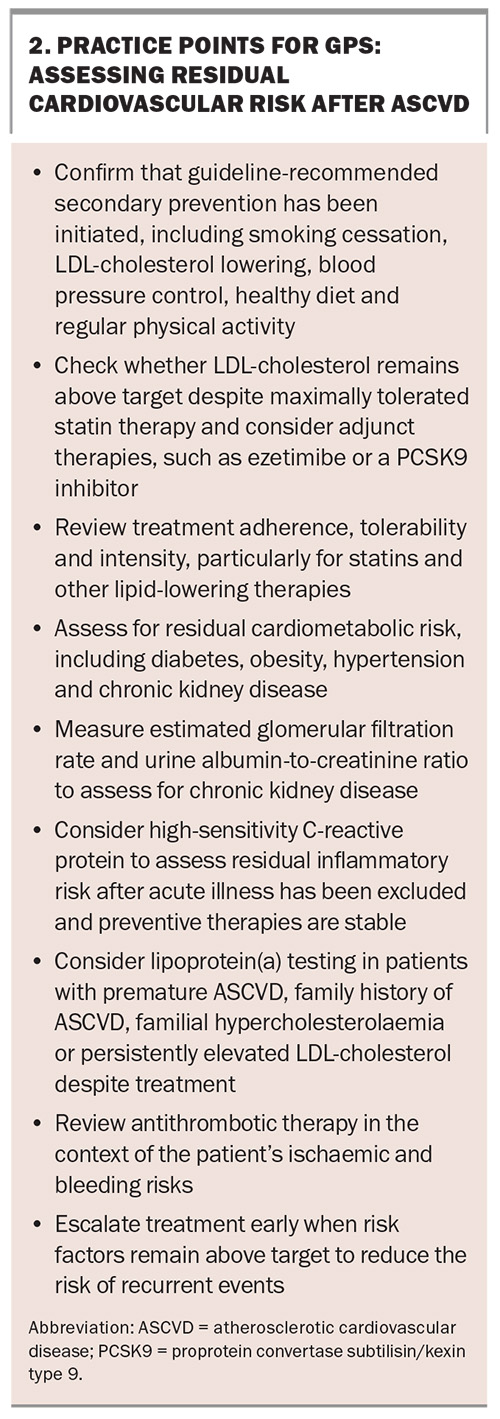
Key practice points for identifying and addressing residual cardiovascular risk in general practice are summarised in Box 2.
Conclusion
Despite usual care, cardiovascular events continue to occur at unacceptable rates in patients with ASCVD. This underscores the need for clinicians to be proactive in using risk stratification tools and therapies at their disposal to identify and address all modifiable risk factors for each individual patient. Although this must start with smoking cessation, optimal lowering of LDL-C levels and blood pressure, and clear recommendations around a healthy diet and physical activity, clinicians should also assess, manage and monitor other drivers of residual cardiovascular risk. This requires a systematic and dedicated approach to lipids (including non-LDL-C lipids), inflammation, cardiometabolic conditions and antithrombotic therapy.
With many trials actively evaluating new therapies that target different pathways in ASCVD, the treatment options in our armamentarium will rapidly grow. Familiarity with the different drivers of residual cardiovascular risk enables clinicians to provide personalised care for their patients with ASCVD in an evidence-based, cost-effective and safe way. MT
COMPETING INTERESTS: Dr Nguyen and
Dr Marathe: None. Professor Psaltis has received research support from Amgen and Biotronik;
has received consulting fees from Amgen, CSL Seqirus, Esperion, Eli Lilly, Novartis, Novo Nordisk and Sanofi; has received speaker honoraria from Amgen, AstraZeneca, CSL Seqirus, Novartis, Novo Nordisk and Sanofi; and is a nonexecutive board director of Corcillum Systems.
References
1. Vrints C, Andreotti F, Koskinas KC, et al; ESC Scientific Document Group. 2024 ESC guidelines for the management of chronic coronary syndromes. Eur Heart J 2024; 45: 3415-3537.
2. Virani SS, Newby LK, Arnold SV, et al; Peer Review Committee Members. 2023 AHA/ACC/ACCP/ASPC/NLA/PCNA guideline for the management of patients with chronic coronary disease: a report of the American Heart Association/American College of Cardiology Joint Committee on Clinical Practice Guidelines. Circulation 2023; 148: e9-e119.
3. Bueno H, Deaton C, Farrero M, et al; ESC Scientific Document Group. 2025 ESC clinical consensus statement on mental health and cardiovascular disease: developed under the auspices of the ESC Clinical Practice Guidelines Committee. Eur Heart J 2025; 46: 4156-4225.
4. Vernon ST, Coffey S, D’Souza M, et al. ST-segment-elevation myocardial infarction (STEMI) patients without standard modifiable cardiovascular risk factors-how common are they, and what are their outcomes? J Am Heart Assoc 2019; 8: e013296.
5. Emerging Risk Factors Collaboration; Sarwar N, Gao P, Seshasai SR, Gobin R, et al. Diabetes mellitus, fasting blood glucose concentration, and risk of vascular disease: a collaborative meta-analysis of 102 prospective studies. Lancet 2010;
375: 2215-2222.
6. Arnold SV, Stolker JM, Lipska KJ, et al. Recognition of incident diabetes mellitus during an acute myocardial infarction. Circ Cardiovasc Qual Outcomes 2015; 8: 260-267.
7. Bell K, Shaw JE, Maple-Brown L, et al. A position statement on screening and management of prediabetes in adults in primary care in Australia. Diabetes Res Clin Pract 2020; 164: 108188.
8. Tabák AG, Herder C, Rathmann W, Brunner EJ, Kivimäki M. Prediabetes: a high-risk state for diabetes development. Lancet 2012; 379: 2279-2290.
9. Allahwala MA, Marathe CS, Nelson AJ, Psaltis PJ, Marathe JA. Established and emerging therapies for cardiovascular-kidney-metabolic syndrome: harnessing the benefits of sglt-2 inhibitors, glp-1 receptor agonists, and beyond. Heart Lung Circ 2025; 34: 995-1005.
10. Kittipibul V, Cox ZL, Chesdachai S, Fiuzat M, Lindenfeld J, Mentz RJ. Genitourinary tract infections in patients taking SGLT2 inhibitors: JACC review topic of the week. J Am Coll Cardiol 2024; 83: 1568-1578.
11. Zinman B, Wanner C, Lachin JM, et al; EMPA-REG OUTCOME Investigators. Empagliflozin, cardiovascular outcomes, and mortality in type 2 diabetes. N Engl J Med 2015; 373: 2117-2128.
12. Wiviott SD, Raz I, Bonaca MP, et al; DECLARE–TIMI 58 Investigators. Dapagliflozin and cardiovascular outcomes in type 2 diabetes. N Engl J Med 2019; 380: 347-357.
13. Kumar S, Anderson JE, Coviello A, Lopez-Jimenez F, Bakris GL. The role of glucagon-like peptide-1 receptor agonists in the treatment of cardiovascular-kidney-metabolic syndrome. JACC Adv 2026; 5: 102465.
14. Sattar N, Lee MMY, Kristensen SL, et al. Cardiovascular, mortality, and kidney outcomes with GLP-1 receptor agonists in patients with type 2 diabetes: a systematic review and meta-analysis of randomised trials. Lancet Diabetes Endocrinol 2021; 9: 653-662.
15. McDonagh TA, Metra M, Adamo M, et al; ESC Scientific Document Group. 2021 ESC guidelines for the diagnosis and treatment of acute and chronic heart failure: developed by the Task Force for the diagnosis and treatment of acute and chronic heart failure of the European Society of Cardiology (ESC). With the special contribution of the Heart Failure Association (HFA) of the ESC. Eur J Heart Fail 2022; 24: 4-131.
16. McDonagh TA, Metra M, Adamo M, et al; ESC Scientific Document Group. 2023 focused update of the 2021 ESC guidelines for the diagnosis and treatment of acute and chronic heart failure. Eur Heart J 2023; 44: 3627-3639.
17. Markovic TP, Proietto J, Dixon JB, et al. The Australian obesity management algorithm: a simple tool to guide the management of obesity in primary care. Obes Res Clin Pract 2022; 16: 353-363.
18. Wilding JPH, Batterham RL, Calanna S, et al; STEP 1 Study Group. Once-weekly semaglutide in adults with overweight or obesity. N Engl J Med 2021; 384: 989-1002.
19. Lincoff AM, Brown-Frandsen K, Colhoun HM, et al; SELECT Trial Investigators. Semaglutide and cardiovascular outcomes in obesity without diabetes. N Engl J Med 2023; 389: 2221-2232.
20. Frías JP, Davies MJ, Rosenstock J, et al; SURPASS-2 Investigators. Tirzepatide versus semaglutide once weekly in patients with type 2 diabetes. N Engl J Med 2021; 385: 503-515.
21. Khawaji A, A Jaly A, A Bakri H, et al. Weight loss efficacy of tirzepatide compared to placebo or glp-1 receptor agonists in adults with obesity or overweight: a meta-analysis of randomized controlled trials with ≥ 20 weeks treatment duration. J Obes 2025; 2025: 3442754.
22. Nicholls SJ, Pavo I, Bhatt DL, et al; SURPASS-CVOT Investigators. Cardiovascular outcomes with tirzepatide versus dulaglutide in type 2 diabetes. N Engl J Med 2025; 393: 2409-2420.
23. Writing Committee Members; Ndumele CE, Rodriguez F, Dixon DL, et al. 2026 AHA/ACC/ADA/ASN guideline for the prevention, detection, evaluation, and management of cardiovascular-kidney-metabolic syndrome: a report of the American College of Cardiology/American Heart Association Joint Committee on Clinical Practice Guidelines. Circulation 2026 Jun 9; e-pub (https://doi.org/10.1161/cir.0000000000001453).
24. Silverman MG, Ference BA, Im K, et al. Association between lowering LDL-C and cardiovascular risk reduction among different therapeutic interventions: a systematic review and meta-analysis. JAMA 2016; 316: 1289-1297.
25. Wang N, Woodward M, Huffman MD, Rodgers A. Compounding benefits of cholesterol-lowering therapy for the reduction of major cardiovascular events: systematic review and meta-analysis. Circ Cardiovasc Qual Outcomes 2022; 15: e008552.
26. Brieger D, Cullen L, Briffa T, et al. National Heart Foundation of Australia; Cardiac Society of Australia and New Zealand: comprehensive Australian clinical guideline for diagnosing and managing acute coronary syndromes 2025.
Heart Lung Circ 2025; 34: 309-397.
27. Ridker PM. How common is residual inflammatory risk? Circ Res 2017; 120: 617-619.
28. Cannon CP, Blazing MA, Giugliano RP, et al; IMPROVE-IT Investigators. Ezetimibe added to statin therapy after acute coronary syndromes. N Engl J Med 2015; 372: 2387-2397.
29. Ballantyne CM, Graham TE, Van Anglen LJ, rt al. Real-world adherence and effectiveness of inclisiran in lowering ldl-c: results from 1 year of follow-up. Cardiol Ther 2025; 14: 671-685.
30. Sabatine MS, Giugliano RP, Keech AC, et al; FOURIER Steering Committee and Investigators. Evolocumab and clinical outcomes in patients with cardiovascular disease. N Engl J Med 2017; 376: 1713-1722.
31. Ray KK, Wright RS, Kallend D, et al; ORION-10 and ORION-11 Investigators. Two phase 3 trials of inclisiran in patients with elevated LDL cholesterol. N Engl J Med 2020; 382: 1507-1519.
32. Nissen SE, Lincoff AM, Brennan D, et al; CLEAR Outcomes Investigators. Bempedoic acid and cardiovascular outcomes in statin-intolerant patients. N Engl J Med 2023; 388: 1353-1364.
33. Nicholls SJ, Nelson AJ, Ditmarsch M, et al; BROADWAY Investigators. Safety and efficacy of obicetrapib in patients at high cardiovascular risk. N Engl J Med 2025; 393: 51-61.
34. Blumenthal RS, Morris PB, Gaudino M, et L. 2026 ACC/AHA/AACVPR/ABC/ACPM/ADA/AGS/APhA/ASPC/NLA/PCNA Guideline on the management of dyslipidemia: a report of the American College of Cardiology/American Heart Association Joint Committee on Clinical Practice Guidelines. J Am Coll Cardiol 2026; 87: 2624-2757.
35. Bhatt DL, Steg PG, Miller M, Brinton EA, et al; REDUCE-IT Investigators. Cardiovascular risk reduction with icosapent ethyl for hypertriglyceridemia. N Engl J Med 2019; 380: 11-22.
36. Ward NC, Watts GF, Bishop W, et al. Australian Atherosclerosis Society position statement on lipoprotein(a): clinical and implementation recommendations. Heart Lung Circ 2023; 32: 287-296.
37. Ballantyne CM, Nambi V. HDL Therapeutics - time for a curtain call or time to reconceptualize? N Engl J Med 2024; 390: 1622-1623.
38. Nguyen MT, Fernando S, Schwarz N, Tan JT, Bursill CA, Psaltis PJ. Inflammation as a therapeutic target in atherosclerosis. J Clin Med 2019; 8: 1109.
39. Ridker PM, Cushman M, Stampfer MJ, Tracy RP, Hennekens CH. Inflammation, aspirin, and the risk of cardiovascular disease in apparently healthy men. N Engl J Med 1997; 336: 973-979.
40. Ridker PM, Hennekens CH, Buring JE, Rifai N. C-reactive protein and other markers of inflammation in the prediction of cardiovascular disease in women. N Engl J Med 2000; 342: 836-843.
41. Ridker PM, Danielson E, Fonseca FA, et al; JUPITER Study Group. Rosuvastatin to prevent vascular events in men and women with elevated C-reactive protein. N Engl J Med 2008; 359: 2195-2207.
42. Emerging Risk Factors Collaboration; Kaptoge S, Di Angelantonio E, Lowe G, et al. C-reactive protein concentration and risk of coronary heart disease, stroke, and mortality: an individual participant meta-analysis. Lancet 2010; 375: 132-140.
43. Ridker PM, Bhatt DL, Pradhan AD, Glynn RJ, MacFadyen JG, Nissen SE; PROMINENT, REDUCE-IT, and STRENGTH Investigators. Inflammation and cholesterol as predictors of cardiovascular events among patients receiving statin therapy: a collaborative analysis of three randomised trials. Lancet 2023; 401: 1293-1301.
44. Mensah GA, Arnold N, Prabhu SD, Ridker PM, Welty FK. Inflammation and cardiovascular disease: 2025 ACC scientific statement. JACC 2026; 87: 1381-1404.
45. Ridker PM, Everett BM, Thuren T, et al; CANTOS Trial Group. Antiinflammatory therapy with canakinumab for atherosclerotic disease. N Engl J Med 2017; 377: 1119-1131.
46. Tucker B, Tucker WJ, Chung JS, Figtree GA, Keech A, Patel S. The efficacy and safety of low dose colchicine in atherosclerotic cardiovascular disease: a systematic review and meta-analysis. Eur J Prev Cardiol 2026; 33: 694-704.
47. Nguyen MT, Nelson AJ, Psaltis PJ. Colchicine in atherosclerotic cardiovascular disease: weighing up the evidence so far. Eur J Prev Cardiol 2026; 33: 705-706.
48. Byrne RA, Rossello X, Coughlan JJ, et al; ESC Scientific Document Group. 2023 ESC guidelines for the management of acute coronary syndromes. Eur Heart J 2023; 44: 3720-3826.
49. Galli M, Andreotti F, D’Amario D, et al. Randomised trials and meta-analyses of double vs triple antithrombotic therapy for atrial fibrillation-ACS/PCI: a critical appraisal. Int J Cardiol Heart Vasc 2020; 28: 100524.
50. Watanabe H, Morimoto T, Natsuaki M, et al; STOPDAPT-2 ACS investigators. Clopidogrel versus aspirin monotherapy beyond 1 year after PCI: the final 5-year results of the STOPDAPT-2 ACS and STOPDAPT-2 total cohort. Circ Cardiovasc Interv 2026; 19: e016280.
51. Galli M, Capodanno D, Benenati S, et al. Efficacy and safety of dual-pathway inhibition in patients with cardiovascular disease: a meta-analysis of 49 802 patients from 7 randomized trials. Eur Heart J Cardiovasc Pharmacother 2022; 8: 519-528.
Single article purchases are temporarily unavailable due to site maintenance.
If you would like to purchase an article during this time, please email us at [email protected] with the article details and we'll assist you directly. We'll also let you know when online purchasing is available again.
Thank you for your patience and understanding.