
How we breathe: nasal congestion and treatment strategies

Nasal congestion is more than a blocked nose – patient perceptions of pressure, mucus and airflow often diverge sharply from clinical definitions, complicating diagnosis and management. Understanding the interplay between physiology, inflammation and patient experience is key to avoiding misdiagnosis and selecting effective, individualised treatment strategies.
- The sensation of nasal congestion does not always correlate with objective airflow limitation. Symptoms may be driven by altered sensory pathways, hyperreactivity or psychological overlay, rather than mechanical blockage.
- Recognising functional disorders, conversion disorders and nasal hyperreactivity is essential to avoid unnecessary surgery and patient dissatisfaction.
- Immunotherapy and immunomodulation should be considered early in cases of persistent allergic disease to prioritise long-term disease modification over short-term strategies such as nasal sprays.
- Medical and surgical strategies may be integrated and tailored according to underlying aetiology and do not need to be viewed as first-line and last resort strategies.
- Smoking, vaping and intranasal drug use can cause symptoms or exacerbate other aetiologies, as well as impair treatment outcomes of medical or surgical therapies.
Nasal congestion is a frequently encountered symptom in both primary care and specialist settings. Accurate diagnosis relies on the careful distinction between feelings of restricted airflow, pressure or heaviness in the face and mucous symptoms in the nose and throat. Nasal congestion is a term that is often used interchangeably by patients but reflects these different underlying pathophysiological mechanisms. Nasal obstruction is the subjective and objective state of insufficient airflow through the nose. Nasal congestion refers to the sensation of reduced airflow, frequently through mucosal inflammation and vascular engorgement.1 The sense of congestion is not always associated with airflow restriction. Understanding these nuances in the patient experience is essential in guiding clinical evaluation and selecting appropriate investigation and treatment strategies.
The language patients use to describe nasal symptoms often differs from the terminology employed by healthcare professionals. The sensation of nasal obstruction associated with nasal congestion can be distinguished from fixed anatomical obstruction by assessing the response to a topical nasal decongestant. Importantly, sensations of facial pain and pressure, common in upper respiratory infections, are frequently perceived by patients as congestion. As a result, various symptoms associated with sinonasal or even non-nasal pathology may be labelled under this umbrella term. In a study by McCoul et al., patients and physicians were asked to define nasal congestion using symptom descriptors.2 Although both groups agreed on core terms such as ‘blockage of the nose’, ‘stuffy nose’ and ‘difficulty breathing’, significant discrepancies emerged. Patients more commonly associated nasal congestion with pressure-related symptoms (38.8% more frequently than physicians), mucus-related symptoms (51.2%) and other nonobstructive symptoms (49.4%). Notably, 32% of patients identified ‘headache’ as part of nasal congestion, compared with none of the otolaryngologists. Similarly, ‘facial pressure’ was cited by 50% of patients versus 16.1% of clinicians, and ‘postnasal drip’ by 38% of patients compared with only 3.5% of clinicians. Although otolaryngologists uniformly define nasal congestion in terms of airflow obstruction, a substantial proportion of other specialists and patients also include pressure and mucus symptoms in the definition.
For the purposes of this review, we define nasal congestion using the shared terminology agreed upon by both patients and physicians, namely, ‘blockage of the nose’, ‘stuffy nose’ and ‘difficulty breathing’, and consider it synonymous with the clinical concept of nasal obstruction. This review explores the mechanisms, differential diagnoses and management approaches for nasal congestion, with a focus on patients who do not have significant sinus pathology that would otherwise cause nasal congestion (e.g. sinusitis).
Epidemiology
Nasal obstruction is an extremely common presenting symptom, affecting about 30% of the general population.3 The two leading causes are inflammatory conditions and structural abnormalities of the nasal airway. Most clinical research has focused on patients with inflammatory disease, particularly allergic rhinitis (AR), nonallergic rhinitis and chronic rhinosinusitis, with AR being the most common, with a reported prevalence in Australia of about 20% of the population.4 This has increased from 15% in 2001.5 In Australia, the impact of nasal airway obstruction on health-related quality of life has been evaluated using health utility values. Before treatment, patients with nasal airway obstruction have significantly lower mean health utility values than the general Australian population (0.72 [standard deviation, 0.09] vs 0.81 [0.22]), suggesting a significant impact on quality of life.6 This impairment is similar to that reported in other chronic conditions, such as chronic obstructive pulmonary disease (0.72), diabetes (0.70) and renal disease requiring dialysis (0.70).6 Expenditure on medications for AR treatment doubled between 2001 and 2011, increasing from $107.8 million to $226.8 million per year.5
Nasal airflow and physiology of breathing
Sensation of nasal breathing
There are no mechanical airflow receptors in the nose. The perception of clear nasal breathing comes from the cooling effect of air flowing through the nasal passages. Evaporative heat loss from air flowing over the mucociliary layer provides this cooling. The trigeminal afferent system, particularly the cold-sensitive transient receptor potential melastatin 8 receptors, plays a crucial role in the perception of airflow.7 These thermoreceptors, located in the nasal mucosa, are activated by the cooling effect of inspired air. When air moves through the nose, it lowers the mucosal surface temperature, stimulating these receptors and sending afferent signals via the ophthalmic and maxillary branches of the trigeminal nerve to the brainstem. This afferent input contributes to the conscious sensation of nasal patency. Consequently, even when airflow is objectively adequate, impaired trigeminal signalling, such as from mucosal inflammation, thickened mucus and vascular dilatation, can prevent heat loss and may result in the perception of obstruction. The pharmaceutical industry takes advantage of this knowledge in the form of menthol, tea tree, eucalyptus and other substances that stimulate transient receptor potential melastatin 8 receptors and provide temporary relief of nasal congestion without changing airflow.8
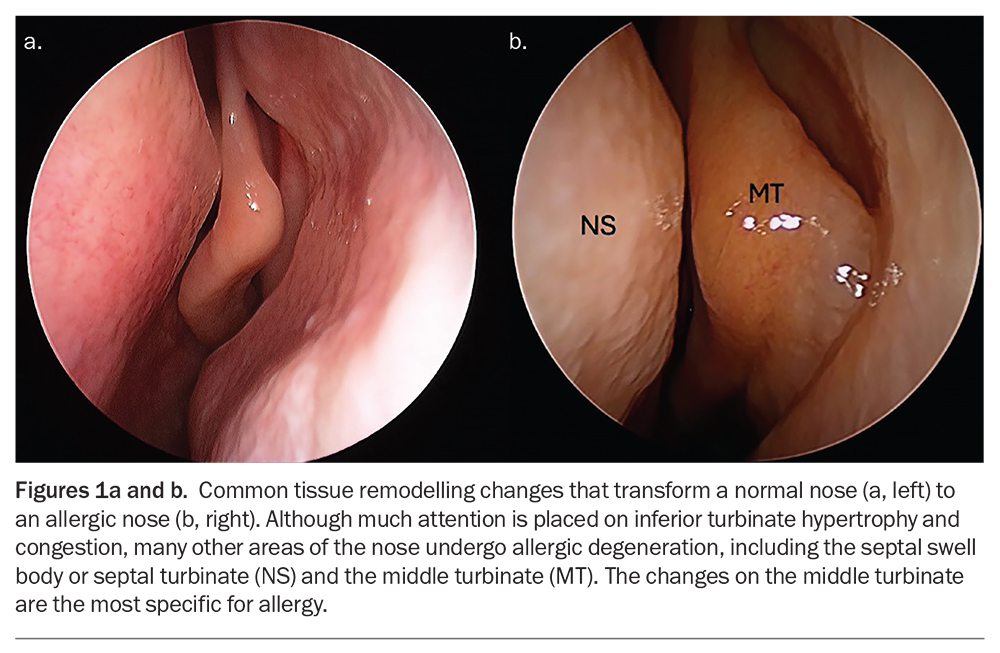
A dense vascular network, most prominent within the septum (including the septal swell body) and inferior turbinates, modifies the morphology of the nasal cavity through dynamic changes in mucosal volume (Figures 1a and 1b).9 This rich vascular plexus in the septum (the septal swell body or septal turbinate) and inferior turbinates can dynamically engorge or constrict in response to autonomic tone. Sympathetic adrenergic stimulation causes vasoconstriction of resistance vessels and collapse of the venous sinusoids, leading to a reduction in mucosal volume and expansion of the nasal airspace. This mechanism underlies the therapeutic effect of decongestants. Conversely, vasoactive drugs that impair alpha-adrenergic receptor activity, such as blood pressure and prostate medications (prazosin), can result in vascular dilatation. Parasympathetic (cholinergic) innervation, although less influential on vascular tone, stimulates seromucous gland secretion and contributes to rhinorrhoea. Overstimulation of these nerves is responsible for ‘skier’s nose’ or a watery nose after exposure to cold air or spicy foods.
The nasal cycle is a physiological, autonomically driven process in which unilateral congestion and decongestion alternate between the nasal passages over several hours.10 This occurs because of asymmetrical engorgement of the venous sinusoids, regulated by fluctuations in sympathetic and parasympathetic tone. Although usually unnoticed, the nasal cycle can become exaggerated or symptomatic in the context of inflammation (allergy), structural narrowing (either from septal deformity or tissue remodelling such as turbinate hypertrophy or the presence of a polyp) or autonomic dysfunction (sometimes brought about by vasoactive drugs such as antihypertensives). Patients who are aware of the nasal cycle can also become affected by body position. There is an increase in venous pressure between standing and lying down and this produces postural congestion that is induced when supine or lying on one side.
Causes of nasal congestion
Structural causes
For most patients who develop nasal congestion as adults, the underlying bony-cartilaginous anatomy is rarely a cause. This is why many patients who have their septum ‘fixed’ often have residual symptoms. Of course, there will be patients whose nasal congestion is unilateral or has come on after trauma or during nasal development, and the treatment strategy might be as simple as septal surgery, but in most cases, the aetiology extends beyond local septal anatomy. As patients enter their sixth or seventh decade, laxity of the cartilaginous structure or prior rhinoplasty surgery can produce nasal valve dysfunction.
Allergy
Nasal congestion is a symptom with a broad differential diagnosis. Inflammation associated with allergy is the most common form of rhinitis. This is an immunoglobulin E (IgE)-mediated event after a sensitised individual is exposed to an offending allergen. Many patients with an allergy do not have itch, sneeze, watery nose or conjunctival symptoms that we commonly associate with allergies and may not intuitively associate their nasal congestion with allergy.
Nonallergic rhinitis is an umbrella term that encompasses any other reactive nose condition and is a term that is being phased out in the fields of otolaryngology and rhinology. Of the patients who do not have positive skin or serum evidence of allergic sensitisation, 15 to 30% of these patients may still be allergic but without systemic evidence, a condition referred to as entopy or local AR. These patients may still respond well to treatment strategies for classic allergy.
Nasal hyperreactivity
Nasal hyperreactivity occurs in patients who have symptoms triggered by environmental stimuli such as smoke, cleaning products, fragrances and changes in temperature. Trigeminal nerve terminals within the nasal mucosa trigger a sympathetic and parasympathetic reflex mechanism via activation of transient receptor potential vanilloid 1 receptors.11 This results in the watery nose response that is common while skiing or during an early morning run in cold air. However, the same nerves can be triggered by common temperature changes, causing pain, discharge and congestion.
Smoking, vaping and other drug use
It is well established that exposure to cigarette smoke results in impaired mucociliary clearance secondary to ciliary damage, increased secretions, thickened nasal secretions and a dampened immune response.12,13 Cigarette smoke condensate (CSC) is a combination of the various combustion compounds from tobacco and other chemicals and materials contained in cigarettes, often seen as a brown and sticky layer on the upper and lower airway linings in smokers. The particulate deposition of CSC in the nasal airway is similar to that of inhalant allergens.
In addition to nicotine, CSC contains a myriad of compounds, including polycyclic aromatic hydrocarbons, formaldehyde, hydrogen cyanide and heavy metals.14,15 CSC has been shown to have cytotoxic effects, leading to apoptosis of bronchial cells and fibrotic changes in the lung, as well as ciliostatic effects in the airway.16,17 Inflammation of the nasal cavity from CSC is often referred to as smoker’s rhinitis, with histological changes such as a thickened epithelium and increased numbers of goblet cells.18
In terms of vaping, the evidence parallels the effects of cigarette smoke and its adverse effects in the airway. Vape products decrease ciliary function and increase oxidative stress in the lower airway.19 Vaping also leads to increased airway inflammation, measured by increased levels of expired nitric oxide and decreased lung capacity.20 It has been shown to inhibit airway immune responses and the ability to respond to viral infections, as well as innate immunity.21,22 Airway endothelial damage has been shown to occur even with very brief use of vaping, with or without nicotine.23 The inflammatory changes induced by vaping have been shown to be similar to those induced by smoking.24 Vaping with or without nicotine products has been shown to decrease blood oxygenation levels and lead to airway epithelial injury.25
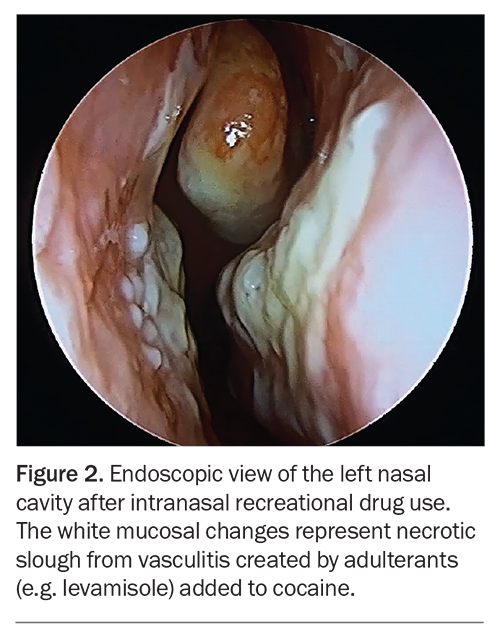
Finally, another common drug implicated in nasal dysfunction is cocaine. In working-age Australians, drug use increased from 3.8 to 6.2% between 2016 and 2019.26 Although cocaine has direct effects on the nasal mucosa, it is commonly adulterated during processing with other substances, and it is these additives that often carry significant adverse effects. The most common of these is the veterinary anthelmintic drug levamisole. The high prevalence of levamisole in cocaine supplies, approaching 70%, is thought to be because of its physical properties similar to pure cocaine, low cost and ability to enhance the effects of cocaine by increasing alkaloid opiate and dopamine levels in the central nervous system.27,28 This drug can produce severe vasculitis and necrosis in the nose with destruction of nasal structures and even skin. Persistent ulceration and rhinitis reactions several weeks after exposure are common (Figure 2).
Functional or conversion disorder
Nasal congestion can overlap with somatic symptom disorder, hyperventilation and anxiety in some patients; however, others may develop a strong belief system around the impact of their nasal breathing and other bodily functions, especially sleep, fatigue and energy. These patients rarely have significant sinonasal pathology but pursue interventions with high expectations of general health benefits. Sleep dysfunction, emotional wellbeing, feelings of low energy or fatigue and breathlessness are a major focus for these patients. If these patients do not show improvement with interventions, especially surgery, they often develop a further sense of despair and mental health decline.
Empty nose syndrome was originally defined in patients who underwent surgery without relief of their symptoms despite an acceptable anatomical outcome. This syndrome likely encompasses patients with these functional or conversion disorders and is often characterised by a sense of maltreatment, in which the patient believes that ‘too much’ or an inappropriate procedure was performed and that this explains their unresolved or worsening symptoms.
Diagnostic workup
Key features on history and examination
A thorough clinical history is essential in the diagnostic workup of nasal congestion, with particular attention to the nature of the pattern of symptoms, including dynamic or positional changes. The phenomenon of postural congestion (i.e. worsening symptoms when moving from upright to supine or when lying on one side), alongside a cycling pattern of congestion and positive response to topical decongestants, suggests a vascular, turbinate-based mechanism and helps differentiate it from fixed obstruction (septal deviation) or from psychogenic causes when there is a vague sense of poor breathing or simply being a mouth breather. Additional history should be sought for underlying allergic or respiratory conditions (e.g. dermatitis, conjunctival irritation, cough, wheeze), exposure risks (smoking, intranasal drug use, pollution, occupational irritants) and a family history of atopy.
Red flags
Most clinicians understand that unilateral bleeding, severe unilateral obstruction, unilateral discharge and other sensory, dental or orbital changes are likely to suggest tumours, masses or more aggressive pathology. However, a more significant danger is a functional or conversion disorder, where excessive focus is placed on snoring, sleep, fatigue and energy levels as consequences of nasal congestion. Isolated nasal obstruction is unlikely to cause breathlessness, dyspnoea, difficulty taking a deep breath or impaired exercise tolerance from nasal obstruction (and especially unilateral obstruction). The nasal airway is simply a conductor of air and is quickly supplanted by oral breathing. There is no part of the nasal airway that is involved in gas exchange and thus the physiological basis of such symptoms must lie elsewhere.
Clinical examination
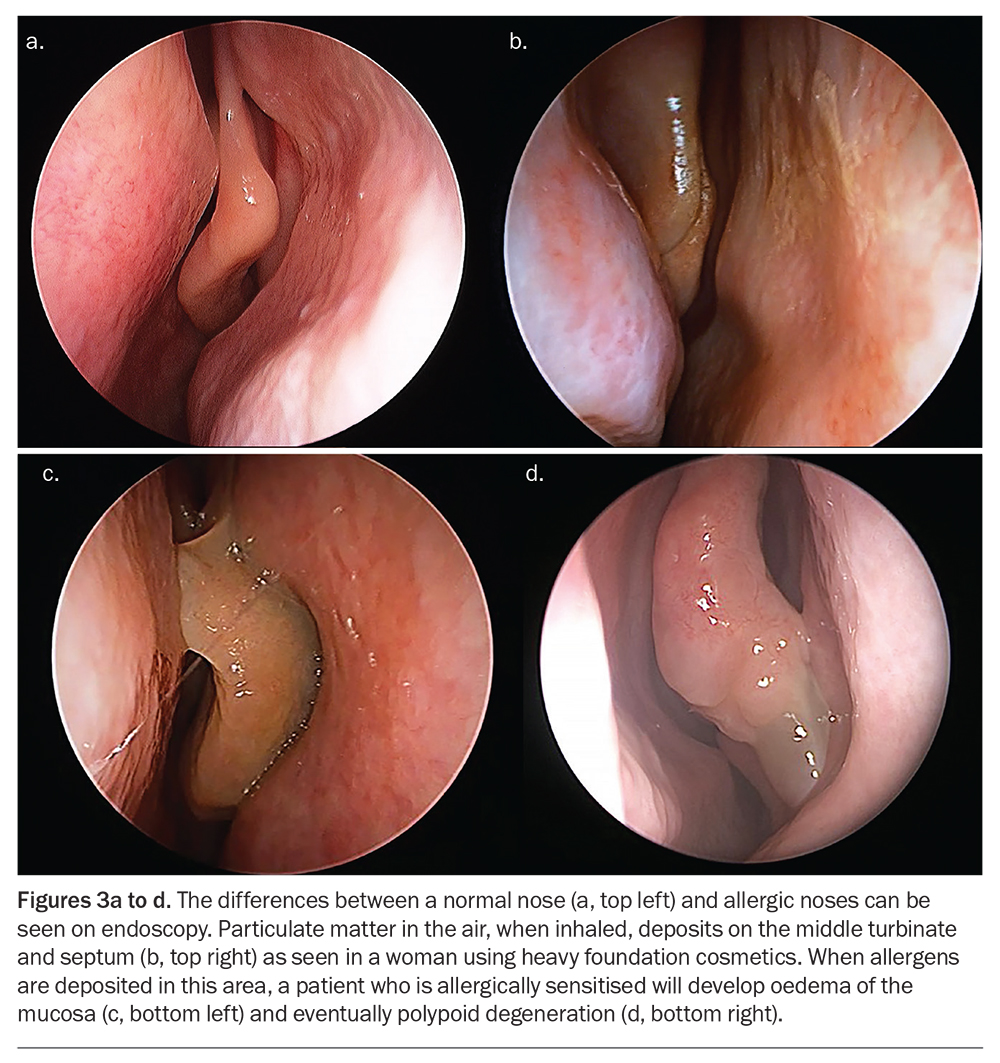
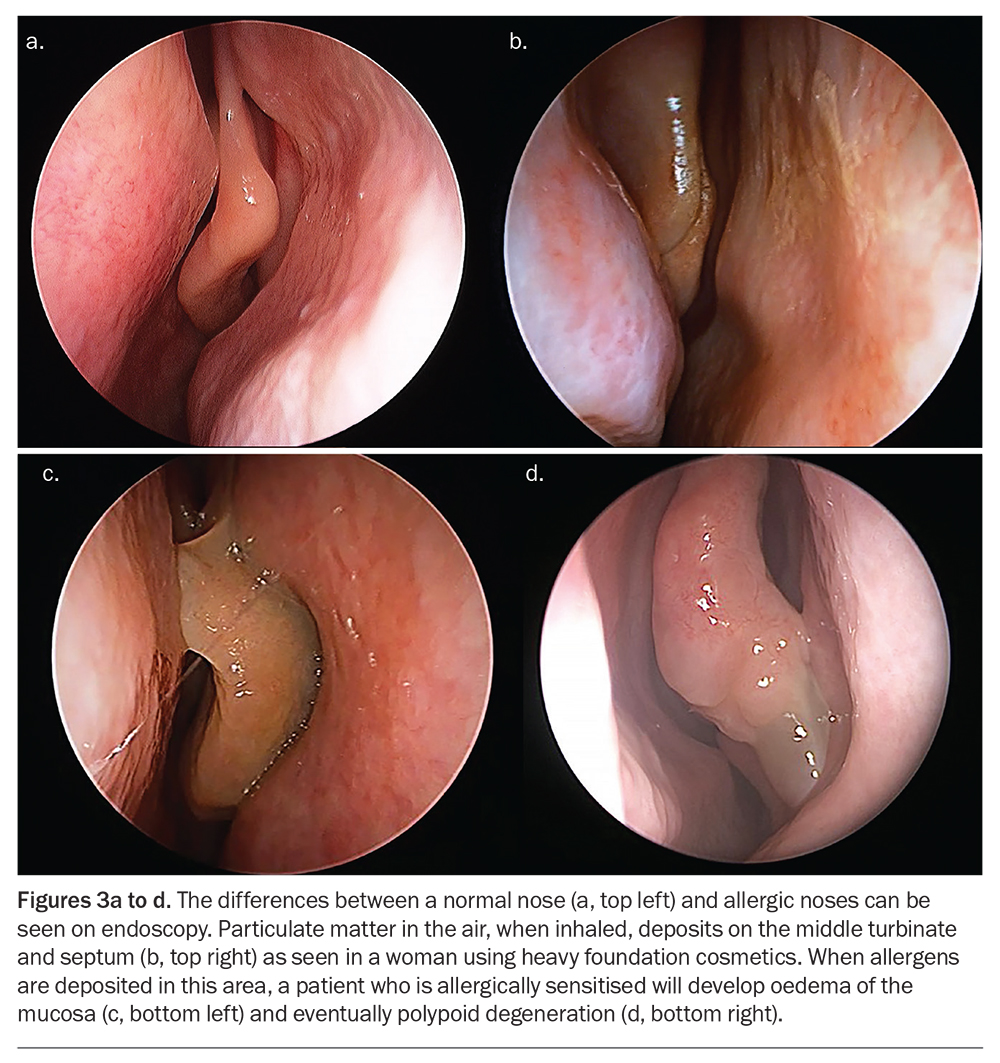
Local examination of the nasal cavity is essential in differentiating causes of nasal congestion and excluding sinister pathology. In the general practice setting, anterior rhinoscopy may identify features such as inferior turbinate hypertrophy, oedema and cobblestoning of the nasal mucosa, and the presence of mucus within the nasal cavity. Nasal endoscopy provides a significantly superior view of the posterior nasal cavity and middle meatal structures, and can be used both in diagnosis and to assess response to treatment through video-recording. A key feature of inhalant allergy is the presence of middle turbinate oedema (Figures 3a to 3d).29 The nasal valve should also be assessed. This consists of the internal nasal valve, made up of the nasal septum, upper lateral cartilage and inferior turbinate head. The external nasal valve consists of the medial and lateral crura of the lower lateral cartilage, caudal septum and nasal sill. A narrow angle between the nasal septum and upper lateral cartilage (internal nasal valve) can result in a significant reduction in nasal airflow perception. Although these changes may contribute to nasal congestion and obstruction, they are markers of the disease process as much as being a problem in themselves.
Allergy testing can be performed through epicutaneous testing or in vitro serum testing. It is important to remember that negative allergy test results do not necessarily exclude local allergy, as specific IgE can be synthesised locally in some patients but may not be detectable systemically.30
Objective measurements
Otolaryngologists struggle with objective measures of disease in nasal and sinus disorders. Objective assessments, of either imaging of the paranasal sinuses or the nasal airway, are useful measures but only assess one construct of sinonasal function experienced by the patient. Subsequently, these measures do not correlate tightly with symptoms.31,32 This has led to enormous heterogeneity in the interpretation of disease and clinical practice. It is widely recognised that some rhinological procedures, such as turbinate and sinus surgery, can be minimally beneficial for some patients. This comes about, not because of a lack of technical performance, but because of poor application in patients where some radiological changes are indicative of a simple allergy, or where a patient’s sense of nasal congestion is more than airflow restriction and thus simple surgical modification of anatomy is unlikely to be of benefit.
Rhinomanometry measures nasal airflow and pressure, and thus resistance, during normal breathing and is a useful tool to distinguish reversible congestion from anatomical obstruction (Figure 4). It is considered the most reliable objective test for nasal congestion and is sensitive to treatment effects. The test is quick and minimally invasive but requires additional staff and equipment. Rhinomanometry can be useful in determining whether nasal surgery might be appropriate for patients with sleep dysfunction. Objective data guide clinicians on whether patients are truly referring to nasal airway obstruction or to a pressure sensation when describing nasal congestion. Furthermore, it helps to avoid surgical interventions for patients with disorders such as hyperventilation or functional nasal disorders.33,34

Nasal peak inspiratory flow, measured using a flowmeter mask with maximal effort through the nose, is a tool to assess nasal congestion.35 An improvement of 20 L/min or greater after decongestion has 75% sensitivity and 61% specificity for predicting reversible nasal obstruction. Measuring changes in nasal peak inspiratory flow after decongestion is more accurate than using pre- or post-decongestion values alone.
Treatment strategies
There has been a historical trend in medicine to offer medical therapy first and reserve surgical interventions for those who fail treatment or those with more severe disease. The ethics and risk management of the principle are sound; however, it is not scientific, and such heuristics have artificially divided therapies into medical or surgical options.
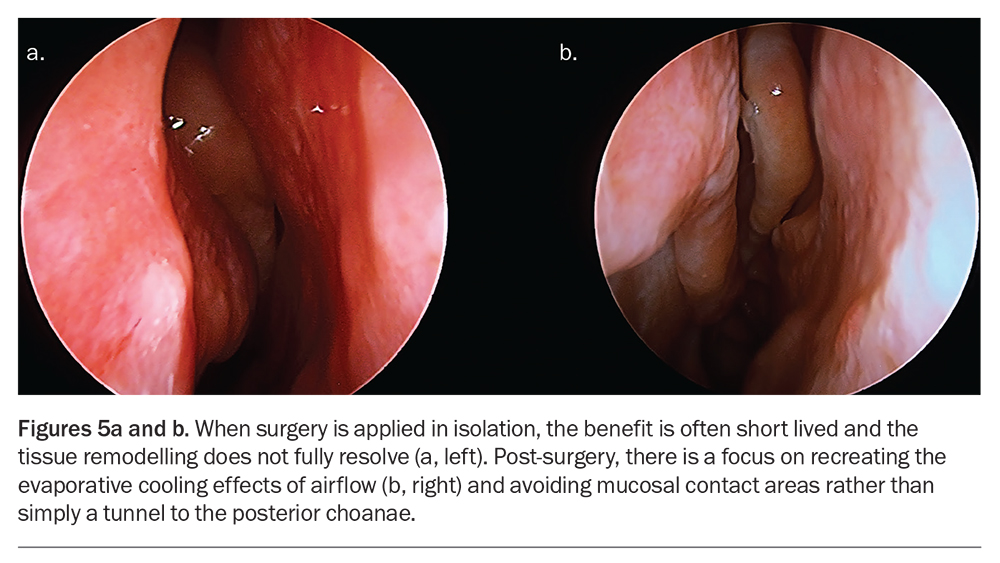
Many patients with severe persistent AR have a natural disease history that will span many years if not modified with immunotherapy or immunomodulation. By the time they seek intervention, many will also have established tissue remodelling in the form of turbinate hypertrophy or polypoid mucosal changes (Figures 3a to 3d). The heuristic of pursuing medical over surgical treatment may fail in such patients, as many will start allergy pharmacotherapy or immunotherapy, only to find that their key symptom of nasal obstruction does not resolve, as tissue remodelling is often irreversible. Likewise, those who undergo early surgery to reduce tissue remodelling (turbinate reduction or polyp removal) without medically addressing the underlying disease process driving those changes will have short-lived benefit.
Engaging patients in a holistic approach to their nasal condition, especially in cases of allergic disease, is essential.
Prioritising short-term pharmacotherapy or long-term immunomodulation
Combination intranasal corticosteroid and antihistamine sprays will often help in suppressing symptoms and, although they may provide a very acceptable approach for patients affected by seasonal AR for a few months each year, they are not an appealing strategy for those with persistent or perennial disease. Many patients need a mix of medical therapy to suppress (pharmacotherapy) or modify (immunotherapy) the underlying allergic immune response, along with surgery to remove the tissue remodelling that has formed from the disease process. For patients who present with dust mite-sensitised persistent rhinitis, long-term strategies such as immunotherapy (with or without surgery) are prioritised, regardless of severity, as this offers a chance of disease modification for a patient who might be facing years or decades of nasal symptoms.36
Addressing nasal hyperreactivity
The symptom presentation, with or without concomitant allergy, can be dominated by nasal hyperreactivity triggered by environmental stimuli such as fragrances, smoke or temperature changes. Pain or pressure is a feature here and commonly reported on days in Australia when bushfire smoke fills populated areas. Education and reassurance are central to treatment. Intranasal ipratropium bromide is effective in controlling watery rhinorrhoea but has little impact in treating nasal obstruction.37 Topical capsaicin has been demonstrated to desensitise nasal sensory nerves, reducing hyperreactivity and improving congestion and rhinorrhoea in selected patients.38 Menthol, tea tree, eucalyptus and related cooling agents provide a subjective sensation of improved airflow by stimulating trigeminal cold receptors, although they do not objectively alter nasal resistance.
Cessation of smoking, vaping and drug use
For most smokers, quitting is a difficult process. Simply educating smokers and recreational drug users on the health consequences of their behaviour is not effective. Repeated attempts are common before they succeed, with some relapsing even after a lengthy period of abstinence. From the 1990 California Tobacco Survey of 24,296 adults in California, USA, 12% of former smokers who had quit for less than one month at baseline remained continuously abstinent at the follow-up interview. This proportion increased to 25% for those who had quit from one to less than three months; it increased again to 52% with a duration of quitting from three to less than six months, but it increased only slightly to 59.2% for those who had quit for six to less than 12 months. Overall, long-term abstinence increased to 95% for those who had quit for one year or longer.39 Considering the implications of smoking and other drugs on nasal symptoms, abstinence from six to 12 months is sought before considering other management approaches, such as surgery or assessing the response to pharmacotherapy or immunotherapy.
Surgical treatments
Creating more space in the nose via surgery is beneficial but unidimensional in its benefits for patients. Typically, anatomical asymmetry responds poorly to medical treatments and has fewer dynamic changes relating to body position, exposures and irritants. The main anatomical sites contributing to nasal obstruction include the nasal septum, inferior (and middle) turbinates and nasal valve. There is level 1 evidence for septal surgery and turbinate reduction, and level 3 for nasal valve surgery in the management of nasal obstruction.40-43 The recent phase III Nasal Airway Obstruction Study (NAIROS) demonstrated the efficacy of septoplasty with or without turbinate reduction over medical management with intranasal corticosteroids. Patients with higher preoperative Nasal Obstruction Symptom Evaluation scores, particularly higher than 55, experienced the greatest symptomatic benefit (see video at: https://youtu.be/m5ydPpYJXhw).44,45
As humans perceive the cooling effects of airway flow through the nose, successful surgery aims to restore or maximise evaporative cooling within the nasal cavity. The goal of surgery is not to simply create a tunnel to the posterior choanae. Although that approach might be useful for sleep dysfunction, it does not resolve the symptom of nasal congestion. Tissue remodelling of turbinate areas in the nose should be reduced to ensure that airflow is restored over the nasal cavity lining as broadly as possible (Figures 5a and 5b).
Conclusion
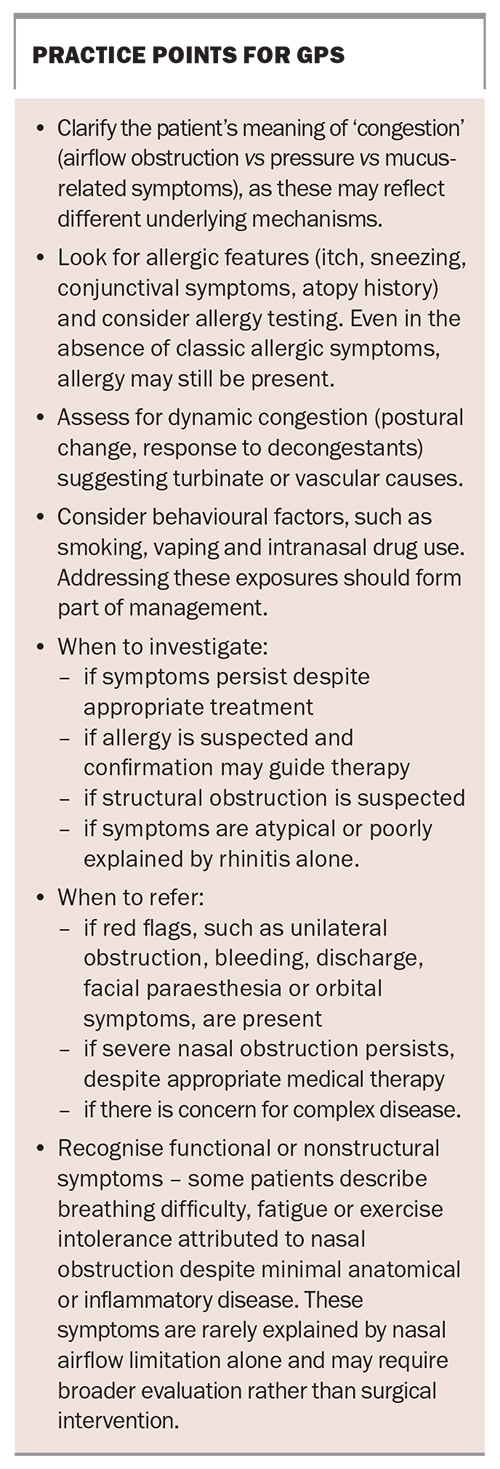
Nasal congestion is best approached as a symptom requiring clarification rather than as a diagnosis in itself. Distinguishing true airflow limitation from pressure, mucus symptoms, sensory dysfunction and broader functional complaints helps avoid inappropriate treatment and unnecessary surgery. Effective management depends on identifying the dominant mechanism – allergic inflammation, nasal hyperreactivity, structural narrowing, exposure-related irritation or functional overlay – and then combining medical, immunomodulatory and surgical strategies where appropriate. For patients with persistent or atypical symptoms, objective assessment and timely referral can help ensure treatment is directed at the actual cause of symptoms rather than the patient’s label of ‘congestion’. Practice points for GPs are provided in the Box. MT
COMPETING INTERESTS: Dr Sacks has received payment or honoraria for manuscript writing from Medtronic; and has participated on advisory boards for Medtronic and AstraZeneca. Professor Harvey has received grants or contracts from GSK, Sanofi and Stallergenes; consulting fees from Medtronic, Novartis, GSK and Viatris; and payment or honoraria from P&G and GSK.
References
1. Harvey RJ, Roland LT, Schlosser RJ, Pfaar O. Chief complaint: nasal congestion. J Allergy Clin Immunol Pract 2024; 12: 1462-1471.
2. McCoul ED, Mohammed AE, Debbaneh PM, Carratola M, Patel AS. Differences in the intended meaning of congestion between patients and clinicians. JAMA Otolaryngol Head Neck Surg 2019; 145: 634-640.
3. Osborn JL, Sacks R. Chapter 2: nasal obstruction. Am J Rhinol Allergy 2013; 27 Suppl 1: S7-S8.
4. Habib A-R, Campbell R, Kalish L, et al. The burden of chronic upper airway disorders in Australia: a population-based cross-sectional study. Aust J Otolaryngol 2019; 2.
5. Australian Institute of Health and Welfare (AIHW). Allergic rhinitis (hay fever). Canberra: AIHW; 2026. Available online at: https://www.aihw.gov.au/reports/chronic-respiratory-conditions/allergic-rhinitis-hay-fever (accessed May 2026).
6. Tjahjono R, Alvarado R, Kalish L, et al. Health impairment from nasal airway obstruction and changes in health utility values from septorhinoplasty. JAMA Facial Plast Surg 2019; 21: 146-151.
7. Sozansky J, Houser SM. The physiological mechanism for sensing nasal airflow: a literature review. Int Forum Allergy Rhinol 2014; 4: 834-838.
8. Lindemann J, Tsakiropoulou E, Scheithauer MO, Konstantinidis I, Wiesmiller KM. Impact of menthol inhalation on nasal mucosal temperature and nasal patency. Am J Rhinol 2008; 22: 402-405.
9. Patel RG. Nasal anatomy and function. Facial Plast Surg 2017; 33: 3-8.
10. Pendolino AL, Lund VJ, Nardello E, Ottaviano G. The nasal cycle: a comprehensive review. Rhinology Online 2018; 1: 67-76.
11. Velasco E, Delicado-Miralles M, Hellings PW, Gallar J, Van Gerven L, Talavera K. Epithelial and sensory mechanisms of nasal hyperreactivity. Allergy 2022; 77: 1450-1463.
12. Prasetyo A, Sadhana U, Budiman J. Nasal mucociliary clearance in smokers: a systematic review. Int Arch Otorhinolaryngol 2021; 25: e160-e169.
13. Rodrigues FM, Ramos D, Xavier RF, et al. Nasal and systemic inflammatory profile after short term smoking cessation. Respir Med 2014; 108: 999-1006.
14. Rodgman A, Smith CJ, Perfetti TA. The composition of cigarette smoke: a retrospective, with emphasis on polycyclic components. Hum Exp Toxicol 2000; 19: 573-595.
15. Piade JJ, Jaccard G, Dolka C, Belushkin M, Wajrock S. Differences in cadmium transfer from tobacco to cigarette smoke, compared to arsenic or lead. Toxicol Rep 2015; 2: 12-26.
16. Lin BC, Li QY, Tian L, et al. Identification of apoptosis-associated protein factors distinctly expressed in cigarette smoke condensate-exposed airway bronchial epithelial cells. J Biochem Mol Toxicol 2020; 34: e22444.
17. Cohen NA, Zhang S, Sharp DB, et al. Cigarette smoke condensate inhibits transepithelial chloride transport and ciliary beat frequency. Laryngoscope 2009; 119: 2269-2274.
18. Hadar T, Yaniv E, Shvili Y, Koren R, Shvero J. Histopathological changes of the nasal mucosa induced by smoking. Inhal Toxicol 2009; 21: 1119-1122.
19. Herbert J, Kelty JS, Laskin JD, Laskin DL, Gow AJ. Menthol flavoring in e-cigarette condensate causes pulmonary dysfunction and cytotoxicity in precision cut lung slices. Am J Physiol Lung Cell Mol Physiol 2023; 324: L345-L357.
20. Kotoulas SC, Domvri K, Tsantos A, et al. Is there a correlation between the changes in airway inflammation and the changes in respiratory mechanics after vaping in patients with asthma? World J Methodol 2024; 14: 89284.
21. Rebuli ME, Glista-Baker E, Hoffman JR, et al. Electronic-cigarette use alters nasal mucosal immune response to live-attenuated influenza virus. A clinical trial. Am J Respir Cell Mol Biol 2021; 64: 126-137.
22. Reidel B, Radicioni G, Clapp PW, et al. E-cigarette use causes a unique innate immune response in the lung, involving increased neutrophilic activation and altered mucin secretion. Am J Respir Crit Care Med 2018; 197: 492-501.
23. Staudt MR, Salit J, Kaner RJ, Hollmann C, Crystal RG. Altered lung biology of healthy never smokers following acute inhalation of e-cigarettes. Respir Res 2018; 19: 78.
24. Payton AD, Perryman AN, Hoffman JR, et al. Cytokine signature clusters as a tool to compare changes associated with tobacco product use in upper and lower airway samples. Am J Physiol Lung Cell Mol Physiol 2022; 322: L722-L736.
25. Chaumont M, van de Borne P, Bernard A, et al. Fourth generation e-cigarette vaping induces transient lung inflammation and gas exchange disturbances: results from two randomized clinical trials. Am J Physiol Lung Cell Mol Physiol 2019; 316: L705-L719.
26. McEntee A, Roche A, Kim S. Increasing cocaine use amongst employed Australians: who is most at-risk? Ind Health 2022; 60: 567-577.
27. Larocque A, Hoffman RS. Levamisole in cocaine: unexpected news from an old acquaintance. Clin Toxicol (Phila) 2012; 50: 231-241.
28. Magliocca KR, Coker NA, Parker SR. The head, neck, and systemic manifestations of levamisole-adulterated cocaine use. J Oral Maxillofac Surg 2013; 71: 487-492.
29. Hamizan AW, Christensen JM, Ebenzer J, et al. Middle turbinate edema as a diagnostic marker of inhalant allergy. Int Forum Allergy Rhinol 2017; 7: 37-42.
30. Forester JP, Calabria CW. Local production of IgE in the respiratory mucosa and the concept of entopy: does allergy exist in nonallergic rhinitis? Ann Allergy Asthma Immunol 2010; 105: 249-255; quiz 56-58.
31. Fokkens WJ, Lund VJ, Hopkins C, et al. Executive summary of EPOS 2020 including integrated care pathways. Rhinology 2020; 58: 82-111.
32. Wong E, Inthavong K, Singh N. Comment on the European position paper on diagnostic tools in rhinology – computational fluid dynamics. Rhinology 2019; 57: 477-478.
33. Png LH, Kalish L, Sacks R. Empty nose syndrome: the case for "functional nasal obstruction" as a predisposing risk prior to nasal surgery. Curr Otorhinolaryngol Rep 2023; 11: 422-429.
34. Smith R. "Functional disorders": one of medicine’s biggest failures. BMJ 2023; 380: 221.
35. Chin D, Marcells G, Malek J, et al. Nasal peak inspiratory flow (NPIF) as a diagnostic tool for differentiating decongestable from structural nasal obstruction. Rhinology 2014; 52: 116-121.
36. Chong AXJ, Alvarado R, Rimmer J, et al. Comparison of allergen immunotherapy alone and in conjunction with turbinate surgery for nasal obstruction in perennial allergic rhinitis patients. Ann Otol Rhinol Laryngol 2024; 133: 545-553.
37. Askoura AM, Sabry SM, Fawaz SA, Salman MI, El Sordy MAMA, Mady OM. Effect of topical anticholinergic medication on clinical manifestations control among patients with vasomotor rhinitis versus allergic rhinitis: as comparative clinical trials. Egypt J Otolaryngol 2023; 39: 51.
38. Van Gerven L, Steelant B, Alpizar YA, Talavera K, Hellings PW. Therapeutic effect of capsaicin nasal treatment in patients with mixed rhinitis unresponsive to intranasal steroids. Allergy 2018; 73: 248-250.
39. Gilpin EA, Pierce JP, Farkas AJ. Duration of smoking abstinence and success in quitting. J Natl Cancer Inst 1997; 89: 572-576.
40. van Egmond M, Rovers MM, Hannink G, Hendriks CTM, van Heerbeek N. Septoplasty with or without concurrent turbinate surgery versus non-surgical management for nasal obstruction in adults with a deviated septum: a pragmatic, randomised controlled trial. Lancet 2019; 394: 314-321.
41. Alessandri-Bonetti M, Costantino A, Cottone G, et al. Efficacy of septoplasty in patients with nasal obstruction: a systematic review and meta-analysis. Laryngoscope 2023; 133: 3237-3246.
42. Zhang K, Pipaliya RM, Miglani A, Nguyen SA, Schlosser RJ. Systematic review of surgical interventions for inferior turbinate hypertrophy. Am J Rhinol Allergy 2023; 37: 110-122.
43. Zhao R, Chen K, Tang Y. Effects of functional rhinoplasty on nasal obstruction: a meta-analysis. Aesthetic Plast Surg 2022; 46: 873-885.
44. Carrie S, Fouweather T, Homer T, et al. Effectiveness of septoplasty compared to medical management in adults with obstruction associated with a deviated nasal septum: the NAIROS RCT. Health Technol Assess 2024; 28: 1-213.
45. Maniam P, Bray A, Drinnan M, et al. Exploring the relationships between clinical examination findings, subjective reported symptoms and objective nasal patency measures in nasal obstruction: a baseline NAIROS sub-study analysis. Clin Otolaryngol 2025; 50: 22-30.
Single article purchases are temporarily unavailable due to site maintenance.
If you would like to purchase an article during this time, please email us at [email protected] with the article details and we'll assist you directly. We'll also let you know when online purchasing is available again.
Thank you for your patience and understanding.