
Diuretics and digoxin in heart failure – a never-ending story

A high proportion of patients with heart failure experience congestion, despite receiving optimal medical therapy. Congestion is debilitating and is associated with poor outcomes. Diuretics are effective and safe for decongestion when appropriately dosed. In patients with persistent symptoms, recent evidence suggests that the addition of digoxin may improve patients’ quality of life.
- Persistent congestion is common in patients with heart failure (HF) and is associated with poor prognosis.
- Various diuretics are available that act on different parts of the nephron.
- Increasing doses of diuretics as a single agent or as part of combined treatment is safe and effective for decongestion.
- Low-dose digoxin is safe as an adjunct to guideline-directed medical therapy in symptomatic patients with HF with reduced or mildly reduced ejection fraction.
- Recent data suggest adjunct digoxin therapy could reduce HF hospitalisations.
Evidence-based, guideline-directed medical therapy (GDMT), particularly the four pillars for heart failure (HF) with reduced ejection fraction, is a well-established standard of care for HF. However, patients may remain symptomatic despite receiving GDMT. This article discusses the roles of diuretics and digoxin as adjuncts in HF management.
Diuretics
Pulmonary or systemic congestion is a key pathophysiological feature of HF.1 The most common symptom of pulmonary congestion is dyspnoea, which is often first noticed with exertion and progresses to orthopnoea or paroxysmal nocturnal dyspnoea if left untreated. In the early stage of systemic congestion, patients may experience abdominal bloating, nausea or lethargy, before the clinical manifestation of lower limb oedema or ascite formation becomes apparent. Diuretics are the mainstay treatment for congestion – a common feature of acute, decompensated HF – and remain a strong class I indication in Australian and international HF guidelines, despite the absence of a demonstrated mortality benefit.
Persistent congestion has consistently been associated with increased mortality and can limit the optimisation of GDMT, particularly beta-blocker therapy.2-5 Patients recently discharged from hospital after admission for HF are at the greatest risk of rehospitalisation or death, which may be attributable, in part, to suboptimal decongestion during their hospital stay.6 This problem may be underappreciated, as up to half of these patients are discharged with residual congestion, as reported in the European and United States registries.3,7 Furthermore, recurrence of congestion has been observed in up to two-thirds of patients within two months of hospital discharge.2
Despite clear evidence that the presence of congestion is associated with poor patient outcomes, there is a hesitancy in escalating diuretics because of safety concerns. These perceived adverse outcomes are based on the findings of observational studies, which are often confounded because patients receiving higher diuretic doses are often sicker and have a greater burden of comorbidities.8-10 However, evidence from multiple randomised controlled trials suggests that high-dose loop diuretics, either alone or in combination with non-loop diuretics, can achieve effective decongestion without increasing mortality.11-13
Diuretic resistance and coexisting renal dysfunction are commonly encountered in HF, reducing the effectiveness of diuretics where the kidneys are the target site of diuretic action. The presence of chronic kidney disease impairs the ability of the kidneys to cope with the additional physiological consequences of congestion. Although reduced cardiac output is often implicated in worsening renal function in acute HF, renal dysfunction is not entirely driven by reduced cardiac output; other mechanisms, such as renal venous congestion, may also contribute.14 Raised central venous pressure in the congested state is associated with reduced renal blood flow and glomerular filtration rate, whereas effective decongestion may improve renal function.15 Consequently, worsening renal function in the presence of ongoing congestion should not be viewed as an absolute indicator to withhold diuretic therapy.
Loop diuretics have a steep dose–response curve, with minimal therapeutic effect until a threshold dose is reached.
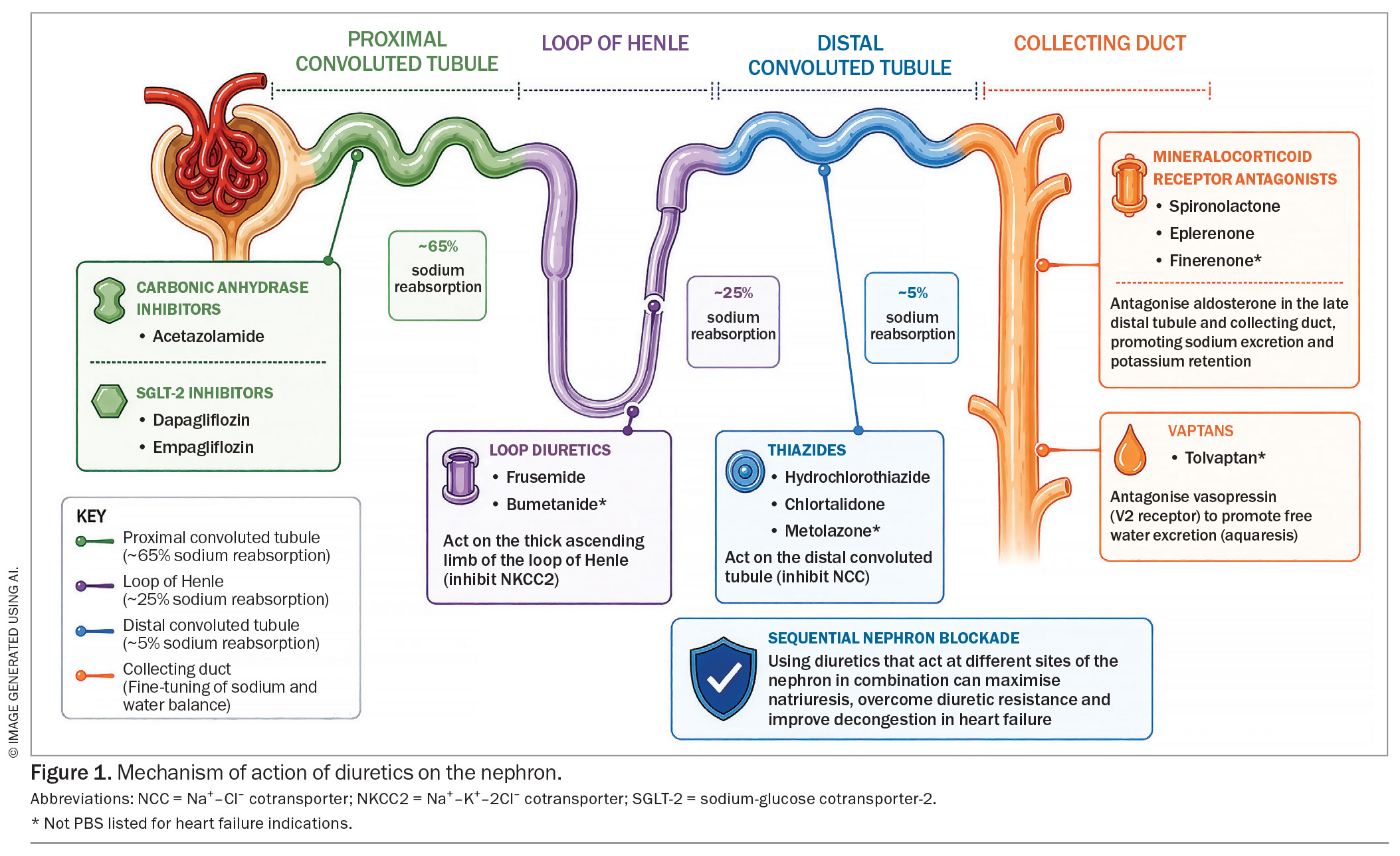
Although furosemide is the most commonly used and studied loop diuretic in HF, several non-loop diuretics target different segments of the nephron (Figure 1).1 Combining diuretics that act on various parts of the nephron can help in overcoming diuretic resistance and achieving more effective decongestion (Flowchart).12,13,16-18 Most evidence supporting combination diuretic therapy is based on studies of hospitalised patients with acute HF; however, these medications are readily available in the community and may have a role in the outpatient setting for early worsening HF, which could prevent hospitalisation. When selecting combination decongestive therapy, the addition of a mineralocorticoid receptor antagonist or a sodium-glucose cotransporter-2 inhibitor (if not already prescribed) may be particularly attractive, as it also provides an opportunity to optimise GDMT.
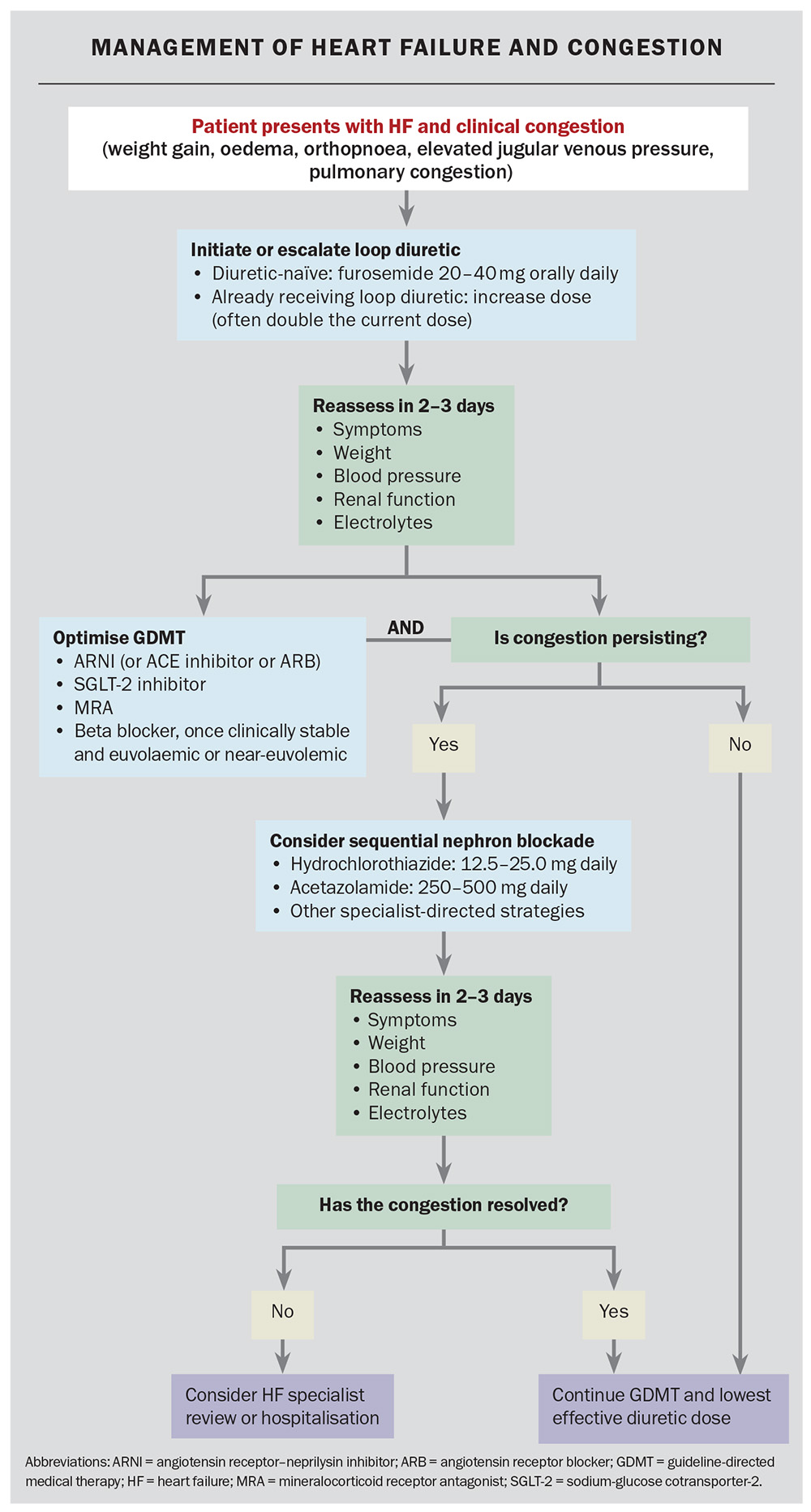
Diuretics are often required to maintain euvolemia and clinical stability. The lowest effective dose should be used to maintain euvolaemia while minimising adverse effects. Diuretic dosing is dynamic and should be adjusted promptly in response to changes in volume status, with both escalation and de-escalation considered as clinically appropriate.
Digoxin
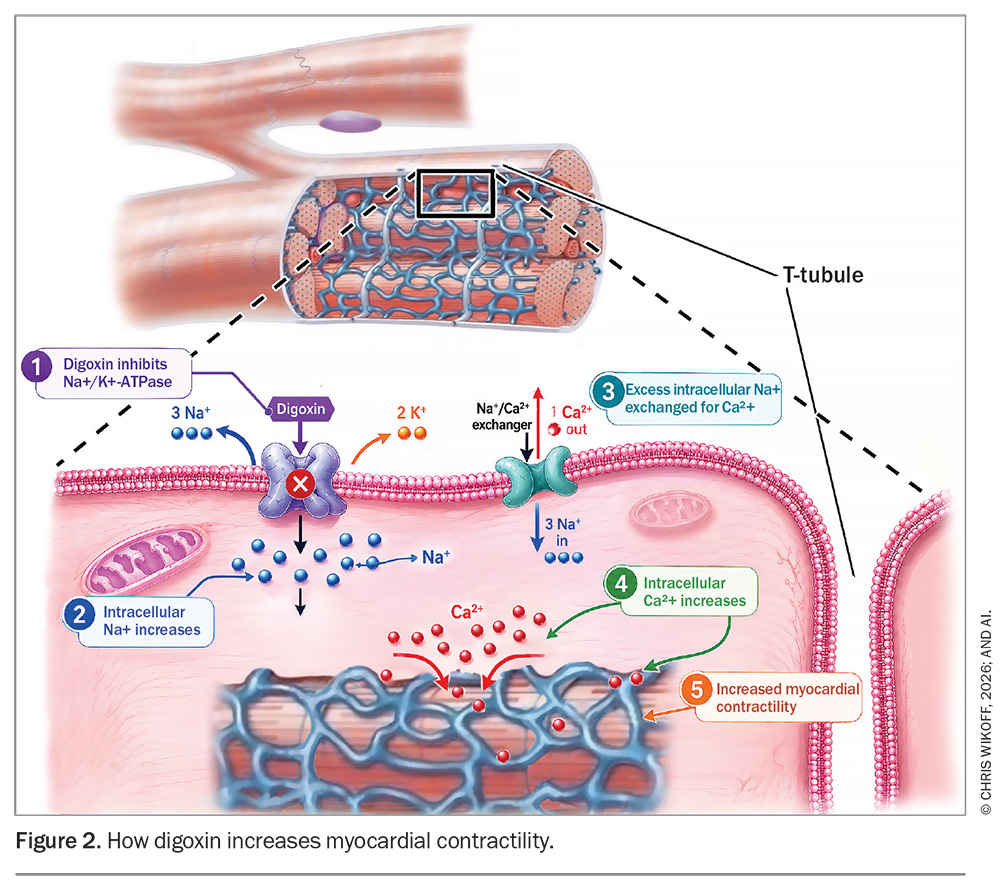
Digoxin, a cardiac glycoside, is one of the oldest drugs used in cardiovascular medicine, often used in atrial fibrillation for its negative chronotropic property. In addition to the rate-slowing property, digoxin increases intracardiac calcium concentrations via sodium–potassium adenosine triphosphatase inhibition, resulting in increased myocardial contractility, a perceived favourable property, particularly in HF with reduced ejection fraction (Figure 2).19 However, digoxin only scored a class II recommendation in current local and international HF guidelines for patients with HF with reduced ejection who are in sinus rhythm and have refractory HF symptoms, owing to an absence of a demonstrable mortality benefit in the Digitalis Investigation Group (DIG) trial.20 At face value, the DIG trial, being the largest randomised controlled trial of digoxin use in HF, missed the primary endpoint of all-cause mortality. However, digoxin significantly reduced HF hospitalisation by 28% in its secondary endpoint among patients with reduced ejection fraction. By contemporary standards, which often use a composite endpoint of cardiovascular death or HF hospitalisation, the findings may have been viewed more favourably. Furthermore, post-hoc analysis from the DIG trial suggested potential mortality benefit when lower serum concentration was achieved.21 This resulted in reignited interest in exploring the role of digoxin in HF.
In the multicenter European Digitoxin to Improve Outcomes in Patients with Advanced Chronic Heart Failure (DIGIT-HF) study, digitoxin added to GDMT reduced the composite primary endpoint of death or first HF hospitalisation.22 However, the study was criticised for not reaching its enrollment target and was therefore underpowered. Differences in pharmacokinetics between digitoxin and digoxin may limit the applicability of these findings to digoxin, the more commonly used cardiac glycoside, as digitoxin may produce more stable serum concentrations and less cardiac toxicity.
Contrary to the DIGIT-HF study, the Digoxin Evaluation in Chronic heart failure: Investigational Study In Outpatients in the Netherlands (DECISION) trial of low-dose digoxin in addition to contemporary GDMT failed to show a reduction in the composite endpoint of total worsened HF events or cardiovascular death.23 Of note, there were fewer but nonstatistically significant numbers of worsened HF events in patients on low-dose digoxin (serum concentration 0.5–0.9 ng/mL). One major limitation the authors highlighted was the high rate of study drop out (about 25%), partly because of the COVID-19 pandemic, which markedly reduced the power of the trial to demonstrate the therapeutic benefit of digoxin.
The difference seen in the DIGIT-HF and DECISION trials may also be related to the cohort in the DIGIT-HF study appearing sicker, with a higher proportion of participants with New York Heart Association class III HF and a lower median left ventricular ejection fraction. Although the benefit of digoxin in addition to GDMT in chronic HF remains unclear, both the DIGIT-HF and DECISION trials have demonstrated the safety and tolerability of low-dose cardiac glycoside as an adjunct to modern GDMT. Furthermore, increased adverse events were observed when digoxin was withdrawn in the DECISION post-hoc analysis, suggesting digoxin may have some additional value.24
To address the lack of statistical power that may contribute to the controversial results, a meta-analysis was conducted of all three large trials (DIG, DIGIT-HF and DECISION), involving more than 9000 patients with HF with reduced or mildly reduced ejection fraction.25 In this meta-analysis, cardiac glycoside was associated with a lower risk of composite cardiovascular death or worsening HF events through a lower risk of worsening HF events. The current evidence suggests digoxin may be considered as an adjunct to GDMT in selected patients with HF with reduced or mildly reduced ejection fraction, particularly when reducing HF hospitalisation is a therapeutic goal.
Conclusion
Diuretics and low-dose digoxin may be useful adjuncts to GDMT to improve the quality of life for selected patients with HF. Suboptimal decongestion remains a common problem with associated poor outcomes. Appropriately dosed diuretics are effective for relieving congestion in acute HF and for maintaining euvolaemia in the chronic setting when used with appropriate monitoring. Although digoxin has not been shown to improve survival, recent data suggest that low doses can reduce HF hospitalisation, an important determinant of quality of life. Thus, low-dose digoxin may be considered as an additional therapy in selected patients with residual symptoms despite receiving an optimal dose of GDMT. MT
COMPETING INTERESTS: None.
References
1. Felker GM, Ellison DH, Mullens W, Cox ZL, Testani JM. Diuretic therapy for patients with heart failure: JACC state-of-the-art review. J Am Coll Cardiol 2020; 75: 1178-1195.
2. Lala A, McNulty SE, Mentz RJ, et al. Relief and recurrence of congestion during and after hospitalization for acute heart failure: insights from Diuretic Optimization Strategy Evaluation in Acute Decompensated Heart Failure (DOSE-AHF) and Cardiorenal Rescue Study in Acute Decompensated Heart Failure (CARESS-HF). Circ Heart Fail 2015; 8: 741-748.
3. Cooper L, DeVore A, Cowger J, et al. Patients hospitalized with acute heart failure, worsening renal function, and persistent congestion are at high risk for adverse outcomes despite current medical therapy. Clin Cardiol 2023; 46: 1163-1172.
4. Pagnesi M, Staal L, Ter Maaten JM, et al. Decongestion and outcomes in patients hospitalized for acute heart failure: insights from the RELAX-AHF-2 trial. JACC Heart Fail 2025; 13: 414-429.
5. Gheorghiade M, Colucci WS, Swedberg K. Beta-blockers in chronic heart failure. Circulation 2003; 107: 1570-1575.
6. Greene SJ, Butler J, Fonarow GC. Contextualizing risk among patients with heart failure. JAMA 2021; 326: 2261-2262.
7. Chioncel O, Mebazaa A, Maggioni AP, et al. Acute heart failure congestion and perfusion status - impact of the clinical classification on in-hospital and long-term outcomes; insights from the ESC-EORP-HFA Heart Failure Long-Term Registry. Eur J Heart Fail 2019; 21: 1338-1352.
8. Felker GM, O’Connor CM, Braunwald E; Heart Failure Clinical Research Network Investigators. Loop diuretics in acute decompensated heart failure: necessary? Evil? A necessary evil? Circ Heart Fail 2009; 2: 56-62.
9. Ahmed A, Husain A, Love TE, et al. Heart failure, chronic diuretic use, and increase in mortality and hospitalization: an observational study using propensity score methods. Eur Heart J 2006; 27: 1431-1439.
10. Madelaire C, Gustafsson F, Stevenson LW, et al. One-year mortality after intensification of outpatient diuretic therapy. J Am Heart Assoc 2020; 9: e016010.
11. Felker GM, Lee KL, Bull DA, et al. Diuretic strategies in patients with acute decompensated heart failure. N Engl J Med 2011; 364: 797-805.
12. Mullens W, Dauw J, Martens P, et al. Acetazolamide in acute decompensated heart failure with volume overload. N Engl J Med 2022; 387: 1185-1195.
13. Trullas JC, Morales-Rull JL, Casado J, et al. Combining loop with thiazide diuretics for decompensated heart failure: the CLOROTIC trial. Eur Heart J 2023; 44: 411-421.
14. Hanberg JS, Sury K, Wilson FP, et al. Reduced cardiac index is not the dominant driver of renal dysfunction in heart failure. J Am Coll Cardiol 2016; 67: 2199-2208.
15. Mullens W, Nijst P. Cardiac output and renal dysfunction: definitely more than impaired flow. J Am Coll Cardiol 2016; 67: 2209-2212.
16. Butler J, Anstrom KJ, Felker GM, et al. Efficacy and safety of spironolactone in acute heart failure: the ATHENA-HF randomized clinical trial. JAMA Cardiol 2017; 2: 950-958.
17. Schulze PC, Bogoviku J, Westphal J, et al. Effects of early empagliflozin initiation on diuresis and kidney function in patients with acute decompensated heart failure (EMPAG-HF). Circulation 2022; 146: 289-298.
18. Cox ZL, Collins SP, Hernandez GA, et al. Efficacy and safety of dapagliflozin in patients with acute heart failure. J Am Coll Cardiol 2024; 83: 1295-1306.
19. Gheorghiade M, Adams KF, Jr., Colucci WS. Digoxin in the management of cardiovascular disorders. Circulation 2004; 109: 2959-2964.
20. Digitalis Investigation Group. The effect of digoxin on mortality and morbidity in patients with heart failure. N Engl J Med 1997; 336: 525-533.
21. Rathore SS, Curtis JP, Wang Y, Bristow MR, Krumholz HM. Association of serum digoxin concentration and outcomes in patients with heart failure. JAMA 2003; 289: 871-878.
22. Bavendiek U, Grosshennig A, Schwab J, et al. Digitoxin in patients with heart failure and reduced ejection fraction. N Engl J Med 2025; 393: 1155-1165.
23. van Veldhuisen DJ, Rienstra M, Mosterd A, et al. Low-dose digoxin in patients with heart failure with reduced or mildly reduced ejection fraction: a randomized controlled trial. Nat Med 2026 May 10; e-pub (https://doi.org/10.1038/s41591-026-04406-6).
24. van der Meer P, van Veldhuisen DJ, Voordes GHD, et al. Blinded withdrawal of randomized treatment with low-dose digoxin or placebo in patients with heart failure: the DECISION trial. Eur Heart J 2026 May 10; e-pub (https://doi.org/10.1093/eurheartj/ehag385).
25. Damman K, van Veldhuisen DJ, Bauersachs J, et al. Efficacy and safety of digitalis glycosides in heart failure: a meta-analysis. JAMA 2026; 335: 2029-2037.
Single article purchases are temporarily unavailable due to site maintenance.
If you would like to purchase an article during this time, please email us at [email protected] with the article details and we'll assist you directly. We'll also let you know when online purchasing is available again.
Thank you for your patience and understanding.