
Chemical peels – controlled injury, clinical gain
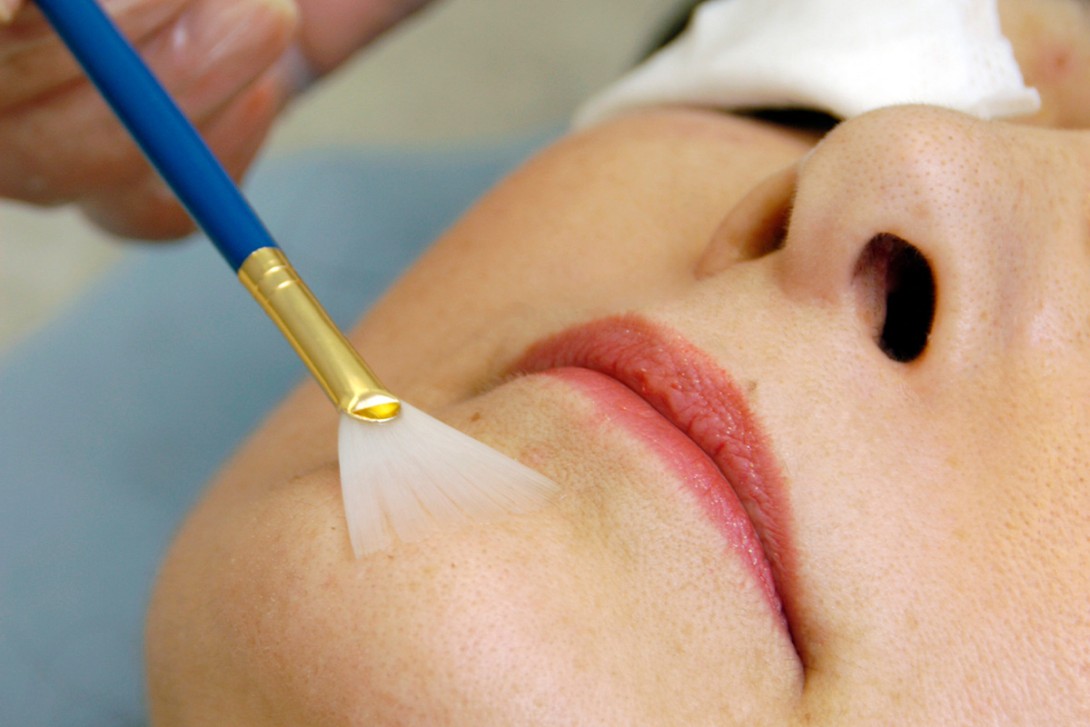
Chemoexfoliation is an efficacious and cost-effective therapeutic modality for skin rejuvenation. Different cutaneous conditions require peels of different depth, and each peeling agent has its own risk profile. With appropriate selection of both patient and peel type, these cosmetic procedures are safe when performed by an experienced clinician.
- Chemical peel procedures involve the topical application of caustic agents to induce controlled injury to the skin, with ensuing healing leading to improvement in a variety of cutaneous conditions.
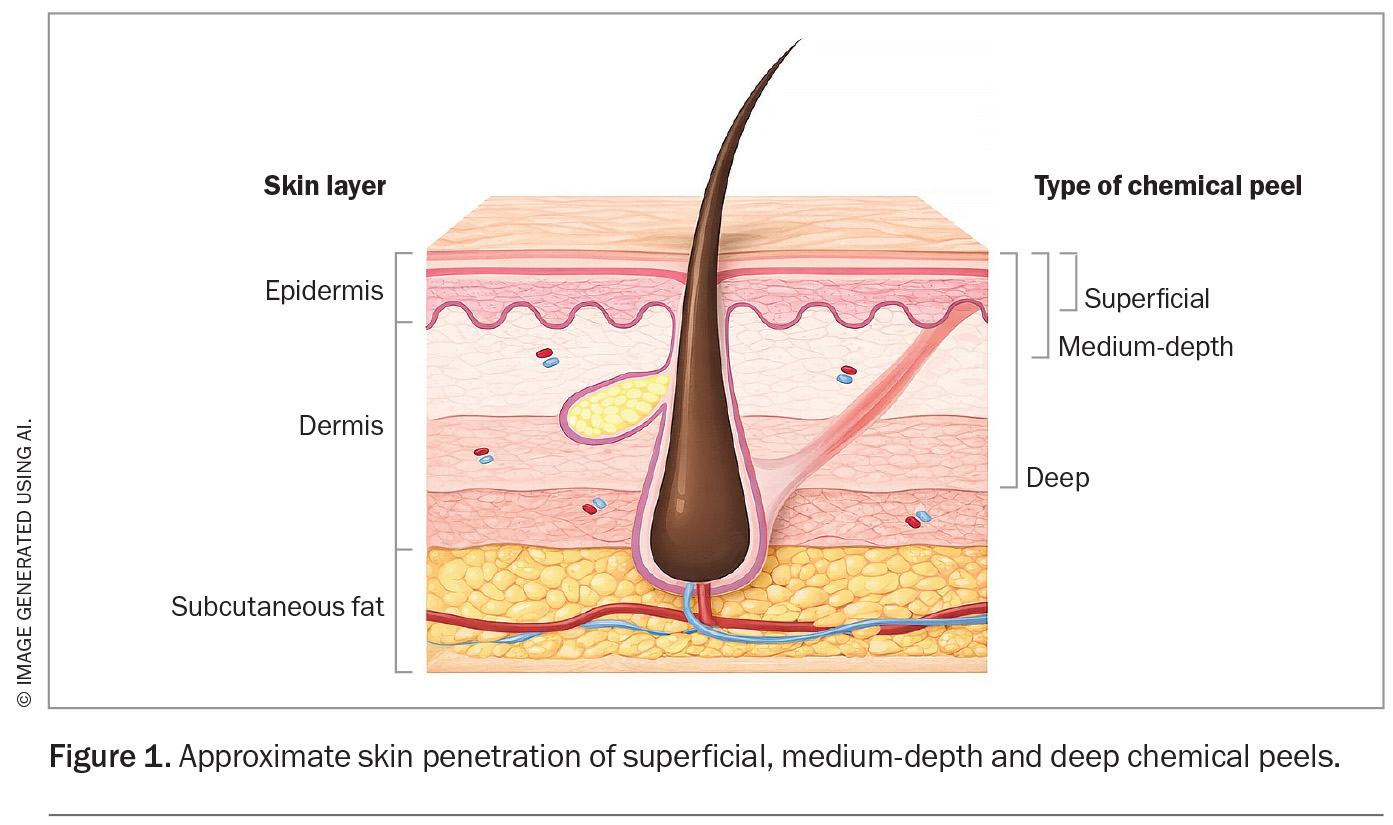
- Superficial peels penetrate the layers of the epidermis variably. They are indicated for the treatment of inflammatory acne, mild photodamage, solar lentigines and melasma.
- Medium-depth peels extend through the epidermis into the papillary dermis. They are most commonly recommended for fine rhytides, seborrhoeic keratoses, superficial hyperpigmentation and mild-to-moderate photodamage. They are also used as a field treatment for actinic dysplasia.
- Deep peels extend to the level of the mid-reticular dermis. These are used to treat acne scars, severe photodamage and deeply furrowed rhytides in areas such as the lateral canthal and perioral regions. Deep peels have largely been replaced by light-based skin resurfacing modalities.
- The risks of complications associated with chemical peels generally increase with penetrative depth of the procedure. The risks are also greater for patients who have a darker skin type.
Chemical peeling, or chemoexfoliation, is a cosmetic procedure for treating a variety of cutaneous conditions. It involves the topical application of caustic agents to induce controlled injury to the epidermis and dermis, which results in tissue regeneration and remodelling (Figure 1).1 The indications for chemical peeling are broad and commonly include melasma, lentigines, actinic keratoses, rhytides and acne scarring.1-3 Overall, chemical peeling is an efficacious and cost-effective therapeutic modality for skin rejuvenation.4
Types of chemical peels
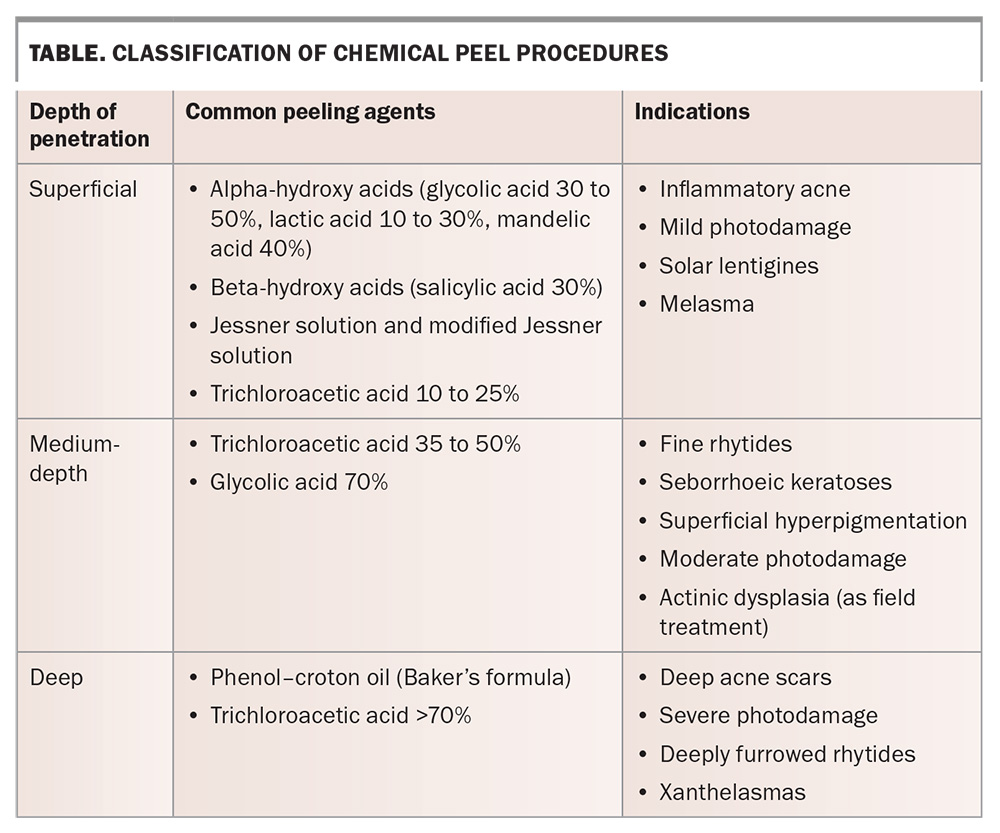
Chemical peel procedures can be classified according to the depth of penetration of the active peeling agents into the skin (Table). Different cutaneous conditions require peels of different depth, and each peeling agent has its own risk profile. Selection of the optimal penetration and peeling agent requires clinical assessment of both disease and patient factors, including skin type, disease severity, lesion location, patient expectations and available downtime after the procedure.
Superficial peels
Superficial peels penetrate the layers of the epidermis variably, down to the stratum basale.5,6 The main peeling agents are:
- alpha-hydroxy acids (AHAs)
- beta-hydroxy acids
- Jessner solution and modified Jessner solution
- trichloroacetic acid (TCA), at concentrations of 10 to 25%.
The AHAs used in superficial peels include low-concentration glycolic acid (30 to 50%), lactic acid (10 to 30%) and mandelic acid (40%). When combined with 5-fluorouracil, glycolic acid can effectively treat premalignant changes such as actinic keratosis and actinic cheilitis (although this is an uncommon combination).7 Lactic acid inhibits the tyrosinase activity crucial for melanin synthesis, making it an effective agent for pigmentary disorders such as melasma and lentigines.3,8 Mandelic acid, which is derived from bitter almonds, has a high molecular weight and hence slower penetration, which makes it a good option for sensitive skin; it is used to treat patients with acne vulgaris and post-acne hyperpigmentation.9,10
Salicylic acid is a common beta-hydroxy acid that has anti-inflammatory, anti-microbial and depigmenting properties.2 It is used to exfoliate the skin with minimal inflammation, which diminishes the risk of postinflammatory hyperpigmentation.5,11 Owing to its ability to rapidly penetrate lipid barriers, salicylic acid also demonstrates high efficacy for inflammatory acne.1,5,12
Jessner solution and modified Jessner solution are both frequently used to treat acne and acne scarring and for photo-rejuvenation.3,7,9 Jessner solution is a combination of resorcinol, salicylic acid and lactic acid. Modified Jessner solution contains 8% citric acid instead of resorcinol, which reduces the risks of contact dermatitis and thyroid dysfunction associated with resorcinol.8,13
Superficial peels usually require multiple sessions to optimise treatment outcomes. They are also often used with topical adjunctive therapy (such as topical retinoids).7
Medium-depth peels
Medium-depth peel agents penetrate the epidermis and a variable portion of the papillary and upper reticular dermis.14 This peel depth is most commonly used to treat fine rhytides, seborrhoeic keratoses and superficial hyperpigmentation (Figures 2a and b) as well as mild-to-moderate photodamage. It is also used as a field treatment for actinic dysplasia.15 Medium-depth peels are usually limited to treatment of the face or scalp because of an increased risk of scarring when used in other areas.2
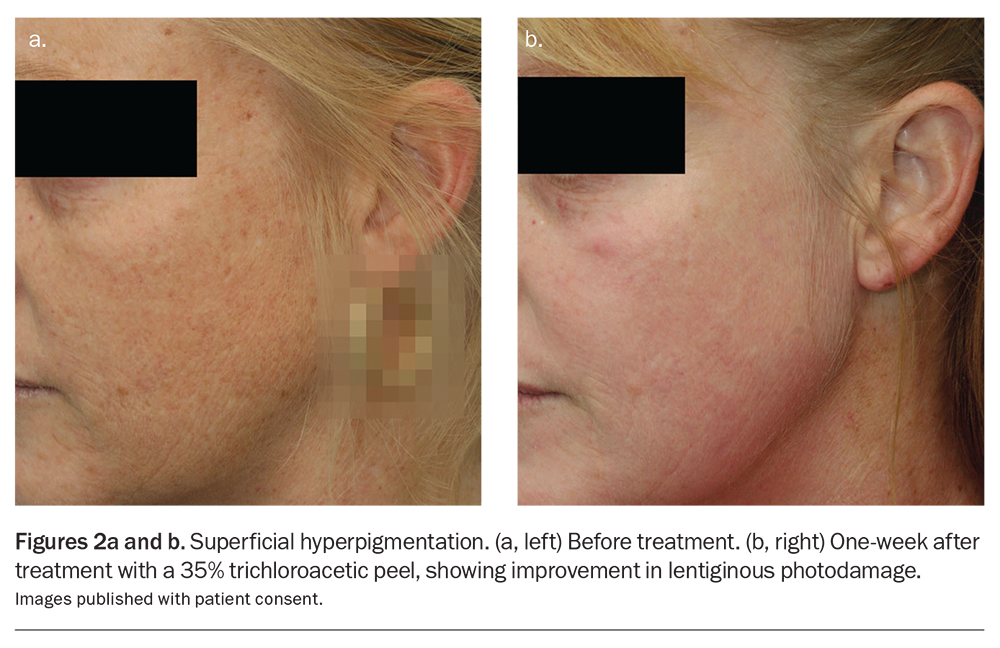
TCA 35% is one of the most widely used agents in medium-depth chemical peels and is commonly used in combination with other active agents. It is often applied with a preceding preparation agent such as solid carbon dioxide, Jessner solution or 70% glycolic acid, with synergistic action producing a greater effect and allowing for safer and more even peeling than the single agents.4,16
Deep peels
Deep peeling agents penetrate the entire epidermis and reach the mid-reticular dermis.14 They are indicated for deep acne scars, severely photodamaged skin and deeply furrowed rhytides in lateral canthal and perioral regions (Figures 3a and b).1,14 Deep peels should only be used for patients with Fitzpatrick skin types I or II and be performed by experienced clinicians who are familiar with the procedure.
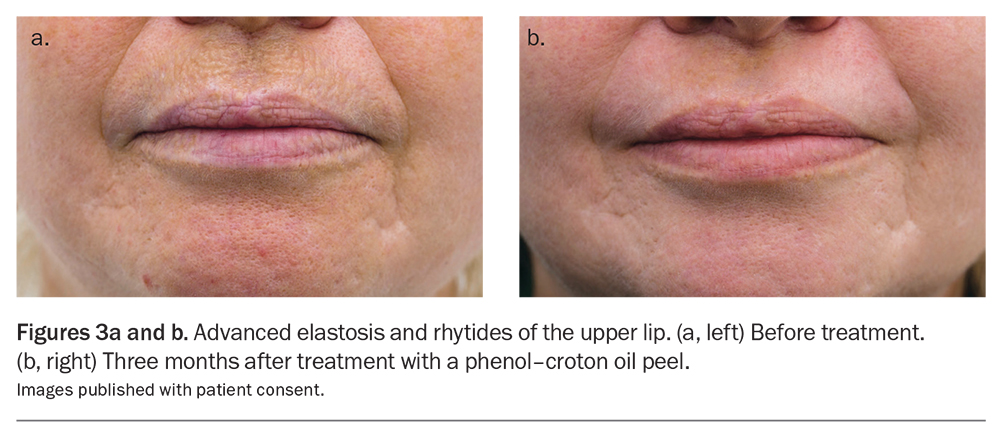
Phenol is a deep peeling agent that is typically used in combination with croton oil.14 Phenol peels have a risk of systemic toxicity, producing cardiac arrhythmias.7,8 As both agents are eliminated by the liver and kidneys, renal and hepatic toxicity are other potential side effects.8,14
At concentrations above 35%, single-agent TCA peels are only used for focal treatment because of the risks of scarring and dyspigmentation.2,5,7 In particular, TCA 65 to 100% can be delivered focally to treat pitted (‘ice-pick’) acne scars (known as TCA chemical reconstruction of skin scars [CROSS], Figure 4) or xanthelasma.7,17
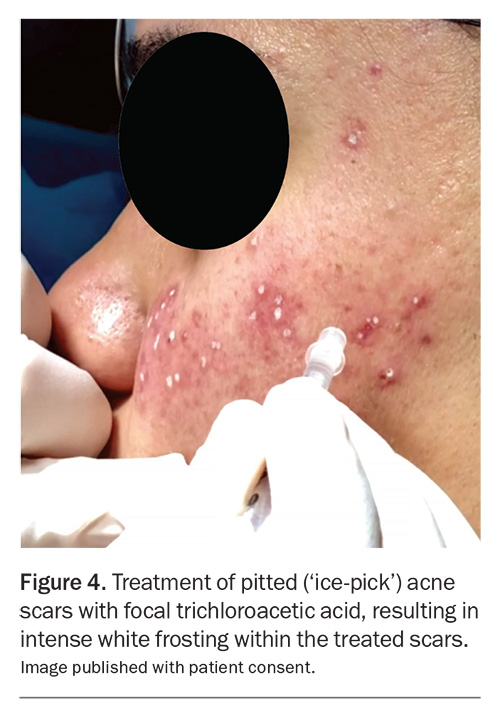
For deep peels, the greater penetration provides more pronounced improvements in skin tone and texture. It may be necessary to reduce demarcation of the boundaries of deeper peels, especially along the jawline, which can be achieved by feathering along the upper neck with a superficial or medium-depth peel.
Deep peels are associated with a longer recovery and carry higher risks of scarring and dyschromia.7 Permanent hypopigmentation, while rare, can occur even in patients with Fitzpatrick skin type I or II. However, relative hypopigmentation of the treated area is common. Deep peels have largely been replaced by light-based skin resurfacing modalities, which have a more favourable safety profile.
Patient selection
Careful identification of patients who have skin conditions amenable to treatment with a chemical peel is essential. It is important to assess each individual’s motivation for requesting a peel and to establish realistic expectations. Patients should be advised that partial improvement, rather than complete resolution, is the normal outcome after chemoexfoliation for most cosmetic concerns. They also need to be aware that peeling necessitates strict adherence to pre- and post-treatment regimens, particularly sun avoidance, and a potentially long recovery period (several months for deeper peels).5,6,18
An important aspect of the clinical examination is assessment of skin colour. Superficial peels are suitable for all Fitzpatrick skin types. However, medium-depth and deep peels are usually reserved for patients with Fitzpatrick skin types I or II. This is because there is an increased risk of side effects otherwise, especially of postinflammatory hypo- or hyperpigmentation changes in darker skin.16,18 Baseline and progress photographic documentation is mandatory for monitoring therapeutic response and for assessing patient outcomes.6
A careful medical history should be taken, which includes an assessment of medical conditions that may affect the choice of peeling agents and factors that affect outcomes. Contraindications to deep phenol peels, for example, include a history of arrhythmias, hepatic dysfunction or renal impairment.1 A history of herpes simplex virus (HSV) infection, connective tissue disorders and atypical scarring are risk factors for a poor outcome to treatment. Comorbidities that impair wound healing or increase infection risk, such as diabetes and immunosuppression, should be elicited.5,6 Psychological conditions such as body dysmorphic disorder should also be excluded, as the risks often outweigh the perceived benefits. A recent history of resurfacing procedures, radiation therapy and surgery will contribute to the decision-making process, as these also increase the risk of post-peel complications.6 Non-urgent cosmetic procedures should be deferred according to clinical need in the presence of open wounds and active infections.5
A review of the patient’s medications also forms part of the risk assessment. Multiple international consensus guidelines indicate that recent use of isotretinoin is not a contraindication for superficial peels; however, recommendations of its use around the time of medium-depth or deep peels is less well established.19,20
Chemical peel procedures
Pre-treatment
Preparation for a chemical peel typically commences weeks or months before the procedure. Prior to treatment, the skin is defatted with acetone or pre-peel preparation agents, which allows for uniform penetration of the peeling agent through the stratum corneum. This also allows for expedited healing and early detection of peel intolerance, and reduces the risk of complications.21,22 Pre-treatment with topical retinoids or hydroquinone can augment the clinical improvement of a chemical peel by creating a more even skin surface for peeling and reduce the risk of postinflammatory hyperpigmentation in darker skin types.5
There is a risk of HSV reactivation, especially after medium-depth and deep peels, and prophylactic antiviral therapy can be considered. Patients with a history of orolabial HSV infection should commence prophylactic antiretroviral therapy one to two days prior to peeling and continue until full re-epithelialisation has occurred.
Treatment
Details of the peel procedure depend on the peeling agent that is being used. The peeling agent should be applied uniformly to all areas that are being treated. Some agents, such as AHAs, are applied for a specified duration. For the agents that cause ‘frosting’ (a visible effect of protein denaturation), the end of the procedure is determined when the desired level is observed, which in general corresponds with depth of the peel achieved:1
- level I frosting (superficial peel) – predominantly erythema with some inconsistent whitening of the skin
- level II frosting (medium-depth peel) – an even white coat with some associated erythema
- level III frosting (deep peel) – a solid white coat with little background erythema (Figure 5).
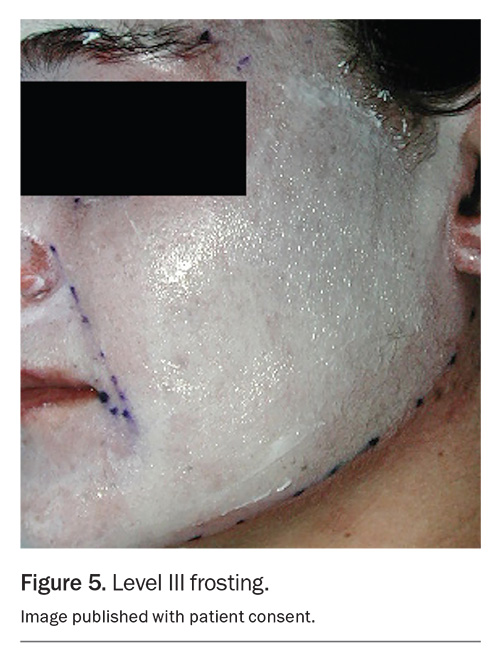
For some peeling agents, such as AHAs, neutralisation is required to terminate the action when the treatment duration has been achieved. Dilute sodium bicarbonate solution or cool saline compresses can be used to terminate peel procedures conducted with glycolic, lactic or mandelic acid, and can be considered for TCA peels.1 Neutralisation is an exothermic process and so patients may experience a transient increase in warmth.
Superficial peels generally create minimal patient discomfort and analgesia is not usually required; however, patient feedback is critical because the peel must be neutralised immediately if any areas are very painful.5 Patients undergoing medium-depth and deep peels may require physical cooling agents and oral analgesics (such as paracetamol and NSAIDs, or potentially tramadol or pethidine). Patients undergoing deep peels may require regional nerve blocks, intramuscular analgesia or general anaesthesia.6,13
Post-treatment
Patient care after a chemical peel and expectations, including expected downtime, should include verbal and written instructions.6
Superficial peels are characterised by several days of exfoliation, with re-epithelialisation complete within seven to 10 days. Generous use of a mist spray immediately after the procedure can alleviate discomfort. Patients should apply a bland emollient (e.g. white soft paraffin) to the peeled areas, with the exception of those being treated for acne.1,3 For the first 24 hours, cool compresses and gentle vinegar soaks (prepared as one part vinegar diluted in five parts water) can lessen postoperative swelling, pain, and skin flaking.1 About one to three days after the peel, gentle cleansing and direct contact with shower water can be resumed.13
Medium-depth peels cause oedema, erythema and desquamation. For the first 24 hours, simple oral analgesia, cool compresses and dilute vinegar soaks should be used alongside a bland emollient. A mist spray can also help alleviate discomfort. The erythema peaks four to five days after the procedure, with exfoliation complete at 10 to 14 days.
Deep peels cause erythematous oedema that progresses to epidermal necrosis and serosanguinous exudate within 24 to 48 hours, with the potential for severe periorbital oedema.1 Greater patient care is required after a deep peel and downtime is more prolonged. Initially, cool compresses, ice packs and NSAIDs should be used to control inflammation, alongside soaks with dilute vinegar solution to remove necrotic epidermal debris. Transmembrane water loss is more significant, so routine application of a bland emollient and oral hydration are necessary. Re-epithelialisation does not commence until three to four days after the procedure and continues for 14 days or longer. Healing processes, including fibroplasia, neoangiogenesis and neocollagen formation, will continue for at least six months after treatment. A broad-spectrum sunscreen can be applied as tolerated, but direct and prolonged sun exposure should be avoided for a minimum of 12 weeks after a deep peel.3,6
Adverse events
Chemical peels are safe with appropriate selection of both patient and peel type and when performed by an experienced clinician.6 Complications are generally minor and include skin irritation, erythema, milia, pruritus, oedema and blistering. These are more common in patients with darker skin or sensitive skin, and with deeper peels. Skin flaking and peeling are an expected effect of some peeling agents, including Jessner solution. These symptoms are often evident within minutes to hours of the procedure and may persist until the completion of re-epithelialisation.6,23 Topical corticosteroids and emollients provide symptomatic relief.23
The duration of erythema after a chemical peel is proportional to the depth of penetration of the peeling agent as well as the long-term effectiveness of the procedure.18 However, persistent erythema, especially if localised, irregular or progressive, may portend scarring or hyperpigmentation.22 Hydrocortisone 1% ointment, pulsed dye laser treatment and frequent application of a sunscreen are useful to treat prolonged erythema.3,16,24
There is a slightly increased risk of skin infections resulting from disruption of the skin barrier. Common culprits include Candida albicans, Staphylococcus aureus and Pseudomonas aeruginosa; in addition, there is a risk of HSV reactivation.5 Infected lesions should be swabbed for microscopy, culture and sensitivity testing. Prompt recognition and early treatment with a course of appropriate systemic antibiotic, antiviral or antifungal medication are essential to minimise the risks of delayed healing and scarring.3
Postinflammatory hyperpigmentation is a comparatively common complication that arises days to weeks after a peeling procedure. It usually lasts less than six months and is especially prevalent among patients with Fitzpatrick skin types III or VI. Other risk factors include post-peel sun exposure, comorbid pigmentary disorders and use of photosensitising medications.3,16 Post-inflammatory hyperpigmentation can be managed with a combination of broad-spectrum sunscreen, tretinoin 0.05% cream, hydrocortisone 1% cream and hydroquinone 4% cream.3,21
Postinflammatory hyperpigmentation may be followed by a period of pseudo-hypopigmentation where the treated areas appear hypopigmented relative to the untreated, photodamaged skin.18 However, true hypopigmentation is uncommon for superficial and medium-depth peels.
The risk of scarring increases with increasing peel depth, inappropriate patient selection and inattention to post-procedure care. The most susceptible areas are the upper lip and skin overlying bony prominences, such as the zygomatic arch and mandible.1 Hypertrophic scarring may benefit from silicone coverings, intralesional corticosteroid injections or 5-fluorouracil injections.3,6 Erythematous scars can be improved by multiple sessions with vascular laser or intense pulsed light therapy, whereas atrophic scars may benefit from fractional laser treatment.3,17 Textural changes can also occur, resulting in a peau d’orange texture.
Systemic complications such as toxic shock syndrome are rare and usually only associated with deep peels. As noted above, phenol absorption is associated with cardiac arrhythmias.7,8 Telemetry, intravenous access and 10 to 15 minute time-lapse between facial cosmetic units to allow for phenol clearance are required during full-face deep peels.13 In the event of a supraventricular arrhythmia, the procedure should be immediately paused and not resumed until the patient has returned to normal sinus rhythm.3,18
Conclusion
Overall, chemical peeling is an efficacious and cost-effective therapeutic modality for skin rejuvenation. Although light-based skin resurfacing modalities have largely supplanted deep peels, the clinical utility of superficial and medium-depth peels, in particular, is enduring. Careful selection of both patient and peel type is essential. Patient counselling to establish realistic expectations, requirements for post-peel care and potential adverse events, is important for patient safety and to optimise post-procedural satisfaction. MT
COMPETING INTERESTS: None.
References
1. Soleymani T, Lanoue J, Rahman Z. A practical approach to chemical peels: a review of fundamentals and step-by-step algorithmic protocol for treatment. J Clin Aesthet Dermatol 2018; 11: 21-28.
2. Lee K, Wambier C, Soon S, et al; International Peeling Society. Basic chemical peeling: superficial and medium-depth peels. J Am Acad Dermatol 2019; 81: 313-324.
3. Starkman S, Mangat D. Chemical peels: deep, medium, and light. Facial Plast Surg 2019; 35: 239-247.
4. Bhardwaj V, Sharma K, Maksimovic S, Fan A, Adams-Woodford A, Mao J. Professional-grade TCA-lactic acid chemical peel: elucidating mode of action to treat photoaging and hyperpigmentation. Front Med (Lausanne) 2021; 8: 617068.
5. Cosmetic dermatology: products and procedures. Draelos Z (ed). West Sussex: John Wiley & Sons; 2015.
6. O’Connor AA, Lowe PM, Shumack S, Lim AC. Chemical peels: a review of current practice. Australas J Dermatol 2018; 59: 171-181.
7. Măgerusan SE, Hancu G, Mircia E. Considerations on the use of organic substances in chemical peels: a systematic review. Acta Med Marisiensis 2020; 66: 50-55.
8. Jackson A. Chemical peels. Facial Plast Surg 2014; 30: 26-34.
9. Kontochristopoulos G, Platsidaki E. Chemical peels in active acne and acne scars. Clin Dermatol 2017; 35: 179-182.
10. Garg V, Sinha S, Sarkar R. Glycolic acid peels versus salicylic-mandelic acid peels in active acne vulgaris and post-acne scarring and hyperpigmentation: a comparative study. Dermatol Surg 2009; 35: 59-65.
11. Landau M. Chemical peels. Clin Dermatol 2008; 26: 200-208.
12. Vemula S, Maymone M, Secemsky E, et al. Assessing the safety of superficial chemical peels in darker skin: a retrospective study. J Am Acad Dermatol 2018; 79: 508-513.
13. Pathak A, Mohan R, Rohrich R. Chemical peels: role of chemical peels in facial rejuvenation today. Plast Reconstr Surg. 2020;145: 58e-66e.
14. Camacho F. Medium-depth and deep chemical peels. J Cosmet Dermatol 2005; 4: 117-128.
15. Sitohang IB, Legiawati L, Suseno L, Safira F. Trichloroacetic acid peeling for treating photoaging: a systematic review. Dermatol Res Pract 2021; 2021: 3085670.
16. Salam A, Dadzie O, Galadari H. Chemical peeling in ethnic skin: an update. Br J Dermatol 2013; 169 Suppl 3: 82-90.
17. Sebaratnam DF, Lim AC, Lowe PM, Goodman GJ, Bekhor P, Richards S. Lasers and laser-like devices: part two. Australas J Dermatol 2014; 55: 1-14.
18. Wambier CG, Lee KC, Soon SL, et al; International Peeling Society. Advanced chemical peels: phenol-croton oil peel. J Am Acad Dermatol 2019; 81: 327-336.
19. Spring L, Krakowski A, Alam M, et al. Isotretinoin and timing of procedural interventions: a systematic review with consensus recommendations. JAMA Dermatol 2017; 153: 802-809.
20. Waldman A, Bolotin D, Arndt K, et al. ASDS guidelines task force: consensus recommendations regarding the safety of lasers, dermabrasion, chemical peels, energy devices, and skin surgery during and after isotretinoin use. Dermatol Surg 2017; 43: 1249-1262.
21. Khunger N; IADVL Task Force. Standard guidelines of care for chemical peels. Indian J Dermatol Venereol Leprol 2008; 74 Suppl: S5-12.
22. Deprez P. Textbook of chemical peels: superficial, medium and deep peels in cosmetic practice. Boca Raton: CRC Press; 2016.
23. Nikalji N, Godse K, Sakhiya J, Patil S, Nadkarni N. Complications of medium depth and deep chemical peels. J Cutan Aesthet Surg 2012; 5: 254-260.
24. Clark E, Scerri L. Superficial and medium-depth chemical peels. Clin Dermatol 2008; 26: 209-218.
Single article purchases are temporarily unavailable due to site maintenance.
If you would like to purchase an article during this time, please email us at [email protected] with the article details and we'll assist you directly. We'll also let you know when online purchasing is available again.
Thank you for your patience and understanding.